
Eden Robinson
Author of Monkey Beach
About the Author
Eden Robinson is a First Nations woman who grew up in Haisla territory. Her first book, a collection of stories called "Traplines" (1996), was awarded the Winifred Holtby Prize for the best first work of fiction in the Commonwealth & was selected as a New York Times Editors' Choice & Notable Book show more of the Year. She lives in Vancouver, British Columbia. (Bowker Author Biography) show less
Series
Works by Eden Robinson
Associated Works
So Long Been Dreaming: Postcolonial Science Fiction & Fantasy (2004) — Contributor — 323 copies, 9 reviews
Lost Classics: Writers on Books Loved and Lost, Overlooked, Under-read, Unavailable, Stolen, Extinct, or Otherwise Out of Commission (2000) — Contributor — 321 copies, 6 reviews
Walking the Clouds: An Anthology of Indigenous Science Fiction (2012) — Contributor — 218 copies, 3 reviews
Shapes of Native Nonfiction: Collected Essays by Contemporary Writers (2019) — Contributor — 88 copies
Tagged
Common Knowledge
- Birthdate
- 1968-01-19
- Gender
- female
- Awards and honors
- Writers' Trust Engel/Findley Award (2016)
- Agent
- The Bukowski Agency
- Nationality
- Canada
- Birthplace
- Kitamaat, British Columbia, Canada
- Places of residence
- Kitamaat, British Columbia, Canada
North Vancouver, British Columbia, Canada - Associated Place (for map)
- British Columbia, Canada
Members
Reviews
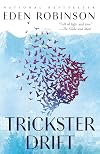
Jared Martin is sober. It’s been almost a year. Almost a year since the events that brought [Son of a Trickster] to a close. His girlfriend, Sarah, is now his ex. Most of his friends have abandoned him. And his mother can’t stand what she perceives as his sanctimonious AA sobriety. Just as well that he is on his way out of Kitimat, headed to Vancouver and college. He’ll make new friends and, if necessary, connect with other relations such as his aunt, Mavis Moody, even though his show more mother hates her sister. What Jared doesn’t expect is his newfound connection to the otherworldly. For example, he sees ghosts, well mostly just one ghost in a bathrobe who always wants to watch Dr Who on the Sci-Fi channel. Oh, and there’s something creepy living in the wall of his bedroom.
Although the opening of this second volume of this proposed trilogy is a bit awkward — inevitably Robinson has to open out Jared’s world with individuals we’ve not yet come across even though they appear to be relatives — once the story gets going, it is fully engrossing. She has a real flair for Jared’s unique voice and his sanguine approach to frankly freaky situations. Not that he has escaped his past. His mother’s crazy ex-boyfriend, David, is stalking him, and magic keeps edging closer and closer.
Of course some of what shows up in the middle novel of a trilogy, of necessity, is bridging material to get us to the final volume. But there is enough real interaction between characters here to ensure this novel satisfies on its own terms. Aunt Mave is a wonderfully eccentric character and Jared’s cousin and fellow participant at AA, Kota, is both complex and poignant. Plus there are plenty of opportunities for Jared’s sparky verbal jousts which are a treat. I enjoyed it all.
Recommended. show less
Although the opening of this second volume of this proposed trilogy is a bit awkward — inevitably Robinson has to open out Jared’s world with individuals we’ve not yet come across even though they appear to be relatives — once the story gets going, it is fully engrossing. She has a real flair for Jared’s unique voice and his sanguine approach to frankly freaky situations. Not that he has escaped his past. His mother’s crazy ex-boyfriend, David, is stalking him, and magic keeps edging closer and closer.
Of course some of what shows up in the middle novel of a trilogy, of necessity, is bridging material to get us to the final volume. But there is enough real interaction between characters here to ensure this novel satisfies on its own terms. Aunt Mave is a wonderfully eccentric character and Jared’s cousin and fellow participant at AA, Kota, is both complex and poignant. Plus there are plenty of opportunities for Jared’s sparky verbal jousts which are a treat. I enjoyed it all.
Recommended. show less

I had to think for awhile about Eden Robinson’s first two novels in her Trickster trilogy, Son of a Trickster, which was shortlisted for the Giller in 2018, and Trickster Drift.
The novels tell the story of Jared, a burned-out kid of mid-adolescence, living on the west coast of Canada in an Haisla Nation family. To say his family dynamics are abusive and dysfunctional would be understatement. With no moral compass but his own sense of compassion, and desire for something better, brighter, show more he gets by in high school by squeezing cramming sessions of study in between baking and selling pot cookies in order to pay the bills. And when it all becomes too much, he sinks into binge-drinking.
The novels can easily slide into magic realism, even dark urban fantasy. They are relentless in pace and emotional tension, with tight, spare writing that mirrors the desperation of Jared’s life. Certainly, the novels are award-worthy. Not easy to read because of the brutality and hopelessness of the narrative. But most definitely brilliantly written. You could say they are a modern, dark take on J.D. Salinger’s now legendary Catcher in the Rye.
What has given me pause, however—and please understand this in no way is a reflection of the author’s skill—is the classification of these novels. That is to say, they are marketed as YA.
When my daughter-in-law informed me of that, I was, to put it mildly, gobsmacked. What follows in this review-come-commentary, contains many spoilers, so be advised.
Perhaps my problem with the novels is a sign of my own ageing, of carrying with me what is perhaps an outdated compass more suited to senior citizens than current societal standards. But having read these novels I have to wonder about what kind of standards and messages we’re cementing in society, let alone for our youth, particularly First Nations youth, with the promulgation of literature so egregiously violent and lacking in hope.
As a first example I give you Maggie, Jared’s mother. She is a bad-ass junkie of a mother, with a reputation of a witch in the Haisla tradition, whose expertise, besides being able to cast curses and wardings, is to ally herself to a drug-dealing man who has about as much interest in carving out a safe, secure environment for Jared let alone Maggie, as finding a legitimate way to make his way in the world. Maggie swings between fierce love, casual neglect, and outright violence toward her son. The worldview she imparts to Jared is that in order to get by you have to be tougher, stronger, more violent than anyone who opposes you, no boundaries, anything goes. She helps him to deal. She obtains for him a handgun and teaches him how to use it.
As illustration of her complete lack of parenting skills, when she discovers a previous boyfriend, David, was in the act of sadistic, violent torture of her son (kneeling on Jared’s chest so that he could slowly, casually, break the boy’s ribs), her response is to nail David’s feet to the floor with a power-nailer. (I won’t get into the implausibility of sneaking up on someone with a power-nailer.) When she drags Jared out from under David, she then, in a rage and without regard for Jared’s serious injury, commands Jared to nail David’s armpits to the floor. Only after Jared refuses is an EMS team summoned and the boy’s injuries addressed. He then spends his recovery couch-surfing with an elderly neighbour.
The level of egregious violence and written detail regarding this encounter put me in mind of Stieg Larsson’s Millennium Trilogy.
And this is only one example of the relentless onslaught of graphic violence in both novels.
Now, understand, I have no difficulty whatever with this level of violence and darkness in novels for adults. Certainly, I’ve published fiction for adults by authors who write this sort of dark literature. However, I do have a great deal of difficulty with novels of such an explicit and hopeless nature for young adults. I have to ask myself, perhaps in a typically senior fashion, what kind of message does this send to our youth? It’s hard enough finding your way as a young person, particularly today, without creating a normalized view of this sort of violence. And then what about First Nations youth who are, of course, going to want to read work by a First Nations author, particularly literature targeted for exactly their demographic?
That suicide rates, alcohol and substance abuse are rife among our First Nations youth is a national crisis. And then we’re going to introduce this kind of literature to them, let them know it’s okay to read because it’s been cleared by the publishing gatekeepers for them? And then we’re going to expect them to be able to find some sense of hope? That there’s a way out? That there’s maybe something more hopeful in their society and their lives than violence, drug abuse and the endless repetition of that? That they’re told they need to educate themselves, but then read about a young person who is desperately trying to do just that, and who is constantly dragged down not only by drugs and violence, but by the magic of his own culture? That there’s no way out but through violence?
That’s the message in these two books. It’s very clear. As an adult, I can discern, navigate, discuss. But as a young person? Sure, I’m not saying young people aren’t capable of rational thought. But I am saying if you continue to disseminate a message of violence and hopelessness, that’s what you get.
So, at the heart of this categorization of the Trickster Trilogy as YA, I cannot help but feel this is no more than a marketing ploy by the publishers to capitalize on a soaring trend in literature. Ride the YA train to financial gain. The hell with any kind of societal responsibility, particularly to First Nations youth.
Would I recommend the Trickster Trilogy? Most definitely. To adults. But I will never recommend these novels as reading for YA. show less
The novels tell the story of Jared, a burned-out kid of mid-adolescence, living on the west coast of Canada in an Haisla Nation family. To say his family dynamics are abusive and dysfunctional would be understatement. With no moral compass but his own sense of compassion, and desire for something better, brighter, show more he gets by in high school by squeezing cramming sessions of study in between baking and selling pot cookies in order to pay the bills. And when it all becomes too much, he sinks into binge-drinking.
The novels can easily slide into magic realism, even dark urban fantasy. They are relentless in pace and emotional tension, with tight, spare writing that mirrors the desperation of Jared’s life. Certainly, the novels are award-worthy. Not easy to read because of the brutality and hopelessness of the narrative. But most definitely brilliantly written. You could say they are a modern, dark take on J.D. Salinger’s now legendary Catcher in the Rye.
What has given me pause, however—and please understand this in no way is a reflection of the author’s skill—is the classification of these novels. That is to say, they are marketed as YA.
When my daughter-in-law informed me of that, I was, to put it mildly, gobsmacked. What follows in this review-come-commentary, contains many spoilers, so be advised.
Perhaps my problem with the novels is a sign of my own ageing, of carrying with me what is perhaps an outdated compass more suited to senior citizens than current societal standards. But having read these novels I have to wonder about what kind of standards and messages we’re cementing in society, let alone for our youth, particularly First Nations youth, with the promulgation of literature so egregiously violent and lacking in hope.
As a first example I give you Maggie, Jared’s mother. She is a bad-ass junkie of a mother, with a reputation of a witch in the Haisla tradition, whose expertise, besides being able to cast curses and wardings, is to ally herself to a drug-dealing man who has about as much interest in carving out a safe, secure environment for Jared let alone Maggie, as finding a legitimate way to make his way in the world. Maggie swings between fierce love, casual neglect, and outright violence toward her son. The worldview she imparts to Jared is that in order to get by you have to be tougher, stronger, more violent than anyone who opposes you, no boundaries, anything goes. She helps him to deal. She obtains for him a handgun and teaches him how to use it.
As illustration of her complete lack of parenting skills, when she discovers a previous boyfriend, David, was in the act of sadistic, violent torture of her son (kneeling on Jared’s chest so that he could slowly, casually, break the boy’s ribs), her response is to nail David’s feet to the floor with a power-nailer. (I won’t get into the implausibility of sneaking up on someone with a power-nailer.) When she drags Jared out from under David, she then, in a rage and without regard for Jared’s serious injury, commands Jared to nail David’s armpits to the floor. Only after Jared refuses is an EMS team summoned and the boy’s injuries addressed. He then spends his recovery couch-surfing with an elderly neighbour.
The level of egregious violence and written detail regarding this encounter put me in mind of Stieg Larsson’s Millennium Trilogy.
And this is only one example of the relentless onslaught of graphic violence in both novels.
Now, understand, I have no difficulty whatever with this level of violence and darkness in novels for adults. Certainly, I’ve published fiction for adults by authors who write this sort of dark literature. However, I do have a great deal of difficulty with novels of such an explicit and hopeless nature for young adults. I have to ask myself, perhaps in a typically senior fashion, what kind of message does this send to our youth? It’s hard enough finding your way as a young person, particularly today, without creating a normalized view of this sort of violence. And then what about First Nations youth who are, of course, going to want to read work by a First Nations author, particularly literature targeted for exactly their demographic?
That suicide rates, alcohol and substance abuse are rife among our First Nations youth is a national crisis. And then we’re going to introduce this kind of literature to them, let them know it’s okay to read because it’s been cleared by the publishing gatekeepers for them? And then we’re going to expect them to be able to find some sense of hope? That there’s a way out? That there’s maybe something more hopeful in their society and their lives than violence, drug abuse and the endless repetition of that? That they’re told they need to educate themselves, but then read about a young person who is desperately trying to do just that, and who is constantly dragged down not only by drugs and violence, but by the magic of his own culture? That there’s no way out but through violence?
That’s the message in these two books. It’s very clear. As an adult, I can discern, navigate, discuss. But as a young person? Sure, I’m not saying young people aren’t capable of rational thought. But I am saying if you continue to disseminate a message of violence and hopelessness, that’s what you get.
So, at the heart of this categorization of the Trickster Trilogy as YA, I cannot help but feel this is no more than a marketing ploy by the publishers to capitalize on a soaring trend in literature. Ride the YA train to financial gain. The hell with any kind of societal responsibility, particularly to First Nations youth.
Would I recommend the Trickster Trilogy? Most definitely. To adults. But I will never recommend these novels as reading for YA. show less
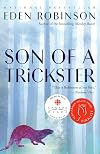
An interesting book, first in a trilogy, that is nothing like what you expect. Or at least nothing like what I expected, going in. The characters are interesting, and surprisingly complex as you find out more about them. I was expecting a fantasy plot, but fantasy only really figures into the last third of the book or so. I think the hardest thing to adapt to in the book was the way the author, Eden Robinson, addresses time - or rather, does not address time. It can be difficult to tell how show more much time has passed between chapters, or when something is a sudden flashback or time jump. I struggled with that for about three chapters, and then I caught on to the way Robinson is writing. Beyond that, the book grabs you quite well, and despite it being completely unlike what I thought it was going to be, it was a fantastic and refreshing read. Very excited to read the rest of the trilogy. show less
Jared is a teenager living in Kitimat in northern B.C. with his native mom and her current boyfriend, Richie. Jared’s got the normal problems of teenagers — alcohol, drugs, sex, and surviving high school. Plus his mom is somewhat challenging even when she’s not drunk, or high on coke, or out of her head on meth. At least Jared has some elderly neighbours, the Jaks, that he likes. And he’s got a hobby, baking cookies. Okay, they are not your ordinary cookies, but at least gaining the show more label “Cookie Dude” by the stoner crowd is some kind of acceptance at school. And now Sarah, the Jaks’ granddaughter, has come to stay with them. Sarah is smart and sassy and beautifully weird. And if he could ignore the talking fireflies buzzing around her head, she’d be great.
Eden Robinson brings Jared and his friends entirely to life in this novel. That’s no small feat since Jared’s life will be outside the experience zone of most readers, I think. He’s funny and sensitive and sweet but life for him is especially hard. It probably doesn’t help that there are rumours that he’s not entirely human, that he’s really the offspring of the Trickster god, Wee’git. And just like that, Robinson is able to weave the mythic into her gritty realism in such a way that the reader just takes it as one more of the many things weighing down Jared’s life.
That has a double edge. Because life is hard enough without also learning that you and your mom and others are at the mercy of not-so-friendly gods and witches. If this mythic world is real — and certainly it is consistently taken as real in the novel — then it seems very unfair. Yet one hesitates to think what all this means if the mythic here is not real.
As the novel develops, Jared’s interactions with the spirit-world increase with numerous consequences. Alas, just as things are taking a turn, this novel ends. Just one of the dangers of reading something that turns out to be a trilogy. Now I’ll definitely have to track down the next two books in the series. And all of Eden Robinson’s other writings as well.
Easily recommended. show less
Eden Robinson brings Jared and his friends entirely to life in this novel. That’s no small feat since Jared’s life will be outside the experience zone of most readers, I think. He’s funny and sensitive and sweet but life for him is especially hard. It probably doesn’t help that there are rumours that he’s not entirely human, that he’s really the offspring of the Trickster god, Wee’git. And just like that, Robinson is able to weave the mythic into her gritty realism in such a way that the reader just takes it as one more of the many things weighing down Jared’s life.
That has a double edge. Because life is hard enough without also learning that you and your mom and others are at the mercy of not-so-friendly gods and witches. If this mythic world is real — and certainly it is consistently taken as real in the novel — then it seems very unfair. Yet one hesitates to think what all this means if the mythic here is not real.
As the novel develops, Jared’s interactions with the spirit-world increase with numerous consequences. Alas, just as things are taking a turn, this novel ends. Just one of the dangers of reading something that turns out to be a trilogy. Now I’ll definitely have to track down the next two books in the series. And all of Eden Robinson’s other writings as well.
Easily recommended. show less
Lists
Female Author (2)
Magic Realism (2)
Awards


You May Also Like


Associated Authors
Statistics
- Works
- 8
- Also by
- 7
- Members
- 2,121
- Popularity
- #12,135
- Rating
- 4.0
- Reviews
- 73
- ISBNs
- 59
- Languages
- 4
- Favorited
- 8


