
Michelle Good
Author of Five Little Indians
About the Author
Image credit: www.michellegood.ca
Works by Michelle Good
Tagged
Common Knowledge
- Birthdate
- unknown
- Gender
- female
- Education
- University of British Columbia, Canada
- Occupations
- lawyer
poet
author - Short biography
- Good is a member of the Red Pheasant Cree Nation. Her great-grandmother participated in the 1885 uprising at Frog Lake and her uncle was Big Bear. Good graduated from the University of British Columbia with a Masters of Fine Arts in Creative writing in 2014. The first draft of her debut novel, Five Little Indians, was her graduate thesis project.
- Nationality
- Canada
- Associated Place (for map)
- Canada
Members
Reviews
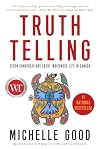
This is an important book because it recasts much of Canadian history, giving it an Indigenous perspective.
In addition to being an important book, it's a good read. Well written, moving and thought-provoking.
The story of the letter a young Michelle wrote to her mother while in foster care broke my heart. The newspaper ads offering Indigenous children for adoption as if they were puppies made me angry (and broke my heart).
It is hard to read that the Government wanted to eliminate the show more Aboriginal peoples. Michelle Good thinks that may still be the case. The book doesn't provide easy answers as to how to fix things. Rather, the author argues for greater understanding through truth telling. A difficult, but necessary, start. show less
In addition to being an important book, it's a good read. Well written, moving and thought-provoking.
The story of the letter a young Michelle wrote to her mother while in foster care broke my heart. The newspaper ads offering Indigenous children for adoption as if they were puppies made me angry (and broke my heart).
It is hard to read that the Government wanted to eliminate the show more Aboriginal peoples. Michelle Good thinks that may still be the case. The book doesn't provide easy answers as to how to fix things. Rather, the author argues for greater understanding through truth telling. A difficult, but necessary, start. show less
I think this book should be required reading for every person of settler ancestry in Canada. It explains how the policies of the colonialists did such substantial harm to the Indigenous peoples. And it explains how those policies continued to be promulgated into quite recent times. It will probably make you feel very uncomfortable. It certainly made me feel that way. But I encourage you to keep reading because Good has a message for how we can achieve reconciliation with our Indigenous show more neighbours.
Michelle Good probably now regrets giving Buffy Sainte-Marie as an example of people affected by the Sixties' Scoop. CBC has certainly cast doubt on whether she is even of Indigenous ancestry. In another chapter Good talks about "Pretendians" (non-Indigenous people who pretend to be Indigenous) and she is pretty scathing for those people who pretend to be Indigenous for material gain. She likens them to invasive plants that do harm to their surroundings. She has another category of non-Indigenous people "who have long history of association with Indigenous Peoples and communities in a good way and are welcomed and adopted into the community." These people are like naturalized plants which spread into non-native environments but don't harm the existing native plants. Buffy Sainte-Marie is probably a naturalized plant. show less
Michelle Good probably now regrets giving Buffy Sainte-Marie as an example of people affected by the Sixties' Scoop. CBC has certainly cast doubt on whether she is even of Indigenous ancestry. In another chapter Good talks about "Pretendians" (non-Indigenous people who pretend to be Indigenous) and she is pretty scathing for those people who pretend to be Indigenous for material gain. She likens them to invasive plants that do harm to their surroundings. She has another category of non-Indigenous people "who have long history of association with Indigenous Peoples and communities in a good way and are welcomed and adopted into the community." These people are like naturalized plants which spread into non-native environments but don't harm the existing native plants. Buffy Sainte-Marie is probably a naturalized plant. show less
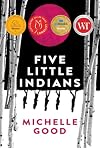
A difficult book to read because of the subject matter. It made me both sad and angry. Very well written, this story of five young adults who were raised in Residential School shows how the system wronged them in so many ways, leaving them unprepared for life back in their communities or in the city. What struck me was how fiction can, as the author has said, sometimes get at the truth better than nonfiction. It certainly gets at the deep emotional impacts of Residential Schools -- emotions show more readers can relate to.
I sometimes (rarely) read novels about dystopian futures. What struck me reading this book is that these characters lived in a dystopia -- a foreign culture that they were ill equipped to navigate. show less
I sometimes (rarely) read novels about dystopian futures. What struck me reading this book is that these characters lived in a dystopia -- a foreign culture that they were ill equipped to navigate. show less
This was a wildly moving novel spanning decades following the lives of five children who survive a residential school in British Columbia. The book doesn't just depict their time in the system, it follows them after release, showing how wholly unprepared they were for the world beyond its walls. The façade of education they received only masked years of neglect, abuse, and trauma. Upon entry into society, they are met not with support but with continued cruelty and systemic racism. Each show more perspective is rendered with care and nuance, giving space to their traumas, resilience, and attempts to reclaim their lives. It was impossible not to feel for them, my notes are basically just their names surrounded by broken hearts. Lucy, Kenny, Maisie, Clara, Howie. Their experiences are fictionalized, but tragically rooted in very real history, making this an emotionally devastating and necessary read. It is written with compassion and clarity, weaving their stories into a haunting narrative. The injustices here are not confined to the past, they ripple outward, generationally, and continue to shape lives. There is no undoing that harm, no sufficient reparation. This book is part of the work of remembering, witnessing, and honouring those who lived it. It should be required reading. show less
Lists
READ IN 2021 (1)
Awards


You May Also Like


Statistics
- Works
- 2
- Members
- 830
- Popularity
- #30,756
- Rating
- 4.2
- Reviews
- 34
- ISBNs
- 15
- Languages
- 1