
Leanne Simpson
Author of As We Have Always Done
About the Author
Works by Leanne Simpson
Associated Works
Fantasy Magazine, Issue 60 (December 2016) - People of Colo(u)r Destroy Fantasy! Special Issue (2016) — Contributor — 32 copies, 1 review
Telegrams from Home, Vol. 1 — Contributor — 2 copies
Tagged
Common Knowledge
- Legal name
- Simpson, Leanne Betasamosake
- Birthdate
- 1971
- Gender
- female
- Education
- University of Manitoba
- Nationality
- Canada
- Birthplace
- Wingham, Ontario, Canada
- Associated Place (for map)
- Ontario, Canada
Members
Reviews
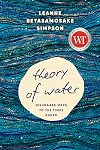
“In his book The Nation on No Map: Black Anarchism and Abolition, Wiliam C. Anderson asks us to consider a vision of politics that “no longer has the state as its object or horizon and eschews the calcified forms of politics as usual… where the state is no longer the horizon of possibility or the telos of struggle.”
This is a relief to read, even as it also marks a lonely path. This vision of politics means no more apologies, no more Royal Commissions and National Inquiries, no more show more Assembly of First Nations, Indian Act, Self-Government Agreement, Rights, Court – no more, no more, no more. No more begging neoliberalism for recognition. No more begging for charges and convictions. No more being bound up in the cyclical terror of never-ending court cases, negotiations and research projects so tightly controlled that the predetermined outcomes include pacifying resistance. It is a relief, and it also places me on a different trajectory from many others engaged in Indigenous struggle. I don’t mean to fault those who have tried and continue to try to make life and living better for First Nations people and our communities, and I don’t mean to diminish the gains they have made with issues such as clean drinking water or housing, for example. But I do mean that we must study and examine our strategies. And I do mean to bask, even if briefly, in the flight path opened up by changing the horizon.”
– Leanne Betasamosake Simpson, Theory of Water: Nishnaabe Maps to the Times Ahead show less
This is a relief to read, even as it also marks a lonely path. This vision of politics means no more apologies, no more Royal Commissions and National Inquiries, no more show more Assembly of First Nations, Indian Act, Self-Government Agreement, Rights, Court – no more, no more, no more. No more begging neoliberalism for recognition. No more begging for charges and convictions. No more being bound up in the cyclical terror of never-ending court cases, negotiations and research projects so tightly controlled that the predetermined outcomes include pacifying resistance. It is a relief, and it also places me on a different trajectory from many others engaged in Indigenous struggle. I don’t mean to fault those who have tried and continue to try to make life and living better for First Nations people and our communities, and I don’t mean to diminish the gains they have made with issues such as clean drinking water or housing, for example. But I do mean that we must study and examine our strategies. And I do mean to bask, even if briefly, in the flight path opened up by changing the horizon.”
– Leanne Betasamosake Simpson, Theory of Water: Nishnaabe Maps to the Times Ahead show less
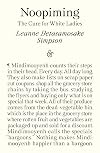
This is one of the strangest, most interesting and experimental books I've ever read, and I loved it. It explores the impact colonialism had and continues to have on First Nations peoples through allegory, fable and poetry.
If I say there are radical Uber-using raccoons in it and a caribou with a Fjällräven backpack and a voice recorder, and they're deadpan funny, you might get an impression.
It has encouraged me to rethink my whole approach to the world of work, which is structured to crush show more individuality, and find ways to let go. Woot! show less
If I say there are radical Uber-using raccoons in it and a caribou with a Fjällräven backpack and a voice recorder, and they're deadpan funny, you might get an impression.
It has encouraged me to rethink my whole approach to the world of work, which is structured to crush show more individuality, and find ways to let go. Woot! show less
As we have always done : indigenous freedom through radical resistance by Leanne Betasamosake Simpson
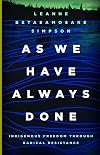
Leanne Betasamosake Simpson's "As we have always done" provides the reader with an intersectional analysis for a radical resurgence that rejects the colonial politics of recognition and seeks Indigenous resurgence on Indigenous terms.
There are many strengths in this thesis, including critiques of capitalism and industrialism as they intersect with the settler colonial state to dispossess Indigenous peoples of land; critiques of patriarchy and gender stereotypes, and their intersection with show more law (i.e. the Indian Act); and critiques of legal constructions of recognition including reserve vs urban, status vs non-status. Through these critiques, Simpson offers the reader an alternative ideology, one that prioritizes Nishinaabewin, connections to land, community and culture, and alternative modes of production in line with these concepts that allow for an Indigenous resurgence.
A weakness in Simpson's work, however, is her choice of terminology when addressing LGBTQ2S+ issues and their intersections with Indigenous radical resurgence. In discussing the very important and very real oppressions that Indigenous LGBTQ2S+ people face, Simpson chooses to use the term "2SQ". This inadvertently excludes those who do not identify with either of those labels, but whom understand themselves to be a part of the group described. Indigenous Lesbians, Bisexuals, Gay men, and Trans people (among others) who do not view themselves as either Queer or Two-Spirit are incidentally left out, or applied a label they do not apply to themselves.
Overall, this is an excellent work that provides the reader with a fantastic starting point to further formulate grounded normativity and a radical resurgence as applicable to their particular situations. show less
There are many strengths in this thesis, including critiques of capitalism and industrialism as they intersect with the settler colonial state to dispossess Indigenous peoples of land; critiques of patriarchy and gender stereotypes, and their intersection with show more law (i.e. the Indian Act); and critiques of legal constructions of recognition including reserve vs urban, status vs non-status. Through these critiques, Simpson offers the reader an alternative ideology, one that prioritizes Nishinaabewin, connections to land, community and culture, and alternative modes of production in line with these concepts that allow for an Indigenous resurgence.
A weakness in Simpson's work, however, is her choice of terminology when addressing LGBTQ2S+ issues and their intersections with Indigenous radical resurgence. In discussing the very important and very real oppressions that Indigenous LGBTQ2S+ people face, Simpson chooses to use the term "2SQ". This inadvertently excludes those who do not identify with either of those labels, but whom understand themselves to be a part of the group described. Indigenous Lesbians, Bisexuals, Gay men, and Trans people (among others) who do not view themselves as either Queer or Two-Spirit are incidentally left out, or applied a label they do not apply to themselves.
Overall, this is an excellent work that provides the reader with a fantastic starting point to further formulate grounded normativity and a radical resurgence as applicable to their particular situations. show less
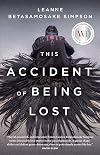
Simpson uses fiction as a vehicle to tell the truth.
And when fiction feels true, or real, it makes it all that much better. Her short fiction has distinctive multiple voices but I can feel her author’s touch in all of them and she makes me think about how I could be a better author or writer.
Her work as a musician means that her poetry reads and sounds like music. What I adore about her poetry is that it is not forced, it does not feel abstract in any way, I understand almost all of her show more poems which is a rare thing. Sometimes, with other authors, I just have to accept that if I read a poetry collection, I’m reading it for the language but not so with Simpson’s work.
Her work is so grounded and unapologetic — it’s sentimental and sweet and her creativity feels sacred, like nothing can touch it. I love that when I read her works I feel like she’s there within the story itself. She’s not a puppeteer, steering the character’s from above, but she’s weaving the story like a tapestry and telling it as she weaves, so that I feel like her fiction is a living, breathing thing.
Simpson feels like someone who is so surrounded by fiction that it just pours out of her. I actually also really enjoyed how she wrote social media interactions in her short fiction. They feel actually authentic rather than manufactured and forced, as though writing on social media or using hashtags is somehow beneath all other authors. How many books have we all read that feature teenagers talking to each other via text using random acronyms and anagrams and bizarre vocab that we, as young people who regularly use social media, have never even seen before?
Although, I will be curious to see how this book ages. What will happen to Instagram in 10 years time? Although Simpson doesn’t reference it directly, it’s odd to think about the fact that technology will change so much in the next five years, let alone 10.
Her writing was so commanding but she felt so comfortable in her prowess. I loved this book. show less
And when fiction feels true, or real, it makes it all that much better. Her short fiction has distinctive multiple voices but I can feel her author’s touch in all of them and she makes me think about how I could be a better author or writer.
Her work as a musician means that her poetry reads and sounds like music. What I adore about her poetry is that it is not forced, it does not feel abstract in any way, I understand almost all of her show more poems which is a rare thing. Sometimes, with other authors, I just have to accept that if I read a poetry collection, I’m reading it for the language but not so with Simpson’s work.
Her work is so grounded and unapologetic — it’s sentimental and sweet and her creativity feels sacred, like nothing can touch it. I love that when I read her works I feel like she’s there within the story itself. She’s not a puppeteer, steering the character’s from above, but she’s weaving the story like a tapestry and telling it as she weaves, so that I feel like her fiction is a living, breathing thing.
Simpson feels like someone who is so surrounded by fiction that it just pours out of her. I actually also really enjoyed how she wrote social media interactions in her short fiction. They feel actually authentic rather than manufactured and forced, as though writing on social media or using hashtags is somehow beneath all other authors. How many books have we all read that feature teenagers talking to each other via text using random acronyms and anagrams and bizarre vocab that we, as young people who regularly use social media, have never even seen before?
Although, I will be curious to see how this book ages. What will happen to Instagram in 10 years time? Although Simpson doesn’t reference it directly, it’s odd to think about the fact that technology will change so much in the next five years, let alone 10.
Her writing was so commanding but she felt so comfortable in her prowess. I loved this book. show less
Lists
KW Wishlist (1)
Five star books (1)
Awards


You May Also Like


Associated Authors
Statistics
- Works
- 14
- Also by
- 3
- Members
- 1,357
- Popularity
- #18,943
- Rating
- 4.2
- Reviews
- 33
- ISBNs
- 59
- Languages
- 1
- Favorited
- 2

