
Lee Maracle (1950–2021)
Author of I Am Woman: A Native Perspective on Sociology and Feminism
About the Author
Works by Lee Maracle
“Oratory” 1 copy
Oratory : coming to theory 1 copy
Talking to the diaspora 1 copy
Mink Returns to Tkaronto 1 copy
Associated Works
Reinventing the Enemy's Language: Contemporary Native Women's Writings of North America (1997) — Contributor — 182 copies, 1 review
The Colour of Resistance: A Contemporary Collection of Writing by Aboriginal Women (1993) — Contributor — 31 copies
Tagged
Common Knowledge
- Other names
- Carter, Marguerite Aline (birth)
- Birthdate
- 1950-07-02
- Date of death
- 2021-11-11
- Gender
- female
- Occupations
- university professor
teacher - Relationships
- George, Chief Dan (grandparent)
- Cause of death
- heart failure (complications)
- Nationality
- Canada
Stó:lō Nation - Birthplace
- North Vancouver, British Columbia, Canada
- Place of death
- Surrey, British Columbia, Canada
- Associated Place (for map)
- British Columbia, Canada
Members
Reviews
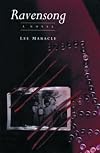
Salish- Métis author Lee Maracle’s 1993 novel Ravensong doesn’t centre around queerness or lesbian sexuality in the way that you might expect in a book reviewed here. It’s a beautiful and powerful novel about settler and Indigenous relations regardless, but its main character Stacey, a young Salish woman living on a reserve in the 1950s, isn’t explicitly or implicity queer (although she is potentially queer, I would say, given Maracle’s take on sexuality). There is, however, a show more lesbian couple who feature as secondary characters in Ravensong, and I think their inclusion is really significant, for a few reasons. Mostly, I find the way that the novel deals with queer sexuality in relation to its politics of decolonization fascinating. In fact, I think honing in on how the novel deals with queerness is a great way to understand what it’s trying to do in terms of decolonizing. The absence in Ravensong of an explicit assertion of queerness, the fact that it doesn’t “come out,” as it were, as a queer text, is no failure at all but rather indicates an entirely different method of interrogating issues of queer sexuality...
See the rest of the review on my website: http://caseythecanadianlesbrarian.wordpress.com/2012/11/25/a-review-of-lee-marac... show less
See the rest of the review on my website: http://caseythecanadianlesbrarian.wordpress.com/2012/11/25/a-review-of-lee-marac... show less
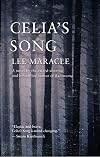
I haven't read Maracle's Ravensong, in which the title character (Celia) first appears. Apparently readers wanted to hear more about Celia, and this book focuses on her to some degree, but not only her. Celia has visions, appears to be able to cross time and space, and a shape-shifting mink acts as a witness for her, her family, and the past. Other important characters include a two-headed serpent, the bones of ancestors, and members of Celia's family, who have experienced horror and tragedy show more and will do so again. Their resistance and resilience is powerful and potent, and brings life and hope through incredibly difficult events. This is not always an easy book to read, but very important and will stay with me for a very long time.
This is the first book by Maracle I have read, and will put Ravensong (and others of her works) on my "to read" list now! show less
This is the first book by Maracle I have read, and will put Ravensong (and others of her works) on my "to read" list now! show less
The first hundred pages of this book are amazing.
The story follows a shape-shifting witness called mink who observes Celia and her family deal with the horrific effects of colonialism. Meanwhile, a two headed spirit-serpent grows restless from the community's rejection of the old way of loving. The serpent tries to feed upon and tear apart the community while the community tries to learn to live with their trauma and the changes in their lives. The beginning of the book of filled with show more interesting characters, thoughtful meditations, and a unique form of magic realism grounded in indigenous mythology. Towards the end of the story, the framing device of the witness falls away much to the detriment of the quality of the book. The end of the book feels quite hurried and doesn't seem to quite fit with the rest of the book.
I still really loved reading this, and I think it's an important book in spite of the writing toward the end. show less
The story follows a shape-shifting witness called mink who observes Celia and her family deal with the horrific effects of colonialism. Meanwhile, a two headed spirit-serpent grows restless from the community's rejection of the old way of loving. The serpent tries to feed upon and tear apart the community while the community tries to learn to live with their trauma and the changes in their lives. The beginning of the book of filled with show more interesting characters, thoughtful meditations, and a unique form of magic realism grounded in indigenous mythology. Towards the end of the story, the framing device of the witness falls away much to the detriment of the quality of the book. The end of the book feels quite hurried and doesn't seem to quite fit with the rest of the book.
I still really loved reading this, and I think it's an important book in spite of the writing toward the end. show less

Bobbie Lee Indian Rebel is a memoir of Lee Maracle’s first twenty years in Vancouver and Toronto. Twenty years filled with racism, poverty, violence, drug and alcohol use, and family dysfunction. “Colonialism stole everything”. Maracle courageously shares the darkest and most difficult times of her early years. It is easy to understand her shutting down emotionally and her acknowledged lack of self worth amidst the trauma of living in a racist society. “The umbilical cord of terror show more we inherited from our imprisoned parents.”
Right from the start though, Maracle had a hunger for meaning and this is likely what kept her going through her darkest times in Toronto and back home in BC. Maracle details her interest in Marxism and leftist politics and outlines her involvement in the Indigenous resistance movement Native Alliance for Red Power (NARP) modeled after the Black Panther Party. In a 1990 update at the end of the book (the original story was recorded in 1975) Maracle brings us forward another 15 years in her life including the birth of her children. show less
Right from the start though, Maracle had a hunger for meaning and this is likely what kept her going through her darkest times in Toronto and back home in BC. Maracle details her interest in Marxism and leftist politics and outlines her involvement in the Indigenous resistance movement Native Alliance for Red Power (NARP) modeled after the Black Panther Party. In a 1990 update at the end of the book (the original story was recorded in 1975) Maracle brings us forward another 15 years in her life including the birth of her children. show less
Lists
Awards


You May Also Like


Associated Authors
Statistics
- Works
- 25
- Also by
- 13
- Members
- 802
- Popularity
- #31,797
- Rating
- 4.1
- Reviews
- 15
- ISBNs
- 55
- Languages
- 1
- Favorited
- 2