
Élisa Shua Dusapin
Author of Winter in Sokcho
About the Author
Image credit: Elisa Shua Dusapin
Works by Élisa Shua Dusapin
Damals waren wir unzertrennlich 2 copies
Tagged
Common Knowledge
- Canonical name
- Dusapin, Élisa Shua
- Birthdate
- 1992-10-23
- Gender
- female
- Education
- Swiss University of the Arts, Bern, Switzerland
- Occupations
- author
- Nationality
- Switzerland (citizenship)
France (birth) - Birthplace
- France
- Places of residence
- Paris, France
Seoul, South Korea
Porrentruy, Jura, Switzerland
Bressaucourt, Jura, Switzerland
Members
Reviews
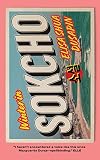
Real Rating: 4.75* of five, rounded up out of respect for the difficult job this terrific tale presented its translator
I CHECKED THIS BOOK OUT OF MY LOCAL LIBRARY. USE THOSE LIBRARIES! THEY NEED US, AND WE NEED THEM.
My Review: I can't say too much, because there isn't one helluva lot of book here.
This is the most Duras thing I've read that wasn't set in France. This is what Impressionism looks like in words. This is the way you take a simple, even banal, story of a young woman whose life is in neutral and chunk it into first gear without using the clutch.
You can feel a good, faithful translation. It fits and it means something you won't ever find anywhere else. This is a good, faitful translation by that metric. I haven't read the French but, should it ever swim across my bow, I will grab it and gobble it down to see how the flavor of fugu feels in French.
Mother and daughter at daggers drawn, sisters locked in battle, no one is getting a leg up on anyone else in this bitter little pill. It's always the family that makes you feel the worst when they could choose to give you their best. It's certainly true that South Korean culture is the epicenter of the plastic surgery world. The pressure to "look perfect" whatever that means there is powerful, and it's astonishing to me how high the percentage of South Koreans who've had serious work done is. It's no surprise that Jun-Oh, the narrator's boyfriend, is caught up in it...it makes sense, in that world, and her categorical refusal to give in to the not-subtle pressures he puts on her, her mother puts on her, and her mother's sister puts on her to "fix her flaws" is proof to me that this is someone I'd like to spend more time with.
Food is a huge part of this read...you'll read words in Korean that aren't translated, eg tteok, and it's on you to go figure out what the heck they are, or not if you don't care. I like that in a book. I will figure out what a tteok is (a rice cake made with steamed flour made of various grains, including glutinous or non-glutinous rice) and why it would smell of cold oil (some meal-base versions, not desserts, are fried) if I decide it means something to me. In a nutshell, the plot is nothing; in reality, it is Everything...how we mistreat our intimates without really giving it a thought; how we form alliances and attachments that never ever get to the surface of our lives (poor old Park!); how completely we fail to find our world's gifts until they make the gravity double and the body sink into a slough of despond with their absence.
Most of all, though, reading this beautiful book is an exercise in allowing words to do their work in you. You are not there, you more than likely have never been there, but through the magic of fiction here you are:
Don't miss the chance to read this book. It is a FINALIST for the 2021 Best Translated Literature category at the National Book Awards! The winner will be announced this evening. show less
I CHECKED THIS BOOK OUT OF MY LOCAL LIBRARY. USE THOSE LIBRARIES! THEY NEED US, AND WE NEED THEM.
My Review: I can't say too much, because there isn't one helluva lot of book here.
He’d never understand what Sokcho was like. You had to be born here, live through the winters. The smells, the octopus. The isolation.show more
–and–
A rubber-gloved hand pointed us in the right
direction.
Too much of everything. Too big, too cold, too empty. The clatter of our shoes on the marble slabs rang out.
–and–
Oozing winter and fish, Sokcho waited. That was Sokcho, always waiting, for tourists, boats, men, spring.
This is the most Duras thing I've read that wasn't set in France. This is what Impressionism looks like in words. This is the way you take a simple, even banal, story of a young woman whose life is in neutral and chunk it into first gear without using the clutch.
You can feel a good, faithful translation. It fits and it means something you won't ever find anywhere else. This is a good, faitful translation by that metric. I haven't read the French but, should it ever swim across my bow, I will grab it and gobble it down to see how the flavor of fugu feels in French.
Mother and daughter at daggers drawn, sisters locked in battle, no one is getting a leg up on anyone else in this bitter little pill. It's always the family that makes you feel the worst when they could choose to give you their best. It's certainly true that South Korean culture is the epicenter of the plastic surgery world. The pressure to "look perfect" whatever that means there is powerful, and it's astonishing to me how high the percentage of South Koreans who've had serious work done is. It's no surprise that Jun-Oh, the narrator's boyfriend, is caught up in it...it makes sense, in that world, and her categorical refusal to give in to the not-subtle pressures he puts on her, her mother puts on her, and her mother's sister puts on her to "fix her flaws" is proof to me that this is someone I'd like to spend more time with.
Food is a huge part of this read...you'll read words in Korean that aren't translated, eg tteok, and it's on you to go figure out what the heck they are, or not if you don't care. I like that in a book. I will figure out what a tteok is (a rice cake made with steamed flour made of various grains, including glutinous or non-glutinous rice) and why it would smell of cold oil (some meal-base versions, not desserts, are fried) if I decide it means something to me. In a nutshell, the plot is nothing; in reality, it is Everything...how we mistreat our intimates without really giving it a thought; how we form alliances and attachments that never ever get to the surface of our lives (poor old Park!); how completely we fail to find our world's gifts until they make the gravity double and the body sink into a slough of despond with their absence.
Most of all, though, reading this beautiful book is an exercise in allowing words to do their work in you. You are not there, you more than likely have never been there, but through the magic of fiction here you are:
All night long the town was entombed in frost. The temperature fell to minus twenty-seven degrees, the first time it had happened in years. Curled up under the covers, I blew on my hands and rubbed them between my thighs. Outside, against the onslaught of ice, the waves struggled to resist, moving ever more slowly and heavily, cracking as they collapsed in defeat on the shoreline. I bundled myself up in my overcoat, the only way I could find sleep.
–and–
The rain hammered down, the sea rising beneath it in spikes like the spines of a sea urchin.
–and–
‘What I mean is you may have had your wars, I’m sure there are scars on your beaches, but that’s all in the past. Our beaches are still waiting for the end of a war that’s been going on for so long people have stopped believing it’s real. They build hotels, put up neon signs, but it’s all fake, we’re on a knife-edge, it could all give way any moment. We’re living in limbo. In a winter that never ends.’
Don't miss the chance to read this book. It is a FINALIST for the 2021 Best Translated Literature category at the National Book Awards! The winner will be announced this evening. show less
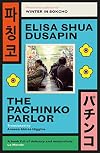
The Publisher Says: The days are beginning to draw in. The sky is dark by seven in the evening. I lie on the floor and gaze out of the window. Women’s calves, men’s shoes, heels trodden down by the weight of bodies borne for too long.
It is summer in Tokyo. Claire finds herself dividing her time between tutoring twelve-year-old Mieko, in an apartment in an abandoned hotel, and lying on the floor at her grandparents: daydreaming, playing Tetris and listening to the sounds from the street show more above. The heat rises; the days slip by.
The plan is for Claire to visit Korea with her grandparents. They fled the civil war there over fifty years ago, along with thousands of others, and haven’t been back since. When they first arrived in Japan, they opened Shiny, a pachinko parlor. Shiny is still open, drawing people in with its bright, flashing lights and promises of good fortune. And as Mieko and Claire gradually bond, a tender relationship growing, Mieko’s determination to visit the pachinko parlor builds.
The Pachinko Parlor is a nuanced and beguiling exploration of identity and otherness, unspoken histories, and the loneliness you can feel amongst family. Crisp and enigmatic, Shua Dusapin’s writing glows with intelligence.
I RECEIVED A DRC FROM THE PUBLISHER VIA EDELWEISS+. THANK YOU.
My Review: I'm aware of two things about this read, two very strong responses that wouldn't be elicited by any other read I've encountered this year: 1) Food looms very, very large in my experience of a story. This book, it's Claire and her inability to enjoy any food she encounters in Japan. 2) Author Shua Dusapin builds very intricate clockworks of interdependent imagery to support her stories of women without pleasure in the worlds they're in. The recurring fish-object images in this book join Winter in Sokcho's cold, echoing spaces. I mean, when a child's desire to act on the world is performed in explicit imitation of a cleaner fish, and a train pulling into a station summons from its immensity and speed the idea of a fish in Claire, our main character, then the author's going about her business with a degree of bravura that demands to be noted. As to whether it worked, I cannot say. I noticed it...I never thought of not noticing it...but derived nothing but the most facile conclusions from its obviousness. Me, or the choice? A case is readily made for either.
Claire's visit to her Korean grandparents, whose lives have taken them to batten on the economic lifeblood of their erstwhile colonizers, is always...off. Claire has little knowledge of Korean to offer in her attempts to connect with them. None of them deign to speak Japanese among themselves. So, to skirt around the grandparental reticence with their native language (a reticence they did not demonstrate with Claire's Swiss boyfriend, she notes) and still manage to communicate, they use English. Another colonial tongue...one associated in Korea with the US...another occupying power, though perhaps more palatable (!) because it's used by the Japanese's modern overlords.
Pachinko earns profits for her Korean grandparents...the only legal way for Japanese to gamble, or Koreans to earn...Japan making an apology for its colonial past? Or simply making it obvious who the vampires sucking the country's vice income into themselves are. Both...either...not for nothing is Japan's food disagreeable to Claire. Its artifice (a description of a raspberry atop a dessert was so revolting I had to put the book down:
...it made something lush and luscious sound so unheathily slimy!) is removed from nature, is devoid of dirt or even signs of human hands in its preparation...something very Japanese about that. And Claire's not having it inside her, not willingly anyway.
Mieko serves as Claire's out, her means of contributing something to this life she's temporarily trapped in (it's a visit, not an emigration!) and unhappily isolated within. Mieko is a young Japanese girl whose mother hires Claire to teach French. (Which is odd, given the mother's fluency...permaybehaps seeking a genuinely French accent? from a Swiss Korean?) Mieko's, um, a little odd. Her ordinary-kid desires, eg going to theme parks or eating, are all as not-Japanese as is Claire's role in her life of teaching her a European language. Mieko is for Claire, unsurprisingly, the friend whose strangeness meets one's own in silent weirdo communion.
Claire's main failing as a character is simply that she is so passive. She drifts, she causes nothing to happen...teaching Mieko French and acting as her escort to theme parks aren't things Claire causes or even proposes...and, in the end, her presence changes nothing. The grandparents she's there to visit aren't communicative, make no demands and accept no role in the granddaughter who came around the world to enable a much-mooted visit to Korea for them's life while she's there. The visit itself, a "return" to a country that the grandparents left before there was a North or a South or an American- or Chinese-backed state, is...inconclusive. Did it happen? We aren't vouchsafed that information...Claire's climbing a gangway, thinking her grandparents are behind her...and they aren't.
What makes me not-best-pleased about that ending, that tunnel Claire's climbing to visit a place she's not been to, she's there to allow others to experience before they die...is the fact that it does nothing like an ending to resolve the family's generational hurts. It's a story about a disintegrating family's stop at a roadside attraction on its way somewhere and suddenly the stop's over but not everyone's in the car.
It is, in other words, a bit too much like Winter in Sokcho to be ignored. That tale's very French-feeling plot of plotlessness as families unite around the goal of making everyone feel as miserable as possible worked because it was the author's introduction to the Anglophone reading world. It's no less beautifully wrapped in sentences here, the imagery is lovely, but...it's not my first trip to the well.
I am glad I read this story. I am eager to see what else the author has in mind for me to read in future. I hope it will ring more than a change of scenery on the story next time. Once was enough; twice a bit troublesome; no more now, if you please. show less
It is summer in Tokyo. Claire finds herself dividing her time between tutoring twelve-year-old Mieko, in an apartment in an abandoned hotel, and lying on the floor at her grandparents: daydreaming, playing Tetris and listening to the sounds from the street show more above. The heat rises; the days slip by.
The plan is for Claire to visit Korea with her grandparents. They fled the civil war there over fifty years ago, along with thousands of others, and haven’t been back since. When they first arrived in Japan, they opened Shiny, a pachinko parlor. Shiny is still open, drawing people in with its bright, flashing lights and promises of good fortune. And as Mieko and Claire gradually bond, a tender relationship growing, Mieko’s determination to visit the pachinko parlor builds.
The Pachinko Parlor is a nuanced and beguiling exploration of identity and otherness, unspoken histories, and the loneliness you can feel amongst family. Crisp and enigmatic, Shua Dusapin’s writing glows with intelligence.
I RECEIVED A DRC FROM THE PUBLISHER VIA EDELWEISS+. THANK YOU.
My Review: I'm aware of two things about this read, two very strong responses that wouldn't be elicited by any other read I've encountered this year: 1) Food looms very, very large in my experience of a story. This book, it's Claire and her inability to enjoy any food she encounters in Japan. 2) Author Shua Dusapin builds very intricate clockworks of interdependent imagery to support her stories of women without pleasure in the worlds they're in. The recurring fish-object images in this book join Winter in Sokcho's cold, echoing spaces. I mean, when a child's desire to act on the world is performed in explicit imitation of a cleaner fish, and a train pulling into a station summons from its immensity and speed the idea of a fish in Claire, our main character, then the author's going about her business with a degree of bravura that demands to be noted. As to whether it worked, I cannot say. I noticed it...I never thought of not noticing it...but derived nothing but the most facile conclusions from its obviousness. Me, or the choice? A case is readily made for either.
Claire's visit to her Korean grandparents, whose lives have taken them to batten on the economic lifeblood of their erstwhile colonizers, is always...off. Claire has little knowledge of Korean to offer in her attempts to connect with them. None of them deign to speak Japanese among themselves. So, to skirt around the grandparental reticence with their native language (a reticence they did not demonstrate with Claire's Swiss boyfriend, she notes) and still manage to communicate, they use English. Another colonial tongue...one associated in Korea with the US...another occupying power, though perhaps more palatable (!) because it's used by the Japanese's modern overlords.
Pachinko earns profits for her Korean grandparents...the only legal way for Japanese to gamble, or Koreans to earn...Japan making an apology for its colonial past? Or simply making it obvious who the vampires sucking the country's vice income into themselves are. Both...either...not for nothing is Japan's food disagreeable to Claire. Its artifice (a description of a raspberry atop a dessert was so revolting I had to put the book down:
I look down at my tart. A single raspberry glistens atop a lump of whipped cream. Compact and rubbery-looking. I pick up my knife, cut the tart into sections and start eating. It tastes fatty. I spit it out into my napkin. The raspberry stares up at me, still intact, coated in a film of jelly.
...it made something lush and luscious sound so unheathily slimy!) is removed from nature, is devoid of dirt or even signs of human hands in its preparation...something very Japanese about that. And Claire's not having it inside her, not willingly anyway.
Mieko serves as Claire's out, her means of contributing something to this life she's temporarily trapped in (it's a visit, not an emigration!) and unhappily isolated within. Mieko is a young Japanese girl whose mother hires Claire to teach French. (Which is odd, given the mother's fluency...permaybehaps seeking a genuinely French accent? from a Swiss Korean?) Mieko's, um, a little odd. Her ordinary-kid desires, eg going to theme parks or eating, are all as not-Japanese as is Claire's role in her life of teaching her a European language. Mieko is for Claire, unsurprisingly, the friend whose strangeness meets one's own in silent weirdo communion.
Claire's main failing as a character is simply that she is so passive. She drifts, she causes nothing to happen...teaching Mieko French and acting as her escort to theme parks aren't things Claire causes or even proposes...and, in the end, her presence changes nothing. The grandparents she's there to visit aren't communicative, make no demands and accept no role in the granddaughter who came around the world to enable a much-mooted visit to Korea for them's life while she's there. The visit itself, a "return" to a country that the grandparents left before there was a North or a South or an American- or Chinese-backed state, is...inconclusive. Did it happen? We aren't vouchsafed that information...Claire's climbing a gangway, thinking her grandparents are behind her...and they aren't.
What makes me not-best-pleased about that ending, that tunnel Claire's climbing to visit a place she's not been to, she's there to allow others to experience before they die...is the fact that it does nothing like an ending to resolve the family's generational hurts. It's a story about a disintegrating family's stop at a roadside attraction on its way somewhere and suddenly the stop's over but not everyone's in the car.
It is, in other words, a bit too much like Winter in Sokcho to be ignored. That tale's very French-feeling plot of plotlessness as families unite around the goal of making everyone feel as miserable as possible worked because it was the author's introduction to the Anglophone reading world. It's no less beautifully wrapped in sentences here, the imagery is lovely, but...it's not my first trip to the well.
I am glad I read this story. I am eager to see what else the author has in mind for me to read in future. I hope it will ring more than a change of scenery on the story next time. Once was enough; twice a bit troublesome; no more now, if you please. show less
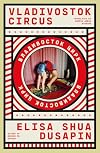
Rating: 4* of five
The Publisher Says: Tonight is the opening night. There are birds perched everywhere, on the power lines, the guy ropes, the strings of light that festoon the tent . . . when I think of all those little bodies suspended between earth and sky, it makes me smile to remind myself that for some of them, their first flight begins with a fall.
Nathalie arrives at the circus in Vladivostok, Russia, fresh out of fashion school in Geneva. She is there to design the costumes for a show more trio of artists who are due to perform one of the most dangerous acts of all: the Russian Bar.
As winter approaches, the season at Vladivostok is winding down, leaving the windy port city empty as the performers rush off to catch trains, boats and buses home; all except the Russian bar trio and their manager. They are scheduled to perform at a festival in Ulan Ude, just before Christmas.
What ensues is an intimate and beguiling account of four people learning to work with and trust one another. This is a book about the delicate balance that must be achieved when flirting with death in such spectacular fashion, set against the backdrop of a cloudy ocean and immersing the reader into Dusapin’s trademark dreamlike prose.
I RECEIVED A DRC FROM THE PUBLISHER VIA EDELWEISS+. THANK YOU.
My Review: In less time than it takes Houellebecq to clear his throat in The Possibility of an Island, a book which goes on a similar trip, Dusapin starts and finishes this story. Nathalie is a woman who leaves, finds, and abandons in a country that, unluckily for the author, is an international pariah at the time her novel appears in English. Even more unluckily, it features a Ukrainian acrobat performing in a Russian circus troupe. So, through no fault of her own, Dusapin has created an artifact of a bygone time in this story.
Swiss-educated Nathalie has a fashion degree, which she is using in Vladivostok, Siberia, to work with a troupe of acrobats as they pursue a very difficult performance piece. So, already the theme of leaving is prominent: She left tidy, bourgeois Switzerland for the extreme edge of the wildest place in a wild country, Siberia, at the edge of Russia. The country is itself at the edge of the Asian continent; something I think a lot of people forget is that Korea, Dusapin's previously centered culture, is very close to Siberia. Nathalie is now, temporarily, in a port city, working with a troupe of performers who tour with a circus, and who are practicing an extremely difficult maneuver called "the Russian Bar," a name that carries a whole different cultural freight of metaphor in 2024 than it did when she wrote the book in 2020.
This is, one would expect, the McGuffin, the thing that motivates the action but, in itself is fungible. I thought it sounded like a great McGuffin for a young woman abandoning the bourgeois life that a Swiss fashion design degree virtually condemns one to, by literally running away from home to join the bloody circus.
Only partially true.
We do indeed have the young woman (instead of Daniel, the narrator of The Possibility of an Island and my idea of "the Houellebecqian man") on a voyage of self-discovery among the acrobats. Their extremes of hard, dangerous work, their deeply set bonds of trust built from many, many painful falls and much incredibly focused work on balance and dexterity, aren't exactly subtle metaphors for the young woman who abandons an entire life in Switzerland to start afresh to encounter. The work that Nathalie does, the external and honestly almost extraneous work of dressing these finely honed athletic bodies pales beside their training. Her choreography likewise is just a way of getting them out of one position in time to enact another athletic feat, while telling a story.
So she is only a part of the externals, the appearances of the actual group...the men and women whose work and commitment to each other, to building their trust in each other, makes the act...verb and noun...possible in the first place. But this semi-outsider is the one needed to refine and design the public face, the pretty dress that they need to sell the act...verb and noun...to a group of judges.
Okay? You with me on the meaning, and the stakes?
But the McGuffin is decidedly not just the moitvator here. Author Dusapin, deft of phrase, makes this McGuffin into a deeply explored reality:
There's a lot more detail about the specifics of the Russian Bar, and while I applaud Author Dusapin for making the physicality of the act...verb and noun...so starkly plain to us, and drawing our attention to the extreme discipline it takes a woman to perform as expected under the constant pressure of a hypercritical, unseen audience, its details are rather more prominent in the story than my interest in them required. It gave me rather less pleasure, then, than Author Dusapin's previous novels did.
But let's be clear about this: I enjoyed this novel a good deal more than most. I enjoyed the lovely translation. I enjoyed the thought-provoking metaphor of acrobatic performance for a young woman's acquired presentation of self; I enjoyed the Asian setting's evocative potentials. This is a compact, intense dose of good storytelling. show less
The Publisher Says: Tonight is the opening night. There are birds perched everywhere, on the power lines, the guy ropes, the strings of light that festoon the tent . . . when I think of all those little bodies suspended between earth and sky, it makes me smile to remind myself that for some of them, their first flight begins with a fall.
Nathalie arrives at the circus in Vladivostok, Russia, fresh out of fashion school in Geneva. She is there to design the costumes for a show more trio of artists who are due to perform one of the most dangerous acts of all: the Russian Bar.
As winter approaches, the season at Vladivostok is winding down, leaving the windy port city empty as the performers rush off to catch trains, boats and buses home; all except the Russian bar trio and their manager. They are scheduled to perform at a festival in Ulan Ude, just before Christmas.
What ensues is an intimate and beguiling account of four people learning to work with and trust one another. This is a book about the delicate balance that must be achieved when flirting with death in such spectacular fashion, set against the backdrop of a cloudy ocean and immersing the reader into Dusapin’s trademark dreamlike prose.
I RECEIVED A DRC FROM THE PUBLISHER VIA EDELWEISS+. THANK YOU.
My Review: In less time than it takes Houellebecq to clear his throat in The Possibility of an Island, a book which goes on a similar trip, Dusapin starts and finishes this story. Nathalie is a woman who leaves, finds, and abandons in a country that, unluckily for the author, is an international pariah at the time her novel appears in English. Even more unluckily, it features a Ukrainian acrobat performing in a Russian circus troupe. So, through no fault of her own, Dusapin has created an artifact of a bygone time in this story.
Swiss-educated Nathalie has a fashion degree, which she is using in Vladivostok, Siberia, to work with a troupe of acrobats as they pursue a very difficult performance piece. So, already the theme of leaving is prominent: She left tidy, bourgeois Switzerland for the extreme edge of the wildest place in a wild country, Siberia, at the edge of Russia. The country is itself at the edge of the Asian continent; something I think a lot of people forget is that Korea, Dusapin's previously centered culture, is very close to Siberia. Nathalie is now, temporarily, in a port city, working with a troupe of performers who tour with a circus, and who are practicing an extremely difficult maneuver called "the Russian Bar," a name that carries a whole different cultural freight of metaphor in 2024 than it did when she wrote the book in 2020.
This is, one would expect, the McGuffin, the thing that motivates the action but, in itself is fungible. I thought it sounded like a great McGuffin for a young woman abandoning the bourgeois life that a Swiss fashion design degree virtually condemns one to, by literally running away from home to join the bloody circus.
Only partially true.
We do indeed have the young woman (instead of Daniel, the narrator of The Possibility of an Island and my idea of "the Houellebecqian man") on a voyage of self-discovery among the acrobats. Their extremes of hard, dangerous work, their deeply set bonds of trust built from many, many painful falls and much incredibly focused work on balance and dexterity, aren't exactly subtle metaphors for the young woman who abandons an entire life in Switzerland to start afresh to encounter. The work that Nathalie does, the external and honestly almost extraneous work of dressing these finely honed athletic bodies pales beside their training. Her choreography likewise is just a way of getting them out of one position in time to enact another athletic feat, while telling a story.
So she is only a part of the externals, the appearances of the actual group...the men and women whose work and commitment to each other, to building their trust in each other, makes the act...verb and noun...possible in the first place. But this semi-outsider is the one needed to refine and design the public face, the pretty dress that they need to sell the act...verb and noun...to a group of judges.
Okay? You with me on the meaning, and the stakes?
But the McGuffin is decidedly not just the moitvator here. Author Dusapin, deft of phrase, makes this McGuffin into a deeply explored reality:
Backstage, a pungent animal smell hits me. Straw scattered on the ground. Streaks of dirt on the walls. Like a stable but with velvet lining—hoops instead of horses, waist-high wooden balls, metal poles, tangles of cables, drones in the shape of planes, straw hats hanging on hooks. Leon tugs a cord and the curtains part.
–and–
She places a chair on the bar, balances it on two legs. They hold it in place for as long as they can, barely moving a muscle. Sometimes Leon is there with me. He explains to me why exercises of this kind are so important: the flyer has to rely entirely on the bases for balance and not try to stabilise herself at all. Think of Anna as the chair, he says, that’s how passive she has to be. It’s one of the hardest things about the Russian bar discipline.
There's a lot more detail about the specifics of the Russian Bar, and while I applaud Author Dusapin for making the physicality of the act...verb and noun...so starkly plain to us, and drawing our attention to the extreme discipline it takes a woman to perform as expected under the constant pressure of a hypercritical, unseen audience, its details are rather more prominent in the story than my interest in them required. It gave me rather less pleasure, then, than Author Dusapin's previous novels did.
But let's be clear about this: I enjoyed this novel a good deal more than most. I enjoyed the lovely translation. I enjoyed the thought-provoking metaphor of acrobatic performance for a young woman's acquired presentation of self; I enjoyed the Asian setting's evocative potentials. This is a compact, intense dose of good storytelling. show less
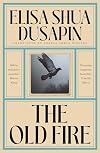
Elisa Shua Dusapin is so skilled at writing these tender, melancholic stories that are full of something so rarely shown: platonic affection. This particular book, about a fraught relationship between two sisters cleaning out their father's house after his death, ends with them sleeping back to back in one bed in the empty house, the slight contact acting as unspoken reconciliation after years of distance.
Agathe, the narrator, leaves her family in France to work in the US, returning only show more now after her father's death, to clean out her childhood home. Véra, her sister, has remained in Dordogne, and since childhood, has stopped speaking, communicating sparingly via her phone by typing out text messages. In contrast, Agathe, a screenwriter, pores over every single word she writes. Their mother left when they were young, and Agathe has been Véra's caretaker her whole life. As the years pass and Agathe leaves, the distances and silences between them grow, and Agathe is hesistant to accept the small smiles and gestures her sister offers because she knows that at the end of this process, she'll leave again. But in small tiny ways, as they clear out the debris of their childhood from their old home, they rebuild connection, with Véra tugging on Agathe's sleeve to show her it is time to leave, Agathe putting down her work to go walk in the woods with Véra. The physical landscape of Dordogne looms over them, local caves where their father was a tour guide, mushroom picking in the forest, hunters' guns echoing around them.
This is such a beautiful, slow book, tracing how language and silence allow use to bridge and separate relationships. There's so much tenderness and pain and Dusapin has chosen her words carefully, with an excellent translation by Aneesa Abbas Higgins. I look forward to anything she writes. show less
Agathe, the narrator, leaves her family in France to work in the US, returning only show more now after her father's death, to clean out her childhood home. Véra, her sister, has remained in Dordogne, and since childhood, has stopped speaking, communicating sparingly via her phone by typing out text messages. In contrast, Agathe, a screenwriter, pores over every single word she writes. Their mother left when they were young, and Agathe has been Véra's caretaker her whole life. As the years pass and Agathe leaves, the distances and silences between them grow, and Agathe is hesistant to accept the small smiles and gestures her sister offers because she knows that at the end of this process, she'll leave again. But in small tiny ways, as they clear out the debris of their childhood from their old home, they rebuild connection, with Véra tugging on Agathe's sleeve to show her it is time to leave, Agathe putting down her work to go walk in the woods with Véra. The physical landscape of Dordogne looms over them, local caves where their father was a tour guide, mushroom picking in the forest, hunters' guns echoing around them.
This is such a beautiful, slow book, tracing how language and silence allow use to bridge and separate relationships. There's so much tenderness and pain and Dusapin has chosen her words carefully, with an excellent translation by Aneesa Abbas Higgins. I look forward to anything she writes. show less
Lists
Awards


You May Also Like


Associated Authors
Statistics
- Works
- 6
- Members
- 898
- Popularity
- #28,531
- Rating
- 3.5
- Reviews
- 39
- ISBNs
- 53
- Languages
- 10
- Favorited
- 1