
Hiroko Oyamada
Author of The Factory
About the Author
Image credit: Oyamada in 2023
Works by Hiroko Oyamada
Associated Works
文学ムック たべるのがおそいvol.7 — Contributor — 1 copy
Tagged
Common Knowledge
- Legal name
- 小山田 浩子
- Birthdate
- 1983
- Gender
- female
- Nationality
- Japan
- Birthplace
- Hiroshima, Japan
- Associated Place (for map)
- Hiroshima, Japan
Members
Reviews
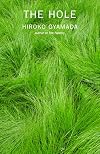
Most of Oyamada’s works are very short—100 pages or less. The Hole reads smoothly and easily and much of it is straightforward narrative. But there are mysteries: what was the animal she saw? Did she really see something at all? Does the brother-in-law even exist? Or the gang of kids at the convenience store? The family (the story is told by the young wife) has just moved to the countryside because the husband has transferred to a new job. The uninvolved/self-involved husband is a minor show more character and the wife tries to adjust to their new remoteness, exploring the area by herself. Everything speaks to isolation, both literal and figurative. She has far too much free time, one reason she is so intent on discovering what’s nearby. A series of bizarre experiences—inexplicable mysteries that are never solved or explained—raise far more questions than she can handle, leading her to question everything from her marriage to her family to her society. Fantasy-ish, magic realism-ish. Unsettling might be the best word. Not exceptional in my humble estimation but I should also point out that it won the Akutagawa Prize, so what do I know? In any case, I am intrigued enough to invest the time in another book or two of hers. I suspect that this will grow on me as time passes and I will recognize that despite the (intentionally) flat narrative voice, there is more going on here than I realize as I sit here today. show less
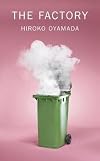
The factory is a sprawling institution in a parklike setting in an unnamed Japanese town at which many of the townspeople work. This novella follows three workers who are hired at the factory at about the same time. Yoshiko is a college graduate, but this is her fifth job, which doesn't bode well for her career path. Instead of a permanent position, she is offered a contract position in "staff support." She will spend her days shredding paper. ("document destruction"). Furfue was a post-grad show more student studying mosses when his faculty advisor practically forces him to take a position at the factory. He is hired to convert the roofs of all the buildings at the factory into "green roofs," something he insists he knows nothing about. He advises his superiors that he only knows how to classify mosses, and doesn't know any practicalities. He is told to take his time and learn. He is the only employee in his department, and spends his days walking around the campus identifying different mosses. He is well-compensated. The final employee we meet is a temporary employee in the document division whose job is to proof read documents. The documents are inane, don't appear to relate to anything (no one knows what the factory makes) but the job must be done.
Although Kafkaesque and absurdist, this is all related in a straightforward manner, at least until the end. I actually quite enjoyed this.
Some quotes:
"Maybe it's not such a bad thing to have a job you can master from the first day."
"From my second day on the job,...I never had to use a single brain cell."
"Who wrote this stuff? For what audience? To what end? Why does it need to be proofread at all? If these are all factory documents, what the hell is the factory? What's it making? I thought I knew before, but once I started working here, I realized I had no idea. What kind of factory is this?"
3 stars show less
Although Kafkaesque and absurdist, this is all related in a straightforward manner, at least until the end. I actually quite enjoyed this.
Some quotes:
"Maybe it's not such a bad thing to have a job you can master from the first day."
"From my second day on the job,...I never had to use a single brain cell."
"Who wrote this stuff? For what audience? To what end? Why does it need to be proofread at all? If these are all factory documents, what the hell is the factory? What's it making? I thought I knew before, but once I started working here, I realized I had no idea. What kind of factory is this?"
3 stars show less
In The Hole, Asa's husband transfers jobs to a location near where his parents live. His parents just so happen to have an empty house on their lot that the couple can move into rent free. Asa quits her job and during a downpour on an otherwise hot summer, the young couple moves in. Asa does her best in her new role as housewife, but with no children, no car, and a husband who is rarely there, she quickly stops looking at the calendar as her days are largely empty.
One day, while running an show more errand for her mother-in-law, she sees a strange creature, and since she's in no hurry whatsoever, follows it to the river and ends up falling, feet first, into a hole that seems like it's made just for her. After that, a series of strange and bizarre experiences happen to Asa that make her question herself more and more.
When I first finished this book, I sat it down and had the thought of, "I missed something." It wasn't until I read a few reviews that I actually started to understand--I didn't really miss anything, I just hadn't fully turned the key to make things click. Hiroko Oyamada's writing is often described as strange, some reviews have even said "Kafkaesque." I love Kafka and once I read that, it seemed to open that door in my mind a little wider and I was able to understand it a bit more.
Oyamada sets the story in a fairly normal setting, a family in a small town. There's no serious crisis in the story; Asa runs errands, lightly looks for a job, makes dinner for her husband, and meets a few neighbors. And yet, there is a feeling of blurred lines and things being just a tad bit off and you're never really able to put your finger on it.
It's not until Asa falls in the hole, a hole that seemed to fit her perfectly, that the metaphors really begin...
“It was probably four or five feet deep, but I’d managed to land on my feet … Trying to move, I realized how narrow the hole really was. It almost felt as though the hole was exactly my size—a trap made just for me.”
The Hole looks at the "hole" society creates, especially for women, that is narrow and restrictive, and that before you know it, you've fallen into and you can't get out of it. Oyamada displays a study of the pressures and expectations placed on women by Japanese society. For example, the neighbors refer to Asa only as "the bride," reducing her to her marital status and husband, and make pretty rude assumptions when they find out she doesn't have children. Her husband, when he is home and semi-attentive, complains about her cooking. Her mother-in-law, though friendly and caring, asserts her dominance over Asa even before she moves in.
Overall, I will say you may need a bit of an understanding of Japanese society, but even without, you can still pick up on what Oyamada is writing. This book just creeps you out in the slightest way and it sticks with you... did it all even happen? show less
One day, while running an show more errand for her mother-in-law, she sees a strange creature, and since she's in no hurry whatsoever, follows it to the river and ends up falling, feet first, into a hole that seems like it's made just for her. After that, a series of strange and bizarre experiences happen to Asa that make her question herself more and more.
When I first finished this book, I sat it down and had the thought of, "I missed something." It wasn't until I read a few reviews that I actually started to understand--I didn't really miss anything, I just hadn't fully turned the key to make things click. Hiroko Oyamada's writing is often described as strange, some reviews have even said "Kafkaesque." I love Kafka and once I read that, it seemed to open that door in my mind a little wider and I was able to understand it a bit more.
Oyamada sets the story in a fairly normal setting, a family in a small town. There's no serious crisis in the story; Asa runs errands, lightly looks for a job, makes dinner for her husband, and meets a few neighbors. And yet, there is a feeling of blurred lines and things being just a tad bit off and you're never really able to put your finger on it.
It's not until Asa falls in the hole, a hole that seemed to fit her perfectly, that the metaphors really begin...
“It was probably four or five feet deep, but I’d managed to land on my feet … Trying to move, I realized how narrow the hole really was. It almost felt as though the hole was exactly my size—a trap made just for me.”
The Hole looks at the "hole" society creates, especially for women, that is narrow and restrictive, and that before you know it, you've fallen into and you can't get out of it. Oyamada displays a study of the pressures and expectations placed on women by Japanese society. For example, the neighbors refer to Asa only as "the bride," reducing her to her marital status and husband, and make pretty rude assumptions when they find out she doesn't have children. Her husband, when he is home and semi-attentive, complains about her cooking. Her mother-in-law, though friendly and caring, asserts her dominance over Asa even before she moves in.
Overall, I will say you may need a bit of an understanding of Japanese society, but even without, you can still pick up on what Oyamada is writing. This book just creeps you out in the slightest way and it sticks with you... did it all even happen? show less
The factory is vast and all encompassing. Between its northern and southern components — joined by a huge long bridge over the river that flows through the factory — it has everything from countless restaurants, theatres, a bowling alley, numerous bus lines, some on-site accommodation, and more. So it’s perhaps not surprising for someone to find through the vagaries of life’s accidents that they end up working there. This novella follows three such characters: a young woman who gets show more assigned contract work as a document shredder, an engineer who is forced to take on a temp work assignment as a proofreader, and a botanist who is directed by his university supervisor to apply for a post at the factory as a bryologist (a moss specialist). None of them have ever really wanted to work in the factory, but here they are doing jobs that they are not entirely suited to. Still, it’s a living.
There is a matter of fact tone to the writing as we follow chapter by chapter the different factory lives of these workers. Things are sometimes a bit strange. But not so strange as to be alarming. Just a bit worrisome. However, over time (and time is a factor here), their engagement with the factory becomes more nuanced. Or stranger. And there’s something odd about the fauna.
This was an intriguing scenario. The writing reminded me of Magnus Mills crossed with Kafka. So, a bit alienating. Yet it was also a series of finely drawn portraits of these characters as their own existential anxiety comes to dominate their self-perspective and their relations with others. Not too surprisingly the various story lines cross before the end, but they do so in ways that are unexpected. And Oyamada also has a very curious manner of dealing with the dialogue, occurring at different times, yet mingled in the same paragraph. It forces you to periodically stop what you are doing and figure out who is saying that and when. Clearly deliberate, but to what end? I liked it.
Gently recommended for those willing to take on something just a bit out of the ordinary. show less
There is a matter of fact tone to the writing as we follow chapter by chapter the different factory lives of these workers. Things are sometimes a bit strange. But not so strange as to be alarming. Just a bit worrisome. However, over time (and time is a factor here), their engagement with the factory becomes more nuanced. Or stranger. And there’s something odd about the fauna.
This was an intriguing scenario. The writing reminded me of Magnus Mills crossed with Kafka. So, a bit alienating. Yet it was also a series of finely drawn portraits of these characters as their own existential anxiety comes to dominate their self-perspective and their relations with others. Not too surprisingly the various story lines cross before the end, but they do so in ways that are unexpected. And Oyamada also has a very curious manner of dealing with the dialogue, occurring at different times, yet mingled in the same paragraph. It forces you to periodically stop what you are doing and figure out who is saying that and when. Clearly deliberate, but to what end? I liked it.
Gently recommended for those willing to take on something just a bit out of the ordinary. show less
Lists
Awards


You May Also Like


Associated Authors
Statistics
- Works
- 6
- Also by
- 8
- Members
- 1,311
- Popularity
- #19,588
- Rating
- 3.5
- Reviews
- 65
- ISBNs
- 38
- Languages
- 10
- Favorited
- 2