
Yōko Tawada
Author of The Emissary
About the Author
Series
Works by Yōko Tawada
Yoko Tawada's Portrait of a Tongue: An Experimental Translation by Chantal Wright (Literary Translation) (2013) 22 copies
The Last Children of Tokyo 5 copies
Eine raffinierte Grenze aus Licht: Japanische Dichtung der Gegenwart (Mainzer Reihe. Neue Folge) (2023) — Editor — 2 copies
地球にちりばめられて 1 copy
Chàng Chó 1 copy
Memoires van een ijsbeer 1 copy
Persona 1 copy
Tabula rasa 1 copy
地球にちりばめられて 1 copy
To Zagreb 1 copy
Ookami Ken 1 copy
Tokió utolsó gyermekei 1 copy
Sendiboðinn 1 copy
ゴットハルト鉄道 (講談社文芸文庫) 1 copy
Bir Kutup Ayısının Anıları 1 copy
Associated Works
Digital Geishas and Talking Frogs: The Best 21st Century Short Stories from Japan (2011) — Contributor — 21 copies
Ich habe eine fremde Sprache gewählt. Ausländische Schriftsteller schreiben deutsch (1998) — Contributor — 2 copies
新潮 2018年 01月号 — Contributor — 1 copy
新潮 2019年 01月号 — Contributor — 1 copy
早稲田文学 2014年秋号 — Contributor — 1 copy
早稲田文学 2017年初夏号 (単行本) — Contributor — 1 copy
月の文学館 月の人の一人とならむ — Contributor — 1 copy
三田文学 2020年 02 月号 — Contributor — 1 copy
平成の名小説 (新潮2019年08月号増刊) — Contributor — 1 copy
群像 2019年 02月号 — Contributor — 1 copy
群像 2020年 01 月号 — Contributor — 1 copy
現代詩手帖 1996年 05月号 — Contributor — 1 copy
Kodansha's Fiction Sampler, Extraordinary Writers from Japan — Contributor — 1 copy
武蔵野美術 No.112 1999春 — Contributor — 1 copy
多和田葉子ノート — Contributor — 1 copy
すばる2018年1月号 — Contributor — 1 copy
てんでんこ 2018 第9号 — Contributor — 1 copy
現代詩手帖 2016年 01月号 — Contributor — 1 copy
現代詩手帖 2016年 02月号 — Contributor — 1 copy
現代詩手帖 2018年 01月号 — Contributor — 1 copy
現代詩手帖 2019年 12月号 現代詩年鑑2020 — Contributor — 1 copy
現代詩手帖 2020年 12月号 現代詩年鑑2021 — Contributor — 1 copy
文學界 2021年2月号 創刊1000号記念特大号 — Contributor — 1 copy
文學界2020年5月号 — Contributor — 1 copy
新潮 2010年 03月号 [雑誌] — Contributor — 1 copy
現代詩手帖 2005年 06月号 特集 境域の詩人たち―母語・母国語をめぐる旅 — Contributor — 1 copy
Tagged
Common Knowledge
- Canonical name
- Tawada, Yōko
- Birthdate
- 1960-03-23
- Gender
- female
- Education
- Waseda University (Russian Literature)
University of Hamburg (MA - Contemporary German literature)
University of Zurich (PhD - German Literature) - Organizations
- Deutsche Akademie für Sprache und Dichtung
- Awards and honors
- Adelbert von Chamisso Prize (1996)
Goethe Medal (2005)
Akutagawa Prize (1993)
Gunzo Literature Prize (1991)
Lessing Prize (1994) - Nationality
- Japan
- Birthplace
- Tokyo, Japan
- Places of residence
- Berlin, Germany
Tokyo, Japan - Associated Place (for map)
- Japan
Members
Reviews
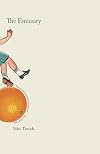
What a strange little book.
The Emissary is set in a not-so-distance future version of Japan, where eternal life has basically been achieved (i.e. everyone lives well into their hundreds and remains strong and able-bodied) but the upshot is that all the children are weak and unhealthy and age so quickly that they are all dead before they're twenty. This future Japan has also completely shut down its borders; travel to and from foreign countries has ceased and trade is a thing of the past.
The show more two main characters are Yoshiro, a former novelist, and his great-grandson Mumei, whose teeth have fallen out and who can barely walk, but still has such joy and a zest for life that his great-grandfather has completely lost. "Mumei may be frail and gray-haired, but he is a beacon full of hope: full of wit and free of self-pity."
The back cover (see the quote above) makes it sound like this book is about Yoshiro's constant state of worry over the state of Japan and his feelings of marvel at his great-grandson's innocence in the face of such calamity (a very Japanese theme). But it's just as much a book about an imagined dystopia that is all too real to its readers. The Earth itself is collapsing; fish from the polluted oceans are so contaminated as to be inedible. Tawada's Japan has adopted a nationalistic, isolationist policy: foreign words and ideas are banned. Bread that originated in Germany is rechristened with a Japanese name, and English words and phrases like "overalls" and "one, two" are taboo so that younger Japanese do not recognize those English counting words. In today's political climate, this extreme behavior is familiar.
A chilling and even (very) interesting parable but not quite a must-read. show less
The Emissary is set in a not-so-distance future version of Japan, where eternal life has basically been achieved (i.e. everyone lives well into their hundreds and remains strong and able-bodied) but the upshot is that all the children are weak and unhealthy and age so quickly that they are all dead before they're twenty. This future Japan has also completely shut down its borders; travel to and from foreign countries has ceased and trade is a thing of the past.
The show more two main characters are Yoshiro, a former novelist, and his great-grandson Mumei, whose teeth have fallen out and who can barely walk, but still has such joy and a zest for life that his great-grandfather has completely lost. "Mumei may be frail and gray-haired, but he is a beacon full of hope: full of wit and free of self-pity."
The back cover (see the quote above) makes it sound like this book is about Yoshiro's constant state of worry over the state of Japan and his feelings of marvel at his great-grandson's innocence in the face of such calamity (a very Japanese theme). But it's just as much a book about an imagined dystopia that is all too real to its readers. The Earth itself is collapsing; fish from the polluted oceans are so contaminated as to be inedible. Tawada's Japan has adopted a nationalistic, isolationist policy: foreign words and ideas are banned. Bread that originated in Germany is rechristened with a Japanese name, and English words and phrases like "overalls" and "one, two" are taboo so that younger Japanese do not recognize those English counting words. In today's political climate, this extreme behavior is familiar.
A chilling and even (very) interesting parable but not quite a must-read. show less
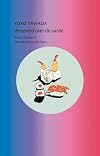
Wat een waanzinnig boek! Het verhaal is kolderiek en diepzinnig tegelijk, en eigenlijk niet samen te vatten. Het gaat over taal en vertalen, over migratie, dit alles in een soort van speculatieve setting, maar eigenlijk doet die er niet eens zoveel toe. Als je houdt van iets geks, iets anders, iets onverwachts, lees dit dan vooral. Als je graag alles begrijpt dan kan je het beter overslaan.
Het bevat dit soort zinnen: 'Ongetwijfeld waren er zelfs talen waarin een punt niet bestond. Een reis show more zonder einde. Een reis zonder onderwerp. Een reis waarvan je niet wist wie hem begon en wie hem voortzette. Een ver land. Ik wilde vertrekken naar een ver land waar adjectieven een verleden tijd hadden, waar voorzetsels achteraan werden geplaatst"
Ik heb ervan genoten. Vond alleen het einde een beetje abrupt en onbevredigend, hoewel ik dit met het citaat van hierboven in mijn hoofd misschien ook wel weer toepasselijk vind. Tawaka is trouwens een Japanse schrijfster die al heel lang in Duitsland woont, dus qua setting, stijl en thematiek wat afwijkend van andere Japanse schrijvers. show less
Het bevat dit soort zinnen: 'Ongetwijfeld waren er zelfs talen waarin een punt niet bestond. Een reis show more zonder einde. Een reis zonder onderwerp. Een reis waarvan je niet wist wie hem begon en wie hem voortzette. Een ver land. Ik wilde vertrekken naar een ver land waar adjectieven een verleden tijd hadden, waar voorzetsels achteraan werden geplaatst"
Ik heb ervan genoten. Vond alleen het einde een beetje abrupt en onbevredigend, hoewel ik dit met het citaat van hierboven in mijn hoofd misschien ook wel weer toepasselijk vind. Tawaka is trouwens een Japanse schrijfster die al heel lang in Duitsland woont, dus qua setting, stijl en thematiek wat afwijkend van andere Japanse schrijvers. show less
I read this book twice because I enjoyed it so much. I can see myself reading it a third time. It's meandering and fluid in its organization, wandering in and out of character's heads and even in and out of time. Those who like more traditionally plotted novels (like Parul Sehgal of the New York Times) maybe find themselves frustrated. I was entranced and also moved. For me the book is one of the starkest and saddest statements on the environmental devastation one generation leaves for show more another -- told metaphorically and fantastically. What if we had to witness how humanity's poor environmental actions today will affect our great-grandchildren? What if those environmental actions, in addition to destroying the Earth, destroyed our great-grandchildren physically? What if we were fine and nearly immortal while our great-grandchildren were neither fine nor immortal so we had to take care of them and watch them die? A powerful and beautiful book.
(Because of the meandering plot, I found the audiobook a little hard to follow. Reading the novel on the page worked much better for me.) show less
(Because of the meandering plot, I found the audiobook a little hard to follow. Reading the novel on the page worked much better for me.) show less
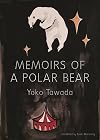
Etüden im Schnee is - amongst other things - a book about three (polar) bears and a little girl. But it's the magic-realist three bears novel that you might imagine Günter Grass, Angela Carter and Richard Adams getting together to write. Part one is narrated by the grandmother bear, who is writing her memoirs in between riding a tricycle in a Russian circus; part two is a joint effort by the East German mother bear Toska and her circus trainer Barbara, and part three is again a show more bear's-eye-view narrated by a slightly-fictionalised version of the greatest real polar-bear-celebrity of our times, Knut of the Berlin Zoo. There's also a guest appearance by a well-known US musician. Although it touches on World War II, the division and reunification of Germany, climate change, and other big topics, this isn't really a political novel - its real focus is on the relationship between people and animals. Tawada tries to get past the anthropomorphism and sentimentality to dig into what is really going on when people interact with animals. Interesting, beautifully written, and technically very ingenious, but I don't know if the result is really worth the effort.
The only obviously Japanese thing about this book was the use of coloured printed paper (with Arctic motifs) for dividers between the chapters, which I thought was a rather nice touch. Less successful was the idea of setting the entire text in Futura. I can't see what that was supposed to achieve - it is a typeface that really doesn't look good when it's packed together to fill a page. show less
The only obviously Japanese thing about this book was the use of coloured printed paper (with Arctic motifs) for dividers between the chapters, which I thought was a rather nice touch. Less successful was the idea of setting the entire text in Futura. I can't see what that was supposed to achieve - it is a typeface that really doesn't look good when it's packed together to fill a page. show less
Lists
Awards


You May Also Like


Associated Authors
Statistics
- Works
- 78
- Also by
- 52
- Members
- 2,808
- Popularity
- #9,145
- Rating
- 3.5
- Reviews
- 81
- ISBNs
- 161
- Languages
- 18
- Favorited
- 7