
Yūko Tsushima (1947–2016)
Author of Territory of Light
About the Author
Image credit: Japanorama
Works by Yūko Tsushima
Associated Works
Other Voices, Other Vistas: Short Stories from Africa, China, India, Japan, and Latin America (1992) — Contributor — 213 copies, 2 reviews
群像 2008年 01月号 [雑誌] — Contributor — 1 copy
現代詩手帖 1979年 02月号 特集・悪漢グラフィティ — Contributor — 1 copy
月刊ポエム 1978年 02月号 — Contributor — 1 copy
津島佑子: 土地の記憶、いのちの海 — Contributor — 1 copy
現代詩手帖 1977年 10月号 特集 抒情のありか・70年代の新鋭 — Contributor — 1 copy
新潮 1990年 09月号 現代SFの冒険 — Contributor — 1 copy
海 1977年06月号 — Contributor — 1 copy
カイエ 創刊号 1978年 07月号 特集・80年代文学へ向けて — Contributor — 1 copy
海 1983年6月号 現代詩1983年[1] — Contributor — 1 copy
ユリイカ 詩と批評 1977年 02月号 — Contributor — 1 copy
自然読本 夢・眠り 夜明かしする人悩む人、夢見る人は眠る人 — Contributor — 1 copy
新潮 2010年 03月号 [雑誌] — Contributor — 1 copy
るしおる (31) — Contributor — 1 copy
平成の名小説 (新潮2019年08月号増刊) — Contributor — 1 copy
津島佑子展 いのちの声をさかのぼる — Contributor — 1 copy
Tagged
Common Knowledge
- Canonical name
- Tsushima, Yūko
- Legal name
- Tsushima, Satoko
- Birthdate
- 1947-03-30
- Date of death
- 2016-02-18
- Gender
- female
- Education
- Shirayuri Women's University
- Occupations
- writer
critic - Relationships
- Dazai, Osamu (father)
- Nationality
- Japan
- Birthplace
- Mitaka, Tokyo, Japan
- Place of death
- Tokyo, Japan
- Associated Place (for map)
- Tokyo, Japan
Members
Reviews
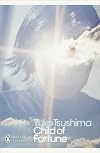
First published 1978, [b:Child of Fortune|1536879|Child of Fortune|Yūko Tsushima|https://i.gr-assets.com/images/S/compressed.photo.goodreads.com/books/1184880371l/1536879._SY75_.jpg|1529013] follows an independent woman named Koko and her tweenage daughter Kayako. Koko is divorced and effectively lives alone, as Kayako stays with Koko's sister for most of the week. It is a short novel of complex and subtle characterisation rather than plot. Koko is a compelling and sympathetic protagonist, show more although she's clearly not a good mother to Kayako. The tension of the family dynamics is shown with great insight in scenes like this:
I appreciated the sympathy and insight Tsushima had for her female characters, who were all trying their best with no real help from the feckless men in their lives. [b:Child of Fortune|1536879|Child of Fortune|Yūko Tsushima|https://i.gr-assets.com/images/S/compressed.photo.goodreads.com/books/1184880371l/1536879._SY75_.jpg|1529013] is a subtle and memorable little novel. It would have been nice if this new edition had included an afterword or translator's note, though. show less
Her sister exchanged smiling glances with her own children for a long moment, then suddenly grew serious. "But isn't there something wrong with you? They say that when your weight changes very quickly it generally means you're ill. It's awful the amount you've put on. Have you been to a doctor?"
Koko shook her head, unable to find her voice. It wasn't time yet, not until dinner was over - or so at least she consoled herself. Not only had she lost her voice, but she was beginning to feel hot under the gaze of the three children. Strange, she thought, are people really so vague about what they see in others? Passengers on a train would surely be better judges of her this bulging belly. Why were her sister and the children so very certain that she couldn't be pregnant? The unsuspecting looks on all their faces let her helplessly irritated - thought she told herself she was behaving like a child who digs a trap then feels thwarted when no one falls in.
I appreciated the sympathy and insight Tsushima had for her female characters, who were all trying their best with no real help from the feckless men in their lives. [b:Child of Fortune|1536879|Child of Fortune|Yūko Tsushima|https://i.gr-assets.com/images/S/compressed.photo.goodreads.com/books/1184880371l/1536879._SY75_.jpg|1529013] is a subtle and memorable little novel. It would have been nice if this new edition had included an afterword or translator's note, though. show less

It was around 1889 that the Ezo wolf of Hokkaido was believed to have gone extinct. The main cause, according to Hiraiwa Yonekichi in Ookami—Sono seitai to rekishi (The wolf: its ecology and history) (1981, revised ed. 1992), was the intense persecution the animal suffered at the hands of humans. By 1905, the Japanese wolf, a distinct and endemic species found only in three islands of the Japanese archipelago, went missing as well. Its extinction was largely a result of hunting, the spread show more of disease, and the loss of habitat and prey. Anecdotal reports gave information of the possibility that the wolves were still in existence beyond these dates, but the truth of these claims was in question.
In fact, the extinction of the wolf species in western Europe came before these two species: 1680 in Scotland and 1710 in Ireland. A worldwide trend indicated that the population of the species was in decline.
Hiraiwa claims that wolves went extinct so early in Europe because they were always seen as a threat to people who from ancient times had raised livestock such as sheep and cattle. They feared the wolf as man's mortal enemy, and constantly persecuted the animal by every possible means—guns, poisons, traps, and snares, even hand grenades—until they had finally eradicated them.
This natural history of wolf, including the appearance of the animal in legends and classic novels, was the subject of "Prelude", in the opening of Tsushima Yūko's novel Laughing Wolf (published in Japan in 2000). The prelude ended with the mention of the extinction of the Japanese wolf in 1905 coinciding with the end of the Russo-Japanese war, after which, Japan was again involved in a war with China and then in the world war which ended in 1945, after Japan's unconditional surrender: "The Japanese wolf was no longer around, but as things turned out, wild dogs who had lost their masters could be spotted running through the smoldering ruins of Japan's cities."
For a work of fiction it was strange to read a long precis of a nonfiction book on wolves. It was also strange, and particularly jarring, when the following chapter changed in tone and took up a different narrative thread, indicating a hybrid approach to the novel. The story turned to a father and his four-year old son living in the apocalyptic landscape and waste of postwar Japan. The two survived air bombings and were left homeless and hungry. The child's point of view could remind one of Cormac McCarthy's The Road. The child recalling his early life through hazy memories: "One day fire came pouring down from the sky. The fence burned, the house burned, his mother, brother, and sister all burned. Even the cat burned. They all vanished from the earth." Later the father also died and the child was taken to an orphanage. One event, however, particularly lingered in the boy's memory. While he and his father were sleeping in a cemetery, he witnessed the suicides of three adults. When already grown up, he investigated the deaths and even visited the house of the wife and daughter of one of the dead.
The narrative also took up the point of view of the daughter, the young girl Yuki being visited by the now grown up young man Mitsuo. The tenuous connection between them did not prevent their becoming easy friends. The young man and the girl, 17 and 12 years old, both orphaned of fathers, decided to leave Tokyo and take a train trip to the countryside.
The novel then recounted their adventures while on train journeys and stops, inadvertently witnessing the social and economic realities of postwar Japan. As with The Shooting Gallery, Tsushima's collection of translated stories, the two characters in this novel were wont to escape their present situations and to create for themselves avatars or surrogate identities. Mitsuo and Yuki took on the names Akela and Mowgli, respectively, characters from The Jungle Book by Rudyard Kipling. With their new aliases, they appropriated not only the identities of a children's book's characters but also the fictional reality associated with them. Hence, their every adventure was colored by plot elements of The Jungle Book, as well as the difficulties they faced in their takeover of Cold Lairs, the world of men, which they were seeking to understand via the book's law of the jungle—We be of one blood, ye and I.
This newly created "alternate" reality allowed the novelist Tsushima and her characters to navigate the inhospitable, savage world-at-war heightened by poverty and crimes faced by the Japanese in the 1940s. Role-playing was thus adopted as a viable strategy for the two of them, as Akela and Mowgli, to survive the world where they saw and found themselves as outsiders: "He's the leader of the wolf pack, the solitary emperor who embodies the law of the jungle. He's the reason the human child Mowgli is allowed to live on the margins of the pack. I'm not all that distinguished, but I'm taking the name [Akela] because I have responsibility for you. I'm the leader—the father, older brother, and teacher all rolled into one—and you're the apprentice. So I think Akela and Mowgli are perfect for us." And so they transformed into the wolf and the young boy, outsiders in the midst of monkeys, the "Man Pack".
Among the people they encountered in their long train journeys were homeless men traveling to work in the coal mines. After the war, when poverty and scarcity of food struck the majority of the population, some of the homeless, including children, were forced to enter into manual labor in the mines in exchange for low salaries. After this incident, where Akela and Mowgli observed the men consigned to backbreaking work, several news clippings were inserted into the text, dated December 1945 to January 1947. The news provided direct context and circumstances of child labor in the coal mines.
By the second half of the novel, the set of news clips were interspersed in the text more and more frequently. The effect was jarring. It forced collisions between what was happening in the made-up (fictional) world and the actual (real) events, and the collisions of private and public lives. In the first place the real and imagined identities of the main characters were already integrated into their respective stories. In addition, the not seamless juxtaposition of the adventures of Akela and Mowgli and the accompanying news excerpts were also forcing the collisions of individual and collective histories. The hybrid text was now bringing out human-interest stories from war-torn Japan through a clash, or perhaps a necessary confrontation, between fiction and nonfiction, to tell a larger story. These episodic news and stories concerned the aforementioned laborers in the coal mines, the corrupt police raiding trains and confiscating rice and barley from the common peasants, a serial killer of young women, a major train accident, outbreaks of epidemic diseases, and other social problems brought about by the just concluded war. With a side-by-side account of events, the novelist was inviting pairwise comparison of the fictive and the realistic, in a manner that was more interesting than the 1Q84-1984 dichotomy of Murakami Haruki in his 1Q84 (trans. Jay Rubin and Philip Gabriel). The latter novel was bogged down by didactic tendencies and narrative spoon-feeding, wrapped in a serviceable prose. Tsushima, in contrast to Murakami, had the novelistic flair to use language and plot elements in a seemingly conventional manner at first and then turn it on its head without apparent self-indulgence and self-validation.
Writing about the immediate aftermath of WWII in Japan, Tsushima was doing something interesting and innovative to the fictional form of the novel. Her technique had unassuming intelligence behind it. Laughing Wolf was a jarring text, in a provocative and brilliant sense, because it unsettled the pace and expectations of reading. The non-fictionality of past events was almost like a comment on the surrealism of the fiction-like present or future ("On a gigantic television screen atop a tall building the leaders of North and South Korea are shaking hands.").
A novel must somehow clear a path, demonstrate its mastery on the page. This novel wrote about aspects of Japanese postwar history in a manner that was not entirely beholden to the methods of conventional historical fiction. The central story of the novel—the friendship between a young man and a girl and their endless train journey—was ultimately heartwarming for its generous sympathy and understanding. show less
In fact, the extinction of the wolf species in western Europe came before these two species: 1680 in Scotland and 1710 in Ireland. A worldwide trend indicated that the population of the species was in decline.
Hiraiwa claims that wolves went extinct so early in Europe because they were always seen as a threat to people who from ancient times had raised livestock such as sheep and cattle. They feared the wolf as man's mortal enemy, and constantly persecuted the animal by every possible means—guns, poisons, traps, and snares, even hand grenades—until they had finally eradicated them.
This natural history of wolf, including the appearance of the animal in legends and classic novels, was the subject of "Prelude", in the opening of Tsushima Yūko's novel Laughing Wolf (published in Japan in 2000). The prelude ended with the mention of the extinction of the Japanese wolf in 1905 coinciding with the end of the Russo-Japanese war, after which, Japan was again involved in a war with China and then in the world war which ended in 1945, after Japan's unconditional surrender: "The Japanese wolf was no longer around, but as things turned out, wild dogs who had lost their masters could be spotted running through the smoldering ruins of Japan's cities."
For a work of fiction it was strange to read a long precis of a nonfiction book on wolves. It was also strange, and particularly jarring, when the following chapter changed in tone and took up a different narrative thread, indicating a hybrid approach to the novel. The story turned to a father and his four-year old son living in the apocalyptic landscape and waste of postwar Japan. The two survived air bombings and were left homeless and hungry. The child's point of view could remind one of Cormac McCarthy's The Road. The child recalling his early life through hazy memories: "One day fire came pouring down from the sky. The fence burned, the house burned, his mother, brother, and sister all burned. Even the cat burned. They all vanished from the earth." Later the father also died and the child was taken to an orphanage. One event, however, particularly lingered in the boy's memory. While he and his father were sleeping in a cemetery, he witnessed the suicides of three adults. When already grown up, he investigated the deaths and even visited the house of the wife and daughter of one of the dead.
The narrative also took up the point of view of the daughter, the young girl Yuki being visited by the now grown up young man Mitsuo. The tenuous connection between them did not prevent their becoming easy friends. The young man and the girl, 17 and 12 years old, both orphaned of fathers, decided to leave Tokyo and take a train trip to the countryside.
The novel then recounted their adventures while on train journeys and stops, inadvertently witnessing the social and economic realities of postwar Japan. As with The Shooting Gallery, Tsushima's collection of translated stories, the two characters in this novel were wont to escape their present situations and to create for themselves avatars or surrogate identities. Mitsuo and Yuki took on the names Akela and Mowgli, respectively, characters from The Jungle Book by Rudyard Kipling. With their new aliases, they appropriated not only the identities of a children's book's characters but also the fictional reality associated with them. Hence, their every adventure was colored by plot elements of The Jungle Book, as well as the difficulties they faced in their takeover of Cold Lairs, the world of men, which they were seeking to understand via the book's law of the jungle—We be of one blood, ye and I.
This newly created "alternate" reality allowed the novelist Tsushima and her characters to navigate the inhospitable, savage world-at-war heightened by poverty and crimes faced by the Japanese in the 1940s. Role-playing was thus adopted as a viable strategy for the two of them, as Akela and Mowgli, to survive the world where they saw and found themselves as outsiders: "He's the leader of the wolf pack, the solitary emperor who embodies the law of the jungle. He's the reason the human child Mowgli is allowed to live on the margins of the pack. I'm not all that distinguished, but I'm taking the name [Akela] because I have responsibility for you. I'm the leader—the father, older brother, and teacher all rolled into one—and you're the apprentice. So I think Akela and Mowgli are perfect for us." And so they transformed into the wolf and the young boy, outsiders in the midst of monkeys, the "Man Pack".
Among the people they encountered in their long train journeys were homeless men traveling to work in the coal mines. After the war, when poverty and scarcity of food struck the majority of the population, some of the homeless, including children, were forced to enter into manual labor in the mines in exchange for low salaries. After this incident, where Akela and Mowgli observed the men consigned to backbreaking work, several news clippings were inserted into the text, dated December 1945 to January 1947. The news provided direct context and circumstances of child labor in the coal mines.
By the second half of the novel, the set of news clips were interspersed in the text more and more frequently. The effect was jarring. It forced collisions between what was happening in the made-up (fictional) world and the actual (real) events, and the collisions of private and public lives. In the first place the real and imagined identities of the main characters were already integrated into their respective stories. In addition, the not seamless juxtaposition of the adventures of Akela and Mowgli and the accompanying news excerpts were also forcing the collisions of individual and collective histories. The hybrid text was now bringing out human-interest stories from war-torn Japan through a clash, or perhaps a necessary confrontation, between fiction and nonfiction, to tell a larger story. These episodic news and stories concerned the aforementioned laborers in the coal mines, the corrupt police raiding trains and confiscating rice and barley from the common peasants, a serial killer of young women, a major train accident, outbreaks of epidemic diseases, and other social problems brought about by the just concluded war. With a side-by-side account of events, the novelist was inviting pairwise comparison of the fictive and the realistic, in a manner that was more interesting than the 1Q84-1984 dichotomy of Murakami Haruki in his 1Q84 (trans. Jay Rubin and Philip Gabriel). The latter novel was bogged down by didactic tendencies and narrative spoon-feeding, wrapped in a serviceable prose. Tsushima, in contrast to Murakami, had the novelistic flair to use language and plot elements in a seemingly conventional manner at first and then turn it on its head without apparent self-indulgence and self-validation.
Writing about the immediate aftermath of WWII in Japan, Tsushima was doing something interesting and innovative to the fictional form of the novel. Her technique had unassuming intelligence behind it. Laughing Wolf was a jarring text, in a provocative and brilliant sense, because it unsettled the pace and expectations of reading. The non-fictionality of past events was almost like a comment on the surrealism of the fiction-like present or future ("On a gigantic television screen atop a tall building the leaders of North and South Korea are shaking hands.").
A novel must somehow clear a path, demonstrate its mastery on the page. This novel wrote about aspects of Japanese postwar history in a manner that was not entirely beholden to the methods of conventional historical fiction. The central story of the novel—the friendship between a young man and a girl and their endless train journey—was ultimately heartwarming for its generous sympathy and understanding. show less

A sparse, realistic depiction of single-motherhood in Japan during the 1970s. Undeniably a relavant text from the time and place, Territory of Light unfortunately lacks the emotional grit necessary to make a lasting impression on contemprary audiences. Despite this, I was particularly enamoured by the author's choice to not share the main character's name nor the real reason for her seperation. The occasional bits of brilliance though could not win me over. I'm completely open to this being show more a translation issue, as broadly, I felt there was a lack of attention to greater themes in the small details that may be ripe in the original. show less
I was hypnotized by this book from the very beginning. I don't read many books about mothers -- is that strange? This was constantly tipping back and forth between scenes where I read, set at a comfortable distance from the narrator and her feelings, to scenes where I identified SO INTENSELY that I was awash with sympathetic guilt, exhaustion, anxiety, or quiet awe.
At the beginning of the novel, she separates from her husband and moves into an apartment with her two-year-old daughter. Over show more the next year and a half, she attempts to make a life for herself and her daughter, while untangling them both from her husband, and figuring out how to be a good parent to a toddler while she herself is struggling. The lack of support she has coupled with the judgements she faces from all sides, and her own judgements of herself leave her frequently feeling a bit untethered and adrift -- a stress a child can't help but pick up on. The ways she both accepts and rebels against responsibility for every aspect of her daughter's behavior -- that slides from apathy if not defensive rage to guilt and panic -- cannot help but be relatable to many mothers, whether or not the specific circumstances causing those reactions are familiar.
This was such an impulse purchase for me -- I had seen the cover image over and over on Instagram, but don't think I had even read any of the reviews. I am very glad to have discovered this one. A quiet, deeply empathetic novel. show less
At the beginning of the novel, she separates from her husband and moves into an apartment with her two-year-old daughter. Over show more the next year and a half, she attempts to make a life for herself and her daughter, while untangling them both from her husband, and figuring out how to be a good parent to a toddler while she herself is struggling. The lack of support she has coupled with the judgements she faces from all sides, and her own judgements of herself leave her frequently feeling a bit untethered and adrift -- a stress a child can't help but pick up on. The ways she both accepts and rebels against responsibility for every aspect of her daughter's behavior -- that slides from apathy if not defensive rage to guilt and panic -- cannot help but be relatable to many mothers, whether or not the specific circumstances causing those reactions are familiar.
This was such an impulse purchase for me -- I had seen the cover image over and over on Instagram, but don't think I had even read any of the reviews. I am very glad to have discovered this one. A quiet, deeply empathetic novel. show less
Lists
Awards


You May Also Like


Associated Authors
Statistics
- Works
- 21
- Also by
- 32
- Members
- 1,387
- Popularity
- #18,533
- Rating
- 3.8
- Reviews
- 29
- ISBNs
- 62
- Languages
- 8
- Favorited
- 2