
Raymond F. Jones (1915–1994)
Author of This Island Earth
About the Author
Image credit: http://raymondfjones.tripod.com/farthest.htm
Series
Works by Raymond F. Jones
The Person from Porlock 5 copies
Rat Race [short story] 3 copies
Der Mann zweier Welten 3 copies
Cybernetic Brain 1ST Edition 2 copies
The Seven Jewels Of Chamar 2 copies
The Martian Circe 2 copies
The River and the Dream 1 copy
The Nonstatistical Man 1 copy
The Cybernetic Brain 1 copy
The Cat and the King (Complete Collection of Short Stories by Raymond F. Jones Book 6) (2014) 1 copy
Non-Statisical Man, The 1 copy
℗L'℗incubo dei Syn 1 copy
Stay off the Moon! 1 copy
This Island Earth - The Original Editions — Author — 1 copy
3 per la vecchia luna 1 copy
Person From Porlock 1 copy
Il signore dell'universo 1 copy
The Children's Room 1 copy
DOOMSDAY MORNING 1 copy
The Lions Of Rome 1 copy
The Alien Machine 1 copy
La fine del silenzio 1 copy
Associated Works
Isaac Asimov Presents : The Golden Years of Science Fiction, 4th Series (1984) — Contributor — 101 copies, 1 review
They Came From Outer Space: 12 Classic Science Fiction Tales That Became Major Motion Pictures (1980) — Contributor — 91 copies, 1 review
Science Fiction Tales: Invaders, Creatures and Alien Worlds (1973) — Contributor — 38 copies, 1 review
Science-Fiction Classics: The Stories That Morphed Into Movies (1999) — Contributor — 24 copies, 1 review
Analog Science Fact/Science Fiction: Vol. LXVIII, No. 6 (February 1962) (1962) — Contributor — 11 copies
Astounding Science Fiction 1946 06 — Contributor — 7 copies
The far side of time, thirteen original stories;: A science fiction anthology (1974) — Contributor — 6 copies
Tagged
Common Knowledge
- Legal name
- Jones, Raymond Fisher
- Other names
- Anderson, David
- Birthdate
- 1915-11-15
- Date of death
- 1994-01-24
- Gender
- male
- Education
- University of Utah
- Occupations
- science fiction writer
- Organizations
- The Church of Jesus Christ of Latter-day Saints
- Short biography
- R. F. Jones est un écrivain américain né en 1915 à Salt Lake City. Son roman Les survivants de l'infini a été porté à l'écran en 1955. Ce fut, avec Planète interdite, l'un des deux bons films de S-F de l'époque.
- Nationality
- USA
- Birthplace
- Salt Lake City, Utah, USA
- Places of residence
- Salt Lake City, Utah, USA
- Place of death
- Sandy City, Utah, USA
- Associated Place (for map)
- Utah, USA
Members
Discussions
Heads up in Good Show Sir! — bad science fiction and fantasy covers (December 2025)
Reviews

Back in the 1950s, Galaxy Science Fiction began a series of reprint paperback novels which they gave away with issues of the magazine. After 35 issues, the novel series was sold to Beacon Books, who were known for publishing mildly pornographic romance paperbacks. As a result, the Galaxy novels issued by Beacon were “edited” to add sexual content.
The Deviates was the second of this series - what’s the opposite of bowdlerised? there needs to be a word for this; maybe we should adopt show more “beaconised” - and was originally published by Avalon Books as The Secret People. In a US recovering from a nuclear war, the genetic viability of all people is tracked and only those who won’t sire mutants are certified as “breeders”. It’s an old, and discredited, trope, but it was popular in the 1950s and produced some notable works, such as The Long Tomorrow, Leigh Brackett, ‘Created He Them’, Alice Eleanor Jones, and ‘That Only a Mother’, Judith Merrill. The head of the Central Genetic Institute is Robert Wellton, who is secretly a “deviate”, but he has used his position to hide that fact.
Wellton’s deviation is beneficial - he is a telepath. So he has doctored the records such that his sperm has been used to father hundreds of children, all of whom exhibit telepathy. He has helped these “Children” to escape to a hidden village in forests in the north. (Wasn’t there an actual news story about a sperm bank doctor who used his own sperm to fertilise ova? There might have even been more than one.) Wellton comes under suspicion and so flees to the Children. But they’re no longer onboard with his mission to gradually improve humanity. They’ve built an atomic-powered spaceship - from knowing only first principles! - and want to go to Mars.
I’ve read Jones before. I don’t remember him sermonising so much. I know early US sf writers had a tendency to do so - hello, RAH! - and some of the crap they spouted barely flew in the 1950s and is now thoroughly discredited or debunked, or just plain offensive in the 21st century. Jones’s plot is based on eugenics, and a poor understanding of genetics, which is bad - but his moral arguments are more misguided than offensive.
And yet, The Deviates is supposed to be the “spiced up” version of The Secret People, and I could find nothing in it which wouldn’t have seen print in a 1956 sf novel from a major imprint. A later novel in the Beacon series, The Mating Cry by AE van Vogt, was based on van Vogt’s The House That Stood Still, which happens to be a favourite sf novel, and at least I spotted the content that had been added by Beacon (reader, it did not improve the book). I haven't read The Secret People, but I couldn’t see anything in The Deviates that might have been added by Beacon.
Oh, and the cover is a complete - and unsurprising - misrepresentation. There are no ripped blouses in the novel, and Wellton’s only “power” over women is a result of his position at the Central Genetic Institute (he can legally prevent them from having babies - see?).
Maybe the cover is the spiced up bit of the story? show less
The Deviates was the second of this series - what’s the opposite of bowdlerised? there needs to be a word for this; maybe we should adopt show more “beaconised” - and was originally published by Avalon Books as The Secret People. In a US recovering from a nuclear war, the genetic viability of all people is tracked and only those who won’t sire mutants are certified as “breeders”. It’s an old, and discredited, trope, but it was popular in the 1950s and produced some notable works, such as The Long Tomorrow, Leigh Brackett, ‘Created He Them’, Alice Eleanor Jones, and ‘That Only a Mother’, Judith Merrill. The head of the Central Genetic Institute is Robert Wellton, who is secretly a “deviate”, but he has used his position to hide that fact.
Wellton’s deviation is beneficial - he is a telepath. So he has doctored the records such that his sperm has been used to father hundreds of children, all of whom exhibit telepathy. He has helped these “Children” to escape to a hidden village in forests in the north. (Wasn’t there an actual news story about a sperm bank doctor who used his own sperm to fertilise ova? There might have even been more than one.) Wellton comes under suspicion and so flees to the Children. But they’re no longer onboard with his mission to gradually improve humanity. They’ve built an atomic-powered spaceship - from knowing only first principles! - and want to go to Mars.
I’ve read Jones before. I don’t remember him sermonising so much. I know early US sf writers had a tendency to do so - hello, RAH! - and some of the crap they spouted barely flew in the 1950s and is now thoroughly discredited or debunked, or just plain offensive in the 21st century. Jones’s plot is based on eugenics, and a poor understanding of genetics, which is bad - but his moral arguments are more misguided than offensive.
And yet, The Deviates is supposed to be the “spiced up” version of The Secret People, and I could find nothing in it which wouldn’t have seen print in a 1956 sf novel from a major imprint. A later novel in the Beacon series, The Mating Cry by AE van Vogt, was based on van Vogt’s The House That Stood Still, which happens to be a favourite sf novel, and at least I spotted the content that had been added by Beacon (reader, it did not improve the book). I haven't read The Secret People, but I couldn’t see anything in The Deviates that might have been added by Beacon.
Oh, and the cover is a complete - and unsurprising - misrepresentation. There are no ripped blouses in the novel, and Wellton’s only “power” over women is a result of his position at the Central Genetic Institute (he can legally prevent them from having babies - see?).
Maybe the cover is the spiced up bit of the story? show less
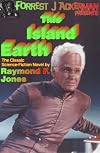
I’ve always wanted an interociter.
The movie version of This Island Earth has been a staple of science fiction movies on television for a very long time. It’s even been immortalized by Mystery Science Theater 3000: The Movie. I didn’t even know that the movie was based on a book from one of the “golden ages” of science fiction.
It’s a pretty simple story by science fiction standards, but it’s fun to read, keeping in mind that this is 1940s-1950s science fiction.
The novel was show more originally published in serialized form in Thrilling Wonder Stories, with its first installment appearing in 1949. That date is probably significant in accounting for some of the differences between the book and the movie. The movie dates from 1955.
IN 1949, World War II was still fresh in American minds. The very title, This Island Earth, is meant to express an analogy between the small Pacific islands used by the great military powers of World War II and Earth’s place in the intergalactic war at the core of the book.
The story begins, like the movie, with Cal Meacham. Here Meacham has a relatively run-of-the-mill job as an engineer, with production responsibilities for run-of-the-mill radio and electronic products. In response to an order to a supplier for condensers, his office receives some inexplicable substitutes from some place called “Electronic Service - Unit Sixteen.”
Meacham tries to figure out who Unit 16 is and gets a catalog sent to him containing all sorts of exotic sounding electronic components. He orders the parts (over four thousand of them) to build something in the catalog called an interociter. He has no idea what an interociter is or what it does. But it sure seems like a great idea to build one, turn it on, and see what happens! What could go wrong?
Meacham assembles the interociter, and it turns out that in doing so, he’s passed an aptitude test and earns a job offer from a secret group called the Peace Engineers. He takes the job and a pilotless airplane flight to his new job in Arizona overseeing production of those very same interociters.
Everything seems a little bit off with the Peace Engineers, and Meacham, with his new girlfriend, Ruth Adams, gradually figure some things out. The more they figure out, the more is revealed to them by the Peace Engineers’ local leader, Jorgasnovara.
All is eventually revealed — the intergalactic war that the Peace Engineers are involved in, what the interociter really is (mostly), and what Earth’s place in this bigger picture is. Things will come to a head as Earth’s insignificance in the bigger picture becomes painfully obvious. Remember what happened to those Pacific islands in World War II.
Then it’s up to Cal to save the day.
The first half of the book is pretty faithfully portrayed by the movie. There are differences. Cal is a brilliant radio engineer, but in a run-of-the-mill job before he meets the Peace Engineers, as opposed to the “VIP” scientist he is in the movie. The author, Raymond F. Jones, was himself a radio engineer, and Cal Meacham seems to be a hero version of himself.
But things in the second half of the book are very different from what came out in the movie. In the movie, Earth is enlisted to help in a “small” war between two planets, the inhabitants of Metaluna (the interociter folks) and their enemies. Here, the war is intergalactic in scale, with many planets and intelligent races combined — that giant stage of war with Earth an insignificant and unknowing player, like the Pacific Islanders of World War II.
The outcome of the story is different, as well. The earthlings bring a new perspective to the Peace Engineers. I won’t spoil the ending, but it all has something to do with Jorgasnovara’s remark that, “You [earthlings] have an imagination, and an inquisitiveness which we have seldom encountered elsewhere.”
Cool for us. show less
The movie version of This Island Earth has been a staple of science fiction movies on television for a very long time. It’s even been immortalized by Mystery Science Theater 3000: The Movie. I didn’t even know that the movie was based on a book from one of the “golden ages” of science fiction.
It’s a pretty simple story by science fiction standards, but it’s fun to read, keeping in mind that this is 1940s-1950s science fiction.
The novel was show more originally published in serialized form in Thrilling Wonder Stories, with its first installment appearing in 1949. That date is probably significant in accounting for some of the differences between the book and the movie. The movie dates from 1955.
IN 1949, World War II was still fresh in American minds. The very title, This Island Earth, is meant to express an analogy between the small Pacific islands used by the great military powers of World War II and Earth’s place in the intergalactic war at the core of the book.
The story begins, like the movie, with Cal Meacham. Here Meacham has a relatively run-of-the-mill job as an engineer, with production responsibilities for run-of-the-mill radio and electronic products. In response to an order to a supplier for condensers, his office receives some inexplicable substitutes from some place called “Electronic Service - Unit Sixteen.”
Meacham tries to figure out who Unit 16 is and gets a catalog sent to him containing all sorts of exotic sounding electronic components. He orders the parts (over four thousand of them) to build something in the catalog called an interociter. He has no idea what an interociter is or what it does. But it sure seems like a great idea to build one, turn it on, and see what happens! What could go wrong?
Meacham assembles the interociter, and it turns out that in doing so, he’s passed an aptitude test and earns a job offer from a secret group called the Peace Engineers. He takes the job and a pilotless airplane flight to his new job in Arizona overseeing production of those very same interociters.
Everything seems a little bit off with the Peace Engineers, and Meacham, with his new girlfriend, Ruth Adams, gradually figure some things out. The more they figure out, the more is revealed to them by the Peace Engineers’ local leader, Jorgasnovara.
All is eventually revealed — the intergalactic war that the Peace Engineers are involved in, what the interociter really is (mostly), and what Earth’s place in this bigger picture is. Things will come to a head as Earth’s insignificance in the bigger picture becomes painfully obvious. Remember what happened to those Pacific islands in World War II.
Then it’s up to Cal to save the day.
The first half of the book is pretty faithfully portrayed by the movie. There are differences. Cal is a brilliant radio engineer, but in a run-of-the-mill job before he meets the Peace Engineers, as opposed to the “VIP” scientist he is in the movie. The author, Raymond F. Jones, was himself a radio engineer, and Cal Meacham seems to be a hero version of himself.
But things in the second half of the book are very different from what came out in the movie. In the movie, Earth is enlisted to help in a “small” war between two planets, the inhabitants of Metaluna (the interociter folks) and their enemies. Here, the war is intergalactic in scale, with many planets and intelligent races combined — that giant stage of war with Earth an insignificant and unknowing player, like the Pacific Islanders of World War II.
The outcome of the story is different, as well. The earthlings bring a new perspective to the Peace Engineers. I won’t spoil the ending, but it all has something to do with Jorgasnovara’s remark that, “You [earthlings] have an imagination, and an inquisitiveness which we have seldom encountered elsewhere.”
Cool for us. show less
Pretty good 50's sci-fi. An engineer gets involved with a company that seems to have some extraordinarily advanced equipment but whats their secret?
It occasionally approaches greatness with analogies of how small nations get used in the wars of great nations. The author also seems to have a major issue with unions. It does feel a little serial at times, there's some late developments which i'm sure weren't planned from the start.
The writing is bit simple, it also tries to keep up the show more mystery elements for a lot longer than it needs too. It constantly teases plot turns which don't usually occur.
It's female character is... i don't know what she is. She has multiple degrees and is usually shown to be the smartest person in the room but nobody listens to her and she doesn't seem to mind, she has a weird submissive nature. The whole thing felt feminist and misogynistic at the same time.
Not much else to say without giving away the plot, this was turned into a B-Movie but i don't know how similar it is to the book. show less
It occasionally approaches greatness with analogies of how small nations get used in the wars of great nations. The author also seems to have a major issue with unions. It does feel a little serial at times, there's some late developments which i'm sure weren't planned from the start.
The writing is bit simple, it also tries to keep up the show more mystery elements for a lot longer than it needs too. It constantly teases plot turns which don't usually occur.
It's female character is... i don't know what she is. She has multiple degrees and is usually shown to be the smartest person in the room but nobody listens to her and she doesn't seem to mind, she has a weird submissive nature. The whole thing felt feminist and misogynistic at the same time.
Not much else to say without giving away the plot, this was turned into a B-Movie but i don't know how similar it is to the book. show less
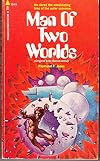
A science fiction novel published in 1951. I have never read any of Raymond F. Jones' 16 novels, but If I had done in my teenage years I would have enjoyed this one. The novel was first serialised in the magazine Astounding in 1944 and was later published by Gnome Press in 1951 as a novel, reprinted in 1963 under the title Man of Two Worlds.
It has a fairly complicated plot, but Jones holds it together well, with some atmospheric world building especially the planet Kronweld. Ketan by show more profession is a seeker after knowledge and spends his time engaged with a massive computer system called the Karildex. He finds that some information has been blocked off and when an old woman accosts him in the great hall, she tells him of a plot by the rulers to keep some knowledge hidden. He is also warned by his female companion Elta not to challenge the ruling triumvirate. The mystery surrounds the temple of birth where some selected young women go to assist with procreation as there has not been a child born outside the temple in living memory. A religious cult has sprung up based on the temple and when Ketan breaks into the temple he discovers a gateway to another world and the world is earth. On Earth there is a war going on between the Statists a high tech group and the Illegitimates a more primitive culture, the Statists are planning an assault on Kronweld in order to seek knowledge to build an atomic bomb. There are also the Restorationists hidden deep in the desert who are attempting to restore the scientific culture that was once the pride of Earth before the cataclysm.
Jones does not hold back on the action and just about manages all the elements before they run out of control. He has time to create mysteries around his characters: as to who they are working for?, are they who they seem variety? and he poses questions about the viability of re-imposing a culture that has previously destroyed itself in a conflagration. It is a page turner to discover how the author can make sense of all the balls he has juggling in the air, but he does a fairly good job. His character development is no worse than much of the writing of this period and he has some strong female personalities and he handles dialogue well enough. There is plenty of subject matter to provide that sense of wonder essential to much science fiction; there is a full scale battle of atomic laser weapons, there are portals to other planets, treks through hostile environments, advanced technology and 3D laser imagery. An absence of sexism and racism is refreshing and so overall a 3.5 star read. show less
It has a fairly complicated plot, but Jones holds it together well, with some atmospheric world building especially the planet Kronweld. Ketan by show more profession is a seeker after knowledge and spends his time engaged with a massive computer system called the Karildex. He finds that some information has been blocked off and when an old woman accosts him in the great hall, she tells him of a plot by the rulers to keep some knowledge hidden. He is also warned by his female companion Elta not to challenge the ruling triumvirate. The mystery surrounds the temple of birth where some selected young women go to assist with procreation as there has not been a child born outside the temple in living memory. A religious cult has sprung up based on the temple and when Ketan breaks into the temple he discovers a gateway to another world and the world is earth. On Earth there is a war going on between the Statists a high tech group and the Illegitimates a more primitive culture, the Statists are planning an assault on Kronweld in order to seek knowledge to build an atomic bomb. There are also the Restorationists hidden deep in the desert who are attempting to restore the scientific culture that was once the pride of Earth before the cataclysm.
Jones does not hold back on the action and just about manages all the elements before they run out of control. He has time to create mysteries around his characters: as to who they are working for?, are they who they seem variety? and he poses questions about the viability of re-imposing a culture that has previously destroyed itself in a conflagration. It is a page turner to discover how the author can make sense of all the balls he has juggling in the air, but he does a fairly good job. His character development is no worse than much of the writing of this period and he has some strong female personalities and he handles dialogue well enough. There is plenty of subject matter to provide that sense of wonder essential to much science fiction; there is a full scale battle of atomic laser weapons, there are portals to other planets, treks through hostile environments, advanced technology and 3D laser imagery. An absence of sexism and racism is refreshing and so overall a 3.5 star read. show less
Lists
Awards


You May Also Like


Associated Authors
Statistics
- Works
- 75
- Also by
- 45
- Members
- 1,101
- Popularity
- #23,343
- Rating
- 3.7
- Reviews
- 22
- ISBNs
- 84
- Languages
- 5