
Michael Waldman (1) (1960–)
Author of The Second Amendment: A Biography
For other authors named Michael Waldman, see the disambiguation page.
About the Author
Michael Waldman was one of the few aides to work closely with president Bill Clinton from the first day of his presidency until nearly the end of the term. He played a key role on controversial issues from campaign finance reform to free trade. Previously, he was a writer & public interest lawyer & show more the author of "Who Robbed America? A Citizen's Guide to the S&L Scandal." (Bowker Author Biography) show less
Image credit: Wikipedia
Works by Michael Waldman
Associated Works
Tagged
Common Knowledge
- Birthdate
- 1960
- Gender
- male
- Education
- Columbia University (BA)
New York University School of Law (JD) - Occupations
- attorney
speechwriter
political advisor - Organizations
- Public Citizen, Congress Watch
Clinton presidential administration
NYU School of Law, Brennan Center for Justice (president, CEO) - Nationality
- USA
- Associated Place (for map)
- USA
Members
Reviews
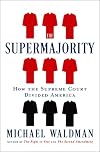
Supermajority: How the Supreme Court Divided America digs into the history of the US Supreme Court before focusing its attention on the make-up of today’s court and how it came to be the way it is. It’s a critical analysis of the Court’s conservative supermajority and its impact on American democracy.
Author Michael Waldman is both a lawyer and a historian. He served under President Clinton, first as a special assistant for policy coordination, and from 1995 to 1999 as the director of show more speechwriting. In this position Waldman had a hand in four State of the Union and two inaugural addresses. He is the author of six previous books including The Fight to Vote and The Second Amendment: A Biography. He is also the current president and CEO of the Brennan Center for Justice at NYU School of Law, a nonpartisan law and policy institute that works to revitalize the nation’s systems of democracy and justice.
In this latest book (released in June of 2023) Waldman delves into the history of the Supreme Court, tracing its trajectory from its very beginnings through landmark cases like Dred Scott v. Sandford and Plessy v. Ferguson and on to more progressive rulings such as Brown v. Board of Education and Obergefell v. Hodges.
He then reviews the additions to the Court under Presidents Trump and Biden before examining the court’s decisions during the tumultuous 2021–2022 term, focusing on three significant rulings. With those rulings the author notes that “Over three days in June 2022, the Supreme Court changed America”.
These decisions included the Dobbs decision that overturned Roe v. Wade, which put both reproductive freedom and other privacy rights at risk; Bruen, which loosened gun control regulations amidst mass shootings; and West Virginia v. EPA which placed limits on government agencies’ ability to address public health and climate change using a never before heard of “major issues doctrine”.
Waldman argues persuasively that the recent actions of the court represent a radical departure from established legal norms and threaten to undo decades of social progress. In particular he explores the notions of originalism and textualism favored by conservative judges. These judicial “philosophies” seek to interpret the Constitution based on the original intentions of the Founding Fathers and the original meanings of the words in the Constitution and the law.
“Now”, Waldman says, “originalism is having its big moment, and its flaws are on full display.”
“Let’s shed any illusions: today’s justices are not conservative because they are originalists; they are originalists because it is conservative. They fly a flag of convenience. Today’s reigning doctrine is a product of a half century of political organizing to change how the Supreme Court and country understood the Constitution. Having at last achieved success, proponents act as if this newly minted vision is unchanging, and unchallengeable. It is, in fact, a form of living constitutionalism.”
In Waldman’s view the Founders expected the Constitution to evolve with society, a view at odds with the approaches employed by the conservative supermajority on the current Court.
Early in the book Waldman talks about what happens when the Supreme Court is extreme, ideological, partisan or otherwise departs from the public consensus. This has happened three times before he says. The first time was with the Dred Scott decision, which “propelled the rise of Abraham Lincoln’s Republican Party and helped to provoke the Civil War that ended slavery.”
The second was during the first part of the twentieth century when a conservative court tried to block federal protections for workers, women and public safety during the Theodore Roosevelt administration, and continuing into the 1930s with the Court’s overturning of essential components of FDR’s New Deal. This “nearly wrecked FDR’s presidency but led to a constitutional revolution.”
The third was the actions of the Warren Court, whose collective leadership on social issues, including Brown v. Board of Education “led to its own backlash, a social counterrevolution. That long backlash is what brought us to today.”
And he notes “…this regular cycle of overreach and backlash has shaped American history. Likely it is happening again.”
Waldman suggests remedies to counteract the court’s rightward shift, including strengthening lower courts, imposing term limits on justices, and focusing on building a progressive legislative branch. What will actually happen is up to our elected leaders - and to us. “Supermajority” is a call to action, urging readers to engage with the ongoing struggle over the Constitution’s meaning and the future of American rights and liberties. show less
Author Michael Waldman is both a lawyer and a historian. He served under President Clinton, first as a special assistant for policy coordination, and from 1995 to 1999 as the director of show more speechwriting. In this position Waldman had a hand in four State of the Union and two inaugural addresses. He is the author of six previous books including The Fight to Vote and The Second Amendment: A Biography. He is also the current president and CEO of the Brennan Center for Justice at NYU School of Law, a nonpartisan law and policy institute that works to revitalize the nation’s systems of democracy and justice.
In this latest book (released in June of 2023) Waldman delves into the history of the Supreme Court, tracing its trajectory from its very beginnings through landmark cases like Dred Scott v. Sandford and Plessy v. Ferguson and on to more progressive rulings such as Brown v. Board of Education and Obergefell v. Hodges.
He then reviews the additions to the Court under Presidents Trump and Biden before examining the court’s decisions during the tumultuous 2021–2022 term, focusing on three significant rulings. With those rulings the author notes that “Over three days in June 2022, the Supreme Court changed America”.
These decisions included the Dobbs decision that overturned Roe v. Wade, which put both reproductive freedom and other privacy rights at risk; Bruen, which loosened gun control regulations amidst mass shootings; and West Virginia v. EPA which placed limits on government agencies’ ability to address public health and climate change using a never before heard of “major issues doctrine”.
Waldman argues persuasively that the recent actions of the court represent a radical departure from established legal norms and threaten to undo decades of social progress. In particular he explores the notions of originalism and textualism favored by conservative judges. These judicial “philosophies” seek to interpret the Constitution based on the original intentions of the Founding Fathers and the original meanings of the words in the Constitution and the law.
“Now”, Waldman says, “originalism is having its big moment, and its flaws are on full display.”
“Let’s shed any illusions: today’s justices are not conservative because they are originalists; they are originalists because it is conservative. They fly a flag of convenience. Today’s reigning doctrine is a product of a half century of political organizing to change how the Supreme Court and country understood the Constitution. Having at last achieved success, proponents act as if this newly minted vision is unchanging, and unchallengeable. It is, in fact, a form of living constitutionalism.”
In Waldman’s view the Founders expected the Constitution to evolve with society, a view at odds with the approaches employed by the conservative supermajority on the current Court.
Early in the book Waldman talks about what happens when the Supreme Court is extreme, ideological, partisan or otherwise departs from the public consensus. This has happened three times before he says. The first time was with the Dred Scott decision, which “propelled the rise of Abraham Lincoln’s Republican Party and helped to provoke the Civil War that ended slavery.”
The second was during the first part of the twentieth century when a conservative court tried to block federal protections for workers, women and public safety during the Theodore Roosevelt administration, and continuing into the 1930s with the Court’s overturning of essential components of FDR’s New Deal. This “nearly wrecked FDR’s presidency but led to a constitutional revolution.”
The third was the actions of the Warren Court, whose collective leadership on social issues, including Brown v. Board of Education “led to its own backlash, a social counterrevolution. That long backlash is what brought us to today.”
And he notes “…this regular cycle of overreach and backlash has shaped American history. Likely it is happening again.”
Waldman suggests remedies to counteract the court’s rightward shift, including strengthening lower courts, imposing term limits on justices, and focusing on building a progressive legislative branch. What will actually happen is up to our elected leaders - and to us. “Supermajority” is a call to action, urging readers to engage with the ongoing struggle over the Constitution’s meaning and the future of American rights and liberties. show less

This book is replete with interesting and important information about the history and functioning of the US Supreme Court. It all leads up to Waldman’s contention that “Over three days in June 2022, the Supreme Court changed America.” It did so by overturning Roe v. Wade, putting all privacy rights at risk; by radically loosening curbs on guns; and by hobbling the ability of government agencies to act to protect public health and safety and the environment.
The Court, Waldman points show more out, was able to do this because of a “supermajority” of six very conservative justices, all appointed by Republican presidents, and of whom five were picked by a president who took office after losing the popular vote (but winning in the Electoral College). Furthermore, he argues, as have others, that while John Roberts is nominally the Chief Justice, the Court is dominated by Clarence Thomas.
The author explains the concept of “originalism,” the judicial philosophy that the conservatives claim to be guided by. They see their job, he avers, as going back in time to ask what the Founders meant to determine what Americans in 2022 should do. This means, however, that the Court “would only recognize rights … recognized by the white men of the 1700s and 1800s.” [Court Justices elide over the fact that Jefferson himself wrote, in 1816, that it was “absurd” to believe that “preceding generations held the earth more freely than we do; had a right to impose laws on us, unalterable by ourselves; and that we, in like manner, can make laws, and impose burthens on future generations, which they will have no right to alter: in fine that the earth belongs to the dead, & not the living . . .” (Letter from Thomas Jefferson to William Plumer, then Governor of New Hampshire, July 21, 1816.)]
The strict originalism adhered to by the current Court, Waldman observes, is patently absurd:
"The framers were from a different time - thank heavens! Many owned slaves, or abhorred democracy. Nearly all disdained women’s equality. Most Americans lived isolated in villages and farms. Why should their views govern in 2022?”
In truth, he suggests, “today’s justices are not conservative because they are originalists; they are originalists because it is conservative. They fly a flag of convenience.”
Waldman writes that the Dred Scott decision, now widely regarded as the worst decision in the Court’s history, “was in fact the first major originalist opinion.” The Founders only granted rights to white people in the country (and at that, only to white, property-owning men). The current Court seems intent on honoring that sordid history. (Waldman points out that Lincoln was a counter-originalist, believing that the country should look to the words of the Declaration of Independence, rather than to those of the Constitution, for guidance for what the governing principles of the country *should* be. The Constitution, Waldman clarifies, was “a careful compromise” and one that avoided the issue of slavery as much as possible in order to form a union out of disparate states sharply divided on the issue. Lincoln, by contrast, claimed the country was founded in 1776, the date of the Declaration, not 1787, the date of the Constitution.)
Alas, the Court for much of its history hewed to the words of the Constitution, not the Declaration, and by the 19th Century was “fully entrenched as a tribune for privilege and the status quo.” It wasn’t until 1938 that the Court, in a footnote to a case, United States v. Carolene Products Company involving adulterated milk, directed scrutiny to laws that had a deleterious effect on “particular religious, or national, or racial minorities” disadvantaged in a majoritarian system. Justice Harlan Stone pointed out that “prejudice against discrete and insular minorities may be a special condition, which tends seriously to curtail the operation of those political processes ordinarily to be relied upon to protect minorities, and which may call for a correspondingly more searching judicial inquiry.” That is, because these groups are not only subject to prejudices, but usually lack efficacy in challenging the political process, they require extra protection in a democracy.
One claim often made supporting originalism is that law is supposedly *neutral*, applying to everyone in an equal manner. However, when prejudices have been enshrined structurally and systemically, “neutrality” is a fatuous excuse to maintain the status quo and power structures as is. This philosophy totally ignores the dicta of the Carolene Products case, maintaining that whatever protections for minorities were established subsequent to the time of the Constitution should not apply. Thus, for example, Justice Kavanaugh, concurring in the 2022 Dobbs v. Jackson Women's Health Organization et al. case that overturned Roe v. Wade, wrote that the Supreme Court must be “neutral” on the subject of abortion. But as the minority dissent maintained: “Because laws in 1868 deprived women of any control over their bodies, the majority approves States doing so today.”
Any evolution in concepts of liberty and equality are ignored by the stringent originalism of the current Court, which decided to eliminate federal protections and send the issue back to the states. In the states, however, as Waldman observes, gerrymandering has produced unrepresentative legislative maps and a skewed Congress; the vitiation of the Voting Rights Act by the 2013 decision in Shelby County v. Holder, which has interfered with the ability of minorities to vote; and the 2010 Citizens United decision allowing boatloads of dark money to influence the political process, tipping the scales in favor of a despotic group of white Christian Nationalists intent on abrogating the rights of the kinds of minorities referenced by Carolene Products. Thus, as Waldman holds, “At times we need strong national standards because states are abusing the rights of their people.”
Waldman concludes, “That a small group of people has seized so much power and wields it so abruptly, energetically, and unwisely, poses a crisis for American democracy.” What can be done? Waldman reviews a number of steps that *could* be taken, although the odds are stacked against success. But the US Supreme Court has shown itself to be a *threat* to American democracy. This concern, Waldman says, should be at the center of our politics.
Evaluation: Michael A. Waldman is an American attorney and presidential speechwriter and political advisor, who is currently serving as the president of the Brennan Center for Justice at NYU School of Law, a nonprofit law and policy institute. He is articulate and informed, and more passionately committed to justice for all than - apparently - is the majority of the current U.S. Supreme Court. I think this book should be required reading. show less
The Court, Waldman points show more out, was able to do this because of a “supermajority” of six very conservative justices, all appointed by Republican presidents, and of whom five were picked by a president who took office after losing the popular vote (but winning in the Electoral College). Furthermore, he argues, as have others, that while John Roberts is nominally the Chief Justice, the Court is dominated by Clarence Thomas.
The author explains the concept of “originalism,” the judicial philosophy that the conservatives claim to be guided by. They see their job, he avers, as going back in time to ask what the Founders meant to determine what Americans in 2022 should do. This means, however, that the Court “would only recognize rights … recognized by the white men of the 1700s and 1800s.” [Court Justices elide over the fact that Jefferson himself wrote, in 1816, that it was “absurd” to believe that “preceding generations held the earth more freely than we do; had a right to impose laws on us, unalterable by ourselves; and that we, in like manner, can make laws, and impose burthens on future generations, which they will have no right to alter: in fine that the earth belongs to the dead, & not the living . . .” (Letter from Thomas Jefferson to William Plumer, then Governor of New Hampshire, July 21, 1816.)]
The strict originalism adhered to by the current Court, Waldman observes, is patently absurd:
"The framers were from a different time - thank heavens! Many owned slaves, or abhorred democracy. Nearly all disdained women’s equality. Most Americans lived isolated in villages and farms. Why should their views govern in 2022?”
In truth, he suggests, “today’s justices are not conservative because they are originalists; they are originalists because it is conservative. They fly a flag of convenience.”
Waldman writes that the Dred Scott decision, now widely regarded as the worst decision in the Court’s history, “was in fact the first major originalist opinion.” The Founders only granted rights to white people in the country (and at that, only to white, property-owning men). The current Court seems intent on honoring that sordid history. (Waldman points out that Lincoln was a counter-originalist, believing that the country should look to the words of the Declaration of Independence, rather than to those of the Constitution, for guidance for what the governing principles of the country *should* be. The Constitution, Waldman clarifies, was “a careful compromise” and one that avoided the issue of slavery as much as possible in order to form a union out of disparate states sharply divided on the issue. Lincoln, by contrast, claimed the country was founded in 1776, the date of the Declaration, not 1787, the date of the Constitution.)
Alas, the Court for much of its history hewed to the words of the Constitution, not the Declaration, and by the 19th Century was “fully entrenched as a tribune for privilege and the status quo.” It wasn’t until 1938 that the Court, in a footnote to a case, United States v. Carolene Products Company involving adulterated milk, directed scrutiny to laws that had a deleterious effect on “particular religious, or national, or racial minorities” disadvantaged in a majoritarian system. Justice Harlan Stone pointed out that “prejudice against discrete and insular minorities may be a special condition, which tends seriously to curtail the operation of those political processes ordinarily to be relied upon to protect minorities, and which may call for a correspondingly more searching judicial inquiry.” That is, because these groups are not only subject to prejudices, but usually lack efficacy in challenging the political process, they require extra protection in a democracy.
One claim often made supporting originalism is that law is supposedly *neutral*, applying to everyone in an equal manner. However, when prejudices have been enshrined structurally and systemically, “neutrality” is a fatuous excuse to maintain the status quo and power structures as is. This philosophy totally ignores the dicta of the Carolene Products case, maintaining that whatever protections for minorities were established subsequent to the time of the Constitution should not apply. Thus, for example, Justice Kavanaugh, concurring in the 2022 Dobbs v. Jackson Women's Health Organization et al. case that overturned Roe v. Wade, wrote that the Supreme Court must be “neutral” on the subject of abortion. But as the minority dissent maintained: “Because laws in 1868 deprived women of any control over their bodies, the majority approves States doing so today.”
Any evolution in concepts of liberty and equality are ignored by the stringent originalism of the current Court, which decided to eliminate federal protections and send the issue back to the states. In the states, however, as Waldman observes, gerrymandering has produced unrepresentative legislative maps and a skewed Congress; the vitiation of the Voting Rights Act by the 2013 decision in Shelby County v. Holder, which has interfered with the ability of minorities to vote; and the 2010 Citizens United decision allowing boatloads of dark money to influence the political process, tipping the scales in favor of a despotic group of white Christian Nationalists intent on abrogating the rights of the kinds of minorities referenced by Carolene Products. Thus, as Waldman holds, “At times we need strong national standards because states are abusing the rights of their people.”
Waldman concludes, “That a small group of people has seized so much power and wields it so abruptly, energetically, and unwisely, poses a crisis for American democracy.” What can be done? Waldman reviews a number of steps that *could* be taken, although the odds are stacked against success. But the US Supreme Court has shown itself to be a *threat* to American democracy. This concern, Waldman says, should be at the center of our politics.
Evaluation: Michael A. Waldman is an American attorney and presidential speechwriter and political advisor, who is currently serving as the president of the Brennan Center for Justice at NYU School of Law, a nonprofit law and policy institute. He is articulate and informed, and more passionately committed to justice for all than - apparently - is the majority of the current U.S. Supreme Court. I think this book should be required reading. show less
The Second Amendment: A Biography is a thorough history of "the right to bear arms" in America from colonial period to today. Bearing arms has always been seen necessary for hunting and self-defense, but in Colonial America the greatest purpose of gun ownership was the duty of serving in a citizen militia for mutual defense. The idea of militias was highly regarded in the culture of the time since its membership included the most prominent members of the community whereas the regular army show more drew from the dregs of society. There was a fear of standing armies being a temptation for tyrannical rulers, so the civilian militia was seen as the ideal.
When the Constitution was sent to the states to be ratified, many opponents complained that it did not include a bill of rights and submitted over 100 suggestions for inclusion in a list of rights. The Framers of the Constitution for the most part didn't consider a Bill of Rights necessary since they were already encoded in most state constitutions, and by the time the first Congress met the push for a Bill of Rights had faded away. Ironically, James Madison was among the leaders who didn't see a necessity for a federal Bill of Rights, but as his constituents were particularly adamant about the issue, he took it upon himself to whittle down and combine the many suggestions into the Bill of Rights we know today.
Waldman takes the time to discuss how this process of revision, combinations, and debate lead to the awkwardly worded Second Amendment that we know today. He also cites records of the drafting to show that the concerns underlying the Second Amendment were related to individual gun ownership and self-defense as many activists insist today. Waldman examines the quotes the Second Amendment activists use from leaders like Thomas Jefferson and Patrick Henry and shows that they are used out of context or are irrelevant to the Second Amendment.
The idea and practice of the militia evolved over time with the Civil War prompting a major growth in a federal military. By World War I, the United States had the standing army many early Americans feared, and militias had all but evaporated. Even within these changing times, courts still interpreted the Second Amendment as a communal rather than individual right. When the Franklin Roosevelt administration introduced bans on machine guns and sawed-off shotguns, event the president of the National Rifle Association wrote in support of sensible gun regulations.
The great societal upheavals of the 1960s - especially expanded civil rights for Black Americans and urban riots - lead to a backlash among conservative white people who began emphasizing the right to firearms for individual defense. At a NRA convention in Cincinnati in 1977, the more conservative members revolted against leadership and moved the organization to be the activist gun rights lobbying organization we're familiar with today.
At the same time, judicial appointees from the Nixon and Reagan (and later the Bushes) made the courts more conservative in their interpretations of the Second Amendment. Waldman focuses particularly on Supreme Court Justice Antonin Scalia and his idea of following the original intent of the Framers. Waldman demonstrates that original intent is actually a reactionary and activist position. Over Scalia's long career on the Supreme Court, he went to being an outlier on the idea of Constitutional originalism to being in a judiciary where such interpretations were widespread. Which leads to the landmark case of District of Columbia v. Heller where the Supreme Court affirmed for the first time that the Second Amendment protects an individual's right to bear arms.
Waldman's book is very detailed and provides a lot of interesting context for a thorny topic. Regardless of where you stand on the issue, I expect this book will show you that there are a lot of things about the Second Amendment that are not what you thought. This is a good book to read as we continue to grapple with the issues that come at the conflict of individual rights and communal responsibilities. show less
When the Constitution was sent to the states to be ratified, many opponents complained that it did not include a bill of rights and submitted over 100 suggestions for inclusion in a list of rights. The Framers of the Constitution for the most part didn't consider a Bill of Rights necessary since they were already encoded in most state constitutions, and by the time the first Congress met the push for a Bill of Rights had faded away. Ironically, James Madison was among the leaders who didn't see a necessity for a federal Bill of Rights, but as his constituents were particularly adamant about the issue, he took it upon himself to whittle down and combine the many suggestions into the Bill of Rights we know today.
Waldman takes the time to discuss how this process of revision, combinations, and debate lead to the awkwardly worded Second Amendment that we know today. He also cites records of the drafting to show that the concerns underlying the Second Amendment were related to individual gun ownership and self-defense as many activists insist today. Waldman examines the quotes the Second Amendment activists use from leaders like Thomas Jefferson and Patrick Henry and shows that they are used out of context or are irrelevant to the Second Amendment.
The idea and practice of the militia evolved over time with the Civil War prompting a major growth in a federal military. By World War I, the United States had the standing army many early Americans feared, and militias had all but evaporated. Even within these changing times, courts still interpreted the Second Amendment as a communal rather than individual right. When the Franklin Roosevelt administration introduced bans on machine guns and sawed-off shotguns, event the president of the National Rifle Association wrote in support of sensible gun regulations.
The great societal upheavals of the 1960s - especially expanded civil rights for Black Americans and urban riots - lead to a backlash among conservative white people who began emphasizing the right to firearms for individual defense. At a NRA convention in Cincinnati in 1977, the more conservative members revolted against leadership and moved the organization to be the activist gun rights lobbying organization we're familiar with today.
At the same time, judicial appointees from the Nixon and Reagan (and later the Bushes) made the courts more conservative in their interpretations of the Second Amendment. Waldman focuses particularly on Supreme Court Justice Antonin Scalia and his idea of following the original intent of the Framers. Waldman demonstrates that original intent is actually a reactionary and activist position. Over Scalia's long career on the Supreme Court, he went to being an outlier on the idea of Constitutional originalism to being in a judiciary where such interpretations were widespread. Which leads to the landmark case of District of Columbia v. Heller where the Supreme Court affirmed for the first time that the Second Amendment protects an individual's right to bear arms.
Waldman's book is very detailed and provides a lot of interesting context for a thorny topic. Regardless of where you stand on the issue, I expect this book will show you that there are a lot of things about the Second Amendment that are not what you thought. This is a good book to read as we continue to grapple with the issues that come at the conflict of individual rights and communal responsibilities. show less
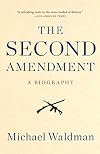
Michael Waldman is a professor of law at New York University. The Second Amendment: A Biography is an erudite and informative analysis of the history of the interpretation of that amendment by the Founding Fathers, the Supreme Court, and various legal scholars. Waldman states:
"For 218 years, judges overwhelmingly concluded that the amendment authorized states to form militias….then in 2008, the U.S. Supreme Court upended two centuries of precedent. In…District of Columbia V. Heller [it] show more declared the Constitution confers a right to own a gun for self-defense in the home.”
On a literal level, this book is the story of how that change came about. On a “meta” level, it is a description of the process by which the Constitution is interpreted, and how interpretations evolve over time. On a societal level, the content of this book is extremely important because of what it says about the power of the government, on any tier, to deal with the current spate of gun violence.
The Second Amendment has a curious grammatical construction:
"A well regulated militia, being necessary to the security of a free state, the right of the people to keep and bear arms, shall not be infringed."
How does the reference to “the militia” in the introductory phrase affect the interpretation of the amendment as a whole? Waldman’s historical analysis makes clear that the debates that preceded the adoption of the amendment were concerned with the role of the militia (what we would now call the National Guard), and had virtually nothing to say about an individual’s right “to keep and bear arms.” Moreover, the amendment says that the right to bear arms is that of the people (presumably acting in the context of the militia), not individuals. Ironically, it must be noted that the militias were composed of white males who were expected to supply their own weapons to participate in military training. Those men were not merely allowed to keep rifles; they were required to do so.
Waldman goes into detail about just how the meaning of the amendment changed over time. His concluding chapter contains some very interesting observations, the most striking of which I quote below:
“A full scan of American history shows that the public, fully engaged, has made constitutional law every bit as much as jurists and lawyers….[T]he reason the Court has pronounced that limited right [individual gun ownership] is not because the Framers of the Second Amendment intended it to confer it. (They didn’t.) Nor is it because of a dictionary from 1730, or a state court judicial interpretation from 1830, or even a Supreme Court case from 1939. Rather, it is because the people today believe there is such a right. The country has evolved—the Constitution is living, as it were—and the widespread acceptance of some form of gun ownership is part of the way Americans think. Not then, now. [It reflects] a popular consensus won by focused activists.”
Evaluation: This book brings a lot of light to some issues about which one often finds only heat. It should be read by all citizens concerned with gun violence and gun rights.
Note: For those interested in a more thorough review, you will find one on our blog, Legal Legacy. And for a satiric could-have-almost-happened take on the issue, see this humorous imagined conversation between James Madison and Thomas Jefferson from The New Yorker.
(JAB) show less
"For 218 years, judges overwhelmingly concluded that the amendment authorized states to form militias….then in 2008, the U.S. Supreme Court upended two centuries of precedent. In…District of Columbia V. Heller [it] show more declared the Constitution confers a right to own a gun for self-defense in the home.”
On a literal level, this book is the story of how that change came about. On a “meta” level, it is a description of the process by which the Constitution is interpreted, and how interpretations evolve over time. On a societal level, the content of this book is extremely important because of what it says about the power of the government, on any tier, to deal with the current spate of gun violence.
The Second Amendment has a curious grammatical construction:
"A well regulated militia, being necessary to the security of a free state, the right of the people to keep and bear arms, shall not be infringed."
How does the reference to “the militia” in the introductory phrase affect the interpretation of the amendment as a whole? Waldman’s historical analysis makes clear that the debates that preceded the adoption of the amendment were concerned with the role of the militia (what we would now call the National Guard), and had virtually nothing to say about an individual’s right “to keep and bear arms.” Moreover, the amendment says that the right to bear arms is that of the people (presumably acting in the context of the militia), not individuals. Ironically, it must be noted that the militias were composed of white males who were expected to supply their own weapons to participate in military training. Those men were not merely allowed to keep rifles; they were required to do so.
Waldman goes into detail about just how the meaning of the amendment changed over time. His concluding chapter contains some very interesting observations, the most striking of which I quote below:
“A full scan of American history shows that the public, fully engaged, has made constitutional law every bit as much as jurists and lawyers….[T]he reason the Court has pronounced that limited right [individual gun ownership] is not because the Framers of the Second Amendment intended it to confer it. (They didn’t.) Nor is it because of a dictionary from 1730, or a state court judicial interpretation from 1830, or even a Supreme Court case from 1939. Rather, it is because the people today believe there is such a right. The country has evolved—the Constitution is living, as it were—and the widespread acceptance of some form of gun ownership is part of the way Americans think. Not then, now. [It reflects] a popular consensus won by focused activists.”
Evaluation: This book brings a lot of light to some issues about which one often finds only heat. It should be read by all citizens concerned with gun violence and gun rights.
Note: For those interested in a more thorough review, you will find one on our blog, Legal Legacy. And for a satiric could-have-almost-happened take on the issue, see this humorous imagined conversation between James Madison and Thomas Jefferson from The New Yorker.
(JAB) show less
Lists
You May Also Like


Statistics
- Works
- 9
- Also by
- 1
- Members
- 635
- Popularity
- #39,693
- Rating
- 3.7
- Reviews
- 19
- ISBNs
- 30