
Tommy Pico
Author of Nature Poem
About the Author
Image credit: Author Tommy Pico at the 2018 Texas Book Festival in Austin, Texas, United States. By Larry D. Moore - Own work, CC BY-SA 4.0, https://commons.wikimedia.org/w/index.php?curid=74051826
Series
Works by Tommy Pico
Birdsong 2: Long 1 copy
Birdsong 3: Heat 1 copy
Birdsong 4: Over 1 copy
Birdsong 10: Ephemera 1 copy
Birdsong 11: Latitude 1 copy
Birdsong 5: Last 1 copy
Birdsong 6: Revolution 1 copy
Birdsong 7: Fluency 1 copy
Birdsong 8: Luster 1 copy
Bird Song 1 copy
Associated Works
When the Light of the World Was Subdued, Our Songs Came Through: A Norton Anthology of Native Nations Poetry (2020) — Contributor — 380 copies, 4 reviews
Nepantla: An Anthology Dedicated to Queer Poets of Color (2018) — Contributor — 125 copies, 2 reviews
Tagged
Common Knowledge
- Gender
- male
Members
Reviews
IRL by Tommy Pico
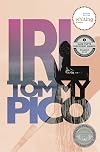
Chatty, playful, hot, sticky, visceral. I love it.
As I was reading this, it really made me examine language and I admired how Pico played with language and how language played with him, if that makes sense. I really enjoy when poetry does that because it is so sparse sometimes, as a medium, that without that playfulness, it can be repetitive or dry or turn people off poetry because it seems so academic.
IRL doesn't do that. At first, it felt a little like Instagram / Tumblr / Twitter poetry, show more not that there's anything wrong with that, but I thought I'd be irritated by his voice, and then I heard his humour and his cheekiness and I had so much fun reading this. Because of Pico's direct references to certain technologies (like Grindr) I'm curious to see how this book ages.
If you've studied poetry at school and were just totally sick of it, this is the anecdote. Pico is soft, pastel-pink rebellion, self-deprecating humour hiding generations of pain, asserting himself and then questioning himself. He is not the hero to his own story and yet that makes him heroic in my heart.
He tore himself down to build himself back up and I wish I could see him live, listen to the words he crafts. I'll leave this as a 4 star review for now, but if it stays on my mind, I might increase the star rating.
He is Puck, and all of this is a dream, and Brooklyn NYC is his playground. show less
As I was reading this, it really made me examine language and I admired how Pico played with language and how language played with him, if that makes sense. I really enjoy when poetry does that because it is so sparse sometimes, as a medium, that without that playfulness, it can be repetitive or dry or turn people off poetry because it seems so academic.
IRL doesn't do that. At first, it felt a little like Instagram / Tumblr / Twitter poetry, show more not that there's anything wrong with that, but I thought I'd be irritated by his voice, and then I heard his humour and his cheekiness and I had so much fun reading this. Because of Pico's direct references to certain technologies (like Grindr) I'm curious to see how this book ages.
If you've studied poetry at school and were just totally sick of it, this is the anecdote. Pico is soft, pastel-pink rebellion, self-deprecating humour hiding generations of pain, asserting himself and then questioning himself. He is not the hero to his own story and yet that makes him heroic in my heart.
He tore himself down to build himself back up and I wish I could see him live, listen to the words he crafts. I'll leave this as a 4 star review for now, but if it stays on my mind, I might increase the star rating.
He is Puck, and all of this is a dream, and Brooklyn NYC is his playground. show less
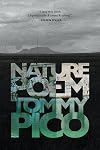
This book-length poem is a delight.
Tommy Pico is an indigenous young gay city-dwelling american who inventively and beautifully combines and switches between what is considered classic or traditional english poetic forms and language, experiences with a native upbringing, millennial netspeak and modern city living, a history of colonialism and genocide and its impact on his family and friends, lots of swearing, and an overall reaction to the stereotype associating native people with The show more Land, best encapsulated in his constantly repeated "I am never going to write a nature poem" with a nature poem (and a very beautiful one) dancing in the background the whole time.
It's a real achievement. I adored this book and I can't wait for his next one. show less
Tommy Pico is an indigenous young gay city-dwelling american who inventively and beautifully combines and switches between what is considered classic or traditional english poetic forms and language, experiences with a native upbringing, millennial netspeak and modern city living, a history of colonialism and genocide and its impact on his family and friends, lots of swearing, and an overall reaction to the stereotype associating native people with The show more Land, best encapsulated in his constantly repeated "I am never going to write a nature poem" with a nature poem (and a very beautiful one) dancing in the background the whole time.
It's a real achievement. I adored this book and I can't wait for his next one. show less
Junk by Tommy Pico
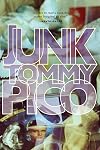
Tommy Pico was recommended to me by Laura for the Queer Humor prompt of #QueerYourYear, and this was the one collection my library has on hand, so it became my introduction to Pico!
This is not humor writing like anything you are going to find at the humor table at Barnes & Noble, but Pico's sense of humor is certainly strong throughout, despite the fact that this is basically a breakup book. It's that dark humor that is indigenous humor, queer humor: "How do we protect ourselves from car show more commercials and the border patrol."
The theme of the book is junk. Junk food, junk shops, men's junk (as in anatomy) and men's junk (as in unexamined racism, toxic behaviors, etc.), like dumped. The whole book is one long poem, without punctuation other than commas, apostrophes, and the occasional quotation mark, with line ends that are structural rather than the end of a thought or a breath. When it worked for me, it gave the writing a propulsive stream of consciousness that really fit his style well. When it didn't work for me (especially when I tried to read this while I was sick), I quickly got frustrated trying to parse where one thought or phrase ended and the next began, going back and rereading over and over.
I liked it (especially when not sick), but I have a number of friends here looking to get into poetry or dip back into poetry looking for work that is "accessible," and if accessibility of form is what you mean, this may not be that. But if it's the content and references you mean, this is VERY accessible/relatable, returning over and over to defend Janet Jackson and expand on Pico's love of junk food. "I'm the opposite of a foodie, I'm like a junkie" or "How the fuck do ppl still have energy for sweaty sexytimes after midnight He wants to go again and I want to go home, have an indica chamomile and slack like a boss" show less
This is not humor writing like anything you are going to find at the humor table at Barnes & Noble, but Pico's sense of humor is certainly strong throughout, despite the fact that this is basically a breakup book. It's that dark humor that is indigenous humor, queer humor: "How do we protect ourselves from car show more commercials and the border patrol."
The theme of the book is junk. Junk food, junk shops, men's junk (as in anatomy) and men's junk (as in unexamined racism, toxic behaviors, etc.), like dumped. The whole book is one long poem, without punctuation other than commas, apostrophes, and the occasional quotation mark, with line ends that are structural rather than the end of a thought or a breath. When it worked for me, it gave the writing a propulsive stream of consciousness that really fit his style well. When it didn't work for me (especially when I tried to read this while I was sick), I quickly got frustrated trying to parse where one thought or phrase ended and the next began, going back and rereading over and over.
I liked it (especially when not sick), but I have a number of friends here looking to get into poetry or dip back into poetry looking for work that is "accessible," and if accessibility of form is what you mean, this may not be that. But if it's the content and references you mean, this is VERY accessible/relatable, returning over and over to defend Janet Jackson and expand on Pico's love of junk food. "I'm the opposite of a foodie, I'm like a junkie" or "How the fuck do ppl still have energy for sweaty sexytimes after midnight He wants to go again and I want to go home, have an indica chamomile and slack like a boss" show less
subversive, addictive and queer af.
tommy pico doesn't make me feel bad for shortening my texts or my words indiscriminately. he's casual and serious. he's playful and cynical. he makes fun of himself so beautifully and wonderfully i want to be his friend asdfghg.
ru paul wishes he could be this cool.
i want to read everything he's written, ty.
tommy pico doesn't make me feel bad for shortening my texts or my words indiscriminately. he's casual and serious. he's playful and cynical. he makes fun of himself so beautifully and wonderfully i want to be his friend asdfghg.
ru paul wishes he could be this cool.
i want to read everything he's written, ty.
Lists
Awards


You May Also Like


Associated Authors
Statistics
- Works
- 15
- Also by
- 5
- Members
- 442
- Popularity
- #55,391
- Rating
- 4.1
- Reviews
- 17
- ISBNs
- 11
- Favorited
- 1