
Peter Kimani
Author of Dance of the Jakaranda
Works by Peter Kimani
Nairobi Noir (Akashic Noir) 2 copies
Tagged
Common Knowledge
- Nationality
- Kenya
- Associated Place (for map)
- Kenya
Members
Reviews
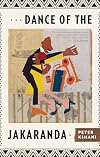
A frustrating read that missed the mark in every possible way for me. This take on colonial and post-colonial Kenya should have been riveting but the characters were too cartoonish and the scenes too sketchy to really capture my attention. The satire didn't work for me either. There are limp forays into Midnights-Children-Land whimsy--for instance Babu's comically high forehead makes a repetitive motif not unlike Saleem Sinai's memorable nose--but they don't easily relate to a greater theme show more and so feel tacked-on and distracting. And listen, I am somewhat outraged at the treatment of women characters in the novel--from the anonymous, sexualized kiss in a dark hallway, to a young wife becoming a crippled invalid by sitting too long in one position on her harrowing journey to Kenya, to--and this really took the cake--the ludicrous, hmm, dare I say offensive? ok i did--treatment of Sally, who expresses her discomfort about colonialism by sleeping with her black gardener as atonement. There are just too many layers of irony there for this event to work. The writing isn't good enough for me to give the author benefit of the doubt that he is deliberately exposing Sally's hypocrisy in the way she exploits a man who is economically dependent on her, all the while thinking she is atoning. The scene is treated like a frivolous adventure to set up her husband McDonald's story arc, once he witnesses Sally's unfaithfulness directly and viscerally. There is no real human feeling in that scene--I felt sorry for these three fictional creations on the page, for the shabby way the author treated them.
I came away from this novel believing that satirical writing must have a bedrock-solid unmoving core of moral rightness, so that the reader knows very clearly where the author stands and can therefore place even the most outrageous and potentially offensive scenes into the right context. This book doesn't have that core of moral rightness, or at least, I couldn't find it. show less
I came away from this novel believing that satirical writing must have a bedrock-solid unmoving core of moral rightness, so that the reader knows very clearly where the author stands and can therefore place even the most outrageous and potentially offensive scenes into the right context. This book doesn't have that core of moral rightness, or at least, I couldn't find it. show less
“History has strange ways of announcing itself to the present, whether conceived in comforting darkness or blinding light. It can manifest with the gentleness of a bean cracking out of its pod, making music in its fall. Even when such seed falls into fertile soil, it still wriggles from the tug of the earth, stretching a green hand for uplift.”
I really enjoyed this one for a lot of reasons and this quote seems to sum up a lot of the plot strands. I’ve been reading a lot in Africa these show more days, experiencing the colonial experience from both the side of the colonized and the colonizers. This one was even more convoluted because the main protagonist is neither, at least in Kenya. Babu is also a victim of imperialism, however, as he is a Punjabi imported by the British to help build the railroad in Kenya with promise of making a fortune and returning home. Unfortunately, “home” goes away with the partitioning of British Punjab between India and Pakistan. So there’s that historical strand of an Imperial power shifting people and ethnic groups around, playing them off each other, and then abandoning them after their work is done.
Then there is the personal side of history, where the secrets and shenanigans of the grandfathers and fathers come back to haunt the children. Or as they say in Kenya, “Majuto ni mjukuu...children would pay for the sins of their forebearers.”
Finally, the Jakaranda’s patio and lounge sounded very, very similar to the Lake Nakuru lodge I stayed at during a photo safari several years ago. The descriptions were so similar that I did a quick check to see if I could find any evidence that there was some connection between the two.
As to the writing, this multi-generational novel was oft times confusing and seemed to meander and eventually putter out in a dramatic but not very well fleshed out finale. Like much of the books published these days, it probably could have used some stronger editorial influence and guidance. This was more evident at the end than in the beginning and middle sections, so maybe there was a deadline that caused Kimani to wrap it up a little too abruptly. In the end, I still enjoyed much of the book and especially appreciated yet another view into the development of Kenya as a country. If that is something that interests you, I would invite you to check this one out. show less
I really enjoyed this one for a lot of reasons and this quote seems to sum up a lot of the plot strands. I’ve been reading a lot in Africa these show more days, experiencing the colonial experience from both the side of the colonized and the colonizers. This one was even more convoluted because the main protagonist is neither, at least in Kenya. Babu is also a victim of imperialism, however, as he is a Punjabi imported by the British to help build the railroad in Kenya with promise of making a fortune and returning home. Unfortunately, “home” goes away with the partitioning of British Punjab between India and Pakistan. So there’s that historical strand of an Imperial power shifting people and ethnic groups around, playing them off each other, and then abandoning them after their work is done.
Then there is the personal side of history, where the secrets and shenanigans of the grandfathers and fathers come back to haunt the children. Or as they say in Kenya, “Majuto ni mjukuu...children would pay for the sins of their forebearers.”
Finally, the Jakaranda’s patio and lounge sounded very, very similar to the Lake Nakuru lodge I stayed at during a photo safari several years ago. The descriptions were so similar that I did a quick check to see if I could find any evidence that there was some connection between the two.
As to the writing, this multi-generational novel was oft times confusing and seemed to meander and eventually putter out in a dramatic but not very well fleshed out finale. Like much of the books published these days, it probably could have used some stronger editorial influence and guidance. This was more evident at the end than in the beginning and middle sections, so maybe there was a deadline that caused Kimani to wrap it up a little too abruptly. In the end, I still enjoyed much of the book and especially appreciated yet another view into the development of Kenya as a country. If that is something that interests you, I would invite you to check this one out. show less
 This review was written for LibraryThing Early Reviewers.
I've lost track of how many Akashic Noir books I've read, but they continue to be amazing. This particular installment however, was a little rougher than most for two reasons. I wouldn't say the stories were darker than past collections, in fact they weren't as brutal as some others. But there was a theme that went through nearly every tale of police corruption that made the hopelessness of the situation so pervasive.
The other difficulty, there were a lot of words that weren't in English show more and while I could get an idea of their meaning from context, I felt there was a lot of wiggle room for me to miss nuances if I wasn't getting the meaning closely enough and that was a bit of a letdown. Akashic doesn't do a glossary of terms or footnotes really, but I would have appreciated it in this case. show less
The other difficulty, there were a lot of words that weren't in English show more and while I could get an idea of their meaning from context, I felt there was a lot of wiggle room for me to miss nuances if I wasn't getting the meaning closely enough and that was a bit of a letdown. Akashic doesn't do a glossary of terms or footnotes really, but I would have appreciated it in this case. show less
This review was written for LibraryThing Early Reviewers.The plot revolves around two stories: the construction of a major railway in southern Kenya at the dawn of the 20th century and the life story of one of the Indian laborers. It is told from multiple viewpoints, including at points, not only the Indian and African laborers who built it but by a handful of English characters as well. The overall story is well-constructed, involves (mostly) well-drawn characters, and even makes some pithy observations. I’d be curious about anything else show more Kimani writes but I’m truly mystified that the jacket contains a blurb from Ngugi wa Thiong’o who says “Kimani's writing has the clarity of analytic prose and the lyrical tenderness of poetry.” Apparently he and I read different books. In fact, from time to time, I found the writing obscure and simply not even good English. (I’ll leave entirely aside the fact that there is more than an occasional comment in Swahili that is, astonishingly, left untranslated.) show less
Awards


You May Also Like
Associated Authors
Statistics
- Works
- 4
- Members
- 179
- Popularity
- #120,382
- Rating
- 3.7
- Reviews
- 34
- ISBNs
- 12
