
Gail Honeyman
Author of Eleanor Oliphant is Completely Fine
About the Author
Image credit: google image
Works by Gail Honeyman
Tagged
Common Knowledge
- Birthdate
- 1972
- Gender
- female
- Education
- University of Glasgow
University of Oxford - Agent
- Madeleine Milburn
- Short biography
- Gail Honeyman wrote her debut novel, Eleanor Oliphant is Completely Fine, while working a full-time job, and it was shortlisted for the Lucy Cavendish Fiction Prize as a work in progress. She has also been awarded the Scottish Book Trust's Next Chapter Award 2014, was longlisted for BBC Radio 4's Opening Lines, and was shortlisted for the Bridport Prize. She lives in Glasgow.Gail Honeyman is a graduate of the universities of Glasgow and Oxford
- Nationality
- UK
- Birthplace
- Stirling, Scotland, UK
- Places of residence
- Glasgow, Scotland, UK
- Map Location
- Scotland, UK
Members
Reviews
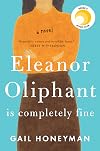
As usual when someone claims they're "completely fine," Eleanor Oliphant isn't. When we meet her, she's working the same office job she's had since university and has a very strict, contained routine for herself that involves work on the weekdays, frozen pizza on Friday nights, and vodka for most of the weekend. She complains (internally) that other people have terrible social skills, but it's clear that she's the one who is a little unusual and socially awkward. The new IT guy at her show more company, Raymond, befriends her anyway, and slowly Eleanor begins to deviate from her routine. This change is a struggle, as Eleanor in the present contends with her awful (seriously, newspaper-headline-horrible) childhood. After a suicide attempt that Raymond interrupts, Eleanor starts counseling and begins to remember events she'd been keeping locked away.
Eleanor's first-person narration, coupled with the reader's knowledge of typical social conventions, works perfectly to illuminate the way that Eleanor moves through the world, why she says and does what she says and does, and why she keeps feelings - her own and others - at a distance. The hinted-at bits of Eleanor's past weren't shocking by the time they were finally revealed, but plot isn't the point in this character-driven novel. Eleanor is a unique character presented in a unique way; I loved reading this book and experiencing her transformation as she rejoins the world.
Author interview: https://www.theguardian.com/books/2018/jan/12/gail-honeyman-didnt-want-eleanor-o...
*
Re-read February/March 2026
Quotes
I do exist, don't I? It often feels as if I'm not here, that I'm a fragment of my own imagination. There are days when I feel so lightly connected to the earth that the threads that tether me to the planet are gossamer thin, spun sugar.A strong gust of wind could dislodge me completely, and I'd lift off and blow away, like one of those seeds in a dandelion clock. (5)
[Mummy] has a knack for amusing herself, although no one else laughs much in her company. (31)
[Mummy] liked doing bad things, and I didn't. It was as simple as that. (112)
"Listen, the past isn't over. The past is a living thing." (Mummy to Eleanor, 113)
You can't protect other people, however hard you try. You try, and you fail, and your world collapses around you, burns down to ashes. (134)
"It occurs to me that there are many things in life that I've never considered doing, Raymond. I suppose I didn't realize I had any control over them. That sounds ridiculous, I know." (158)
Although it's good to try new things and to keep an open mind, it's also extremely important to stay true to who you really are. I read that in a magazine at the hairdressers. (174)
I suppose one of the reasons we're all able to continue to exist for our allotted span in this green and blue vale of tears is that there is always, however remote it might seen, the possibility of change. (182)
Time only blunts the pain of loss. It doesn't erase it. (196)
Grief is the price we pay for love, so they say. The price is far too high. (198)
Once you get used to being on your own, it becomes normal. It certainly had become so for me. (207)
It's both good and bad, how humans can learn to tolerate pretty much anything, if they have to. (210)
The past could neither be escaped nor undone. After all those weeks of delusion, I recognized, breathless, the pure, brutal truth of it. (221)
My life, I realized, had gone wrong. Very, very wrong. I wasn't supposed to live like this. No one was supposed to live like this. The problem was that I simply didn't know how to make it right. Mummy's way was wrong, I knew that. But no one had ever shown me the right way to live a life, and although I'd tried my best over the years, I simply didn't know how to make things better. I could not solve the puzzle of me. (232)
I was gradually getting used to feeling the range of available human emotions, their intensity, the rapidity with which they could change. (266)
When you're struggling hard to manage your own emotions, it becomes unbearable to have to witness other people's, to have to try and manage theirs too. (291) show less
Eleanor's first-person narration, coupled with the reader's knowledge of typical social conventions, works perfectly to illuminate the way that Eleanor moves through the world, why she says and does what she says and does, and why she keeps feelings - her own and others - at a distance. The hinted-at bits of Eleanor's past weren't shocking by the time they were finally revealed, but plot isn't the point in this character-driven novel. Eleanor is a unique character presented in a unique way; I loved reading this book and experiencing her transformation as she rejoins the world.
Author interview: https://www.theguardian.com/books/2018/jan/12/gail-honeyman-didnt-want-eleanor-o...
*
Re-read February/March 2026
Quotes
I do exist, don't I? It often feels as if I'm not here, that I'm a fragment of my own imagination. There are days when I feel so lightly connected to the earth that the threads that tether me to the planet are gossamer thin, spun sugar.A strong gust of wind could dislodge me completely, and I'd lift off and blow away, like one of those seeds in a dandelion clock. (5)
[Mummy] has a knack for amusing herself, although no one else laughs much in her company. (31)
[Mummy] liked doing bad things, and I didn't. It was as simple as that. (112)
"Listen, the past isn't over. The past is a living thing." (Mummy to Eleanor, 113)
You can't protect other people, however hard you try. You try, and you fail, and your world collapses around you, burns down to ashes. (134)
"It occurs to me that there are many things in life that I've never considered doing, Raymond. I suppose I didn't realize I had any control over them. That sounds ridiculous, I know." (158)
Although it's good to try new things and to keep an open mind, it's also extremely important to stay true to who you really are. I read that in a magazine at the hairdressers. (174)
I suppose one of the reasons we're all able to continue to exist for our allotted span in this green and blue vale of tears is that there is always, however remote it might seen, the possibility of change. (182)
Time only blunts the pain of loss. It doesn't erase it. (196)
Grief is the price we pay for love, so they say. The price is far too high. (198)
Once you get used to being on your own, it becomes normal. It certainly had become so for me. (207)
It's both good and bad, how humans can learn to tolerate pretty much anything, if they have to. (210)
The past could neither be escaped nor undone. After all those weeks of delusion, I recognized, breathless, the pure, brutal truth of it. (221)
My life, I realized, had gone wrong. Very, very wrong. I wasn't supposed to live like this. No one was supposed to live like this. The problem was that I simply didn't know how to make it right. Mummy's way was wrong, I knew that. But no one had ever shown me the right way to live a life, and although I'd tried my best over the years, I simply didn't know how to make things better. I could not solve the puzzle of me. (232)
I was gradually getting used to feeling the range of available human emotions, their intensity, the rapidity with which they could change. (266)
When you're struggling hard to manage your own emotions, it becomes unbearable to have to witness other people's, to have to try and manage theirs too. (291) show less
"These days, loneliness is the new cancer---a shameful, embarrassing thing, brought upon yourself in some obscure way. A fearful, incurable thing, so horrifying that you dare not mention it; other people don’t want to hear the word spoken aloud for fear that they might too be afflicted, or that it might tempt fate into visiting a similar horror upon them."
If there was ever a book that I had completely underestimated, or got completely wrong before the actual reading, it would be this book. show more I read the title and thought, “Hmmm, light and probably fluffy.” Wrong. I would have to change that estimation. Oh it was very funny in places. And the tone and language that the protagonist uses is anything but light and fluffy. Her language is precise and correct throughout, so much so that it provides a few chuckles in and of itself. ("Obscenity is the distinguishing hallmark of a sadly limited vocabulary"). I can’t really reproduce this tone but it was prevalent throughout the book and for me was a highlight of what otherwise could’ve been a maudlin narrative. Because Eleanor is lonely more than anything else and you understand that right away.
The cause of her loneliness and therefore her unhappiness is hinted at throughout but not revealed until the end. And that kept me turning the pages quite feverishly. This author knew just what she was doing. And I was putty in her hands. Highly recommended. show less
If there was ever a book that I had completely underestimated, or got completely wrong before the actual reading, it would be this book. show more I read the title and thought, “Hmmm, light and probably fluffy.” Wrong. I would have to change that estimation. Oh it was very funny in places. And the tone and language that the protagonist uses is anything but light and fluffy. Her language is precise and correct throughout, so much so that it provides a few chuckles in and of itself. ("Obscenity is the distinguishing hallmark of a sadly limited vocabulary"). I can’t really reproduce this tone but it was prevalent throughout the book and for me was a highlight of what otherwise could’ve been a maudlin narrative. Because Eleanor is lonely more than anything else and you understand that right away.
The cause of her loneliness and therefore her unhappiness is hinted at throughout but not revealed until the end. And that kept me turning the pages quite feverishly. This author knew just what she was doing. And I was putty in her hands. Highly recommended. show less
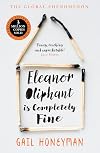
What a cracking novel. Eleanor feels so real. A clever trick the author’s pulled off. For all her oddities there’s so many human touches to her that I suppose everyone can identify with. This is the bit that hooked me:
“If I’m ever unsure of the correct course of action, I’ll think, ‘What would a ferret do?’ or, ‘How would a salamander respond to this situation?’ Invariably, I find the right answer.”
If I’m ever in a tricky social situation I often think ‘What would show more Basil Faulty do?’ You’d be surprised how often it works, or at least brings the situation to a swift close one way or the other.
I also liked how blinkered she was. You can work out what she does before you’re told because she criticises it in others. Of course, I don’t do that but lots of other people do.
Nice to find a book that’s funny and sad and written with care and attention to detail. Pacing’s excellent. I see her second novel is now overdue. Hope Honeyman doesn’t muck it up. show less
“If I’m ever unsure of the correct course of action, I’ll think, ‘What would a ferret do?’ or, ‘How would a salamander respond to this situation?’ Invariably, I find the right answer.”
If I’m ever in a tricky social situation I often think ‘What would show more Basil Faulty do?’ You’d be surprised how often it works, or at least brings the situation to a swift close one way or the other.
I also liked how blinkered she was. You can work out what she does before you’re told because she criticises it in others. Of course, I don’t do that but lots of other people do.
Nice to find a book that’s funny and sad and written with care and attention to detail. Pacing’s excellent. I see her second novel is now overdue. Hope Honeyman doesn’t muck it up. show less
Eleanor Oliphant Is Completely Fine - well, not really. She is out of sync with just about everything. She uses words such as hamartia, de trop, rebarbative, sybarite and a interlocutor when the rest of the world employs tragic flaw, too much, repellent, devoted to luxury and dialogue. She bears scars on her face and worse on her psyche. Gail Honeyman tells Eleanor's story as if she is peeling an onion, one thin layer at a time, and had me, laughing, crying, gasping for breath as the tears show more ran down my face. Honeyman has written a brilliant characterization of a marginalized young woman and the forces and people around her who can't help but care.
Thank you Penguin First To Read for an advance copy and the opportunity to savor every description on every page of this well written book. show less
Thank you Penguin First To Read for an advance copy and the opportunity to savor every description on every page of this well written book. show less
Lists
To Read (1)
Review 2 (1)
Female Author (1)
Favourite Books (1)
FAB 2025 (1)
GAL Book Club (1)
First Novels (1)
READ 2025 (1)
Awards


You May Also Like


Associated Authors
Statistics
- Works
- 2
- Members
- 11,440
- Popularity
- #2,056
- Rating
- 4.1
- Reviews
- 607
- ISBNs
- 83
- Languages
- 16
- Favorited
- 1