
Victor S. Navasky (1932–2023)
Author of Naming Names
About the Author
Victor S. Navasky is Delacorte Professor of Magazine Journalism at Columbia University.
Image credit: Eye on Books
Works by Victor S. Navasky
The Experts Speak : The Definitive Compendium of Authoritative Misinformation (1998) 235 copies, 3 reviews
The Best of the Nation: Selections from the Independent Magazine of Politics and Culture (2000) — Editor — 71 copies
The Art of Making Magazines: On Being an Editor and Other Views from the Industry (2012) — Editor — 35 copies, 2 reviews
Perspectives 1865-2000: A Time Capsule of Classic Selections By the World's Most Provocative Writers, Thinkers and Poets. From the Pages of "The Nation". (2000) 22 copies
Naming Names 1 copy
Associated Works
What Orwell Didn't Know: Propaganda and the New Face of American Politics (2007) — Contributor — 133 copies, 1 review
The Nation, 1865-1990: Selections from the Independent Magazine of Politics and Culture (1990) — Afterword — 95 copies, 1 review
It Did Happen Here: Recollections of Political Repression in America (1989) — Foreword — 49 copies, 1 review
Tagged
Common Knowledge
- Legal name
- Navasky, Victor Saul
- Birthdate
- 1932-07-05
- Date of death
- 2023-01-23
- Gender
- male
- Education
- Rudolf Steiner School, New York
Swarthmore College (AB | 1954)
Yale University (LLB | 1959) - Occupations
- editor
publisher
professor
journalist - Organizations
- The New York Times
The Nation
Columbia University School of Journalism - Cause of death
- pneumonia
- Nationality
- USA
- Birthplace
- New York, New York, USA
- Places of residence
- New York, New York, USA
- Place of death
- New York, New York, USA
- Associated Place (for map)
- New York, New York, USA
Members
Reviews
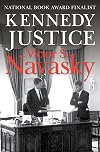
Summary: A study of Robert F. Kennedy's tenure as Attorney General and head of the Department of Justice during the John F. Kennedy and Johnson presidencies.
Several full length biographies of Robert F. Kennedy have been published including the classic by Arthur Schlesinger and more recent ones by Chris Matthews and Evan Thomas. This work looks at a four year period of Kennedy's life, from 1961 to 1964 when he served as the Attorney General of the United States, heading up the Department of show more Justice. Victor S. Navasky, in a book originally published three years after Kennedy's untimely assassination in 1968, explores the character of Kennedy's leadership in this position, the focus of his efforts, and both his signal accomplishments, and shortcomings. Navasky uses phone transcripts, memos and correspondence, extensive interviews and research to give an indepth look at Kennedy's years at the Department of Justice.
The first part, "The Code of the FBI" explores Kennedy's relationship with the FBI, particularly in his efforts to fight organized crime and in the field of Civil Rights. This section explores the skill with which he was able to work with, and around J. Edgar Hoover's self-protective agency. There was the delicate dance around bugging and wiretapping of crime families in which Kennedy believed only legal efforts were being pursued, and Hoover believed he had authority from the AG (and former AGs) to conduct these investigations. There was the refusal of the FBI to intervene in civil rights matters, but only to collect evidence, forcing Kennedy to mobilizing other DOJ attorneys and investigators to intervene, sometimes at great personal risk. The Department of Justice prosecuted record numbers of crime family members, protected Freedom Riders, defended voting rights, help pass the Civil Rights Act of 1964--and failed to change the way the FBI worked under Hoover.
Part Two, "The Code of the Ivy League Gentleman" looks at the incredibly talented group of people Kennedy surrounded himself with men like Burke Marshall, Nicholas Katzenbach, Louis Oberdorfer, John Doar, and Solicitor General Archibald Cox. It speaks highly of Kennedy, a University of Virginia law grad who gathers Harvard and Yale educated luminaries and inspires them to excellence. There was just one problem--the code of the Ivy League Gentleman. The belief was that calm, rational negotiation could resolve any problem, a belief shown to be flawed in Kennedy's conversations with Governor Ross Barnett, when Kennedy was seeking to uphold legal rulings admitting James Meredith to the University of Mississippi. Ultimately it took the National Guard, because Kennedy and those around him misjudged their ability to move Barnett to action to protect Meredith. Similarly, the code that didn't question ABA ratings in the appointment of southern judges led to the appointment of judges who perpetuated the structures of southern segregation. At the same time, Navasky chronicles the skilled way Kennedy works with the meticulous Harvard professor, Archibald Cox, who served as his Solicitor General.
The third part focuses on the "Code of the Kennedys" and how Robert Kennedy lived in the tension of family loyalty and integrity as the chief law enforcement officer of the country. Navasky illustrates this with the efforts Robert Kennedy engaged in to coordinate a humanitarian donation to Cuba in exchange for the release of the Bay of Pigs prisoners. There was family honor to be upheld in securing the prisoner's release, laws and regulations to be negotiated, and logistics to coordinate. RFK's skilled work with the "honorary" Kennedys to cut through red tape accomplished a seemingly impossible exchange. At the same time, family political ties did not prevent RFK's Department of Justice from prosecuting political corruption. Finally, there was the family vendetta against teamster boss Jimmy Hoffa, done within the provisions of the law, yet devoting disproportionate resources to the effort that set questionable precedents for the department.
The book traces Kennedy's growing commitment to civil rights and the eventual shift in focus from organized crime to civil rights during his tenure. It portrays an Attorney General skilled in the management of relationships and able to evoke excellence and energy in people who already came with high qualifications. Navasky portrays Kennedy as a man of high ideals who used his skills to tackle problems connected with the pursuit of those ideals, yet without a vision that looked beyond problems. Nowhere was this more apparent in his tolerance of Hoover's entrenched leadership and non-cooperation.
So, why read a book on an Attorney General from more than fifty years ago? It reminds us of the vital role the Attorney General plays as the people's attorney. It underscores the vital need that the AG, a presidential appointee, in this case, a presidential brother, is not the president's lawyer but the people's lawyer. It meant prosecuting political friends when those friends broke the law. It reminds us that justice is for all citizens, even when established party structures in the south are challenged by the series of voting rights cases filed by the Department of Justice. It also underscores the continuing tension of the relationship of the FBI to its parent department, the Department of Justice. How do you foster both the independence needed for impartial investigations, and the accountability and sharing of information that may be essential to national security? It seems this continues to be a challenge. Ultimately, however this is resolved, it must be in the service of "liberty and justice for all." show less
Several full length biographies of Robert F. Kennedy have been published including the classic by Arthur Schlesinger and more recent ones by Chris Matthews and Evan Thomas. This work looks at a four year period of Kennedy's life, from 1961 to 1964 when he served as the Attorney General of the United States, heading up the Department of show more Justice. Victor S. Navasky, in a book originally published three years after Kennedy's untimely assassination in 1968, explores the character of Kennedy's leadership in this position, the focus of his efforts, and both his signal accomplishments, and shortcomings. Navasky uses phone transcripts, memos and correspondence, extensive interviews and research to give an indepth look at Kennedy's years at the Department of Justice.
The first part, "The Code of the FBI" explores Kennedy's relationship with the FBI, particularly in his efforts to fight organized crime and in the field of Civil Rights. This section explores the skill with which he was able to work with, and around J. Edgar Hoover's self-protective agency. There was the delicate dance around bugging and wiretapping of crime families in which Kennedy believed only legal efforts were being pursued, and Hoover believed he had authority from the AG (and former AGs) to conduct these investigations. There was the refusal of the FBI to intervene in civil rights matters, but only to collect evidence, forcing Kennedy to mobilizing other DOJ attorneys and investigators to intervene, sometimes at great personal risk. The Department of Justice prosecuted record numbers of crime family members, protected Freedom Riders, defended voting rights, help pass the Civil Rights Act of 1964--and failed to change the way the FBI worked under Hoover.
Part Two, "The Code of the Ivy League Gentleman" looks at the incredibly talented group of people Kennedy surrounded himself with men like Burke Marshall, Nicholas Katzenbach, Louis Oberdorfer, John Doar, and Solicitor General Archibald Cox. It speaks highly of Kennedy, a University of Virginia law grad who gathers Harvard and Yale educated luminaries and inspires them to excellence. There was just one problem--the code of the Ivy League Gentleman. The belief was that calm, rational negotiation could resolve any problem, a belief shown to be flawed in Kennedy's conversations with Governor Ross Barnett, when Kennedy was seeking to uphold legal rulings admitting James Meredith to the University of Mississippi. Ultimately it took the National Guard, because Kennedy and those around him misjudged their ability to move Barnett to action to protect Meredith. Similarly, the code that didn't question ABA ratings in the appointment of southern judges led to the appointment of judges who perpetuated the structures of southern segregation. At the same time, Navasky chronicles the skilled way Kennedy works with the meticulous Harvard professor, Archibald Cox, who served as his Solicitor General.
The third part focuses on the "Code of the Kennedys" and how Robert Kennedy lived in the tension of family loyalty and integrity as the chief law enforcement officer of the country. Navasky illustrates this with the efforts Robert Kennedy engaged in to coordinate a humanitarian donation to Cuba in exchange for the release of the Bay of Pigs prisoners. There was family honor to be upheld in securing the prisoner's release, laws and regulations to be negotiated, and logistics to coordinate. RFK's skilled work with the "honorary" Kennedys to cut through red tape accomplished a seemingly impossible exchange. At the same time, family political ties did not prevent RFK's Department of Justice from prosecuting political corruption. Finally, there was the family vendetta against teamster boss Jimmy Hoffa, done within the provisions of the law, yet devoting disproportionate resources to the effort that set questionable precedents for the department.
The book traces Kennedy's growing commitment to civil rights and the eventual shift in focus from organized crime to civil rights during his tenure. It portrays an Attorney General skilled in the management of relationships and able to evoke excellence and energy in people who already came with high qualifications. Navasky portrays Kennedy as a man of high ideals who used his skills to tackle problems connected with the pursuit of those ideals, yet without a vision that looked beyond problems. Nowhere was this more apparent in his tolerance of Hoover's entrenched leadership and non-cooperation.
So, why read a book on an Attorney General from more than fifty years ago? It reminds us of the vital role the Attorney General plays as the people's attorney. It underscores the vital need that the AG, a presidential appointee, in this case, a presidential brother, is not the president's lawyer but the people's lawyer. It meant prosecuting political friends when those friends broke the law. It reminds us that justice is for all citizens, even when established party structures in the south are challenged by the series of voting rights cases filed by the Department of Justice. It also underscores the continuing tension of the relationship of the FBI to its parent department, the Department of Justice. How do you foster both the independence needed for impartial investigations, and the accountability and sharing of information that may be essential to national security? It seems this continues to be a challenge. Ultimately, however this is resolved, it must be in the service of "liberty and justice for all." show less

I read this (original edition, not the one updated to 2001) as a follow-up to a viewing of the movie Trumbo. Neither would really qualify as "a history of the blacklist;" the movie tries to give some political background to what is essentially a bio-pic, while Navasky's book is an exploration, it strikes me, of Dalton Trumbo's assertion that the HUAC hearings and the Blacklist produced "only victims." He does this by recording and analysing many individual stories and attempting a kind of show more moral parsing. The conclusions he reaches could no doubt have been summarised in a more succinct volume. Reading Naming Names today requires wading through many accounts of forgotten writers of forgotten movies. But the record preserved here is valuable. Navasky interviewed as many participants, those who co-operated with HUAC and those who did not, as he could find, and tracked down press statements and hearing transcripts with which to compare their statements, in many instances. Most of these people are now dead, I would imagine, and thus the book preserves something that cannot be replaced by retrospective historians. Unlike previous reviewer BirdBrian I found Navasky's style quite engaging. He treats everyone with humanity and respect without losing sight of the necessity to find a consistent moral stand on the issues raised. show less
The art of making magazines : on being an editor and other views from the industry by Victor S. Navasky
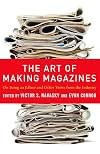
Loved the articles that described the nitty-gritty of magazines, like how to talk to an art director, and how fact-checking is done at the New Yorker; and the ones with interesting anecdotes, like Ruth Reichel's, Roberta Myers, and Tina Brown's. Felix Dennis's was annoyingly snarky, and John Gregory Dunne's didn't really seem to be about magazines. I almost gave up on the book halfway through his piece, which is the first one!
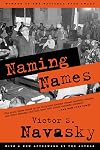
The first edition appeared in the early 1980's, but Navasky has updated this version to post 2001. This is an exhaustively researched history and analysis of the Hollywood "show" hearings of the House UnAmerican Activities Committee of the late 1940's and 1950's. His exploration was timely as most of those who were involved in, or impacted by, the witch hunts were still living and enough time had passed to open up their willingness to talk
Navasky explores the motivations of those who show more informed and those who refused to "name names". His insights are deeply informed from political, cultural, psychological and philosophical perspectives. He is generally critical of those who told on others, but he digs deep into the rationales of people who informed or withheld. He discusses the morality of, and devastating practical consequences of, the "black lists" that emerged from the revelations of who had been a communist decades earlier, or who refused to cooperate with the committee. He touches on the strategies -- legal and public relations -- employed by those compelled to testify.
Navasky correctly does not draw parallels too closely to Stalin's show trials whose results saw thousands executed or imprisoned; in America only a few were sent to prison and more lost their livelihoods. Nonetheless, he paints a picture of an ugly time in our history. Navasky doesn't delve deeply into the committee itself and the political purposes that underlay its activities. This is not his intended focus, but the implications of this bald effort to gain political advantage is clear. show less
Navasky explores the motivations of those who show more informed and those who refused to "name names". His insights are deeply informed from political, cultural, psychological and philosophical perspectives. He is generally critical of those who told on others, but he digs deep into the rationales of people who informed or withheld. He discusses the morality of, and devastating practical consequences of, the "black lists" that emerged from the revelations of who had been a communist decades earlier, or who refused to cooperate with the committee. He touches on the strategies -- legal and public relations -- employed by those compelled to testify.
Navasky correctly does not draw parallels too closely to Stalin's show trials whose results saw thousands executed or imprisoned; in America only a few were sent to prison and more lost their livelihoods. Nonetheless, he paints a picture of an ugly time in our history. Navasky doesn't delve deeply into the committee itself and the political purposes that underlay its activities. This is not his intended focus, but the implications of this bald effort to gain political advantage is clear. show less
Lists
Awards


You May Also Like


Associated Authors
Statistics
- Works
- 15
- Also by
- 4
- Members
- 971
- Popularity
- #26,520
- Rating
- 3.7
- Reviews
- 15
- ISBNs
- 35
- Languages
- 4
- Favorited
- 1