
Anne-Marie O'Connor
Author of The Lady in Gold: The Extraordinary Tale of Gustav Klimt's Masterpiece, Portrait of Adele Bloch-Bauer
About the Author
Works by Anne-Marie O'Connor
Tagged
Common Knowledge
- Birthdate
- 1959
- Gender
- female
- Education
- Vassar College
San Francisco Art Institute
University of California, Berkeley - Occupations
- foreign correspondent
staff writer - Organizations
- Reuters
Los Angeles Times
Washington Post - Nationality
- USA
- Places of residence
- Mexico City, Mexico
California, USA - Associated Place (for map)
- USA
Members
Reviews
The Lady in Gold: The Extraordinary Tale of Gustav Klimt's Masterpiece, Portrait of Adele Bloch-Bauer [Deckle Edge] by Anne-Marie O'Connor
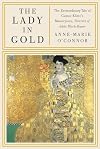
Subtitled: The Extraordinary Tale of Gustav Klimt’s Masterpiece, Portrait of Adele Bloch-Bauer
This is a story of a portrait of a beautiful Viennese Jewish salon hostess, the now-vanished turn-of-the-century Vienna cultural scene of which it became an emblem, the atrocities of the Nazi regime, and the efforts of Adele’s heirs to recover this and other paintings from an Austrian government that wished to hide the realities of war-time complicity.
My husband and I have reproductions of two show more Klimt paintings in our home – The Kiss (perhaps his most famous work) and Water Serpents I, so I was immediately interested in the book. I really appreciated that O’Connor took the reader back to the late 19th century and early 20th century to paint the landscape of the era – the parties, the intrigue, the art scene, the romantic scandals, the loving families and not-so-loving marriages. I was completely drawn into this era and felt the loss of it when the narrative moved on to the war years and how the family members endured and/or escaped.
I thought it lost a little momentum when the time frame advanced to modern day and the early efforts of Maria Altmann (Adele’s niece) to recover the paintings which had been stolen from her family. For some of the chapters in the last section of the book O’Connor switched to a first-person narrative, told from Maria’s point of view, and that seemed to interrupt the flow. Still, I was captivated from beginning to end. show less
This is a story of a portrait of a beautiful Viennese Jewish salon hostess, the now-vanished turn-of-the-century Vienna cultural scene of which it became an emblem, the atrocities of the Nazi regime, and the efforts of Adele’s heirs to recover this and other paintings from an Austrian government that wished to hide the realities of war-time complicity.
My husband and I have reproductions of two show more Klimt paintings in our home – The Kiss (perhaps his most famous work) and Water Serpents I, so I was immediately interested in the book. I really appreciated that O’Connor took the reader back to the late 19th century and early 20th century to paint the landscape of the era – the parties, the intrigue, the art scene, the romantic scandals, the loving families and not-so-loving marriages. I was completely drawn into this era and felt the loss of it when the narrative moved on to the war years and how the family members endured and/or escaped.
I thought it lost a little momentum when the time frame advanced to modern day and the early efforts of Maria Altmann (Adele’s niece) to recover the paintings which had been stolen from her family. For some of the chapters in the last section of the book O’Connor switched to a first-person narrative, told from Maria’s point of view, and that seemed to interrupt the flow. Still, I was captivated from beginning to end. show less
The Lady in Gold: The Extraordinary Tale of Gustav Klimt's Masterpiece, Portrait of Adele Bloch-Bauer by Anne-Marie O'Connor

A book about a remarkable painter and the lives and persistence of his works. About Austria and, more particularly, about Vienna. About Nazis and about Anschluss. About government seizures, theft, appropriations, reparations, guilt, justice, even family conflicts. Denial. Anti-semitism. About shuffling around unpleasant facts, events, realities.
Gustav Klimt was an artist with an eye for beauty and the skill to capture a unique impression of it on canvas. He lived in Vienna, Austria from show more the late 1800s until his death in 1918. Some of his work was regarded as pornographic, yet (or, perhaps, thus) he attracted many lady admirers, among them wealthy art lovers. One of them, Adele Bloch-Bauer, was the subject of the pivotal Klimt painting in this tale. When completed in 1907, it was hung in the Bloch-Bauer mansion. Adele died in 1925, leaving an expression of her wish that her husband, Ferdinand, would donate the portrait and five other Klimt paintings, which he owned, to the Austrian State Gallery upon his death.
Anschluss derailed the Bloch-Bauers and every other Jewish family in Vienna; almost overnight, they had everything taken from them—cars, homes, country estates, jewelry and artworks, businesses, their houses of worship, their standing and respect in the community. SS men spirited away all the artworks. The railroad took over the house, converting it into office space. Adele's niece, Maria, had just returned from her honeymoon with Fritz Altmann, her husband of ten days, who was arrested. Fritz's elder brother Bernhard, Europe's largest knitwear manufacturer, was maneuvering to keep company stock out of German hands; dangling his assets before the Nazis, he negotiated Fritz's release and helped Fritz and Maria escape to Britain. Other family members confronted worse ordeals.
When the war ended, survivors tried to get their property back, but the Austrian government was loathe to part with it. Ultimately, Maria survived when few other family members did and she became principal heir to Adele and Ferdinand Bloch-Bauer's estate. Represented by Randol Schoenberg, grandson of exiled Austrian composer Arnold Schoenberg, Maria pressed her case. Seemingly thwarted by Austrian stalling, Schoenberg took the case to U.S. courts, where the case was decided—by the U. S. Supreme Court—in the heirs' favor. You have to read it to believe it. show less
Gustav Klimt was an artist with an eye for beauty and the skill to capture a unique impression of it on canvas. He lived in Vienna, Austria from show more the late 1800s until his death in 1918. Some of his work was regarded as pornographic, yet (or, perhaps, thus) he attracted many lady admirers, among them wealthy art lovers. One of them, Adele Bloch-Bauer, was the subject of the pivotal Klimt painting in this tale. When completed in 1907, it was hung in the Bloch-Bauer mansion. Adele died in 1925, leaving an expression of her wish that her husband, Ferdinand, would donate the portrait and five other Klimt paintings, which he owned, to the Austrian State Gallery upon his death.
Anschluss derailed the Bloch-Bauers and every other Jewish family in Vienna; almost overnight, they had everything taken from them—cars, homes, country estates, jewelry and artworks, businesses, their houses of worship, their standing and respect in the community. SS men spirited away all the artworks. The railroad took over the house, converting it into office space. Adele's niece, Maria, had just returned from her honeymoon with Fritz Altmann, her husband of ten days, who was arrested. Fritz's elder brother Bernhard, Europe's largest knitwear manufacturer, was maneuvering to keep company stock out of German hands; dangling his assets before the Nazis, he negotiated Fritz's release and helped Fritz and Maria escape to Britain. Other family members confronted worse ordeals.
When the war ended, survivors tried to get their property back, but the Austrian government was loathe to part with it. Ultimately, Maria survived when few other family members did and she became principal heir to Adele and Ferdinand Bloch-Bauer's estate. Represented by Randol Schoenberg, grandson of exiled Austrian composer Arnold Schoenberg, Maria pressed her case. Seemingly thwarted by Austrian stalling, Schoenberg took the case to U.S. courts, where the case was decided—by the U. S. Supreme Court—in the heirs' favor. You have to read it to believe it. show less
The lady in gold : the extraordinary tale of Gustav Klimt's masterpiece, Portrait of Adele Bloch-Bauer by Anne-Marie O'Connor
I really liked the stories of belle-epoch Vienna. Modern life is pretty good, but if I had to live in another time, I think I'd pick Klimt's Vienna.
This would have been a better book with more Klimt and fewer lawyers. I did not enjoy the story of the lawsuit. A significant portion of the book is dedicated to the saga of Adele Bloch-Bauer's niece trying to recover several Klimt paintings through the Austrian courts. The paintings were seized by the Nazi's in 1938 and the family had been show more trying to recover them since the end of WWII. The Nazi's were terrible and the succeeding Austrian and German governments were terrible about returning stolen property. I think the paintings should have been returned, but didn't find the legal wrangling very interesting.
I am a bit anti-lawyer. The attorney who spent 8 years on a case that no one thought could be one was taking a huge risk, but his gargantuan reward is out of step with reality and decency. show less
This would have been a better book with more Klimt and fewer lawyers. I did not enjoy the story of the lawsuit. A significant portion of the book is dedicated to the saga of Adele Bloch-Bauer's niece trying to recover several Klimt paintings through the Austrian courts. The paintings were seized by the Nazi's in 1938 and the family had been show more trying to recover them since the end of WWII. The Nazi's were terrible and the succeeding Austrian and German governments were terrible about returning stolen property. I think the paintings should have been returned, but didn't find the legal wrangling very interesting.
I am a bit anti-lawyer. The attorney who spent 8 years on a case that no one thought could be one was taking a huge risk, but his gargantuan reward is out of step with reality and decency. show less
The Lady in Gold: The Extraordinary Tale of Gustav Klimt's Masterpiece, Portrait of Adele Bloch-Bauer by Anne-Marie O'Connor
If you enjoy art history or would enjoy WWII European History, you'll enjoy The Lady in Gold. My memory of learning about Gustav Klimt as a freshman in college was that he was a this jerk who lived a dissipated life, dying an early death. His overall contribution to Modern Art was not as significant as other artists at the same time, and we only briefly considered his work.
This book changed my viewpoint on Klimt's work. I thought it was interesting that he got his inspiration for his later show more paintings after a visit to Ravenna where he saw the Byzantine mosaics of Empress Theodora and that influenced his painting of Adele. I've never seen this painting, but I imagine it is amazing as it is personal.
Behind every portrait is a real person, and the stories of the people surrounding Klimt are as rich and complex as the gold leaf woven into his paintings. There is a dark side to his work that represents a civilized society that only a short time later after his death was welcoming the Third Reich with open arms. It is incredible that not only were Jewish families plundered of all their assets practically overnight, but that the Austrian government held on to stolen art over 60 years later with little apology. Anne-Marie O'Conner does an incredible job bringing us the drama of how these paintings ended up back with their rightful owners. show less
This book changed my viewpoint on Klimt's work. I thought it was interesting that he got his inspiration for his later show more paintings after a visit to Ravenna where he saw the Byzantine mosaics of Empress Theodora and that influenced his painting of Adele. I've never seen this painting, but I imagine it is amazing as it is personal.
Behind every portrait is a real person, and the stories of the people surrounding Klimt are as rich and complex as the gold leaf woven into his paintings. There is a dark side to his work that represents a civilized society that only a short time later after his death was welcoming the Third Reich with open arms. It is incredible that not only were Jewish families plundered of all their assets practically overnight, but that the Austrian government held on to stolen art over 60 years later with little apology. Anne-Marie O'Conner does an incredible job bringing us the drama of how these paintings ended up back with their rightful owners. show less
Lists
Carole's List (1)
Awards


You May Also Like


Statistics
- Works
- 6
- Members
- 729
- Popularity
- #34,829
- Rating
- 3.8
- Reviews
- 25
- ISBNs
- 25
- Languages
- 6