
Karen Wilkin
Author of Elegant Enigmas: The Art of Edward Gorey
About the Author
Karen Wilkin, a specialist in twentieth-century modernism, is a regular contributor to The New Criterion and The Wall Street Journal, and is the art critic for The Hudson Review. Educated at Barnard College and Columbia University, she has curated numerous exhibitions internationally
Image credit: photo by Edward Rubin
Works by Karen Wilkin
David Smith : the formative years : sculptures and drawings from the 1930s and 1940s (1981) 12 copies
Changing Visions: The Canadian Landscape - A Traveling Exhibition / Apercus Divers: Le Paysage Canadien - Esposition Itinerante (1976) 4 copies
Frank Stella: Indian Birds 2 copies
Pierre Gauvreau : the first decade 2 copies
Caio Fonseca 2 copies
Willard Boepple Sculpture 1 copy
Michael Mulhern 1 copy
Chester & Bentham 1 copy
Sculpture in Steel 1 copy
STUART DAVIS (1892-1964). Black and white.Essay by Karen Wilkin. Notes by William C. Agee. Nov. -Dec. 1985. (1985) 1 copy
Stanley Boxer 1 copy
Clement Greenberg 1 copy
Pat Lipsky 1 copy
Associated Works
Counterpoints: 25 Years of The New Criterion on Culture and the Arts (2007) — Contributor — 48 copies
Against the Grain: The New Criterion on Art and Intellect at the End of the Twentieth Century (1995) — Contributor — 36 copies
Tagged
Common Knowledge
- Birthdate
- 1940
- Gender
- female
- Education
- Barnard College
Columbia University - Occupations
- curator
art critic
lecturer - Awards and honors
- Woodrow Wilson Fellowship
Fulbright Scholarship - Nationality
- USA
- Associated Place (for map)
- USA
Members
Reviews

This is a lovely book, nice to touch and to hold. And I suppose it would work well as an introduction to Gorey, but I would never recommend it as such. (Instead, if you want a crash course, buy one of the Amphigoreys.)
This book is for those who already admire Gorey. Who will enjoy an academic and trivia-fun but mostly pointless essay and seeing Gorey's pictures removed from their context. Gorey was ultimately a storyteller and cutting out images denies him his place as one of America's show more preeminent masters of the comics form. But this is why I do not recommend it for neophytes --- not a reason to reject the book.
In fact, this book is worth owning just for the envelopes he illustrated before mailing home to his mother while he was away at college. Those are great.
The book is the accompaniment to a travelling exhibition of Gorey's work. Most (but not all) of the included works are shown here, but I would still love to see the show. Here's to hoping it hits the Bay Area.
One last note: great bidirectional indexing, Pomegranate Press. Very handily done.
http://thmazing.blogspot.com/2009/04/new-five.html show less
This book is for those who already admire Gorey. Who will enjoy an academic and trivia-fun but mostly pointless essay and seeing Gorey's pictures removed from their context. Gorey was ultimately a storyteller and cutting out images denies him his place as one of America's show more preeminent masters of the comics form. But this is why I do not recommend it for neophytes --- not a reason to reject the book.
In fact, this book is worth owning just for the envelopes he illustrated before mailing home to his mother while he was away at college. Those are great.
The book is the accompaniment to a travelling exhibition of Gorey's work. Most (but not all) of the included works are shown here, but I would still love to see the show. Here's to hoping it hits the Bay Area.
One last note: great bidirectional indexing, Pomegranate Press. Very handily done.
http://thmazing.blogspot.com/2009/04/new-five.html show less
 This review was written for LibraryThing Early Reviewers.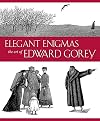
If you love Edward Gorey, you'll love this book. I've been a Gorey fan since I first sat transfixed as a child by the opening credits of "Mystery" on PBS, and while I've poured over many of his little books, and his Amphigoreys, I've never had a good context in which to view his work. Karen Wilkin's insightful essay peels back the curtain and lets us see into Gorey's world. He was complex, and certainly did not want to be labeled or fit into any neat categorization people would like to put show more him, or his work, into. This book has really fleshed out my understanding of the man and his art. I never knew what a breadth of references he drew from, or how much I was missing. I love the background given to some of his more popular work, along with the chance to glimpse more private pieces that you normally would never get a chance to see. The hand-drawn envelopes he sent his mother when he was in school were simply marvelous. This book is terrific for anyone who wants to delve a little deeper into the mind of the man who has inspired so many. While I've been perfectly content to view his work at face value for all these years, I will certainly have a deeper appreciation for them now. show less
This review was written for LibraryThing Early Reviewers.How Gory is Gorey?
The answer of course, depends entirely on you. How gory or bloody is your imagination? What's the worst your imagination can feed you? There's your answer. You see, Edward Gorey's work; full of dangerous death-dealing villains, scheming faultlessly in full Victorian garb and their helpless victims; includes a brief summation of the unfortunate events, but his actual work does not depict the actual event. He merely pokes and somewhat prods our imagination into the right show more direction-- how evil and dark the event becomes in the end is, quite entirely, up to you.
Being a longtime collector of Gorey's delightfully tenebrous work, it has often been a cause of much amusement for me over the years to hear the reasons why some viewers of his work find it to be "offensive" in nature. A particular incident comes to mind, so I will share it here with you. There were many remarks made like this from various co-workers about the Gashlycrumb Tinies images from the Edward Gorey calendar I had hanging up at my old job. When asked why they found it to be "offensive" in nature, they responded they thought the subject of Death and the children to be too violent.
I would respond to their statement with questions of my own regarding their interests. Did they ever watch the News, read the Newspaper headlines, watch TV in general, movies, or use the internet? Generally, they would answer in affirmative to one (if not all) of these activities. Did they derive any sort of entertainment from these programs? Were any of them amusing or beneficial at all in some part? Yes, they answered; mostly with a vaguely confused look on their faces. I would then point out my line of reasoning, which follows thus: Somehow, it was not so clear to them that watching or reading about Death and violence on TV, the movies or the Internet was in any way similar to the matter at hand...i.e. How could one be offended by Edward Gorey's ironic and charmingly droll stories-- which do not actually show the actual Death of any of the characters-- and NOT be offended by the very real descriptions, pictures and images which daily confront them in the Newspaper, on the Internet, the TV screen or in the movies? Something to think about, eh?
Although admittedly some of the topics of Gorey's stories can seem a bit disturbing at first glance (''A is for Amy who fell down the stairs, B is for Basil assaulted by Bears"), the more careful observer will perhaps find that they are merely "mildly unsettling", as Gorey himself put it in an interview. 'When asked if he ever thought about the effect of his work on his readers''. On page 26 of Elegant Enigmas, the author Karen Wilkin articulately goes on to describe the je ne sais quoi of the attraction, response and appreciation of Gorey-philes and his work,
"When Gorey's people venture outside, through their wrought-iron gates of their slightly creepy dwellings, they don enormous hats with veils and ankle-length fur coats...Cats and indescribable creatures behave like humans or lurk in corners. These... drawings are not simply illustrations but achieved works of art in their own right, extraordinarily various and unexpected in their imagery, and deeply evocative".
As both a friend of the late Mr. Gorey, who sadly passed away in 2000, and the author of Ascending Peculiarity: Edward Gorey On Edward Gorey, Karen Wilkin can indeed be considered a "Gorey Expert" as the inside book flap suggests. As both friend and critic, Wilkin peels away the subtle layers of the opulent and characteristically ambiguous catalog of works by Gorey, and even offers us a rare glimpse into the mind and workings of the man himself. His influences that drove his work (Louis Feuillarde's silent films, the choreography of George Balanchine), his reading habits and the books and objects he collected in his home ""The Elephant House"":obscure English novels, complete sets of obsolete children's series, tattered issues of Punch, studies of Asian ceramics, compendiums of party games, and a volume on napkin folding" (11); to the artists he admired most (Paul Klee, Rene Magritte, Odilon Redon and Balthus).
However, even with these treasured clues as to the associations and allusions that are made known to us through Wilkin's efforts, there will always be the mysteriously unreachable precipice where all the meanings lie... Just at the edge of your imagination, where all the "mildly unsettling" take place, naturally.
This book therefore, is not to be recommended to those who are "un-initiated" or not already familiar with Gorey's work. (Start with Amphigorey) This is for those readers whose literary and artistic palate already savours and delights in the dark but brilliantly wry flair of All Things Gorey. It will deepen your appreciation for the man, his work, and his gently decadent panache.
Definitely a book to be treasured, including some previously unpublished material.
4.5 stars out of 5. show less
The answer of course, depends entirely on you. How gory or bloody is your imagination? What's the worst your imagination can feed you? There's your answer. You see, Edward Gorey's work; full of dangerous death-dealing villains, scheming faultlessly in full Victorian garb and their helpless victims; includes a brief summation of the unfortunate events, but his actual work does not depict the actual event. He merely pokes and somewhat prods our imagination into the right show more direction-- how evil and dark the event becomes in the end is, quite entirely, up to you.
Being a longtime collector of Gorey's delightfully tenebrous work, it has often been a cause of much amusement for me over the years to hear the reasons why some viewers of his work find it to be "offensive" in nature. A particular incident comes to mind, so I will share it here with you. There were many remarks made like this from various co-workers about the Gashlycrumb Tinies images from the Edward Gorey calendar I had hanging up at my old job. When asked why they found it to be "offensive" in nature, they responded they thought the subject of Death and the children to be too violent.
I would respond to their statement with questions of my own regarding their interests. Did they ever watch the News, read the Newspaper headlines, watch TV in general, movies, or use the internet? Generally, they would answer in affirmative to one (if not all) of these activities. Did they derive any sort of entertainment from these programs? Were any of them amusing or beneficial at all in some part? Yes, they answered; mostly with a vaguely confused look on their faces. I would then point out my line of reasoning, which follows thus: Somehow, it was not so clear to them that watching or reading about Death and violence on TV, the movies or the Internet was in any way similar to the matter at hand...i.e. How could one be offended by Edward Gorey's ironic and charmingly droll stories-- which do not actually show the actual Death of any of the characters-- and NOT be offended by the very real descriptions, pictures and images which daily confront them in the Newspaper, on the Internet, the TV screen or in the movies? Something to think about, eh?
Although admittedly some of the topics of Gorey's stories can seem a bit disturbing at first glance (''A is for Amy who fell down the stairs, B is for Basil assaulted by Bears"), the more careful observer will perhaps find that they are merely "mildly unsettling", as Gorey himself put it in an interview. 'When asked if he ever thought about the effect of his work on his readers''. On page 26 of Elegant Enigmas, the author Karen Wilkin articulately goes on to describe the je ne sais quoi of the attraction, response and appreciation of Gorey-philes and his work,
"When Gorey's people venture outside, through their wrought-iron gates of their slightly creepy dwellings, they don enormous hats with veils and ankle-length fur coats...Cats and indescribable creatures behave like humans or lurk in corners. These... drawings are not simply illustrations but achieved works of art in their own right, extraordinarily various and unexpected in their imagery, and deeply evocative".
As both a friend of the late Mr. Gorey, who sadly passed away in 2000, and the author of Ascending Peculiarity: Edward Gorey On Edward Gorey, Karen Wilkin can indeed be considered a "Gorey Expert" as the inside book flap suggests. As both friend and critic, Wilkin peels away the subtle layers of the opulent and characteristically ambiguous catalog of works by Gorey, and even offers us a rare glimpse into the mind and workings of the man himself. His influences that drove his work (Louis Feuillarde's silent films, the choreography of George Balanchine), his reading habits and the books and objects he collected in his home ""The Elephant House"":obscure English novels, complete sets of obsolete children's series, tattered issues of Punch, studies of Asian ceramics, compendiums of party games, and a volume on napkin folding" (11); to the artists he admired most (Paul Klee, Rene Magritte, Odilon Redon and Balthus).
However, even with these treasured clues as to the associations and allusions that are made known to us through Wilkin's efforts, there will always be the mysteriously unreachable precipice where all the meanings lie... Just at the edge of your imagination, where all the "mildly unsettling" take place, naturally.
This book therefore, is not to be recommended to those who are "un-initiated" or not already familiar with Gorey's work. (Start with Amphigorey) This is for those readers whose literary and artistic palate already savours and delights in the dark but brilliantly wry flair of All Things Gorey. It will deepen your appreciation for the man, his work, and his gently decadent panache.
Definitely a book to be treasured, including some previously unpublished material.
4.5 stars out of 5. show less
This review was written for LibraryThing Early Reviewers.Every Goreyphile I know is rabid about owning his work. I think this volume was beautifully assembled. While a lot of it is already in my collection, I was transfixed by the decorated envelopes that he created before sending his letters. Absolute treasure.
This review was written for LibraryThing Early Reviewers.Lists
You May Also Like


Associated Authors
Statistics
- Works
- 88
- Also by
- 5
- Members
- 867
- Popularity
- #29,520
- Rating
- 4.1
- Reviews
- 17
- ISBNs
- 67
- Languages
- 4
