
Weike Wang
Author of Chemistry
Works by Weike Wang
Omakase 1 copy
Associated Works
The O. Henry Prize Stories 2019: 100th Anniversary Edition (2019) — Contributor — 62 copies, 2 reviews
Tagged
Common Knowledge
- Birthdate
- 20th century
- Gender
- female
- Education
- Harvard University (BS - Chemistry, PhD - Public Health)
Boston University (MFA - Writing) - Occupations
- novelist
short story writer - Awards and honors
- National Book Foundation, 5 Under 35 Honoree (2017)
- Nationality
- USA
- Birthplace
- Nanjing, China
- Places of residence
- Boston, Massachusetts, USA
Canada
Australia
Nanjing, China
Members
Reviews
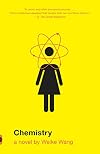
I loved school. Right up until I hit grad school. Then I couldn't wait to get out. Originally I wanted a PhD. Then I didn't. I still love learning things purely for learning's sake but I don't think I'd want to ever go back to school again and deal with the angst and the politics and all the other nonsense that has nothing to do with learning. It was not a happy place to be for me. And it is not a happy place to be for Weike Wang's unnamed narrator in the novel Chemistry. Then again, nowhere show more in her life seems particularly happy.
The narrator of this novel is standing still, afraid to choose a path. She is a PhD student in Chemistry but her project is stalled and she isn't certain she wants to continue. Her boyfriend has proposed but she's put him off, not answering him, thinking always of her own parents' unhappy marriage. She is floundering under the weight of so many expectations--from her parents, from her advisor, from her boyfriend. The only one in her life who doesn't add to her stress and pressure is her dog. Finally quitting school four years into her PhD to tutor others, she can't bring herself to tell her traditional Chinese immigrant parents and let them down. Unable to commit one way or another to her boyfriend, she keeps things open, staying behind when he moves from Boston to a school in Ohio for a job. But stasis is not living and while the narrator needs time and space to find her own path and learn to embrace uncertainty, she will examine herself, her choices, and her wants with the help of a therapist and her doctor friend.
Told entirely in the first person, the reader still feels somewhat at a remove from the main character. She is quite introspective, jumping from her present to scenes from her parents' lives to her own childhood. She can be dryly witty and the science facts sprinkled throughout the text as asides are appropriate and interesting additions to her thoughts. The writing is spare and choppy and composed in small chunks, like flash pieces knitted together into a whole. The insight into life as a second generation Chinese-American woman is interesting but overall, the main character and her life felt stultifying. The novel as a whole is very slow moving despite its slight length. I wanted to enjoy this a lot more than I did. show less
The narrator of this novel is standing still, afraid to choose a path. She is a PhD student in Chemistry but her project is stalled and she isn't certain she wants to continue. Her boyfriend has proposed but she's put him off, not answering him, thinking always of her own parents' unhappy marriage. She is floundering under the weight of so many expectations--from her parents, from her advisor, from her boyfriend. The only one in her life who doesn't add to her stress and pressure is her dog. Finally quitting school four years into her PhD to tutor others, she can't bring herself to tell her traditional Chinese immigrant parents and let them down. Unable to commit one way or another to her boyfriend, she keeps things open, staying behind when he moves from Boston to a school in Ohio for a job. But stasis is not living and while the narrator needs time and space to find her own path and learn to embrace uncertainty, she will examine herself, her choices, and her wants with the help of a therapist and her doctor friend.
Told entirely in the first person, the reader still feels somewhat at a remove from the main character. She is quite introspective, jumping from her present to scenes from her parents' lives to her own childhood. She can be dryly witty and the science facts sprinkled throughout the text as asides are appropriate and interesting additions to her thoughts. The writing is spare and choppy and composed in small chunks, like flash pieces knitted together into a whole. The insight into life as a second generation Chinese-American woman is interesting but overall, the main character and her life felt stultifying. The novel as a whole is very slow moving despite its slight length. I wanted to enjoy this a lot more than I did. show less
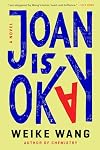
The Publisher Says: A witty, moving, piercingly insightful new novel about a marvelously complicated woman who can’t be anyone but herself, from the award-winning author of Chemistry
Joan is a thirtysomething ICU doctor at a busy New York City hospital. The daughter of Chinese parents who came to the United States to secure the American dream for their children, Joan is intensely devoted to her work, happily solitary, successful. She does look up sometimes and wonder where her true roots show more lie: at the hospital, where her white coat makes her feel needed, or with her family, who try to shape her life by their own cultural and social expectations.
Once Joan and her brother, Fang, were established in their careers, her parents moved back to China, hoping to spend the rest of their lives in their homeland. But when Joan’s father suddenly dies and her mother returns to America to reconnect with her children, a series of events sends Joan spiraling out of her comfort zone just as her hospital, her city, and the world are forced to reckon with a health crisis more devastating than anyone could have imagined.
Deceptively spare yet quietly powerful, laced with sharp humor, Joan Is Okay touches on matters that feel deeply resonant: being Chinese-American right now; working in medicine at a high-stakes time; finding one’s voice within a dominant culture; being a woman in a male-dominated workplace; and staying independent within a tight-knit family. But above all, it’s a portrait of one remarkable woman so surprising that you can’t get her out of your head.
I RECEIVED A DRC FROM THE PUBLISHER VIA NETGALLEY. THANK YOU.
My Review: First things first: I think Joan's neurodivergent. There. I said it.
What else is Joan? A disappointing daughter, who isn't going to give her mother the expected grands. An annoying sister, who is resolutely unimpressed with her brother's lavish getting-and-spending lifestyle. A breathtakingly good, effective ICU doctor at the outset of the Plague. A clueless, oblivious object of somewhat diffident romantic interest...utterly unrequited...for her neighbor. And most of all, most satisfyingly and unbreakably, Joan is herself.
If you don't like to read "women's fiction" because it's about men (how to catch), read this book. It's about Others (how to evade), when it's about anyone not Joan. And that was exactly why I enjoyed the read so much. Joan's struggles are typical for an atypical person, and her intelligence isn't a problem but a solution, making her an extra delightful companion for this reader. As everyone around her tries to make her feel she's missing out, lacking something, somehow wanting for something, and until she decides for herself what she thinks, she remains upset and at sea. In her enforced idleness (bereavement leave? for a father she felt little connection to still less affection for, shouting abuser that he was?) she loses the armor of being too busy to deal with all the mishegas of ordinary life.
It is great to read about the woman lead's sense of self being explored and resolved without a boyfriend at the beginning, middle, or end of the process. It is bracing to read the genuinely painful experience of the first-generation American in attempting to come to a happy resolution to a parent's desires when these are rooted in a wildly different world. But then, as the visibly different as well as culturally different as well as neurologically different (this last is not explicit in the text, but its factuality is the hill I'll die on) Joan thinks, "Why try to explain yourself to someone who had no capacity to listen?" She thinks this in a different relationship's context but the truth is, it is Joan all the way. She's not going to do the same thing a dozen...even, I suspect, a pair of...times expecting or hoping for different results. What kept me from giving it all five stars was, however, that very thing: I felt Joan was harshly judgmental from beginning to end, despite questioning herself and her responses as we went through the story. I think that's a bit unbelievable, it seemed to me she would've adjusted some of her private judgments...still, not a fatal flaw since I liked her from giddy-up to whoa.
In fact, in just over 200pp, I fell in love with Joan as she is. I think you might do the same. Give her a few of your hours. She's a good companion. show less
Joan is a thirtysomething ICU doctor at a busy New York City hospital. The daughter of Chinese parents who came to the United States to secure the American dream for their children, Joan is intensely devoted to her work, happily solitary, successful. She does look up sometimes and wonder where her true roots show more lie: at the hospital, where her white coat makes her feel needed, or with her family, who try to shape her life by their own cultural and social expectations.
Once Joan and her brother, Fang, were established in their careers, her parents moved back to China, hoping to spend the rest of their lives in their homeland. But when Joan’s father suddenly dies and her mother returns to America to reconnect with her children, a series of events sends Joan spiraling out of her comfort zone just as her hospital, her city, and the world are forced to reckon with a health crisis more devastating than anyone could have imagined.
Deceptively spare yet quietly powerful, laced with sharp humor, Joan Is Okay touches on matters that feel deeply resonant: being Chinese-American right now; working in medicine at a high-stakes time; finding one’s voice within a dominant culture; being a woman in a male-dominated workplace; and staying independent within a tight-knit family. But above all, it’s a portrait of one remarkable woman so surprising that you can’t get her out of your head.
I RECEIVED A DRC FROM THE PUBLISHER VIA NETGALLEY. THANK YOU.
My Review: First things first: I think Joan's neurodivergent. There. I said it.
What else is Joan? A disappointing daughter, who isn't going to give her mother the expected grands. An annoying sister, who is resolutely unimpressed with her brother's lavish getting-and-spending lifestyle. A breathtakingly good, effective ICU doctor at the outset of the Plague. A clueless, oblivious object of somewhat diffident romantic interest...utterly unrequited...for her neighbor. And most of all, most satisfyingly and unbreakably, Joan is herself.
If you don't like to read "women's fiction" because it's about men (how to catch), read this book. It's about Others (how to evade), when it's about anyone not Joan. And that was exactly why I enjoyed the read so much. Joan's struggles are typical for an atypical person, and her intelligence isn't a problem but a solution, making her an extra delightful companion for this reader. As everyone around her tries to make her feel she's missing out, lacking something, somehow wanting for something, and until she decides for herself what she thinks, she remains upset and at sea. In her enforced idleness (bereavement leave? for a father she felt little connection to still less affection for, shouting abuser that he was?) she loses the armor of being too busy to deal with all the mishegas of ordinary life.
It is great to read about the woman lead's sense of self being explored and resolved without a boyfriend at the beginning, middle, or end of the process. It is bracing to read the genuinely painful experience of the first-generation American in attempting to come to a happy resolution to a parent's desires when these are rooted in a wildly different world. But then, as the visibly different as well as culturally different as well as neurologically different (this last is not explicit in the text, but its factuality is the hill I'll die on) Joan thinks, "Why try to explain yourself to someone who had no capacity to listen?" She thinks this in a different relationship's context but the truth is, it is Joan all the way. She's not going to do the same thing a dozen...even, I suspect, a pair of...times expecting or hoping for different results. What kept me from giving it all five stars was, however, that very thing: I felt Joan was harshly judgmental from beginning to end, despite questioning herself and her responses as we went through the story. I think that's a bit unbelievable, it seemed to me she would've adjusted some of her private judgments...still, not a fatal flaw since I liked her from giddy-up to whoa.
In fact, in just over 200pp, I fell in love with Joan as she is. I think you might do the same. Give her a few of your hours. She's a good companion. show less
I have to say that part of my love for this book involved relating to quite a bit of the narrator's experiences. Her voice is deadpan and self-deprecatory, but unlike a lot of hyper-aware modern fiction it's not an ironic pose to appear clever. It's just that emotional distance has become a coping mechanism for the narrator to deal with the fallout of a turbulent family background. I enjoyed the rhythm of Wang's spare prose. She can convey information and register shifts in tone with a show more minimal use of words. There is a nimble grace to how the narrator's thoughts flit between subjects and time frames.
Although light on the surface, the book is unexpectedly rich and dark when it delves into the effects of immigration on the family unit (the political is personal) and the effects of strict parenting on the narrator. The psychic scars are always there; this is about the narrator's attempts to stop picking at them to her own detriment.
Most of her characters are left nameless, including the narrator, and they all stand out as distinct invidivuals. You get a definite sense of their personality, even of the newborn baby and the narrrator's wonderful dog. The narrator's attempt to understand her parents is the most moving part of the book, for me. It's a tender, bittersweet novel written with love and generosity. I'm impressed with what Wang has achieved in her debut novel and look forward to more of her writing. show less
Although light on the surface, the book is unexpectedly rich and dark when it delves into the effects of immigration on the family unit (the political is personal) and the effects of strict parenting on the narrator. The psychic scars are always there; this is about the narrator's attempts to stop picking at them to her own detriment.
Most of her characters are left nameless, including the narrator, and they all stand out as distinct invidivuals. You get a definite sense of their personality, even of the newborn baby and the narrrator's wonderful dog. The narrator's attempt to understand her parents is the most moving part of the book, for me. It's a tender, bittersweet novel written with love and generosity. I'm impressed with what Wang has achieved in her debut novel and look forward to more of her writing. show less

The unnamed protagonist of this short novel is a graduate student in chemistry who is struggling with, or perhaps avoiding, a number of problems: her growing dissatisfaction with life in the lab, intense pressure to succeed from her demanding Chinese-American parents, the difficult legacy of those parents' dysfunctional marriage, and a deep-seated terror of saying yes to any of her fiancé's many marriage proposals.
This is all told not so much as a story, but as a slightly disjointed show more internal monologue, a technique that works really well because the character's internal voice is readable and interesting, with some appealing touches of dry humor. I was particularly pleased by it because it's really very rare that a literary author even tries, much less succeeds, at getting inside the head of a science-y kind of person. Ian McEwan does it superbly, but I'm hard-pressed to think of another example... except for this. The narrator here is a strange person, a messed-up person, and a person with a very different background from me, but her internal voice somehow felt instantly recognizable to former-physics major me. It felt very right.
The structure of the novel did throw me just a little at first, only because it uses present tense consistently whether the narrator is thinking about events in her present or things that happened far in the past. This was a bit confusing for a while, or at least it took some getting used to, but eventually I almost stopped even noticing it. And an interesting thought occurred to me about this narrative mechanism about fifty pages in, when the protagonist is contemplating the degree to which she thinks in Chinese vs in English. I don't speak any form of Chinese, but I have been told that it lacks a grammatical marking for past tense, instead relying on context to pin down when a particular event happened (or happens, or is happening). Which is exactly what the prose here is doing in English. And I rather like that thought. It makes something that at first looks like a simple stylistic quirk feel instead like an expression of character.
Anyway, I enjoyed this one. My only regret is picking it up when I was kind of busy and had to keep putting it down, because it feels like it would work best if read almost straight through, something that should not be too difficult if you've got a couple of hours to spare. show less
This is all told not so much as a story, but as a slightly disjointed show more internal monologue, a technique that works really well because the character's internal voice is readable and interesting, with some appealing touches of dry humor. I was particularly pleased by it because it's really very rare that a literary author even tries, much less succeeds, at getting inside the head of a science-y kind of person. Ian McEwan does it superbly, but I'm hard-pressed to think of another example... except for this. The narrator here is a strange person, a messed-up person, and a person with a very different background from me, but her internal voice somehow felt instantly recognizable to former-physics major me. It felt very right.
The structure of the novel did throw me just a little at first, only because it uses present tense consistently whether the narrator is thinking about events in her present or things that happened far in the past. This was a bit confusing for a while, or at least it took some getting used to, but eventually I almost stopped even noticing it. And an interesting thought occurred to me about this narrative mechanism about fifty pages in, when the protagonist is contemplating the degree to which she thinks in Chinese vs in English. I don't speak any form of Chinese, but I have been told that it lacks a grammatical marking for past tense, instead relying on context to pin down when a particular event happened (or happens, or is happening). Which is exactly what the prose here is doing in English. And I rather like that thought. It makes something that at first looks like a simple stylistic quirk feel instead like an expression of character.
Anyway, I enjoyed this one. My only regret is picking it up when I was kind of busy and had to keep putting it down, because it feels like it would work best if read almost straight through, something that should not be too difficult if you've got a couple of hours to spare. show less
Lists
Awards


You May Also Like


Associated Authors
Statistics
- Works
- 9
- Also by
- 3
- Members
- 1,612
- Popularity
- #15,986
- Rating
- 3.7
- Reviews
- 109
- ISBNs
- 28
- Languages
- 4