
Charles Yu (1) (1976–)
Author of How to Live Safely in a Science Fictional Universe
For other authors named Charles Yu, see the disambiguation page.
About the Author
Image credit: By Larry D. Moore, CC BY-SA 3.0, https://commons.wikimedia.org/w/index.php?curid=17098066
Works by Charles Yu
Associated Works
A People's Future of the United States: Speculative Fiction from 25 Extraordinary Writers (2019) — Contributor — 539 copies, 20 reviews
From a Certain Point of View: 40 Stories Celebrating 40 Years of The Empire Strikes Back (2020) — Contributor — 512 copies, 8 reviews
The Thackery T. Lambshead Cabinet of Curiosities: Exhibits, Oddities, Images, and Stories from Top Authors and Artists (2011) — Contributor — 487 copies, 17 reviews
The Decameron Project: 29 New Stories from the Pandemic (2020) — Contributor — 157 copies, 5 reviews
Fakes: An Anthology of Pseudo-Interviews, Faux-Lectures, Quasi-Letters, "Found" Texts, and Other Fraudulent Artifacts (2012) — Contributor — 85 copies, 4 reviews
Polychrome Futures and Fantasies — Contributor — 8 copies
Tagged
Common Knowledge
- Other names
- You Chao-Kai/游朝凱
- Birthdate
- 1976
- Gender
- male
- Education
- University of California, Berkeley
Columbia University Law School - Occupations
- writer
lawyer
story editor - Awards and honors
- National Book Foundation "5 Under 35" (2007)
- Agent
- Gary Heidt
- Relationships
- Yu, Kelvin (brother)
- Nationality
- USA
- Birthplace
- Los Angeles, California, USA
- Places of residence
- Santa Monica, California, USA
- Associated Place (for map)
- California, USA
Members
Reviews
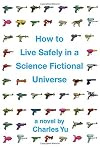
This lovely novel starts off well enough, as a pleasantly smart-alecky story about a time-machine repairman (who also happens to be named Charles Yu); between clients (to the extent that "between" means anything when you live in a time machine), he travels from place/time to place/time searching for his missing father. There are, eventually, the obligatory time travel paradoxes, one of which involves the future Charles handing the present Charles a book and telling him that it contains all show more the answers. The book, of course, is Charles Yu's How to Live Safely in a Science Fictional Universe.
And if the book were just that, it would be an amusing diversion. But while you're not looking, the novel sneaks up on you and becomes a poignant, melancholy meditation on memory -- which is, after all, its own sort of time machine -- and its cousins, nostalgia and regret.
The writing is a joy to read, and often caught me off guard with the beauty of its insights. I love, for instance, this paragraph:
"Hitting the peak of your life's trajectory is not the painful part. The painful day comes earlier, comes before things start going downhill, comes when things are still good, still pretty good, still just fine. It comes when you think you are still on your way up, but you can feel that the velocity isn't there anymore, the push behind you is gone, it's all inertia from here, it's all coasting, it's all momentum, and there will be more, there will be higher days, but for the first time, it's in sight. The top. The best day of your life. There it is. Not as high as you thought it was going to be, and earlier in your life, and also closer to where you are now, startling in its closeness. That there's a ceiling to this, there's a cap, there's a best-case scenario and you are living it right now. To see that look in your parents' faces at the dinner table at ten, and not recognize it, then to see it again at eighteen and recognize it as something to recognize, and then to see it at twenty-five and to recognize it for what it is."
This is a marvelous little jewel of a book. show less
And if the book were just that, it would be an amusing diversion. But while you're not looking, the novel sneaks up on you and becomes a poignant, melancholy meditation on memory -- which is, after all, its own sort of time machine -- and its cousins, nostalgia and regret.
The writing is a joy to read, and often caught me off guard with the beauty of its insights. I love, for instance, this paragraph:
"Hitting the peak of your life's trajectory is not the painful part. The painful day comes earlier, comes before things start going downhill, comes when things are still good, still pretty good, still just fine. It comes when you think you are still on your way up, but you can feel that the velocity isn't there anymore, the push behind you is gone, it's all inertia from here, it's all coasting, it's all momentum, and there will be more, there will be higher days, but for the first time, it's in sight. The top. The best day of your life. There it is. Not as high as you thought it was going to be, and earlier in your life, and also closer to where you are now, startling in its closeness. That there's a ceiling to this, there's a cap, there's a best-case scenario and you are living it right now. To see that look in your parents' faces at the dinner table at ten, and not recognize it, then to see it again at eighteen and recognize it as something to recognize, and then to see it at twenty-five and to recognize it for what it is."
This is a marvelous little jewel of a book. show less
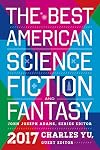
My decision to go back and read the Best American Science Fiction and Fantasy anthologies for years I'd previously missed continues to pay off spectacularly. There are maybe two stories in here that didn't 100% work for me, but those are among the shortest in the book, and are interesting even in their failure to completely click with me. Otherwise, the contents range from pretty good to fan-fucking-tastic, making it a terrific reading experience, as a whole.
One could probably spend a lot of show more time analyzing the interesting trends and patterns and repeated themes to be seen in this particular collection of stories, despite their widely varying perspectives and voices. I'm not necessarily up to doing much of that, myself, but one thing I definitely did notice is the way a surprising number of them draw on ideas from some venerable old subgenres -- especially 1950s monster movies and teen dramas, and classic kids' portal fantasies -- to do things that feel meaningful and relevant in the present day. show less
One could probably spend a lot of show more time analyzing the interesting trends and patterns and repeated themes to be seen in this particular collection of stories, despite their widely varying perspectives and voices. I'm not necessarily up to doing much of that, myself, but one thing I definitely did notice is the way a surprising number of them draw on ideas from some venerable old subgenres -- especially 1950s monster movies and teen dramas, and classic kids' portal fantasies -- to do things that feel meaningful and relevant in the present day. show less

Rarely is a small book so generous with the truth all wrapped in a velvet glove of humor. It would be a mistake to be put off by its format - we are all, after all, the writers, directors, and actors in our own movies. Rewarding in every aspect - satire, social commentary, coming of age, love story, Hollywood send-up. Recommended.
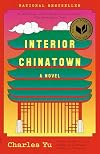
The format of this novel as a metafictional sometimes hallucinatory screenplay is one I'm sort of surprised has met with as much favor as it has. It's not the most accessible, but it is super interesting and will give you a perspective you probably haven't spent much time considering before (at least I hadn't). The format of the novel as screenplay at first led me into confusion, wondering what was "real" and what was "fiction" inside this fictional world. Is his dad really a kung-fu expert show more as he's presented, or is that part of the Kung Fu Guy metaphor for making it vs. not making it as an Asian-American? And then realizing that the screenplay format reinforces the idea of the main character playing a role in his normal everyday life as an Asian American was an a-ha moment. As he says in a section in which the Asian-American experience is essentially placed on trial:
Which gets to how this novel is not just about how America treats and has historically treated Asian-Americans, it's about how Asian-Americans navigate and behave in this reality. How people perform the role expected of them, to what degree they are forced into doing it ("No one will hire you because you don't have an accent. It's weird.") and to what degree they choose it themselves. The main character's marriage falls apart evidently because he can't let go of that role that's expected of him as an Asian-American, and later watching his daughter he reflects on the choice he's made and how he hopes she'll be different:
It's a powerful and inventive novel, well worth its win of the National Book Award. show less
But at the same time, I'm guilty, too. Guilty of playing this role. Letting it define me. Internalizing the role so completely that I've lost track of where reality starts and the performance begins.
Which gets to how this novel is not just about how America treats and has historically treated Asian-Americans, it's about how Asian-Americans navigate and behave in this reality. How people perform the role expected of them, to what degree they are forced into doing it ("No one will hire you because you don't have an accent. It's weird.") and to what degree they choose it themselves. The main character's marriage falls apart evidently because he can't let go of that role that's expected of him as an Asian-American, and later watching his daughter he reflects on the choice he's made and how he hopes she'll be different:
Watching her is like finding old letters, of things you knew thirty years ago and haven't thought of since. How to feel, how to be yourself. Not how to perform or act. How to be.
It's a powerful and inventive novel, well worth its win of the National Book Award. show less
Lists
Awards


You May Also Like


Associated Authors
Statistics
- Works
- 11
- Also by
- 26
- Members
- 5,274
- Popularity
- #4,725
- Rating
- 3.6
- Reviews
- 288
- ISBNs
- 62
- Languages
- 8
- Favorited
- 4
