
About the Author
Heather Sellers is an award-winning writer and professor who has taught writing workshops for the past twenty years
Image credit: Roosevelt MFA program
Works by Heather Sellers
Page After Page: Discover the Confidence & Passion You Need to Start Writing & Keep Writing (No Matter What) (2005) 321 copies, 2 reviews
You Don't Look Like Anyone I Know: A True Story of Family, Face Blindness, and Forgiveness (2010) 313 copies, 43 reviews
Chapter After Chapter: Discover the Dedication and Focus You Need to Write the Book of Your Dreams (2007) 154 copies, 3 reviews
Associated Works
Eat Joy: Stories and Comfort Food from 31 Celebrated Writers (2019) — Contributor — 84 copies, 3 reviews
Best of the South: From the Second Decade of New Stories from the South (2005) — Contributor — 52 copies
Family Trouble: Memoirists on the Hazards and Rewards of Revealing Family (2013) — Contributor — 21 copies
When She Named Fire: An Anthology of Contemporary Poetry by American Women (2008) — Contributor — 15 copies
Tagged
Common Knowledge
- Birthdate
- 1964
- Gender
- female
- Education
- Florida State University (PhD - English and Creative Writing)
- Occupations
- professor (English)
memoirist
non-fiction writer
short story writer
children's book author
poet - Organizations
- Hope College
- Awards and honors
- NEA Fellowship
- Nationality
- USA
- Birthplace
- Orlando, Florida, USA
- Associated Place (for map)
- Florida, USA
Members
Reviews
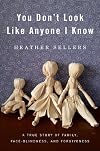
Prepare yourself for sorrow and stark reality in You Don’t Look like Anyone I Know. Illness propels this memoir, but the author’s self-discovery of her face blindness and demands that her neurologist properly diagnose her far outweighed any disquietude experienced by this reader.
Coping with face blindness, the inability to recognize faces reliably seemed to me a secondary theme of this incredible memoir. Ms. Sellers’ real triumph was surviving the war zone created by the illnesses of show more her parents. Her mother’s paranoid tendencies, magnified by her protective instincts toward her children, were bizarre. Desperately desirous but fearful of seeing her father, Sellers manages to come to grips with his philandering and cross-dressing.
In her book trailer, Ms. Sellers explains that prosopagnosia is a memory not a visual problem. She writes charitably and honestly about the family that branded her the crazy one. I didn’t mind that her writing lacked cohesion at times. I thought it accurately reflected the chaos of her childhood. She manages to keep enough distance between herself and her story that I saw no self-pity. Rather she spoke graciously of her parents. At the end of her memoir she states that “deeply flawed love and deeply flawed vision can coexist.”
Reviewing a disturbing book is difficult. Many other reviewers have complained about yet another “disturbing childhood/dysfunctional family memoir.” I agree many of those exist, but I submit that a book review is just that—a comment on the world the author has painted, not a woe-is-me about the reviewer’s reading history.
Despite the title, I found this memoir less about face blindness and more about the strength Ms. Sellers gleaned from her survival and her courage to trust her own perceptions.
For a comfortable, relaxing read, find a romance novel. To unearth hard-hitting reality, sink your teeth into You Don’t Look Like Anyone I Know.
Reviewed by Holly Weiss, author of Crestmont show less
Coping with face blindness, the inability to recognize faces reliably seemed to me a secondary theme of this incredible memoir. Ms. Sellers’ real triumph was surviving the war zone created by the illnesses of show more her parents. Her mother’s paranoid tendencies, magnified by her protective instincts toward her children, were bizarre. Desperately desirous but fearful of seeing her father, Sellers manages to come to grips with his philandering and cross-dressing.
In her book trailer, Ms. Sellers explains that prosopagnosia is a memory not a visual problem. She writes charitably and honestly about the family that branded her the crazy one. I didn’t mind that her writing lacked cohesion at times. I thought it accurately reflected the chaos of her childhood. She manages to keep enough distance between herself and her story that I saw no self-pity. Rather she spoke graciously of her parents. At the end of her memoir she states that “deeply flawed love and deeply flawed vision can coexist.”
Reviewing a disturbing book is difficult. Many other reviewers have complained about yet another “disturbing childhood/dysfunctional family memoir.” I agree many of those exist, but I submit that a book review is just that—a comment on the world the author has painted, not a woe-is-me about the reviewer’s reading history.
Despite the title, I found this memoir less about face blindness and more about the strength Ms. Sellers gleaned from her survival and her courage to trust her own perceptions.
For a comfortable, relaxing read, find a romance novel. To unearth hard-hitting reality, sink your teeth into You Don’t Look Like Anyone I Know.
Reviewed by Holly Weiss, author of Crestmont show less
 This review was written for LibraryThing Early Reviewers.
You Don't Look Like Anyone I Know: A True Story of Family, Face Blindness, and Forgiveness by Heather Sellers

This fascinating book is about a woman with the single most dysfunctional family life in history. Heather spent most of her formative years bouncing between the homes of her paranoid schizophrenic mother and her abusive alcoholic father. It's not until she's thirty-eight and married that she begins to wonder about her own neurological problems. Heather can't recognize people. She's kissed strange men in the grocery story because she thought they were her husband. She's walked past her own show more mother at a gas station without recognizing her. Heather is face-blind. Follow the fascinating and emotional story of Heather's realization of her impairment and her quest to make it known to her friends and colleagues, many of whom simply refuse to believe her. show less
You Don't Look Like Anyone I Know: A True Story of Family, Face Blindness, and Forgiveness by Heather Sellers
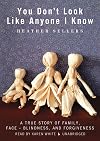
If Heather Sellers were a physicist she'd be the Queen of Chaos; but since she's a professor of English maybe she should have the title Abbess of Ambiguity. Her life has been lived in uncertain circumstances. She was raised by a woman she later realizes is paranoid schizophrenic and who brightly discusses her delusions as if they are real and rails against the dangers inherent in sleeping at other people's houses, eating restaurant food, or using the telephone. She attended new schools every show more year or even more than one a year. Her father, who left the family when she was young, is an irresponsible alcoholic, cross-dressing womanizer who might hit her in the head to emphasize a point, and who invited strangers into the home he shared with his unprotected daughter. Neither father nor mother wanted to answer questions about their lives, "If I tell you I'll have to kill you" her father frequently replies. At the age of 30 Sellers starts looking into her family's mental health history because she thinks something genetic could be going on. Both her parents tell her throughout her life that she's not quite right mentally. Her cousin tells her that her aunt didn't leave her house for the last 3 years of her life or her bedroom for the last 1 year; that one family member had to cut a trip to Europe short and return home because of a paranoid episode and that she herself was hospitalized with exhaustion after the birth of her children but she assured Sellers that there was no mental illness in the family. Heather marries an alcoholic libertarian who is divorced from a schizophrenic and refuses to lay down rules for his children because it might give them a complex. This history in itself is enough to set anyone's life careening off into unknown territory.
Added to the uncertainty of her family is Sellers' tendency to get lost in new or newly visited places and her difficulty recognizing people. It takes Sellers 30 years of embarrassment and of having people accuse her of being stuck-up because she ignores them, of kissing the wrong men at parties and being scared when her stepsons confront her in public before she starts searching for a name for her and her mother's difficulties and in a round about way discovers face blindness, prosopagnosia. When she first starts reading about this condition it is described as being very rare, as usually being the result of a stroke or some other trauma to the brain and as effecting only about 100 people in the world. Being a very intelligent person (which is frequently an aspect of prosopagnosia) she does extensive research about the condition and is finally able to find scientists studying the subject who are willing to test her. Viola, she finds she has a severe case. She looks at her husband, closes her eyes and finds she cannot describe either him or herself.
She finds a therapist, certainly a different kind of therapist than the ones she's heard of, because this one gives her advice. He keeps emphasizing that she needs to tell people of her condition. She keeps rejecting that idea. In fact, she decides that what she really needs to do is move to another town, change jobs, be exposed to new people who won't expect her to recognize them.
This is such an excellent book because Sellers is able to describe what it is like to try to understand yourself when you want to be both exactly like and completely different from everyone else. Life is ambiguity and seems to get more ambiguous daily, and Sellers has learned to live with, and even welcome, uncertainty. Oliver Sacks, who also has a genetic form of face blindness, says that the condition effects 2% of the population, Sellers says in some form it effects 1 in 50 people (Jane Goodall has it to a lesser degree). Yet people have to be cajoled into coming out, into letting the rest of the world know of their difficulty. Doesn't that apply to all of us? We want the world to think we're perfect, we're afraid to let others know of our weak spots. Forgiveness is in the subtitle of the book because over the course of her young life, in spite of tremendous difficulties Sellers learns to forgive her very flawed parents, her loving, though almost equally flawed husband, her dismissive stepsons, and herself.
The only problem I have with the book is its cover which shows a busy kind of background with 3 plain faceless cornhusk dolls in the foreground. This is absolutely not what people with face blindness see. The cover should have the dolls dressed in various clothes with different hairstyles and blank faces. The people afflicted notice voice, gait, clothes, and hair - that's the only way they can recognize differences between people. show less
Added to the uncertainty of her family is Sellers' tendency to get lost in new or newly visited places and her difficulty recognizing people. It takes Sellers 30 years of embarrassment and of having people accuse her of being stuck-up because she ignores them, of kissing the wrong men at parties and being scared when her stepsons confront her in public before she starts searching for a name for her and her mother's difficulties and in a round about way discovers face blindness, prosopagnosia. When she first starts reading about this condition it is described as being very rare, as usually being the result of a stroke or some other trauma to the brain and as effecting only about 100 people in the world. Being a very intelligent person (which is frequently an aspect of prosopagnosia) she does extensive research about the condition and is finally able to find scientists studying the subject who are willing to test her. Viola, she finds she has a severe case. She looks at her husband, closes her eyes and finds she cannot describe either him or herself.
She finds a therapist, certainly a different kind of therapist than the ones she's heard of, because this one gives her advice. He keeps emphasizing that she needs to tell people of her condition. She keeps rejecting that idea. In fact, she decides that what she really needs to do is move to another town, change jobs, be exposed to new people who won't expect her to recognize them.
This is such an excellent book because Sellers is able to describe what it is like to try to understand yourself when you want to be both exactly like and completely different from everyone else. Life is ambiguity and seems to get more ambiguous daily, and Sellers has learned to live with, and even welcome, uncertainty. Oliver Sacks, who also has a genetic form of face blindness, says that the condition effects 2% of the population, Sellers says in some form it effects 1 in 50 people (Jane Goodall has it to a lesser degree). Yet people have to be cajoled into coming out, into letting the rest of the world know of their difficulty. Doesn't that apply to all of us? We want the world to think we're perfect, we're afraid to let others know of our weak spots. Forgiveness is in the subtitle of the book because over the course of her young life, in spite of tremendous difficulties Sellers learns to forgive her very flawed parents, her loving, though almost equally flawed husband, her dismissive stepsons, and herself.
The only problem I have with the book is its cover which shows a busy kind of background with 3 plain faceless cornhusk dolls in the foreground. This is absolutely not what people with face blindness see. The cover should have the dolls dressed in various clothes with different hairstyles and blank faces. The people afflicted notice voice, gait, clothes, and hair - that's the only way they can recognize differences between people. show less
This review was written for LibraryThing Early Reviewers.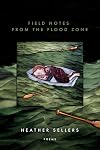
An atmospheric collection of poems which powerfully evoke Florida, especially the weather and the looming certainty of eventual environmental disaster. These poems are ominous and weighty as a storm cloud but still carry a clear appreciation of the beauty that accompanies the aftermath of loss.
This review was written for LibraryThing Early Reviewers.Lists
Just Make Art (1)
Awards


You May Also Like


Associated Authors
Statistics
- Works
- 10
- Also by
- 6
- Members
- 978
- Popularity
- #26,341
- Rating
- 3.8
- Reviews
- 54
- ISBNs
- 30
- Favorited
- 3
