
Otto Julius Bierbaum (1865–1910)
Author of Samalio Pardulus
About the Author
Image credit: Photo © ÖNB/Wien
Series
Works by Otto Julius Bierbaum
Pankrazius Graunzer 4 copies
Sonderbare Geschichten (3 Bände) 3 copies
Aus dem Irrgarten der Liebe 3 copies
Sur Venise 2 copies
Briefe an Gemma 1 copy
Ausgewählte Gedichte 1 copy
Prinz Kuckuck Leben, Taten, Meinungen und Höllenfahrt eines Wollüstlings; in einem Zeitroman Bd. 1 1 copy
Prinz Kuckuck Leben, Taten, Meinungen und Höllenfahrt eines Wollüstlings : in einem Zeitroman Bd. 2 1 copy
Prinz Kuckuck Leben, Taten, Meinungen und Höllenfahrt eines Wollüstlings; in einem Zeitroman 3 1 copy
Hamburger Lesehefte : Otto Julius Bierbaum : Zäpfel Kerns Abenteuer : Ein Märchen (1986) — Text — 1 copy
Hans Thoma 1 copy
Gesammelte Werke 1 copy
Biographie 1 copy
Das Reimkarussell 1 copy
Zwei Stilpe-Komödien 1 copy
Deutsche Chansons 1 copy
Das schöne Mädchen von Bao 1 copy
Associated Works
50 seltsame Geschichten — Contributor — 1 copy
Velhagen und Klasings Almanach 1909 — Contributor — 1 copy
Tagged
Common Knowledge
- Other names
- MÖBIUS, Martin
BIERBAUM, Otto Julius - Birthdate
- 1865-06-28
- Date of death
- 1910-02-01
- Gender
- male
- Occupations
- journalist
editor
writer
librettist - Nationality
- Germany
- Birthplace
- Grünberg, Schlesien, Deutsches Reich
- Places of residence
- Dresden, Sachsen, Deutschland
Leipzig, Sachsen, Deutschland
München, Bayern, Deutschland - Place of death
- Dresden, Sachsen, Deutschland
- Associated Place (for map)
- Sachsen, Deutschland
Members
Discussions
Samalio Pardulus in The Chapel of the Abyss (July 2021)
Reviews

Samalio Pardulus is named after its principal character, a creature of transcendent decadence and misanthropy in the mode of the earlier Des Essientes of Huysmans and the later Fantazius Mallare of Ben Hecht. Like Huysmans, author Bierbaum was involved in the Symbolist culture that detached itself from Romanticism and contributed to Expressionism, although in this little book the Gothic elements are quite palpable.
Samalio Pardulus was a painter in medieval Albania. Rather than documenting show more him from an omniscient third-person narrator as in À rebours or through the medium of his own written journals as in Fantazius Mallare, Bierbaum places two narrative frames between the reader and the character. First, there is a "staid philistine" Italian painter Messer Giacomo, imported to instruct Samalio, whose journals form the purported documentary basis of the story in the form of extensive quotations. Then there is the anonymous archivist who introduces and comments on Giacomo's account. Through the course of the book, this archivist outside of the quotes retreats to invisibility, having left behind only a suitable readerly suspicion regarding Giacomo's perceptiveness.
Samalio himself is ugly, talented, and blasphemous. He is concerned with making objects out of his imaginings, and to the extent that this work tends to horrify his pious teacher, his explanations of it become theological, deprecating a cosmic demiurge and exalting his own "godly pleasure in the grotesque" (14). Beyond his inchoate gnosticism and solipsism, Samalio defines himself with incestuous ambitions for his beautiful sister. These eventuate in a numinous domestic apocalypse. The interrelation of the principal characters--Samalio, his sister Maria Bianca, their father the Count, an unnamed watchman, and Messer Giacomo--eventually becomes so outre that it awoke in me suspicions of allegory.
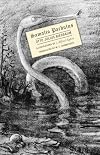
This first English edition is illustrated with many full-page charcoal drawings by Alfred Kubin that appeared in the original 1911 German edition. Some of these depict Samalio's paintings, but most are scenes from the novel. show less
Samalio Pardulus was a painter in medieval Albania. Rather than documenting show more him from an omniscient third-person narrator as in À rebours or through the medium of his own written journals as in Fantazius Mallare, Bierbaum places two narrative frames between the reader and the character. First, there is a "staid philistine" Italian painter Messer Giacomo, imported to instruct Samalio, whose journals form the purported documentary basis of the story in the form of extensive quotations. Then there is the anonymous archivist who introduces and comments on Giacomo's account. Through the course of the book, this archivist outside of the quotes retreats to invisibility, having left behind only a suitable readerly suspicion regarding Giacomo's perceptiveness.
Samalio himself is ugly, talented, and blasphemous. He is concerned with making objects out of his imaginings, and to the extent that this work tends to horrify his pious teacher, his explanations of it become theological, deprecating a cosmic demiurge and exalting his own "godly pleasure in the grotesque" (14). Beyond his inchoate gnosticism and solipsism, Samalio defines himself with incestuous ambitions for his beautiful sister. These eventuate in a numinous domestic apocalypse. The interrelation of the principal characters--Samalio, his sister Maria Bianca, their father the Count, an unnamed watchman, and Messer Giacomo--eventually becomes so outre that it awoke in me suspicions of allegory.
This first English edition is illustrated with many full-page charcoal drawings by Alfred Kubin that appeared in the original 1911 German edition. Some of these depict Samalio's paintings, but most are scenes from the novel. show less
I found this to be neither unlikeable nor entirely what I was after. I was not able to tie the story to the ideas I am struggling with. This is a short, readable book.

No valid German National Library records retrieved.
Lists
You May Also Like
Associated Authors
Statistics
- Works
- 65
- Also by
- 5
- Members
- 176
- Popularity
- #121,981
- Rating
- 3.8
- Reviews
- 3
- ISBNs
- 31
- Languages
- 2
- Favorited
- 1