
Jan Knappert (1927–2005)
Author of Pacific Mythology: An Encyclopedia of Myth and Legend
About the Author
Image credit: Jan Knappert
Works by Jan Knappert
Textual Sources for the Study of Islam (Textual Sources for the Study of Religion) (1986) — Translator — 55 copies, 1 review
Associated Works
Tagged
Common Knowledge
- Birthdate
- 1927-01-14
- Date of death
- 2005-05-30
- Gender
- male
- Organizations
- Catholic University of Leuven
- Nationality
- Netherlands
- Birthplace
- Heemstede, Netherlands
- Place of death
- Hilversum, Netherlands
- Associated Place (for map)
- Netherlands
Members
Reviews

If you've never seen a whole loaf, a half a loaf can look pretty good.
The author of this guide admits to wishing it could have been longer, and I'm sure there is something to be said for that view. After all, even in my ignorance of Hindu mythology, I've come across a few stories not found in this book, and I'm sure someone who knows more would find bigger holes.
But I would still call it a pretty good book. Hinduism is a complex religion -- a pantheon, a set of stories, a complex set of show more writings, a number of philosophies. This volume gives a taste of each. So we learn about the three basic gods -- Brahma, S(h)iva, and Vishnu. We learn about some of their incarnations. We also read stories about them. The tales are probably only the barest subset of those known in Hinduism -- but they serve to give the bare facts about the gods some context. More stories might have been better. On the other hand, by keeping the scope of the volume relatively brief, we are spared the dangers of the extremely complicated philosophical discussions that might arise.
The result is a book which can serve as a reference, but which can also be read with some pleasure simply to learn about Hindu and Buddhist mythology. If you want to know more about, say, Lakshmi or Ganesha, you might wish the book were longer. But if you want to know about Hinduism as a whole, this is an interesting place to start. show less
The author of this guide admits to wishing it could have been longer, and I'm sure there is something to be said for that view. After all, even in my ignorance of Hindu mythology, I've come across a few stories not found in this book, and I'm sure someone who knows more would find bigger holes.
But I would still call it a pretty good book. Hinduism is a complex religion -- a pantheon, a set of stories, a complex set of show more writings, a number of philosophies. This volume gives a taste of each. So we learn about the three basic gods -- Brahma, S(h)iva, and Vishnu. We learn about some of their incarnations. We also read stories about them. The tales are probably only the barest subset of those known in Hinduism -- but they serve to give the bare facts about the gods some context. More stories might have been better. On the other hand, by keeping the scope of the volume relatively brief, we are spared the dangers of the extremely complicated philosophical discussions that might arise.
The result is a book which can serve as a reference, but which can also be read with some pleasure simply to learn about Hindu and Buddhist mythology. If you want to know more about, say, Lakshmi or Ganesha, you might wish the book were longer. But if you want to know about Hinduism as a whole, this is an interesting place to start. show less

These Swahili songs of love and passion make their first appearance in English translation, printed parallel to their Swahili originals.

kind of arbitrary collection of topics and sources, w no historical background or context, and no review of the primary or secondary literature
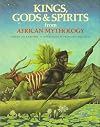
At the end: list of symbols, bibliography, Index. Includes, spirits, heroes, fables, saints, and info on ancient kingdoms.
Lists
You May Also Like


Associated Authors
Statistics
- Works
- 38
- Also by
- 4
- Members
- 641
- Popularity
- #39,338
- Rating
- 3.6
- Reviews
- 7
- ISBNs
- 59
- Languages
- 9