
Daniel E. Sutherland (1) (1946–)
Author of The Expansion of Everyday Life 1860-1876 (Everyday Life in America)
For other authors named Daniel E. Sutherland, see the disambiguation page.
About the Author
Daniel E. Sutherland is Distinguished Professor of History, University of Arkansas. Known for his acclaimed book chronicling 19th-century America, he is also the co-author of Whistler's Mother: Portrait of an Extraordinary Life.
Works by Daniel E. Sutherland
A Savage Conflict: The Decisive Role of Guerrillas in the American Civil War (2009) 101 copies, 3 reviews
Associated Works
Civil War Arkansas: Beyond Battles and Leaders (The Civil War in the West) (2000) — Editor — 27 copies
A Very Violent Rebel: The Civil War Diary of Ellen Renshaw House (Voices of the Civil War) (1996) — Editor — 23 copies
Reminiscences of a Private: William E. Bevens of the First Arkansas Infantry C.S.A. (1992) — Editor — 16 copies
From Shiloh to Savannah: The Seventh Illinois Infantry in the Civil War (2002) — Introduction — 9 copies
Desperta Ferro Moderna. Vicksburg 1863 — Contributor — 2 copies
Tagged
Common Knowledge
- Birthdate
- 1946-03-05
- Gender
- male
- Education
- Wayne State University
- Occupations
- historian
university professor - Organizations
- University of Arkansas, Fayetteville
- Nationality
- USA
- Associated Place (for map)
- USA
Members
Reviews
A Savage Conflict: The Decisive Role of Guerrillas in the American Civil War (Civil War America) by Daniel E. Sutherland
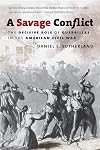
This isn't the most entertaining book on the US Civil War I've read about blending first-hand accounts, but it is fascinating in what it sets out to do.
I've never been exposed to the idea the civil war had this huge underlying front basically in terms of guerrilla warfare. It's hard not to draw comparisons to today but the author does an excellent job of keeping this book focused on how this type of warfare was viewed by participants and civilians back then.
I was shocked to learn just how show more divided each state was. I was under the impression that even if it was a southern or northern state, most of the population went along with how their state chose to proceed. This book proves this was not the case.
A great read from the information imparted but, on the whole, somewhat dry. show less
I've never been exposed to the idea the civil war had this huge underlying front basically in terms of guerrilla warfare. It's hard not to draw comparisons to today but the author does an excellent job of keeping this book focused on how this type of warfare was viewed by participants and civilians back then.
I was shocked to learn just how show more divided each state was. I was under the impression that even if it was a southern or northern state, most of the population went along with how their state chose to proceed. This book proves this was not the case.
A great read from the information imparted but, on the whole, somewhat dry. show less
Instead of the usual political or military objective histories, Seasons of War uses journals, letters, and newspapers to try to recreate the "feel" of the Civil War in Culpeper County VA, and largely succeeds. The present tense (which could have been distracting) works to give some immediacy to the events and emotions of those who lived in and/or fought in Culpeper.
For those of us who live in the County, it helps reveal the history around us and underfoot in a way that makes it all too human.
For those of us who live in the County, it helps reveal the history around us and underfoot in a way that makes it all too human.
My great great grandfather enlisted in the 7th Virginia Infantry at Culpeper Court House in April, 1861 at the age of 18. His family farm was in Culpeper County. So, this is kind of a personal account of what the war would have been like for my ancestors there. Although they are not mentioned in the book, and I do not know where in the county they lived, it is still fascinating to imagine that they must have personally known at least some of the individuals whose stories are told in this show more book.
Sutherland does an excellent job of conveying what the war was like for the civilians, as well as for soldiers of both armies. His descriptions of camp life as well as battles such as Cedar Mountain and Brandy Station are powerful. He uses the present tense (with a tip of the hat to historian Albert Castel, who did the same in his classic account of the Atlanta Campaign) which does lend a "you are there" intensity to the narrative. Many of the characters of the county come alive over the seasons as Sutherland deftly weaves their tales with the overall history of the county during the war.
An excellent book, offering a compelling account of the trials and tribulations of a war torn section of Virginia during the Civil War. show less
Sutherland does an excellent job of conveying what the war was like for the civilians, as well as for soldiers of both armies. His descriptions of camp life as well as battles such as Cedar Mountain and Brandy Station are powerful. He uses the present tense (with a tip of the hat to historian Albert Castel, who did the same in his classic account of the Atlanta Campaign) which does lend a "you are there" intensity to the narrative. Many of the characters of the county come alive over the seasons as Sutherland deftly weaves their tales with the overall history of the county during the war.
An excellent book, offering a compelling account of the trials and tribulations of a war torn section of Virginia during the Civil War. show less
A Savage Conflict: The Decisive Role of Guerrillas in the American Civil War (Civil War America) by Daniel E. Sutherland
In A Savage Conflict author Daniel E. Sutherland brings his expertise to bear on the subject of guerrilla fighting in the Civil War era. The author uses an extensive array of material on guerrilla fighting to make several arguments regarding not only the style of fighting but also its’ effect on both the Confederacy and the United States. Sutherland places all considerations second to his main objective: to examine how Confederate guerilla warfare affected the outcome of the Civil War. The show more author, like a modern-day Victor Frankenstein collecting parts for his re-animation experiment, gathers scattered studies of guerilla fighting into a single body. Like Frankenstein, this Modern Prometheus project crafts a greater whole from the sum of the parts. It is an important contribution to the subject of Civil War era guerilla warfare.
Sutherland’s greatest challenge is to take the many and varied kinds of combatants, Confederate and Union, and explain how they were guerillas. Regardless of what label the fighters adopted or were given - Partisan Ranger, Guerilla, bushwhacker, Buffalo, Jayhawker to name but a few - Sutherland contends that “at least two things defined nearly all ‘guerillas.’” Foremost was the manner of combat employed by the fighter. The “‘irregular’ way they attacked, harassed, and worried their foes” was very much “unlike the methods used by regular soldiers in conventional armies.” In addition, the primary concern when forming such companies was local defense to protect their families and or communities from internal and external foes. The author concedes that this is somewhat “elusive, ungainly and untidy” but contends this only reflects the “nature of the guerilla war.” It is a very functional definition and allows the author to bring to the table many varied elements in support of his overall argument.
Sutherland wisely institutes order on the topic by delineating it chronologically. He does not seek to craft an exhaustive study of guerilla fighting in every neighborhood (impractical at best) but rather to carefully examine regional variations and mine those variations to show how they charted policy for both opposing forces and governments. Dividing the war period into four sections - beginnings, rules of the games, democracy run amok, day of the outlaw - Sutherland sets down an arc showing how guerilla forces evolved over time and in place. This is no small accomplishment given that, as the author details, guerilla warfare is by its’ nature locale specific and is usually best served as a local history study. Sutherland’s Frankenstein-esque approach to pulling cogent parts from each local history study serves to build a clearer picture of the overarching effect of the fighting during the war. He demonstrates that a guerilla war deployed by local fighters gained state and then national recognition within the Confederacy; sometimes placed those two political bodies at odds with one another; caused opposing forces (armies, governments, and counter-guerilla fighters) to direct energy and manpower against those efforts; disintegrated into contests for control of the forces; devolved into personal vendettas; and eventually lost the backing of both the government and the local people whom the guerrillas initially set out to protect. The last of these, the failure to sustain public confidence in their cause, was a major blow to the independence objective of the Confederate government. Guerrilla outrages and the insular nature of its’ command structure undermined civilian confidence in their own government’s ability to protect them.
Like all projects there are some minor errors, even Frankenstein’s creation retained bolts and a few exposed sutures. Perhaps the most problematic is the inclusion of General Edward A. Wild’s December 1863 expedition without context of prior events. In no other region examined by Sutherland does he fail to mention local exigencies that lead to guerrilla events or Federal retaliation. Sutherland notes that locals, in response to the expedition, called for removal of the guerrilla fighters because “their further presence here will bring upon us speedy and inevitable ruin.” While Wild’s expedition was indeed the tipping point, continuous guerrilla activity and counter-measures from February 1862 through the expedition produced this certainty in the local people. Just as Sutherland tracked in other regions of the south, northeastern North Carolina learned first hand the shock of continuous warfare. Fitting the larger argument made by Sutherland, northeastern North Carolina locals despaired of the continued tactics thus guerrilla activity undermined the effort to establish a national government. The author lost a chance to make his larger point by failing to include that context.
Sutherland’s overall point is, nonetheless, made. Union commanders (and Confederate ones as well) were forced to take notice and find ways to counter the guerrilla fighting. The harshness of the fighting itself contributed to the wearing away of home-front morale and unity. These sutured parts come together from the bone yards of local history studies and produce a whole creature - one that should be studied by anyone with a serious interest in the Civil War era. show less
Sutherland’s greatest challenge is to take the many and varied kinds of combatants, Confederate and Union, and explain how they were guerillas. Regardless of what label the fighters adopted or were given - Partisan Ranger, Guerilla, bushwhacker, Buffalo, Jayhawker to name but a few - Sutherland contends that “at least two things defined nearly all ‘guerillas.’” Foremost was the manner of combat employed by the fighter. The “‘irregular’ way they attacked, harassed, and worried their foes” was very much “unlike the methods used by regular soldiers in conventional armies.” In addition, the primary concern when forming such companies was local defense to protect their families and or communities from internal and external foes. The author concedes that this is somewhat “elusive, ungainly and untidy” but contends this only reflects the “nature of the guerilla war.” It is a very functional definition and allows the author to bring to the table many varied elements in support of his overall argument.
Sutherland wisely institutes order on the topic by delineating it chronologically. He does not seek to craft an exhaustive study of guerilla fighting in every neighborhood (impractical at best) but rather to carefully examine regional variations and mine those variations to show how they charted policy for both opposing forces and governments. Dividing the war period into four sections - beginnings, rules of the games, democracy run amok, day of the outlaw - Sutherland sets down an arc showing how guerilla forces evolved over time and in place. This is no small accomplishment given that, as the author details, guerilla warfare is by its’ nature locale specific and is usually best served as a local history study. Sutherland’s Frankenstein-esque approach to pulling cogent parts from each local history study serves to build a clearer picture of the overarching effect of the fighting during the war. He demonstrates that a guerilla war deployed by local fighters gained state and then national recognition within the Confederacy; sometimes placed those two political bodies at odds with one another; caused opposing forces (armies, governments, and counter-guerilla fighters) to direct energy and manpower against those efforts; disintegrated into contests for control of the forces; devolved into personal vendettas; and eventually lost the backing of both the government and the local people whom the guerrillas initially set out to protect. The last of these, the failure to sustain public confidence in their cause, was a major blow to the independence objective of the Confederate government. Guerrilla outrages and the insular nature of its’ command structure undermined civilian confidence in their own government’s ability to protect them.
Like all projects there are some minor errors, even Frankenstein’s creation retained bolts and a few exposed sutures. Perhaps the most problematic is the inclusion of General Edward A. Wild’s December 1863 expedition without context of prior events. In no other region examined by Sutherland does he fail to mention local exigencies that lead to guerrilla events or Federal retaliation. Sutherland notes that locals, in response to the expedition, called for removal of the guerrilla fighters because “their further presence here will bring upon us speedy and inevitable ruin.” While Wild’s expedition was indeed the tipping point, continuous guerrilla activity and counter-measures from February 1862 through the expedition produced this certainty in the local people. Just as Sutherland tracked in other regions of the south, northeastern North Carolina learned first hand the shock of continuous warfare. Fitting the larger argument made by Sutherland, northeastern North Carolina locals despaired of the continued tactics thus guerrilla activity undermined the effort to establish a national government. The author lost a chance to make his larger point by failing to include that context.
Sutherland’s overall point is, nonetheless, made. Union commanders (and Confederate ones as well) were forced to take notice and find ways to counter the guerrilla fighting. The harshness of the fighting itself contributed to the wearing away of home-front morale and unity. These sutured parts come together from the bone yards of local history studies and produce a whole creature - one that should be studied by anyone with a serious interest in the Civil War era. show less
Lists
Awards


You May Also Like


Associated Authors
Statistics
- Works
- 14
- Also by
- 5
- Members
- 712
- Popularity
- #35,610
- Rating
- 3.7
- Reviews
- 9
- ISBNs
- 36