
Scott Galloway (1) (1964–)
Author of The Four: The Hidden DNA of Amazon, Apple, Facebook, and Google
For other authors named Scott Galloway, see the disambiguation page.
About the Author
Scott Galloway is a professor at New York University's Stern School of Business, where he teaches brand strategy and digital marketing to second-year MBA students. A serial entrepreneur, he has founded nine firms, including L2, Red Envelope, and Prophet. In 2012, he was named one of the "World's 50 show more Best Business School Professors" by Poets & Quants. His weekly YouTube series, "Winners and Losers," has generated tens of millions of views. show less
Works by Scott Galloway
The Algebra of Happiness: Notes on the Pursuit of Success, Love, and Meaning (2019) 178 copies, 4 reviews
Tagged
Common Knowledge
- Birthdate
- 1964-11-03
- Gender
- male
- Education
- University of California, Berkeley (MBA - Marketing)
University of California, Los Angeles (BA - Economics) - Occupations
- professor (Marketing)
- Organizations
- New York University (Stern School of Business)
- Nationality
- USA
- Map Location
- USA
Members
Reviews
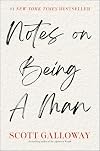
Started and finished this over the weekend. This particular kind of book that arrives not to enlighten you, but to indict you quietly—like a friend who doesn’t raise his voice because he doesn’t have to. Notes on Being a Man is that kind of book. Not profound in the way men pretend to want—dense, esoteric, unreadable—but sharp in the way that leaves a mark you keep touching later, wondering when it started to hurt.
Scott Galloway writes like someone who has already paid for his show more mistakes and is now handing you the receipt, whether you asked for it or not. There’s no romance here. No myth of the heroic man ascending some clean arc toward purpose. Just a ledger: discipline or drift, build or decay, show up or don’t—and live with it.
He talks about money, status, fitness, relationships—the usual suspects—but strips them of their Instagram lighting. What’s left is less flattering. The quiet suggestion that most men are not lost because the world betrayed them, but because they chose distraction over responsibility, comfort over competence, noise over silence. Not once, but daily. Ritualized.
And that’s the uncomfortable part. Not that he’s saying anything new, but that he’s saying it plainly. Like it’s obvious. Like you already knew. Which, of course, you did.
There’s a kind of violence in that simplicity.
The book doesn’t try to save you. It assumes you’re either already saving yourself or you’re not. It offers no absolution—only direction, and even that feels conditional. As if at any moment you could put it down, scroll instead, pour another drink, text someone you don’t respect, and the whole thing would dissolve back into the soft, familiar lie that there’s still time.
Maybe there is.
But Galloway doesn’t seem convinced. And somewhere in reading it, neither are you. show less
Scott Galloway writes like someone who has already paid for his show more mistakes and is now handing you the receipt, whether you asked for it or not. There’s no romance here. No myth of the heroic man ascending some clean arc toward purpose. Just a ledger: discipline or drift, build or decay, show up or don’t—and live with it.
He talks about money, status, fitness, relationships—the usual suspects—but strips them of their Instagram lighting. What’s left is less flattering. The quiet suggestion that most men are not lost because the world betrayed them, but because they chose distraction over responsibility, comfort over competence, noise over silence. Not once, but daily. Ritualized.
And that’s the uncomfortable part. Not that he’s saying anything new, but that he’s saying it plainly. Like it’s obvious. Like you already knew. Which, of course, you did.
There’s a kind of violence in that simplicity.
The book doesn’t try to save you. It assumes you’re either already saving yourself or you’re not. It offers no absolution—only direction, and even that feels conditional. As if at any moment you could put it down, scroll instead, pour another drink, text someone you don’t respect, and the whole thing would dissolve back into the soft, familiar lie that there’s still time.
Maybe there is.
But Galloway doesn’t seem convinced. And somewhere in reading it, neither are you. show less
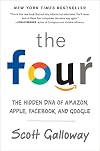
The Publisher Says: The acclaimed NYU business professor's tour-de-force on the true nature of technology's titans, and what happens next in their struggle to dominate our lives.
Apple, Amazon, Google, and Facebook are in an unprecedented race towards a $1 trillion valuation—and whoever gets there first will exert untold influence over our economy, public policy, and consumer behavior. How did these four become so successful? How high can they continue to rise? Does any other company stand show more a chance of competing?
To these questions and more, acclaimed NYU / Stern professor Scott Galloway brings bracing answers. In his highly provocative first book, he pulls back the curtain on exactly how Amazon, Apple, Facebook, and Google built their massive empires. While the media spins tales about superior products and designs, and the power of technological innovation, Galloway exposes the truth about these "Four Horsemen":
Through analysis that's both rigorous and entertaining, Galloway outlines the path for the next trillion-dollar company (the Fifth Horseman) and points to which companies are in the running. (Uber, sure; less obvious, Microsoft and Starbucks.) As with Peter Thiel's Zero to One, readers will come away with fresh, game-changing insights about what it takes to win in today's economy.
I RECEIVED A DRC FROM THE PUBLISHER VIA NETGALLEY. THANK YOU.
My Review: There is no spectacle more repugnant, even repulsive, than naked greed being slaked without shame or even modesty. That is where we are now, as a society, in large part because these four corporations have enabled this behavior in their minions as well as demonstrated it in themselves. A trillion-dollar valuation as a business? It's the avowed goal of all four of these metastatic money pits.
Go watch this explainer on the difference between a million somethings and a billion somethings. It's sobering. Even chilling. And a trillion is yet another order of magnitude greater!
Now think about what this represents...what staggering greed it represents to pursue this goal of creating that much excess at the expense of any and all other goals or principles. Author Galloway has done that thinking. He does not like the principles The Four have utterly abandoned, flouted, or subverted. It is incredible to me that this naked greed, this pathology of psychological orientation, is so celebrated. To the point that the business news cycles are dominated by the horse-race between these bloated-bank-account barons of bad business practice.
I confess that Author Galloway isn't a cicerone I enjoyed being led by. I suspect I'd deeply dislike him if we met in person because he is, while intelligent and savvy, nowhere near as witty or insightful as he seems to think he is. He's boastful and he's arrogant. What he isn't is wrong. He is quite clear that the way these corporate scum (my term, not his) are in fact harming the very economy that they rely on for their income. In the end, that will be their challenge and he (like me) is dubious about their ability to change their course: Change, or die in a welter of your own hemorrhaging money.
Schadenfreude leads me to laugh a hearty bray of triumph. Except I won't fail to suffer in their gargantuan collapse.
On Wednesday, 29 July 2020, and days forward, the four horse-manuremen of the datapocalypse will testify before Congress about their insane, untrammeled greed and its deleterious effect on Society. I presupposed a more condign end result of the hearing here because I am under no obligation to hide my own opinion of these nauseating monopolists...but now, in May 2022, Congress is looking beadily at them again with an eye to figuring out how much their greed has fueled our present 8%-plus annual rate of inflation. show less
Apple, Amazon, Google, and Facebook are in an unprecedented race towards a $1 trillion valuation—and whoever gets there first will exert untold influence over our economy, public policy, and consumer behavior. How did these four become so successful? How high can they continue to rise? Does any other company stand show more a chance of competing?
To these questions and more, acclaimed NYU / Stern professor Scott Galloway brings bracing answers. In his highly provocative first book, he pulls back the curtain on exactly how Amazon, Apple, Facebook, and Google built their massive empires. While the media spins tales about superior products and designs, and the power of technological innovation, Galloway exposes the truth about these "Four Horsemen":
- None of these four are first movers technologically; they've either copied, stolen, or acquired their ideas.
- Each company uses evolutionary psychology to appeal to our basest instincts: Amazon, our need to hunt and gather; Apple, our need to procreate; Facebook, our need for love; and Google, our need for a God.
- These companies are uniquely successful at leveraging competitive advantage built by digital and then protected by analog moats, from an empire of retail stores (Apple) to the world's most efficient physical distribution network (Amazon.)
Through analysis that's both rigorous and entertaining, Galloway outlines the path for the next trillion-dollar company (the Fifth Horseman) and points to which companies are in the running. (Uber, sure; less obvious, Microsoft and Starbucks.) As with Peter Thiel's Zero to One, readers will come away with fresh, game-changing insights about what it takes to win in today's economy.
I RECEIVED A DRC FROM THE PUBLISHER VIA NETGALLEY. THANK YOU.
My Review: There is no spectacle more repugnant, even repulsive, than naked greed being slaked without shame or even modesty. That is where we are now, as a society, in large part because these four corporations have enabled this behavior in their minions as well as demonstrated it in themselves. A trillion-dollar valuation as a business? It's the avowed goal of all four of these metastatic money pits.
Go watch this explainer on the difference between a million somethings and a billion somethings. It's sobering. Even chilling. And a trillion is yet another order of magnitude greater!
Now think about what this represents...what staggering greed it represents to pursue this goal of creating that much excess at the expense of any and all other goals or principles. Author Galloway has done that thinking. He does not like the principles The Four have utterly abandoned, flouted, or subverted. It is incredible to me that this naked greed, this pathology of psychological orientation, is so celebrated. To the point that the business news cycles are dominated by the horse-race between these bloated-bank-account barons of bad business practice.
I confess that Author Galloway isn't a cicerone I enjoyed being led by. I suspect I'd deeply dislike him if we met in person because he is, while intelligent and savvy, nowhere near as witty or insightful as he seems to think he is. He's boastful and he's arrogant. What he isn't is wrong. He is quite clear that the way these corporate scum (my term, not his) are in fact harming the very economy that they rely on for their income. In the end, that will be their challenge and he (like me) is dubious about their ability to change their course: Change, or die in a welter of your own hemorrhaging money.
Schadenfreude leads me to laugh a hearty bray of triumph. Except I won't fail to suffer in their gargantuan collapse.
On Wednesday, 29 July 2020, and days forward, the four horse-manuremen of the datapocalypse will testify before Congress about their insane, untrammeled greed and its deleterious effect on Society. I presupposed a more condign end result of the hearing here because I am under no obligation to hide my own opinion of these nauseating monopolists...but now, in May 2022, Congress is looking beadily at them again with an eye to figuring out how much their greed has fueled our present 8%-plus annual rate of inflation. show less
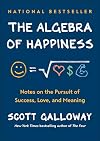
This slim book is written in Galloway's typical breezy and entertaining style. Having devoured at least 50 self-books over the past few decades, it's not surprising that I had been exposed to most of Galloway's concepts. But they reinforced some important tenets about attaining success and happiness. What's more, the book served up a number of intriguing new ideas. One suggestion: when charting your career path, do NOT follow your passion. Yes, this is counter-intuitive advice and show more contradicts everything I've been telling college communications majors for 30 years. But Galloway's point is simple. It makes more sense to find something you're incredibly good at and can get paid for -- and then get great at it. Your "greatness" will create the passion that's needed. I've thought a lot about this advice and it makes total sense. Some other nuggets from "The Algebra of Happiness:"
-- Hunger is more important than talent. I've often said that I would rather a worker who has incredible drive than one who has little drive and loads of talent. I've seen too many of the latter and have actually played a role in helping a few to get jobs. I've regretted it.
-- Review the metrics in your life on a regular basis — everything from relationships to your net worth. Assess the "stuff" that really makes you feel valued. Measure what matters.
-- Fear of rejection is a bigger obstacle than lack of talent. Train yourself to take some sort of risk each and every day so you get comfy grasping beyond your reach. Learn from rejection.
-- Be a role model to someone. Make a major difference in someone's life. "Remarkable men can become irrationally passionate about the well-being of a child who isn't theirs..."
-- Most depression isn't feeling sad, but feeling nothing.
-- In the end, relationships are all that matters.
In summary, "The Algebra of Happiness" is well-worth the read. show less
-- Hunger is more important than talent. I've often said that I would rather a worker who has incredible drive than one who has little drive and loads of talent. I've seen too many of the latter and have actually played a role in helping a few to get jobs. I've regretted it.
-- Review the metrics in your life on a regular basis — everything from relationships to your net worth. Assess the "stuff" that really makes you feel valued. Measure what matters.
-- Fear of rejection is a bigger obstacle than lack of talent. Train yourself to take some sort of risk each and every day so you get comfy grasping beyond your reach. Learn from rejection.
-- Be a role model to someone. Make a major difference in someone's life. "Remarkable men can become irrationally passionate about the well-being of a child who isn't theirs..."
-- Most depression isn't feeling sad, but feeling nothing.
-- In the end, relationships are all that matters.
In summary, "The Algebra of Happiness" is well-worth the read. show less
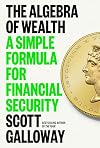
This review is based on the Blinkist version of the book...thus a summary and my review needs to be qualified as such. Presumably the original full text has much more details and research.....but it also takes much longer to read. If I like the Blinkist version, I might seek out and read the full book.
Understanding economic security through capitalism....How can you achieve financial security in a system that seems rigged against you.......Some people, like Warren Buffet have built huge show more wealth but, of course, it’s rare to replicate these outliers’ success........But what you certainly can do is achieve security and wealth through consistent and prudent financial behaviour.
Economic security means having enough assets to generate passive income that exceeds your living expenses–known as your burn rate. This passive income can come from interest, real estate appreciation, dividends, and rental income.
Medical debt has become the leading cause of consumer bankruptcy in America..... Many Americans can’t cover a $500 emergency expense without incurring debt.....The target here (in this book) is an asset base whose net worth is 25 times your annual burn rate, assuming a 4% return rate. This figure ensures that your passive income covers your living expenses indefinitely.
Wealth equals focus plus stoicism, multiplied by time and diversification.
Stoic principles for financial and personal success
With its emphasis on courage, wisdom, justice, and temperance, Stoicism provides valuable lessons for achieving financial stability....Recognizing the space between stimulus and response, as psychologist Viktor Frankl observed, allows for choosing actions that reflect true intentions. And something like writing a weekly blog post can go a long way to reinforcing your identity and leading to growth. Repeated actions rooted in character shape success.
Courage involves persisting without letting fear guide actions. Wisdom, as the Stoic philosopher Epictetus described, is distinguishing what we can control from what we cannot. Justice on the other hand is a commitment to the common good, and temperance means managing indulgence. These virtues help align behaviour with intentions, creating durable success.
Building strong relationships and a supportive community is also essential to financial security......Interdependence, rather than independence, fosters success.
And don’t forget to acknowledge the role of luck in achievements.....external factors and timing will be important.
The power of focus in career development......Economic security and career success are the fruits of sustained focus over decades. After all, working hard without focus simply leads to wasted effort.....Choosing a career direction is the first step in maintaining your focus.
Flexibility is another key element of focus. The ability to allocate work hours around other obligations, facilitated by technology, allows for better management of career and personal life.......Flexibility, though, is often earned through building a reputation within an organization. Good management skills will enhance this flexibility by letting you delegate effectively.
A supportive partner can significantly enhance productivity,
Constraints can also be a driver here. For instance, companies have found that hiring new mothers often leads to greater efficiency and focus. These employees, juggling multiple responsibilities, tend to prioritize tasks and work more effectively within limited time frames.
Jobs and Musk achieved remarkable success by concentrating on what’s truly important and saying no to unnecessary tasks.
Now, when it comes to what you should be saying yes to, the popular opinion is to follow your passion. But the truth is, this isn’t always practical. Instead, focusing on developing talent leads to greater career success. Talent, which is observable and testable, can be nurtured into a high-earning career. Passion often follows mastery, as excelling in a skill brings financial rewards and personal satisfaction. Personality tests like the Myers-Briggs test and feedback from others can also provide insights into your strengths. [Though the Meyers Briggs test has been pretty thoroughly debunked as a scientifically based tool
Mastering the value of time for long-term wealth.....Understanding and effectively managing time can mean the difference between simply making a living and building substantial wealth.....In this context, the power of compounding is fundamental. Small increments of capital, when invested over long periods, can grow significantly. For instance, investing $100 at an 8% annual interest rate grows to $216 in ten years and $1,006 in thirty years....Now, compounding isn’t always positive. [Seems to be a slight contradiction in terms here but the basic message is clear....there can be reversals]. Inflation, which averages about 3% annually, erodes the value of money over time. If ignored, it can significantly diminish purchasing power. For example, that $100 today will be worth only $41.20 in thirty years. So any financial planning must account for inflation to preserve and grow wealth.
Making conscious, disciplined decisions now is crucial for long-term financial success.
You’ll also need to be aware of how the interplay between earning and spending evolves over a lifetime. Earnings typically increase in one’s twenties and thirties, peak in mid-life, and potentially decrease upon retirement......Remember that time is a great equalizer. Everyone, regardless of wealth, has the same 24 hours in a day. Making thoughtful choices about how to spend this time is critical......Developing a habit of saving early allows you to benefit from compounding over a longer period.
Building wealth through strategic diversification.....Achieving financial security requires more than just earning an income. Most people can’t amass substantial wealth through their income alone, except for a lucky few, like Fortune 100 CEOs or NFL quarterbacks.
The bridge between hard work and economic security is investing, which allows for passive income growth......Investments can be categorized as active or passive. Passive investments, like savings accounts, require minimal involvement. But you will also need to diversify in order to protect against significant losses. The importance of diversification is demonstrated time and time again. Warren Buffett’s famous bet that the S& P 500 [Index] would outperform actively managed funds over ten years proved true, with the S& P 500 returning 126% compared to the active funds’ 36%. Active management, because of higher fees and the inherent challenges in accurately timing the market and selecting the right investments, often fails to outperform passive strategies like investing in index funds, which mirror the performance of the broader market.
So, diversified passive investments should form the core of your portfolio. While active investments can be pursued for learning and occasional opportunities, the bulk of investments should be in diversified, passive funds....Index funds and exchange-traded funds, or ETFs, are excellent options for this. Index funds are mutual funds designed to replicate the performance of a specific market index, such as the S& P 500, by holding the same stocks in proportion to their index weighting. ETFs, on the other hand, are similar to index funds but trade on stock exchanges like individual stocks. Both options provide broad market exposure and reduce the risk associated with individual stock picks.
Final summary
Final summary Wealth is built through a simple equation: focus, plus stoicism, multiplied by time and diversification. Focus involves making deliberate career and financial choices that guide you toward your goals. Stoicism, with its emphasis on virtues like courage and temperance, helps you build strong character and resist temptations. Time is leveraged through the power of compounding, turning small, consistent efforts into significant long-term gains. Diversification spreads risk across various investments, protecting your portfolio from significant losses. Together, these components create a comprehensive strategy for achieving long-term financial stability and success. Embrace these principles to secure a prosperous and fulfilling financial future.
My overall take on the book: It’s really good. I’ll be recommending it to my children and grandchildren. Some really sensible advice there. Five stars from me. show less
Understanding economic security through capitalism....How can you achieve financial security in a system that seems rigged against you.......Some people, like Warren Buffet have built huge show more wealth but, of course, it’s rare to replicate these outliers’ success........But what you certainly can do is achieve security and wealth through consistent and prudent financial behaviour.
Economic security means having enough assets to generate passive income that exceeds your living expenses–known as your burn rate. This passive income can come from interest, real estate appreciation, dividends, and rental income.
Medical debt has become the leading cause of consumer bankruptcy in America..... Many Americans can’t cover a $500 emergency expense without incurring debt.....The target here (in this book) is an asset base whose net worth is 25 times your annual burn rate, assuming a 4% return rate. This figure ensures that your passive income covers your living expenses indefinitely.
Wealth equals focus plus stoicism, multiplied by time and diversification.
Stoic principles for financial and personal success
With its emphasis on courage, wisdom, justice, and temperance, Stoicism provides valuable lessons for achieving financial stability....Recognizing the space between stimulus and response, as psychologist Viktor Frankl observed, allows for choosing actions that reflect true intentions. And something like writing a weekly blog post can go a long way to reinforcing your identity and leading to growth. Repeated actions rooted in character shape success.
Courage involves persisting without letting fear guide actions. Wisdom, as the Stoic philosopher Epictetus described, is distinguishing what we can control from what we cannot. Justice on the other hand is a commitment to the common good, and temperance means managing indulgence. These virtues help align behaviour with intentions, creating durable success.
Building strong relationships and a supportive community is also essential to financial security......Interdependence, rather than independence, fosters success.
And don’t forget to acknowledge the role of luck in achievements.....external factors and timing will be important.
The power of focus in career development......Economic security and career success are the fruits of sustained focus over decades. After all, working hard without focus simply leads to wasted effort.....Choosing a career direction is the first step in maintaining your focus.
Flexibility is another key element of focus. The ability to allocate work hours around other obligations, facilitated by technology, allows for better management of career and personal life.......Flexibility, though, is often earned through building a reputation within an organization. Good management skills will enhance this flexibility by letting you delegate effectively.
A supportive partner can significantly enhance productivity,
Constraints can also be a driver here. For instance, companies have found that hiring new mothers often leads to greater efficiency and focus. These employees, juggling multiple responsibilities, tend to prioritize tasks and work more effectively within limited time frames.
Jobs and Musk achieved remarkable success by concentrating on what’s truly important and saying no to unnecessary tasks.
Now, when it comes to what you should be saying yes to, the popular opinion is to follow your passion. But the truth is, this isn’t always practical. Instead, focusing on developing talent leads to greater career success. Talent, which is observable and testable, can be nurtured into a high-earning career. Passion often follows mastery, as excelling in a skill brings financial rewards and personal satisfaction. Personality tests like the Myers-Briggs test and feedback from others can also provide insights into your strengths. [Though the Meyers Briggs test has been pretty thoroughly debunked as a scientifically based tool
Mastering the value of time for long-term wealth.....Understanding and effectively managing time can mean the difference between simply making a living and building substantial wealth.....In this context, the power of compounding is fundamental. Small increments of capital, when invested over long periods, can grow significantly. For instance, investing $100 at an 8% annual interest rate grows to $216 in ten years and $1,006 in thirty years....Now, compounding isn’t always positive. [Seems to be a slight contradiction in terms here but the basic message is clear....there can be reversals]. Inflation, which averages about 3% annually, erodes the value of money over time. If ignored, it can significantly diminish purchasing power. For example, that $100 today will be worth only $41.20 in thirty years. So any financial planning must account for inflation to preserve and grow wealth.
Making conscious, disciplined decisions now is crucial for long-term financial success.
You’ll also need to be aware of how the interplay between earning and spending evolves over a lifetime. Earnings typically increase in one’s twenties and thirties, peak in mid-life, and potentially decrease upon retirement......Remember that time is a great equalizer. Everyone, regardless of wealth, has the same 24 hours in a day. Making thoughtful choices about how to spend this time is critical......Developing a habit of saving early allows you to benefit from compounding over a longer period.
Building wealth through strategic diversification.....Achieving financial security requires more than just earning an income. Most people can’t amass substantial wealth through their income alone, except for a lucky few, like Fortune 100 CEOs or NFL quarterbacks.
The bridge between hard work and economic security is investing, which allows for passive income growth......Investments can be categorized as active or passive. Passive investments, like savings accounts, require minimal involvement. But you will also need to diversify in order to protect against significant losses. The importance of diversification is demonstrated time and time again. Warren Buffett’s famous bet that the S& P 500 [Index] would outperform actively managed funds over ten years proved true, with the S& P 500 returning 126% compared to the active funds’ 36%. Active management, because of higher fees and the inherent challenges in accurately timing the market and selecting the right investments, often fails to outperform passive strategies like investing in index funds, which mirror the performance of the broader market.
So, diversified passive investments should form the core of your portfolio. While active investments can be pursued for learning and occasional opportunities, the bulk of investments should be in diversified, passive funds....Index funds and exchange-traded funds, or ETFs, are excellent options for this. Index funds are mutual funds designed to replicate the performance of a specific market index, such as the S& P 500, by holding the same stocks in proportion to their index weighting. ETFs, on the other hand, are similar to index funds but trade on stock exchanges like individual stocks. Both options provide broad market exposure and reduce the risk associated with individual stock picks.
Final summary
Final summary Wealth is built through a simple equation: focus, plus stoicism, multiplied by time and diversification. Focus involves making deliberate career and financial choices that guide you toward your goals. Stoicism, with its emphasis on virtues like courage and temperance, helps you build strong character and resist temptations. Time is leveraged through the power of compounding, turning small, consistent efforts into significant long-term gains. Diversification spreads risk across various investments, protecting your portfolio from significant losses. Together, these components create a comprehensive strategy for achieving long-term financial stability and success. Embrace these principles to secure a prosperous and fulfilling financial future.
My overall take on the book: It’s really good. I’ll be recommending it to my children and grandchildren. Some really sensible advice there. Five stars from me. show less
Lists
Awards

You May Also Like


Associated Authors
Statistics
- Works
- 6
- Members
- 1,342
- Popularity
- #19,172
- Rating
- 3.7
- Reviews
- 25
- ISBNs
- 76
- Languages
- 10
