
About the Author
John Battelle is a cofounding editor of Wired and the founder of The Industry Standard, as well as TheStandard.com.
Image credit: Lee Odden
Works by John Battelle
The Search: How Google and Its Rivals Rewrote the Rules of Business and Transformed Our Culture (2005) 1,357 copies, 30 reviews
Busca: Como o Google e Seus Competidores Reinventaram os Neg-cios e Est‹o Transformando Nossas Vidas, A (2005) 4 copies
Tagged
Common Knowledge
- Birthdate
- 1965-11-04
- Gender
- male
- Education
- University of California, Berkeley
- Occupations
- entrpreneur,
- Nationality
- USA
- Birthplace
- Pasadena, California, USA
- Places of residence
- Ross, California, USA
- Associated Place (for map)
- California, USA
Members
Reviews
The Search: How Google and Its Rivals Rewrote the Rules of Business and Transformed Our Culture by John Battelle
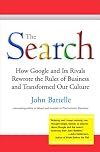
Reading a 20-year old book about web search seems like an exercise in obsolescence, but this history of web search in general and the rise of Google in particular was very interesting. Also pretty relevant with AI being so reliant on the data provided by search. It was fun to step back in time and relive the beginnings of the technology we constantly use today.
Battelle writes clearly, did his research and got participation from all the key players. He injects a nice degree of humor into the show more story and touches on some industry scandals. He also gets right how important search would become; it's incredible that some companies downplayed and ignored it for so long. show less
Battelle writes clearly, did his research and got participation from all the key players. He injects a nice degree of humor into the show more story and touches on some industry scandals. He also gets right how important search would become; it's incredible that some companies downplayed and ignored it for so long. show less
The Search: How Google and Its Rivals Rewrote the Rules of Business and Transformed Our Culture by John Battelle
John Battelle, having helped launch Wired in the 1990s and launched The Industry Standard during the dot-com boom, has the credentials and background to tell the story of searching the internet for fun and profit, by he could have chosen a better narrator than himself for the audiobook version.
The earliest history of searching especially the rise and fall of such early fore-runners as Lycos, Excite and Alta Vista is very interesting. The book's final act is a look forward, but the at show more Internet speeed, this book published in 2005 is already dated with many of the questions asked abouit Google Books already answers and the hype of the semantic Web already a tale of dated and dashed hopes. show less
The earliest history of searching especially the rise and fall of such early fore-runners as Lycos, Excite and Alta Vista is very interesting. The book's final act is a look forward, but the at show more Internet speeed, this book published in 2005 is already dated with many of the questions asked abouit Google Books already answers and the hype of the semantic Web already a tale of dated and dashed hopes. show less
The search : how Google and its rivals rewrote the rules of business and transformed our culture by John Battelle
This book caught my eye at a book sale a few weeks ago. Even though it’s now almost 5 years old (eons in technology years), it still has plenty of usefulness as a history of the development of search technology and of Google, the company whose name has become synonymous with “search”. Remember Archie, Gopher, and Veronica? AltaVista, Lycos, HotBot, and Excite? Battelle places each one in a chronological narrative of search beginning in the early 1990s. Battelle’s comparison of show more Google’s approach to search with Yahoo’s approach to search is particularly useful to me as a librarian who frequently uses search during a typical workday. Most of the book, though, is devoted to the rise of Google. Recommended for any reader interested in the history of the Internet and search technology. show less
The Search: How Google and Its Rivals Rewrote the Rules of Business and Transformed Our Culture by John Battelle
John Battelle has written an insightful book about what is happening in the world of Search as a result of Google and Yahoo's efforts over the last several years. It has been quite a while since I underlined so much of a book. In several chapters, I had to keep myself from underlining each sentence.
The author was the founder of the Industry Standard and the writing style is quite familiar for those of us who read that Dot Com era magazine. He looks at the goods, bads and uglies of what show more Google has accomplished. He points out many of the interesting paradoxes that Google has found themselves in with respect to their "Don't be evil!" public relations blitz.
What most enthralled me about the book is as a source of ideas about what one could do with any application which incorporates "search". His analysis of the components of search and how each of the major search engines has combined those capabilities in different ways and with different strategies provides a framework to think about the market and product potential for the greater Search market.
While an obvious insight after it is pointed out, the author shines a light on Google as a media company and not as a technology company. Given that their business model is completely driven from advertizing this is an "oh of course." Yet with an interesting twist, as most media companies have both their business side (the advertizing) and the editorial content side (their proprietary and copyrighted content). Google is changing the notion of where to best spend advertizing dollars without having to generate any of their own content. This contrasts with Yahoo which still employs considerable resources in generating their own content to surround what they index on the web.
The key point that the author keeps returning to is that Google represents the world's largest Database of Intentions:
"But once I'd seen Google's Zeitgesit, I knew my beloved Macintosh had been trumped. Every day, millions upon millions of people lean forward into their computer screens and pour their wants, fears, and intentions into the simple colors and brilliant white background of Google.com. "Peugeot dealer Lyon," one might ask (in French, of course). "Record criminal Michael Evans," an anxious woman might query as she awaits her blind date. "Toxic EPA Westchester County," a potential homeowner might ask, speaking in the increasingly ubiquitous, sophisticated, and evolving grammar of the Google search keyword.
"Of course, the same is true for the search boxes at Yahoo, MSN, AOL, Ask, and hundreds of other Internet search, information, and commerce sites. Billions of queries stream across the servers of these Internet services - the aggregate thoughtstream of humankind, online. What are we creating, inention by single intention, when we tell the world what we want?
"Link by link, click by click, search is building possibly the most lasting, ponderous, and significant cultural artifact in the history of humankind: the Database of Intentions."
"The search all starts with you: your query, your intent - the desire to get an answer, find a site, or learn something new. Intent drives search - a maxim I'll be repeating time and again throughout this book .... The holy grail of all search engines is to decipher your true intent - what you are looking for, and in what context."
These quotes are all from the first chapter. They set the stage for looking in detail behind the covers of what search is about, the different technologies that are in use, and the different uses for search.
The author writes in a wonderfully congruent and recursive process of his journey of searching for what search is all about. And to think that this book all started with his blog. show less
The author was the founder of the Industry Standard and the writing style is quite familiar for those of us who read that Dot Com era magazine. He looks at the goods, bads and uglies of what show more Google has accomplished. He points out many of the interesting paradoxes that Google has found themselves in with respect to their "Don't be evil!" public relations blitz.
What most enthralled me about the book is as a source of ideas about what one could do with any application which incorporates "search". His analysis of the components of search and how each of the major search engines has combined those capabilities in different ways and with different strategies provides a framework to think about the market and product potential for the greater Search market.
While an obvious insight after it is pointed out, the author shines a light on Google as a media company and not as a technology company. Given that their business model is completely driven from advertizing this is an "oh of course." Yet with an interesting twist, as most media companies have both their business side (the advertizing) and the editorial content side (their proprietary and copyrighted content). Google is changing the notion of where to best spend advertizing dollars without having to generate any of their own content. This contrasts with Yahoo which still employs considerable resources in generating their own content to surround what they index on the web.
The key point that the author keeps returning to is that Google represents the world's largest Database of Intentions:
"But once I'd seen Google's Zeitgesit, I knew my beloved Macintosh had been trumped. Every day, millions upon millions of people lean forward into their computer screens and pour their wants, fears, and intentions into the simple colors and brilliant white background of Google.com. "Peugeot dealer Lyon," one might ask (in French, of course). "Record criminal Michael Evans," an anxious woman might query as she awaits her blind date. "Toxic EPA Westchester County," a potential homeowner might ask, speaking in the increasingly ubiquitous, sophisticated, and evolving grammar of the Google search keyword.
"Of course, the same is true for the search boxes at Yahoo, MSN, AOL, Ask, and hundreds of other Internet search, information, and commerce sites. Billions of queries stream across the servers of these Internet services - the aggregate thoughtstream of humankind, online. What are we creating, inention by single intention, when we tell the world what we want?
"Link by link, click by click, search is building possibly the most lasting, ponderous, and significant cultural artifact in the history of humankind: the Database of Intentions."
"The search all starts with you: your query, your intent - the desire to get an answer, find a site, or learn something new. Intent drives search - a maxim I'll be repeating time and again throughout this book .... The holy grail of all search engines is to decipher your true intent - what you are looking for, and in what context."
These quotes are all from the first chapter. They set the stage for looking in detail behind the covers of what search is about, the different technologies that are in use, and the different uses for search.
The author writes in a wonderfully congruent and recursive process of his journey of searching for what search is all about. And to think that this book all started with his blog. show less
Awards

You May Also Like


Statistics
- Works
- 4
- Members
- 1,363
- Popularity
- #18,858
- Rating
- 3.7
- Reviews
- 30
- ISBNs
- 18
- Languages
- 10