

Eri Banno
Author of Genki 1: An Integrated Course in Elementary Japanese
About the Author
Image credit: via Okayama University
Series
Works by Eri Banno
Genki: An Integrated Course in Elementary Japanese II [Second Edition] (Japanese Edition) (English and Japanese Edition) (1999) 403 copies, 2 reviews
Genki: An Integrated Course in Elementary Japanese, Workbook 2, 2nd Edition (Book & CD-ROM) (English and Japanese Edition) (1999) 216 copies
Genki 1 Third Edition: An Integrated Course in Elementary Japanese 1 Textbook & Workbook Set (2020) 14 copies
GENKI: An Integrated Course in Elementary Japanese [ GENKI Picture Cards on CD-ROM I ] 初級日本語げんき げんきな絵カード I イラストデータ版 (2006) 7 copies
げんき 第2版 = Genki(Second edition) 3 copies
GENKI: An Integrated Course in Elementary Japanese I [Second Edition] 初級日本語 げんき I [第2版] (Japanese Edition) (2020) 3 copies
GENKI: An Integrated Course in Elementary Japanese Picture Cards on CD-ROM II [Second Edition] (2011) 3 copies
GENKI 1 2 An Integrated Course in Elementary Japanese 4 Books (Third edition) Bundle Set (2020) 3 copies
GENKI: An Integrated Course in Elementary Japanese II [Second Edition] 初級日本語 げんき II [第2版] (Japanese Edition) (2020) 2 copies
GENKI: An Integrated Course in Elementary Japanese I Workbook [Third Edition] 初級日本語 げんき I ワークブック[第3版] (Japanese Edition) (2020) 2 copies
GENKI: An Integrated Course in Elementary Japanese I [Third Edition] 初級日本語げんき[第3版] (Japanese Edition) (2020) 2 copies
Genki: An Integrated Course in Elementary Japanese [ Teacher's Manual ](2nd Edition) (English and Japanese Edition) (2012) 2 copies
Genki: An Integrated Course in Elementary Japanese Textbook Workbook II [third Edition] (Multilingual Edition) (2020) 1 copy
Genki I: Student CD 1 copy
GENKI: An Integrated Course in Elementary Japanese Vol.2 [Third Edition]初級日本語 げんき 2【第3版】 (Japanese Edition) (2020) 1 copy
GENKI 1 Text and Workbook , Answer Key ( Third Edition ) , Hiragana Katakana Useful Words Chart (2020) 1 copy
Genki Second Edition Part 1 1 copy
Tagged
Common Knowledge
Members
Reviews
Genki II: An Integrated Course in Elementary Japanese Volume II [FirstEdition] (English and Japanese Edition) by Eri Banno

Again, one cannot claim to have ever 'finished' a language primer, but I find this about the best for a thorough introduction to Japanese. I love the clear typeface, the abundant aids to understanding and study such as the clear sub-titles, multiple contents lists and indexes, the explanatory notes, the copious examples in usage, and the glossaries and declension tables at the back. There's also a generous section on kanji (Chinese-based hieroglyphs) that takes you to 294 kanjis (together show more with the 145 in Volume I), and I especially like that the characters are portrayed in really large font, as it is often difficult to make out the strokes in smaller sizes. I don't see any better introductory textbook around needed to supplement this pair. This was the first edition, and later editions have an added CD for even more support. The next stage is, I suppose, to assiduously increase the kanji count to say 1000 (in the long run); and in the meanwhile to practice writing paragraphs, reading, and listening on the internet. To the south Indian learner, a word of encouragement: the word order is intuitively similar, and the verb forms are uncannily like a combination of Tamil, Kannada, and some Sanskrit! show less
GENKI I: An Integrated Course in Elementary Japanese (English and Japanese, Second Edition) by Eri Banno

One can never say that a language learning book has ever been 'finished', but for what it's worth, I have worked through this volume, and found it more than adequate as a first introduction to Japanese. My volume came with its colored stickers and its own CD, from amazon.co.jp, but with the abundant resources on YouTube, don't think I ever felt the need to use the CD. On the whole, I just love the layout, the clear print, the copious exercise, and the tables of 139 kanji (Chinese-based show more hieroglyphics) and the glossaries and verb conjugations at the back. I don't see that any other textbook is actually called for, after this one (and its Volume II, which also I have worked through). The next stage, as far as I can see, is to get going with the kanji (aiming at some 1000), composing paragraphs, practicing listening and speaking, and increasing one's vocabulary. show less
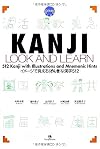
I like this book for the pictograms that help you remember the various kanji, and that it's a kind of companion to the Genki textbook series. My complaint would be that the chapters here don't exactly line up with the kanji chapters in that text. You'd think the authors would eliminate all the overlap and make some kind of plan to cover as many kanji as possible between this book and the two Genki books' vocabulary lists, but I guess they really wanted this one to be stand alone...
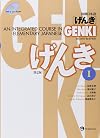
The grammar explanations and pace of progression are not bad. The vocabulary choice is decent, as well as the (not many) dialogues and the reading sections.
What I did not like, especially compared to language learning books of other languages, especially European (take [b:Themen Aktuell|574462|Themen Aktuell|Hartmut Aufderstraße|https://images.gr-assets.com/books/1175920847s/574462.jpg|561453] as an example, in this case for German), is that the exercise sections (both of the coursebook show more and the workbook) are not effective. They mainly consist of grammar drill repetition where an example is shown and all the further items just imply repeating the example with new words. There are almost no productive exercises (such as fill the blanks of a dialogues, decide which verb tense/vocabulary is more appropriate), as well as it totally lacks any review of and links to what happened in the past. Also the dialogues are few, and it lacks short dialogues to reinforce the communicative functions.
Still way better than equivalent Chinese learning books ([b:New Practical Chinese Reader 1 Textbook|1218932|New Practical Chinese Reader 1 Textbook|Liu Xun|https://images.gr-assets.com/books/1387700418s/1218932.jpg|1207409]), but a long distance from English and European languages courses. show less
What I did not like, especially compared to language learning books of other languages, especially European (take [b:Themen Aktuell|574462|Themen Aktuell|Hartmut Aufderstraße|https://images.gr-assets.com/books/1175920847s/574462.jpg|561453] as an example, in this case for German), is that the exercise sections (both of the coursebook show more and the workbook) are not effective. They mainly consist of grammar drill repetition where an example is shown and all the further items just imply repeating the example with new words. There are almost no productive exercises (such as fill the blanks of a dialogues, decide which verb tense/vocabulary is more appropriate), as well as it totally lacks any review of and links to what happened in the past. Also the dialogues are few, and it lacks short dialogues to reinforce the communicative functions.
Still way better than equivalent Chinese learning books ([b:New Practical Chinese Reader 1 Textbook|1218932|New Practical Chinese Reader 1 Textbook|Liu Xun|https://images.gr-assets.com/books/1387700418s/1218932.jpg|1207409]), but a long distance from English and European languages courses. show less
You May Also Like


Associated Authors
Statistics
- Works
- 45
- Members
- 2,485
- Popularity
- #10,317
- Rating
- 4.2
- Reviews
- 10
- ISBNs
- 32
- Languages
- 2