
Naima Coster
Author of What's Mine and Yours
About the Author
Image credit: Author Naima Coster at the 2018 Texas Book Festival in Austin, Texas, United States. By Larry D. Moore - Own work, CC BY-SA 4.0, https://commons.wikimedia.org/w/index.php?curid=74092606
Works by Naima Coster
Associated Works
Wild Tongues Can't Be Tamed: 15 Voices from the Latinx Diaspora (2021) — Contributor — 176 copies, 3 reviews
Daughters of Latin America: An International Anthology of Writing by Latine Women (2023) — Contributor — 38 copies, 1 review
Tagged
Common Knowledge
- Birthdate
- 1976
- Gender
- female
- Education
- Fordham University
Columbia University
Yale University - Nationality
- USA
- Birthplace
- Brooklyn, New York, USA
- Associated Place (for map)
- New York, USA
Members
Reviews
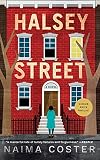
Penelope is a frustrated artist and heavy-drinking bartender who reluctantly returns to Brooklyn in order to care for her ailing father. Doing so means that Penelope has to confront many things she'd rather not: gentrification and racism, her self-sabotage as an artist, her troubled relationship with her mother. There's no easy moralising here, with Naima Coster resisting the urge to give the reader either an uplifting ending or a remorselessly bleak one. It's possible that her show more characters—frustrating, prickly, understandable—will be able to make some changes in their lives, while remaining determinedly unchanged in others. Things may get better; they may be bad in different ways. The lack of neat closure in Halsey Street rings truer than such a tactic does in many other novels because it is the result of Coster's insistent, careful observation of how familial problems can fester. A very strong debut. show less
Penelope Grand was raised in an apartment on Halsey Street. She escaped, briefly, for a year at RISD and then five years in Pittsburgh, working as a bartender and sometimes a substitute art teacher, but when her father has an accident, she returns home to take care of him - her mother has left, returning to the Dominican Republic, where she was born. Penelope feels that her life has stalled: she is angry at her mother for leaving, angry at her father for refusing to do the physical therapy show more exercises and for drinking, angry at the way the neighborhood has changed - her father's record store was finally forced to close as rents rose.
Penelope's parents are angry, too: her father mourns the loss of his store and his community and his physical ability. Her mother, Mirella (who narrates a good chunk of the book, but it still seems like Penelope's story primarily), is angry that Ralph devoted his whole life to the store instead of her and his family; she's also angry at her own parents (her father died when she was young, and her mother moved them from Santiago back to the campo).
Reconciliation comes haltingly when it comes at all, and sometimes too late. Sub-plots include Penelope's relationship with her landlady's family and her friendship-turned-more with a local bartender, Jon.
Quotes
"It's a shame that making room for white folks mean the the rest of us have to go. But it's always been that way, hasn't it?" (Ralph to Penelope, 71)
Why did women have children they would someday hate? (130)
This is what it meant to be Dominican - to be bound for life one moment, and the next, left for dead on the road. (158)
"Marcus and I have been together long enough that we know the things we can share and the things that we can't. Marriage is like that.
...
You can create the life you want." (Samantha to Penelope, 179)
"You know, no one ever believes old men when we say how good our lives were then. But they believe us when we say how bad our lives are now." (Ralph to Penelope, 192)
She had lost her own family and now had the theater of another instead. (211)
...it seemed terrible to Penelope that a day like this could seem so pretty and benign as to trick you into believing this was a good place to live, that every instant, someone in this city wasn't losing something, that bad news couldn't come anytime anywhere, that every day might be the worst day. (249)
Every block in Bed-Stuy was its own universe, the changes coming at a distinct pace on every street, but Ralph didn't see the difference. Everyone was leaving. Everyone was gone. Nothing was the same. (267)
If she could have written more things she would have: how we do things we do not mean; we do evil things; if we see an open door, we will dart through it, before we lose our guts, no matter who is left behind, we will move at the chance to be free. (Mirella, 281)
"When she was alive, at least there was a chance. Even if most of the time we don't really know how to change. We can't hardly figure out how to love right. But there was hope. Now....Nothing is as final as death." (Ralph, 319) show less
Penelope's parents are angry, too: her father mourns the loss of his store and his community and his physical ability. Her mother, Mirella (who narrates a good chunk of the book, but it still seems like Penelope's story primarily), is angry that Ralph devoted his whole life to the store instead of her and his family; she's also angry at her own parents (her father died when she was young, and her mother moved them from Santiago back to the campo).
Reconciliation comes haltingly when it comes at all, and sometimes too late. Sub-plots include Penelope's relationship with her landlady's family and her friendship-turned-more with a local bartender, Jon.
Quotes
"It's a shame that making room for white folks mean the the rest of us have to go. But it's always been that way, hasn't it?" (Ralph to Penelope, 71)
Why did women have children they would someday hate? (130)
This is what it meant to be Dominican - to be bound for life one moment, and the next, left for dead on the road. (158)
"Marcus and I have been together long enough that we know the things we can share and the things that we can't. Marriage is like that.
...
You can create the life you want." (Samantha to Penelope, 179)
"You know, no one ever believes old men when we say how good our lives were then. But they believe us when we say how bad our lives are now." (Ralph to Penelope, 192)
She had lost her own family and now had the theater of another instead. (211)
...it seemed terrible to Penelope that a day like this could seem so pretty and benign as to trick you into believing this was a good place to live, that every instant, someone in this city wasn't losing something, that bad news couldn't come anytime anywhere, that every day might be the worst day. (249)
Every block in Bed-Stuy was its own universe, the changes coming at a distinct pace on every street, but Ralph didn't see the difference. Everyone was leaving. Everyone was gone. Nothing was the same. (267)
If she could have written more things she would have: how we do things we do not mean; we do evil things; if we see an open door, we will dart through it, before we lose our guts, no matter who is left behind, we will move at the chance to be free. (Mirella, 281)
"When she was alive, at least there was a chance. Even if most of the time we don't really know how to change. We can't hardly figure out how to love right. But there was hope. Now....Nothing is as final as death." (Ralph, 319) show less
This should receive accolades as one of the 10 Best Novels of 2017, or any, year. The story is movingly told from the points of view of Penelope, who's half black and half Dominican, and her mother Mirella, whose loss of her wealthy father at an early age stunts her emotional growth. Also at the center is Ralph Grand, the father, owner of a celebrated Bed-Stuy roots record store forced out by the tsunami of Brooklyn gentrification.
Penelope had never recovered from her freshman year at RISD, show more where her art was ridiculed as "illustrations", and she's drifted ever since. Mirella, after twenty years cleaning homes for wealthy white families, left Ralph after he lost his store and his mojo and returned to the DR, and has completely cut off contact with him, ignoring his physical deterioration from accidents and his subsequent alcoholism. Penelope reluctantly returns to the neighborhood to help with Ralph's care and is astonished at the changes wrought by the brownstone-by-brownstone elimination of people of color.
Penelope's actions, her decisions, her seeming paralysis and inability to move on, are so perfectly described that the reader will not want to let go. I rarely wish for a sequel when a novel is as complete in itself as this one, but a return to Halsey Street and Penelope feels like a necessity to me. Highly recommended!
Quotes: " The neighborhood had never been anything more to Penelope than where she was from."
"Her body was the kind that you shape for yourself, not the kind that is the sum of all your accidents, labor, appetite, and genes." show less
Penelope had never recovered from her freshman year at RISD, show more where her art was ridiculed as "illustrations", and she's drifted ever since. Mirella, after twenty years cleaning homes for wealthy white families, left Ralph after he lost his store and his mojo and returned to the DR, and has completely cut off contact with him, ignoring his physical deterioration from accidents and his subsequent alcoholism. Penelope reluctantly returns to the neighborhood to help with Ralph's care and is astonished at the changes wrought by the brownstone-by-brownstone elimination of people of color.
Penelope's actions, her decisions, her seeming paralysis and inability to move on, are so perfectly described that the reader will not want to let go. I rarely wish for a sequel when a novel is as complete in itself as this one, but a return to Halsey Street and Penelope feels like a necessity to me. Highly recommended!
Quotes: " The neighborhood had never been anything more to Penelope than where she was from."
"Her body was the kind that you shape for yourself, not the kind that is the sum of all your accidents, labor, appetite, and genes." show less
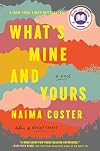
What’s Mine and Yours by Naima Coster examines the repercussions of a senseless death on a diverse community in North Carolina. A revolving point of view from various characters begins in the early 1990s and moves back and forth to the current day allowing readers to see these many connected lives at different points. Coster handles the large cast well and reveals certain moments at just the right times to give them an interesting depth and meaning. While it explores big issues like race show more and class, at its heart, What’s Mine and Yours is a book about family — the ones we are stuck with and the ones we choose. show less
Lists
Awards


You May Also Like


Associated Authors
Statistics
- Works
- 4
- Also by
- 3
- Members
- 934
- Popularity
- #27,503
- Rating
- 3.6
- Reviews
- 25
- ISBNs
- 19