
Xochitl Gonzalez
Author of Olga Dies Dreaming
About the Author
Image credit: 2022 National Book Festival
Works by Xochitl Gonzalez
Associated Works
Tagged
Common Knowledge
- Birthdate
- 1977
- Gender
- female
- Education
- Brown University
- Awards and honors
- Pulitzer Prize finalist (Commentary, 2023)
- Nationality
- USA
- Birthplace
- Brooklyn, New York, USA
- Places of residence
- Brooklyn, New York, USA
- Associated Place (for map)
- Brooklyn, New York, USA
Members
Reviews

The opening scene of this novel introduces Olga, a 40 year old woman, at a wedding, one that she has organised as a wedding planner for a very wealthy client. Her role is rather less glamorous than it sounds, and on the first page there is a discussion of the different quality of napkins, floor coverings and decor at wealthy people's weddings and those of ordinary people, even middle class people with good jobs.
This doesn't sound that interesting but the story quickly moves into a story of show more the effects of race and class and the complications of being Puerto Rican-American in New York City. Olga and her brother Prieto are highly educated at prestigious universities, and have built apparently very successful careers, but both are struggling with their family history and some difficult secrets. Prieto is a politician, and is worried about his family and some of his more socially conservative Puerto Rican voters discovering that he is gay. Olga is caught between competing demands from lots of different people and her own ideas of what she should be.
I really enjoyed this story of Olga and Prieto dealing with a new understanding of who they are and their own and their family's history, the mixture of serious issues with warmth and humour. I was interested to read about one of New York's largest ethnic minority communities and the complexity for the Acevedos of being both New Yorkers and Puerto Rican.
I found the story of their parents a bit more difficult. Their parents were revolutionary political activists and their mother left the family to go underground, and communicates with her children through a series of letters which are quite unpleasant in tone. Their father was more active in bringing them up but when he dropped out of political activity he ended up turning back to drugs and died young from AIDS contracted through injecting heroin, not helped by other health issues from his drug use. I think I'd have probably liked the political activist mother to across as a better human being and more caring parent.
There are also some nasty capitalist villains, and yes, that to me was a plus.
All in all, Olga Dies Dreaming is a great, thought provoking read. show less
This doesn't sound that interesting but the story quickly moves into a story of show more the effects of race and class and the complications of being Puerto Rican-American in New York City. Olga and her brother Prieto are highly educated at prestigious universities, and have built apparently very successful careers, but both are struggling with their family history and some difficult secrets. Prieto is a politician, and is worried about his family and some of his more socially conservative Puerto Rican voters discovering that he is gay. Olga is caught between competing demands from lots of different people and her own ideas of what she should be.
I really enjoyed this story of Olga and Prieto dealing with a new understanding of who they are and their own and their family's history, the mixture of serious issues with warmth and humour. I was interested to read about one of New York's largest ethnic minority communities and the complexity for the Acevedos of being both New Yorkers and Puerto Rican.
I found the story of their parents a bit more difficult. Their parents were revolutionary political activists and their mother left the family to go underground, and communicates with her children through a series of letters which are quite unpleasant in tone. Their father was more active in bringing them up but when he dropped out of political activity he ended up turning back to drugs and died young from AIDS contracted through injecting heroin, not helped by other health issues from his drug use. I think I'd have probably liked the political activist mother to across as a better human being and more caring parent.
There are also some nasty capitalist villains, and yes, that to me was a plus.
All in all, Olga Dies Dreaming is a great, thought provoking read. show less
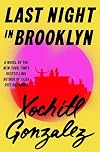
Typically, I find books about twenty-somethings painful — they’re whiny, navel-gazing, and don’t have anything to say that I find interesting. Xochitl Gonzalez’s latest novel, Last Night in Brooklyn, manages to steer clear of those pitfalls due to her excellent writing and a first-person semi-omniscient narrator looking back at a time in her life as opposed to living in it. Alicia Forten has spent her life trying to do everything right, but in the summer of 2007, she learns how to do show more things for herself. Moving out of her mother’s house, putting the brakes on her wedding plans, and partying her way through New York is just the beginning. Gonzalez has written a love letter to the Brooklyn of the aughts, and to women — especially women of color — trying to make it. Last Night in Brooklyn is a fun and satisfying read for her fans and any reader interested in this slice of time and place. show less
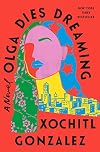
Rating: 3.5* of five
The Publisher Says: A blazing talent debuts with the tale of a status-driven wedding planner grappling with her social ambitions, absent mother, and Puerto Rican roots, all in the wake of Hurricane Maria
It's 2017, and Olga and her brother, Pedro "Prieto" Acevedo, are bold-faced names in their hometown of New York. Prieto is a popular congressman representing their gentrifying Latinx neighborhood in Brooklyn while Olga is the tony wedding planner for Manhattan's show more powerbrokers.
Despite their alluring public lives, behind closed doors things are far less rosy. Sure, Olga can orchestrate the love stories of the 1%, but she can't seem to find her own...until she meets Matteo, who forces her to confront the effects of long-held family secrets...
Twenty-seven years ago, their mother, Blanca, a Young Lord-turned-radical, abandoned her children to advance a militant political cause, leaving them to be raised by their grandmother. Now, with the winds of hurricane season, Blanca has come barreling back into their lives.
Set against the backdrop of New York City in the months surrounding the most devastating hurricane in Puerto Rico's history, Olga Dies Dreaming is a story that examines political corruption, familial strife and the very notion of the American dream--all while asking what it really means to weather a storm.
I RECEIVED A DRC FROM THE PUBLISHER VIA NETGALLEY. THANK YOU.
My Spoilery Review: First, read this:
I spent a chunk of my 1980s in Nuyorican Sunset Park. I grew up around Spanish-speaking people (including my oldest sister, whose command of Mexican Spanish exceeds her command of English) and wasn't thrown by the blended Spanglish interwoven in the book...that's a positive feature to me. Closeted gay guys were a dime a dozen, then as now; closeted gay Nuyorican guys were even more common then than now. And a lot of 'em were/are married, with kids, and a sadly disproportionate percentage were/are also hooked on crack then, heroin now. So I came (!) to this read ready to rumble. Papi dead of AIDS ("this pato disease," as Mami calls it in a letter), Mami in the Cause and effectively dead...yeah, I was feelin' it in all my wypipo leftist soul.
I don't like Olga, or Prieto, at all.
Sellout is the kindest word I have for them, both of them, the grey and compromised souls they got from their rootstock. I think the thing they rebelled against, terrorism in place of activism, makes sense given that they lost their mother to it...and does she have a blinkin' nerve showing back up (even if only by letter) to "take command" after what she left behind!...but. But, but, but.
You are your choices. Own them, and accept the prices they exact; this is what not one of these characters did until something outside themselves actually *forced* them to. And Prieto, for whom the stakes and therefore the costs are so very high, was guilty of the rankest betrayals and most repugnant of sophistic self-justification; in the end, the chickens coming home to roost in the body of Mami...or in the box of worms the goddamned woman sends him...let me just say that this subplot is terrible, realistic, and very, very angering for me on more levels than I can count.
So the story's a banger, right?! YES! This is gonna be epic fucking television! A telenovela in Spanglish for me and my fellow wypipo! (You do not know cross-cultural humor until you've seen English closed-captioned telenovelas.)
I have some problems. My rating says so.
Mami's an evil bitch, a stone-cold rotten-souled foul excresence of a person whose cold, cold heart would shame the Devil Herself.
Her heartlessness is a calculated creation by an author to make a point. Yes, yes, yes, I am a reasonably skilled decoder and can in fact separate reality from fiction. But this is fiction that illuminates a reality far too often ignored in our world. Wrong is being done everywhere, wrong met with wrong, and perpetuating a cycle of use and abuse and victimization that simply won't end.
And what is new about that, you ask. Nothing, not one thing, and that's where I got off the train. Because there needs to be some reckoning for whose lives are paying this price, and not on an institutional level....
Olga and Prieto are compromised, like I said above; I like to read about grey characters because frankly ain't too many all-pure-n-shiny knights out there. What I find so hard to make part of this as a tale of feminist redemption is the fact that Olga knowingly fleeces her clients, launders money for people best left to God or the Devil to deal with, and still manages to fuck up her response to Hurricane María by deciding she shouldn't be a "white savior" and go help the suffering to recover.
Prieto, meanwhile, faces off against their mother in her native element—Revolución!—and comes away knowing 1) she doesn't love him; 2) she's known he's gay all his life; 3) she thinks he's weak and useless, like his (crack-addicted) father. And this is touching bottom for him. This, not the HIV he could've avoided possibly passing on to someone before he knew he had it; this, not allowing his moral compass to be set by vile, evil people because he wanted to stay in politics.
Not down with this, Author González. Not at all, these are some bad actors becoming "good"...okay, they wouldn't claim that, better...by force majeure. And that sits wrong with me, not that it took this to get them to face up to themselves but that this is what it took to get them to face up to themselves. There's compromised and then there's complicit, and these're some complicit folk here.
So my fifth star went away, maximally I was at four.
But then there was that epilogue-y thing set in 2025. Another half-star. It was not a good idea. It wasn't any better or worse, writing-wise, than the rest of the book, but it was...ill advised, I'll stop there. And that's how a delightfully fun, deeply absorbing, hard-charging and target-aiming home run of a read turned into a sacrifice bunt that put the runner in scoring position.
And left her there. show less
The Publisher Says: A blazing talent debuts with the tale of a status-driven wedding planner grappling with her social ambitions, absent mother, and Puerto Rican roots, all in the wake of Hurricane Maria
It's 2017, and Olga and her brother, Pedro "Prieto" Acevedo, are bold-faced names in their hometown of New York. Prieto is a popular congressman representing their gentrifying Latinx neighborhood in Brooklyn while Olga is the tony wedding planner for Manhattan's show more powerbrokers.
Despite their alluring public lives, behind closed doors things are far less rosy. Sure, Olga can orchestrate the love stories of the 1%, but she can't seem to find her own...until she meets Matteo, who forces her to confront the effects of long-held family secrets...
Twenty-seven years ago, their mother, Blanca, a Young Lord-turned-radical, abandoned her children to advance a militant political cause, leaving them to be raised by their grandmother. Now, with the winds of hurricane season, Blanca has come barreling back into their lives.
Set against the backdrop of New York City in the months surrounding the most devastating hurricane in Puerto Rico's history, Olga Dies Dreaming is a story that examines political corruption, familial strife and the very notion of the American dream--all while asking what it really means to weather a storm.
I RECEIVED A DRC FROM THE PUBLISHER VIA NETGALLEY. THANK YOU.
My Spoilery Review: First, read this:
There were, inevitably, children’s clothing stores, furniture shops still offering bedroom sets by layaway, and dollar stores whose awnings teemed with suspended inflatable dolls, beach chairs, laundry carts, and other impulse purchases a mom might make on a Saturday afternoon, exhausted by errand running with her kids. There was the sneaker store where Olga used to buy her cute kicks, the fruit store Prieto had worked at in high school, the little storefront that sold the kind of old-lady bras Abuelita used to wear. On the sidewalks, the Mexican women began to set up their snack stands. Mango with lime and chili on this corner, tamales on that. Until the Mexicans had come to Sunset Park, Olga had never tried any of this food, and now she always tried to leave a little room to grab a snack on her way home. Despite the relatively early hour, most of the shops were open, music blasting into the streets, granting the avenue the aura of a party. In a few more hours, cars with their stereos pumping, teens with boom boxes en route to the neighborhood’s public pool, and laughing children darting in front of their mothers would add to the cacophony that Olga had grown to think of as the sound of a Saturday.
I spent a chunk of my 1980s in Nuyorican Sunset Park. I grew up around Spanish-speaking people (including my oldest sister, whose command of Mexican Spanish exceeds her command of English) and wasn't thrown by the blended Spanglish interwoven in the book...that's a positive feature to me. Closeted gay guys were a dime a dozen, then as now; closeted gay Nuyorican guys were even more common then than now. And a lot of 'em were/are married, with kids, and a sadly disproportionate percentage were/are also hooked on crack then, heroin now. So I came (!) to this read ready to rumble. Papi dead of AIDS ("this pato disease," as Mami calls it in a letter), Mami in the Cause and effectively dead...yeah, I was feelin' it in all my wypipo leftist soul.
“Debt is one of The Man’s great tools for keeping people of color oppressed.”
–and–
“You must remember, mijo, even people who were once your sails can become your anchors.”
I don't like Olga, or Prieto, at all.
Sellout is the kindest word I have for them, both of them, the grey and compromised souls they got from their rootstock. I think the thing they rebelled against, terrorism in place of activism, makes sense given that they lost their mother to it...and does she have a blinkin' nerve showing back up (even if only by letter) to "take command" after what she left behind!...but. But, but, but.
“Because I understand all the problems, I just fundamentally don’t believe we can fix them. However, I fully support those on the bottom taking as much advantage of the top as humanly possible.”
You are your choices. Own them, and accept the prices they exact; this is what not one of these characters did until something outside themselves actually *forced* them to. And Prieto, for whom the stakes and therefore the costs are so very high, was guilty of the rankest betrayals and most repugnant of sophistic self-justification; in the end, the chickens coming home to roost in the body of Mami...or in the box of worms the goddamned woman sends him...let me just say that this subplot is terrible, realistic, and very, very angering for me on more levels than I can count.
So the story's a banger, right?! YES! This is gonna be epic fucking television! A telenovela in Spanglish for me and my fellow wypipo! (You do not know cross-cultural humor until you've seen English closed-captioned telenovelas.)
I have some problems. My rating says so.
Mami's an evil bitch, a stone-cold rotten-souled foul excresence of a person whose cold, cold heart would shame the Devil Herself.
"Olga, I love your mother as much, if not more, than my actual sibling. But there's a reason that I never had kids. Mothering and birthing a child are not the same. Children don't ask to be born. They don't owe anybody anything. This is one area your mother and I never saw eye to eye on, frankly."
Her heartlessness is a calculated creation by an author to make a point. Yes, yes, yes, I am a reasonably skilled decoder and can in fact separate reality from fiction. But this is fiction that illuminates a reality far too often ignored in our world. Wrong is being done everywhere, wrong met with wrong, and perpetuating a cycle of use and abuse and victimization that simply won't end.
The price of Imperialism is lives. —JUAN GONZÁLEZ (epigraph of the book)
And what is new about that, you ask. Nothing, not one thing, and that's where I got off the train. Because there needs to be some reckoning for whose lives are paying this price, and not on an institutional level....
Olga and Prieto are compromised, like I said above; I like to read about grey characters because frankly ain't too many all-pure-n-shiny knights out there. What I find so hard to make part of this as a tale of feminist redemption is the fact that Olga knowingly fleeces her clients, launders money for people best left to God or the Devil to deal with, and still manages to fuck up her response to Hurricane María by deciding she shouldn't be a "white savior" and go help the suffering to recover.
Prieto, meanwhile, faces off against their mother in her native element—Revolución!—and comes away knowing 1) she doesn't love him; 2) she's known he's gay all his life; 3) she thinks he's weak and useless, like his (crack-addicted) father. And this is touching bottom for him. This, not the HIV he could've avoided possibly passing on to someone before he knew he had it; this, not allowing his moral compass to be set by vile, evil people because he wanted to stay in politics.
Not down with this, Author González. Not at all, these are some bad actors becoming "good"...okay, they wouldn't claim that, better...by force majeure. And that sits wrong with me, not that it took this to get them to face up to themselves but that this is what it took to get them to face up to themselves. There's compromised and then there's complicit, and these're some complicit folk here.
So my fifth star went away, maximally I was at four.
But then there was that epilogue-y thing set in 2025. Another half-star. It was not a good idea. It wasn't any better or worse, writing-wise, than the rest of the book, but it was...ill advised, I'll stop there. And that's how a delightfully fun, deeply absorbing, hard-charging and target-aiming home run of a read turned into a sacrifice bunt that put the runner in scoring position.
And left her there. show less
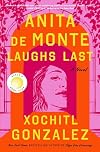
Anita de Monte Laughs Last is a multi-pov book following Anita de Monte and her husband Jack after Jack murders Anita and Raquel as she completes her undergraduate degree doing research on Jack. Little bits of ghosts and vengeance are interspersed with the bulk of the novel, breaking up the more serious topics of racism and classism in the art world. While I know many people did not like the ghosts and vengeance parts of the story, I actually quite enjoyed them.
Based quite directly off of show more Ana Mendieta, a real-life Cuban artist who was killed in the same way by her husband, Anita de Monte discusses her hardships enduring domestic violence, racism within the art world, and her up-and-coming art career. I was disappointed that the only mention of Ana Mendieta we ever got was a first-name in the dedication and that apparently, Mendieta's family was never contacted in the making of this book. Off the top of my head, I can think of at least two places in the novel itself (excluding a potential dedication, afterword, or acknowledgments) in which she could have easily directly named Ana Mendieta. However, I am choosing to not let that affect my rating of the book, as this is something many White authors get away with, and Gonzalez seems to be getting much more pushback on this than a White author would have.
Maybe I am only seeing the parallels because I read this so soon after reading Seven Husbands of Evelyn Hugo by Taylor Jenkins Reid (a book I hated, by the way), but Anita de Monte Laughs Last is everything Seven Husbands DREAMED of being. While it may not be nearly as chronically readable, it has the same idea of investigative journalism with the character Raquel, but it actually dives into the characters much more thoroughly and allows us to learn who these people actually are. It also is much more thorough in its discussion of the systematic oppression and exploitation of women of color in the art world, which added the needed depth to this novel.
I loved this book through the whole thing, and cried my way through the last 50 or so pages. show less
Based quite directly off of show more Ana Mendieta, a real-life Cuban artist who was killed in the same way by her husband, Anita de Monte discusses her hardships enduring domestic violence, racism within the art world, and her up-and-coming art career. I was disappointed that the only mention of Ana Mendieta we ever got was a first-name in the dedication and that apparently, Mendieta's family was never contacted in the making of this book. Off the top of my head, I can think of at least two places in the novel itself (excluding a potential dedication, afterword, or acknowledgments) in which she could have easily directly named Ana Mendieta. However, I am choosing to not let that affect my rating of the book, as this is something many White authors get away with, and Gonzalez seems to be getting much more pushback on this than a White author would have.
Maybe I am only seeing the parallels because I read this so soon after reading Seven Husbands of Evelyn Hugo by Taylor Jenkins Reid (a book I hated, by the way), but Anita de Monte Laughs Last is everything Seven Husbands DREAMED of being. While it may not be nearly as chronically readable, it has the same idea of investigative journalism with the character Raquel, but it actually dives into the characters much more thoroughly and allows us to learn who these people actually are. It also is much more thorough in its discussion of the systematic oppression and exploitation of women of color in the art world, which added the needed depth to this novel.
I loved this book through the whole thing, and cried my way through the last 50 or so pages. show less
Lists
May Books (1)
Awards


You May Also Like


Associated Authors
Statistics
- Works
- 3
- Also by
- 1
- Members
- 2,011
- Popularity
- #12,799
- Rating
- 3.8
- Reviews
- 69
- ISBNs
- 32
- Languages
- 2