
Honorée Fanonne Jeffers
Author of The Love Songs of W.E.B. Du Bois
About the Author
Honoree Fanonne Jeffers teaches at the University of Oklahoma.
Image credit: from Publishers Weekly
Works by Honorée Fanonne Jeffers
Sister Lilith {short story} 2 copies
The Gospel of Barbecue 1 copy
Associated Works
The Fire This Time: A New Generation Speaks about Race (2016) — Contributor — 1,030 copies, 32 reviews
Dark Matter: A Century of Speculative Fiction from the African Diaspora (2000) — Contributor — 598 copies, 11 reviews
African American Poetry: 250 Years of Struggle and Song (2020) — Contributor — 238 copies, 4 reviews
Angles of Ascent: A Norton Anthology of Contemporary African American Poetry (2013) — Contributor — 48 copies
Catch the Fire!!!: A Cross-Generational Anthology of Contemporary African-American Poetry (1998) — Contributor — 35 copies, 1 review
Gathering Ground: A Reader Celebrating Cave Canem's First Decade (2006) — Contributor — 30 copies, 1 review
What God Is Honored Here?: Writings on Miscarriage and Infant Loss by and for Native Women and Women of Color (2019) — Contributor — 27 copies, 2 reviews
The Future Has an Appointment with the Dawn (2011) — Introduction, some editions — 16 copies, 1 review
Another South: Experimental Writing in the South (Modern & Contemporary Poetics) (2002) — Contributor — 6 copies
Tagged
Common Knowledge
- Canonical name
- Jeffers, Honorée Fanonne
- Birthdate
- 1967
- Gender
- female
- Education
- University of Alabama (M.F.A.|1996)
Talladega College (BA|1989) - Occupations
- poet
novelist
professor
critic - Organizations
- University of Oklahoma
- Awards and honors
- Harper Lee Award for Literary Distinction (2018)
NAACP Image Award for Outstanding Literary Work – Poetry (2021)
Alabama Writers Hall of Fame (2020) - Agent
- Sarah Burnes
- Relationships
- Jeffers, Trellie James (mother)
Jeffers, Lance (father)
Jeffers, Valjeanne (sister) - Nationality
- USA
- Birthplace
- Kokomo, Indiana, USA
- Places of residence
- Alabama, USA
Durham, North Carolina, USA
Atlanta, Georgia, USA
Norman, Oklahoma, USA - Associated Place (for map)
- USA
Members
Reviews
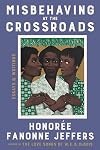
This intriguing book feels like spending a day with a new friend and discovering everything that makes her smart, unique, brave, and peppery! I loved her novel The Love Song of W.E.B. DuBois, which won the National Book Critics Circle Award for Fiction. This one is a collection of essays, poetry, memoir, book reviews, observations on Black and white women academics, and so much more. Both her parents were college professors, her mother with a doctorate, but the mental, physical, and sexual show more abuse perpetrated on Ms. Jeffers and her two older sisters by their father, with her mother occasionally intervening but never being a reliable protector, is the constant underlying theme. She shares the story of her brief marriage to a tour guide she met in Senegal and why she has sworn off marriage forever. There's fascinating sections on Fannie Lou Hamer, on the default value of whiteness in all aspects of American culture, on womanism (Black) vs feminism (white), on the farce of academic conferences on DEI, on her enslaved ancestors, on Sally Hemmings of Monticello, and on the renewal of her love for her mother when, as the last of three surviving daughters, she lovingly cooks southern and stands watch at the deathbed.
Quotes: "When it comes to the United States, the actual history of my ancestors is a trigger warning."
"Like that of most writers, my life is filled with curiosity. Something will strike me in a dream or in waking life, and I move to questioning: What would happen if I thought about this - or that - longer? If I chased my curiosity and waded into the ensuing confusion until I learned to swim instead of drowning?"
"When did "race" become shorthand for so much? Especially for talking about the everyday lives of Black folks? When most scholars talk about the White guys who framed the Constitution, the men collectively known as the founding fathers, we never say, "Oh wait, these dudes are all White, so this discussion is about 'race'." show less
Quotes: "When it comes to the United States, the actual history of my ancestors is a trigger warning."
"Like that of most writers, my life is filled with curiosity. Something will strike me in a dream or in waking life, and I move to questioning: What would happen if I thought about this - or that - longer? If I chased my curiosity and waded into the ensuing confusion until I learned to swim instead of drowning?"
"When did "race" become shorthand for so much? Especially for talking about the everyday lives of Black folks? When most scholars talk about the White guys who framed the Constitution, the men collectively known as the founding fathers, we never say, "Oh wait, these dudes are all White, so this discussion is about 'race'." show less
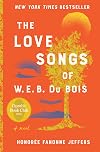
This is an extraordinary, beautiful, epic, work of art exploring the complexities of American history and personal identity. The storytelling is amazing, it's a deeply personal and historically significant narrative. From the first page, I was consumed by the emotional depth of this book. Jeffers explores a wide range of emotions, from despair and heartbreak to hope and passion, weaving them seamlessly. The characters are richly drawn and deeply flawed, making them feel incredibly real and show more relatable. One of the most impressive aspects of this book is its scope. Spanning centuries and covering a wide range of historical events, Jeffers blends intimate personal narratives with broader historical context. Through the experiences of the characters, I gained a deeper understanding of the history of Georgia and the complex dynamics of race and identity in America. I learned about the deep roots of pecan and peach trees, as well as the long history of the Indigenous, Black, and white people who moved through and lived in the area. The pacing is perfect, each narrative shift felt natural and compelling. Despite its length, I was completely absorbed in the story and so looked forward to reading it when I could. By the end, I was emotionally spent and deeply satisfied. I left with so many books added to my TBR for more reading. By spanning centuries, this story feels eternal and is a future classic that deserves to be read by everyone. It is a book that will live inside me, and I cannot recommend it highly enough. If you haven’t read it yet, you must. show less
Really immersive epic of African-American history and family. Jeffers has written a masterpiece that moves around in time and in perspective and place, while always coming back to what's essential. It varies in tone from shift to shift in ways that are true to the characters and time being depicted. Jeffers has a deft hand for voice and characterization; it is not primarily a plot-driven book but readers looking for a rich character experience will get a lot of out of this book. And yeah show more it's long but you know what? You knew that going in. show less
When you start reading Honorée Fanonne Jeffers' The Love Songs of W.E.B. Du Bois, you're making a commitment. At 800+ pages—and none of it the kind of stuff you can skim through—you'll be spending the equivalent of two full work days reading. In addition, this is not lightweight reading. Love Songs has some great moments of humor, but on the whole this is a book with a lot of hardship—generations worth of hardship—so you need some strength to make your way through it.
I can, however, show more promise that your effort in terms of time and heartache will be well worth it.
Love Songs is the kind of book for which the adjective "epic" was intended. It moves back and forth in time, exploring the history of a single family, beginning with Creek Indians before this land had a large white presence and also on the shores of Africa in the midst of the slave trade. By its end, the novel has reached 2007 or 2008, when Obama is running for President, but hasn't yet been elected. Jeffers' central present-day character, Ailey, is a young black women (a child at the novel's start, in her early 30s at the novel's end) balancing life in the city and life at "home" in Chicasetta, the location where all the many generations of her family—indigenous, African, Black, and white—have come in contact, often with painful results. (CW: sexual abuse of children in several generations.)
Reading Love Songs, witnessing the interactions of past and present and their impact on individual lives, provides a complex overview of the history of the U.S. that would seem impossible—if it weren't for the fact that Jeffers is doing it. Take the time to read this title, embrace the fact that you'll need to move through it slowly and that you'll be deeply uncomfortable sometimes while you read. That's how we learn: a mix of pain and laughter, a longitudinal focus, and the necessary days and years and generations to build up experience and knowledge.
I received a free electronic review copy of this title from the publisher via Edelweiss; the opinions are my own. show less
I can, however, show more promise that your effort in terms of time and heartache will be well worth it.
Love Songs is the kind of book for which the adjective "epic" was intended. It moves back and forth in time, exploring the history of a single family, beginning with Creek Indians before this land had a large white presence and also on the shores of Africa in the midst of the slave trade. By its end, the novel has reached 2007 or 2008, when Obama is running for President, but hasn't yet been elected. Jeffers' central present-day character, Ailey, is a young black women (a child at the novel's start, in her early 30s at the novel's end) balancing life in the city and life at "home" in Chicasetta, the location where all the many generations of her family—indigenous, African, Black, and white—have come in contact, often with painful results. (CW: sexual abuse of children in several generations.)
Reading Love Songs, witnessing the interactions of past and present and their impact on individual lives, provides a complex overview of the history of the U.S. that would seem impossible—if it weren't for the fact that Jeffers is doing it. Take the time to read this title, embrace the fact that you'll need to move through it slowly and that you'll be deeply uncomfortable sometimes while you read. That's how we learn: a mix of pain and laughter, a longitudinal focus, and the necessary days and years and generations to build up experience and knowledge.
I received a free electronic review copy of this title from the publisher via Edelweiss; the opinions are my own. show less
Lists
Awards


You May Also Like


Associated Authors
Statistics
- Works
- 11
- Also by
- 21
- Members
- 1,832
- Popularity
- #14,048
- Rating
- 4.3
- Reviews
- 56
- ISBNs
- 37
- Languages
- 3
- Favorited
- 1