
Nathan Harris (1) (1992–)
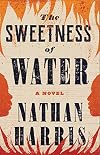
Author of The Sweetness of Water
For other authors named Nathan Harris, see the disambiguation page.
Works by Nathan Harris
Associated Works
Tagged
Common Knowledge
- Birthdate
- 1992
- Gender
- male
- Education
- University of Oregon
University of Texas - Short biography
- Nathan Harris, a native of Oregon, is a Michener Fellow at the University of Texas. He was awarded the Kidd Prize, as judged by Anthony Doerr, and was also a finalist for the Tennessee Williams Fiction Prize. He lives in Austin, Texas.
- Nationality
- USA
- Birthplace
- Ashland, Oregon, USA
- Places of residence
- Ashland, Oregon, USA
Austin, Texas, USA - Map Location
- USA
Members
Discussions
2021 Booker Prize Longlist: The Sweetness of Water by Nathan Harris in Booker Prize (August 2021)
Reviews

I had hesitated reading this novel, passing it by. Then, I was seeing it mentioned over and over. I went back and claimed my ‘read now’ privilege, late to the party.
The writing is wonderful. It is set after the end of the Civil War, just before Federal troops arrive to reconstruct the South. Freedmen have fled the plantations and their previous owners can’t accept they no longer own them. In the town of Old Ox, sons are returning from the war, even a son who was believed to have show more died.
George Walker holds dear the memory of his childhood friend who was sold away to a man bent on misusing the girl. George has never amounted to much, preferring books to farming. At night, he walks the woods searching for the monster who haunted him since childhood.
One night, lost and exhausted, he is found by two freedmen who have been living in the woods. They help him home. He offers them a remarkable chance: help him plant a field of peanuts, and he will pay them a white man’s wages. Prentiss understands this mean the money for traveling North and a new life for him and his brother Landry, brutally deformed from when he was the scapegoat for his fellow slaves. George’s wife accepts the boys as well, forging a special bond with the silent Landry.
Unexpectedly, son Caleb comes home. He had gone to war to follow his boyhood friend and love, the son of a wealthy and powerful man. They have a secret life which is observed by Landry, resulting in tragedy. And from here, the story spirals and pulls the reader along.
The book drew me in and kept my interest. As it unfolded, I understood George’s motivation. I also felt the story was a wish fulfillment fantasy, with poetic justice dealt. And, I find myself thinking that George’s wife had the best parts and was the real hero of the story. George suffered horribly for his beliefs and acts. But it was Isabell who had the strength to fulfill his legacy. She allows herself to turn to women in town for insight and support in some of the most satisfyingly scenes.
There is violence in the book–no surprise because of its subject matter and time setting. But it is the acceptance and love and bravery that remains in my mind. The courage of people who follow their better angels.
Although Prentiss is a strong and brave character, I wish he had been given a bigger presence in the novel. Landry is short-lived in the story, his character almost more a symbol than real, but who is never forgotten by Isabell.
I can understand why this novel has garnered so much attention. It is an engrossing, emotional read. The white people are inspirational characters who risk everything for their convictions. We can trace the depicted racism to today’s headlines. I expect great things to come from this young author.
I received a free egalley from the publisher thought NetGalley. My review is fair and unbiased. show less
The writing is wonderful. It is set after the end of the Civil War, just before Federal troops arrive to reconstruct the South. Freedmen have fled the plantations and their previous owners can’t accept they no longer own them. In the town of Old Ox, sons are returning from the war, even a son who was believed to have show more died.
George Walker holds dear the memory of his childhood friend who was sold away to a man bent on misusing the girl. George has never amounted to much, preferring books to farming. At night, he walks the woods searching for the monster who haunted him since childhood.
One night, lost and exhausted, he is found by two freedmen who have been living in the woods. They help him home. He offers them a remarkable chance: help him plant a field of peanuts, and he will pay them a white man’s wages. Prentiss understands this mean the money for traveling North and a new life for him and his brother Landry, brutally deformed from when he was the scapegoat for his fellow slaves. George’s wife accepts the boys as well, forging a special bond with the silent Landry.
Unexpectedly, son Caleb comes home. He had gone to war to follow his boyhood friend and love, the son of a wealthy and powerful man. They have a secret life which is observed by Landry, resulting in tragedy. And from here, the story spirals and pulls the reader along.
The book drew me in and kept my interest. As it unfolded, I understood George’s motivation. I also felt the story was a wish fulfillment fantasy, with poetic justice dealt. And, I find myself thinking that George’s wife had the best parts and was the real hero of the story. George suffered horribly for his beliefs and acts. But it was Isabell who had the strength to fulfill his legacy. She allows herself to turn to women in town for insight and support in some of the most satisfyingly scenes.
There is violence in the book–no surprise because of its subject matter and time setting. But it is the acceptance and love and bravery that remains in my mind. The courage of people who follow their better angels.
Although Prentiss is a strong and brave character, I wish he had been given a bigger presence in the novel. Landry is short-lived in the story, his character almost more a symbol than real, but who is never forgotten by Isabell.
I can understand why this novel has garnered so much attention. It is an engrossing, emotional read. The white people are inspirational characters who risk everything for their convictions. We can trace the depicted racism to today’s headlines. I expect great things to come from this young author.
I received a free egalley from the publisher thought NetGalley. My review is fair and unbiased. show less
And perhaps that was the great ill of the world, that those prone to evil were left untouched by guilt to a degree so vast that they might sleep through a storm, while better men, conscience stained men, lay awake as though that very storm persisted unyieldingly in the furthest reaches of their soul.
It is post-Civil war Georgia, and the men have come home from the war in various states of mental and physical disrepair. The slaves have been freed, but few of them know how to embrace the new show more life they have found, and most of the townsmen and previous slave owners do not mean to see them succeed. Disarray is everywhere, loss is everywhere, and the scavengers have control of things.
Two of the freedmen released into the town of Old Ox, Georgia are brothers, Landrey and Prentiss, who make their way onto the land of George Walker and his wife, Isabelle. George is a good man, who recognizes that he and the brothers might fill one another’s needs: his to begin a field of peanuts (a task he is ill-equipped to perform), and theirs to make enough money to leave the town and find their way North to a new life. He has a genuine respect for these men, he pays a fair wage, neither of these facts is considered an attribute by his neighbors.
That this relationship should end in tragedy is almost a given. In fact, there is much these men have in common, but little they understand of one another, and they are all struggling to find their feet in a world that has just turned inside-out. Woven into this tale is another kind of struggle, experienced by two other men, but one that impacts directly the events that follow.
Harris has also created, along with this variety of male characters, a couple of female characters that make the book whole and complete. Isabelle, and her growth during the course of the novel, shows, for me, how truly adept a writer Nathan Harris is. She reacts in ways that I did not anticipate, but never in ways that do not ring true.
There is so much one wishes to say, but too difficult to do so without spoiling some aspects of the book for others, which I always strive to avoid. So, I will simply say this is a powerful read, it deserves the attention and award nominations it has received.
The Sweetness of Water is Nathan Harris’ debut offering, and I hope it is a sign of things to come from this very talented and skillful writer. show less
It is post-Civil war Georgia, and the men have come home from the war in various states of mental and physical disrepair. The slaves have been freed, but few of them know how to embrace the new show more life they have found, and most of the townsmen and previous slave owners do not mean to see them succeed. Disarray is everywhere, loss is everywhere, and the scavengers have control of things.
Two of the freedmen released into the town of Old Ox, Georgia are brothers, Landrey and Prentiss, who make their way onto the land of George Walker and his wife, Isabelle. George is a good man, who recognizes that he and the brothers might fill one another’s needs: his to begin a field of peanuts (a task he is ill-equipped to perform), and theirs to make enough money to leave the town and find their way North to a new life. He has a genuine respect for these men, he pays a fair wage, neither of these facts is considered an attribute by his neighbors.
That this relationship should end in tragedy is almost a given. In fact, there is much these men have in common, but little they understand of one another, and they are all struggling to find their feet in a world that has just turned inside-out. Woven into this tale is another kind of struggle, experienced by two other men, but one that impacts directly the events that follow.
Harris has also created, along with this variety of male characters, a couple of female characters that make the book whole and complete. Isabelle, and her growth during the course of the novel, shows, for me, how truly adept a writer Nathan Harris is. She reacts in ways that I did not anticipate, but never in ways that do not ring true.
There is so much one wishes to say, but too difficult to do so without spoiling some aspects of the book for others, which I always strive to avoid. So, I will simply say this is a powerful read, it deserves the attention and award nominations it has received.
The Sweetness of Water is Nathan Harris’ debut offering, and I hope it is a sign of things to come from this very talented and skillful writer. show less

The war is over and the men have started to return. In a rural Georgia community, that means occupation of a sort, and previously enslaved people camping out where they can. For George, a solitary-minded man who lives peacefully with his wife and who prefers to live off of the sale of lands accumulated by his father, rather than work or own human beings, this means an incomprehensible loss. His son's best friend has carried the news of his death home to George and, unable to face his wife show more with the news, George heads out into the wilds of his unfarmed property. Which is where he meets two men, who have left the plantation next door and who intend to go north, but not yet. Which causes George to ask,
"...I just wonder why, really. You could go anywhere."
"We plan to. It's just nice."
"What's that?"
Prentiss looked at George as if the answer was right before him.
"To be left alone for a time."
And, in this way, two unlikely pairs form a tenuous connection. George, in his grief, decides to take up work for the first time, planting peanuts. He hires Prentiss and Landry to work with him, paying them what he would pay any man for his labor and by living in the barn, Prentiss and Landry save up money to start life up north. George's wife, Isabelle, is unable to forgive him for taking so long to share the news of his son's death, but as things in the nearby town change with the tumultuous times, and even the dead return, she finds her own courage to push back against the traditions she's lived with all her life.
I really liked this book. The time and place were well described and the characters felt real to that earlier time and to where they lived. The upheaval of the end of the Civil War is well-described along with the plantation owners desperate attempts to hold on to the power they once held, sometimes with the help of the occupying forces now there to keep the peace and allow the newly-freed to remain free. Harris looks at what freedom might have felt like to someone who has been enslaved their entire life and the sense of dislocation and uncertainty. George remains the center of the book; a man who has avoided work and involvement in the world beyond his own acres, but who discovers a capacity for change with the changes in the world around him. A surprising book in many ways and I look forward to the author's next book. show less
"...I just wonder why, really. You could go anywhere."
"We plan to. It's just nice."
"What's that?"
Prentiss looked at George as if the answer was right before him.
"To be left alone for a time."
And, in this way, two unlikely pairs form a tenuous connection. George, in his grief, decides to take up work for the first time, planting peanuts. He hires Prentiss and Landry to work with him, paying them what he would pay any man for his labor and by living in the barn, Prentiss and Landry save up money to start life up north. George's wife, Isabelle, is unable to forgive him for taking so long to share the news of his son's death, but as things in the nearby town change with the tumultuous times, and even the dead return, she finds her own courage to push back against the traditions she's lived with all her life.
I really liked this book. The time and place were well described and the characters felt real to that earlier time and to where they lived. The upheaval of the end of the Civil War is well-described along with the plantation owners desperate attempts to hold on to the power they once held, sometimes with the help of the occupying forces now there to keep the peace and allow the newly-freed to remain free. Harris looks at what freedom might have felt like to someone who has been enslaved their entire life and the sense of dislocation and uncertainty. George remains the center of the book; a man who has avoided work and involvement in the world beyond his own acres, but who discovers a capacity for change with the changes in the world around him. A surprising book in many ways and I look forward to the author's next book. show less
“Perhaps that was the great ill of the world, that those prone to evil were left untouched by guilt to a degree so vast that they might sleep through a storm, while better men, conscience-stained men, lay awake as though that very storm persisted unyieldingly in the furthest reaches of their soul.”
Beautifully written debut set just after the American Civil War in Old Ox, Georgia. Reconstruction has just begun. It is a time of massive social change. Former slaves and brothers, Prentiss show more and Landry, are living in the woods on homesteader George Walker’s property. George and his wife, Isabelle, have been told their son was killed in the war. George is not all that interested in farming but hires the brothers to help him plant a crop of peanuts, which provides solace to all three through the routines inherent in working together side-by-side. By treating former slaves well, he becomes a pariah in the eyes of the town.
The first half of this book is exceptional. The characters are deeply drawn. The writing is superb. I found it easy to become engrossed in the story. I particularly enjoyed the way the characters challenge the status quo. This, of course, creates conflict, especially in the American South, where the old guard does not wish to change. In fact, they are just waiting for the Yankee troops to leave so they can go back to their old ways.
The second half drifts into a more plot-driven narrative, where a murder occurs, and a racist sheriff gets involved in the pursuit of innocent men. In this section, several standard tropes appear. Even so, I very much enjoyed this book. It is so refreshing to find a book set in this period that celebrates friendship and compassion. Harris does not ignore the horrors of the era, but he offers a tiny ray of hope, which perhaps we can all use these days.
4.5 show less
Beautifully written debut set just after the American Civil War in Old Ox, Georgia. Reconstruction has just begun. It is a time of massive social change. Former slaves and brothers, Prentiss show more and Landry, are living in the woods on homesteader George Walker’s property. George and his wife, Isabelle, have been told their son was killed in the war. George is not all that interested in farming but hires the brothers to help him plant a crop of peanuts, which provides solace to all three through the routines inherent in working together side-by-side. By treating former slaves well, he becomes a pariah in the eyes of the town.
The first half of this book is exceptional. The characters are deeply drawn. The writing is superb. I found it easy to become engrossed in the story. I particularly enjoyed the way the characters challenge the status quo. This, of course, creates conflict, especially in the American South, where the old guard does not wish to change. In fact, they are just waiting for the Yankee troops to leave so they can go back to their old ways.
The second half drifts into a more plot-driven narrative, where a murder occurs, and a racist sheriff gets involved in the pursuit of innocent men. In this section, several standard tropes appear. Even so, I very much enjoyed this book. It is so refreshing to find a book set in this period that celebrates friendship and compassion. Harris does not ignore the horrors of the era, but he offers a tiny ray of hope, which perhaps we can all use these days.
4.5 show less
Lists
Awards


You May Also Like


Associated Authors
Statistics
- Works
- 2
- Also by
- 2
- Members
- 1,391
- Popularity
- #18,478
- Rating
- 4.0
- Reviews
- 43
- ISBNs
- 30
- Languages
- 5
- Favorited
- 1
