
Robert Jones, Jr. (1971–)
Author of The Prophets
Robert Jones, Jr. is Robert Jones Jr. (1). For other authors named Robert Jones Jr., see the disambiguation page.
Works by Robert Jones, Jr.
Associated Works
Four Hundred Souls: A Community History of African America, 1619-2019 (2021) — Contributor — 1,174 copies, 25 reviews
Tagged
Common Knowledge
- Canonical name
- Jones, Robert, Jr.
- Birthdate
- 1971
- Gender
- male
- Nationality
- USA
- Birthplace
- Brooklyn, New York, USA
- Associated Place (for map)
- New York, USA
Members
Reviews
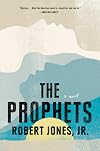
The Prophets is nothing less than a brilliant piece of writing. Robert Jones, Jr., unwinds this story—set primarily on a plantation in the pre-Civil War south—slowly. The narrative is largely in third person, with each chapter focusing on a different character, building a rich understanding of the overlapping worlds each character occupies. Because the chapters focus on different characters, readers experience overlapping versions of events that wouldn't be possible with a more limited show more narrative focus. The characters are primarily slaves, and the detail with which Jones explores their inner and outer worlds brings across the daily reality and inhumanity of slavery more strikingly than any other book I've read.
The exception to Jones' use of third person is the chapters narrated by the old gods of Africa, no longer as powerful as they once were, but still watching over the descendants of those who worshiped them. These chapters are written in first person plural and wrestle with ideas and history over great swathes of time, as opposed to daily happenings.
In The Prophets, Jones explores gay relationships—both in the African homeland and on the plantation. The central action of the novel is the struggle of Samuel and Izaiah, who share responsibility for caring for the animals on the plantation, who sleep in the barn, and who love each other both deeply and, sometimes, uneasily.
I don't have detailed knowledge of the time period—or of life in Africa before the slave trade with Europe and America opened up—to determine the accuracy of Jones' portrayal of the cultures, relationships, and perspectives Jones depicts, but I can say that I was completely and absolutely convinced by his portrayals.
When you reach the end of The Prophets, take time to read through Jones' extensive acknowledgements section. His thanks extend from friends and relatives to embrace a world of performers, activists, writers, teachers, and artists—all of whom he credits with helping him become the man and writer he is. In acknowledging these many figures, living and dead, Jones demonstrates importance of an extended understanding of community in the development of the individual, particularly for someone fighting to empower himself and his community in the face of ongoing oppression. The acknowledgments can also serve as an excellent ground for exploring artists and individuals readers may want to learn more about.
Despite the fact that this book is coming out in early January, I am absolutely convinced that it will remain on my list of the year's best books when we reach December 2021. It's also a title I will be rereading soon because I know my first reading of The Prophets has only begun to grasp the richness of all that Jones presents.
I received a free electronic review copy of this book from the publisher via EdelweissPlus; the opinions are my own. show less
The exception to Jones' use of third person is the chapters narrated by the old gods of Africa, no longer as powerful as they once were, but still watching over the descendants of those who worshiped them. These chapters are written in first person plural and wrestle with ideas and history over great swathes of time, as opposed to daily happenings.
In The Prophets, Jones explores gay relationships—both in the African homeland and on the plantation. The central action of the novel is the struggle of Samuel and Izaiah, who share responsibility for caring for the animals on the plantation, who sleep in the barn, and who love each other both deeply and, sometimes, uneasily.
I don't have detailed knowledge of the time period—or of life in Africa before the slave trade with Europe and America opened up—to determine the accuracy of Jones' portrayal of the cultures, relationships, and perspectives Jones depicts, but I can say that I was completely and absolutely convinced by his portrayals.
When you reach the end of The Prophets, take time to read through Jones' extensive acknowledgements section. His thanks extend from friends and relatives to embrace a world of performers, activists, writers, teachers, and artists—all of whom he credits with helping him become the man and writer he is. In acknowledging these many figures, living and dead, Jones demonstrates importance of an extended understanding of community in the development of the individual, particularly for someone fighting to empower himself and his community in the face of ongoing oppression. The acknowledgments can also serve as an excellent ground for exploring artists and individuals readers may want to learn more about.
Despite the fact that this book is coming out in early January, I am absolutely convinced that it will remain on my list of the year's best books when we reach December 2021. It's also a title I will be rereading soon because I know my first reading of The Prophets has only begun to grasp the richness of all that Jones presents.
I received a free electronic review copy of this book from the publisher via EdelweissPlus; the opinions are my own. show less
NOMINATED FOR A 2021 NATIONAL BOOK AWARD! Winners to be announced on 17 November 2021.
I RECEIVED A DRC FROM THE PUBLISHER VIA EDELWEISS+. THANK YOU.
My Review: First, read this:
You know, from reading those quotes, whether this book is for you or not. This is the prose voice; this is the storyteller's means of talking to you about the world Isaiah and Samuel are within. If it's not for you, then it's not.
But the National Book Award for Fiction thinks it worthy of inclusion on the 2021 list...and I hope, in spite of very serious competition, that the 2021 judges will choose this most American of stories, this beautifully told paean to love's power to transcend mere earthly potency, for the prize.
As I've read this book, and that's twice now, I've been transported by the power of debut novelist Jones's clarity and singleness of purpose. I know that writing about about enslaved people's love for each other is always going to be seen as a political statement. It is inevitable that choosing to tell of the love between two men is going to be seen as a political statement. To do both is, well, it *is* a political statement; but the statement in this book is, "Love Is Love." Isaiah loves Samuel, Samuel loves Isaiah, and these two men are WRONG and BAD and WICKED for this.
How that can be is not something I see in the story; it's not in these pages; and it's the reason I want the book to receive the National Book Award. I'm too old to hope that people will learn not to hate. They love it so, it's such a glorious high, that they aren't going to give it up. But I am not beyond hoping that the unconverted will resonate to the simple, deep joy of Samuel and Isaiah as they navigate a world that hates them for being, on many levels and in many, many places.
That could very well be the most profound thing I've ever read....
I'd recommend to you a read like this under any circumstances, a read that challenges you to make the assumptions you live by fit the facts and not the other way around. I'd recommend it to you because it's about battling the addiction to Being Right. I'd urge it on you because it's beautifully written and deeply, emotionally wrought from the stuff that we get just from being alive.
But most of all, I do recommend this read to you because it's so satisfying to see the story of gay men's love as it has been seen, felt, internalized by the people around them...in many different ways, for many different reasons. The Samuel and Isaiah story is something these two men did not hide, and that is what I think matters the most. The narrative is not solely theirs, so the narrators are not solely them. How very important that facet of the story is to this old reader...how necessary its message of accepting the burden of being alive and in love places on some of us, far far more than others.
Check your privilege, straight people of all skin colors and ethnicities.
When the ancient gods of Africa address you, Readers, you need to listen. They chose Robert Jones, Junior, to deliver their message. I think you're wise to heed it. show less
I RECEIVED A DRC FROM THE PUBLISHER VIA EDELWEISS+. THANK YOU.
My Review: First, read this:
To survive this place, you had to want to die. That was the way of the world as remade by toubab, and Samuel's list of grievances was long: They pushed people into the mud and then called them filthy. They forbade people from accessing any knowledge of the world and then called them simple. They worked people untilshow more
their empty hands were twisted, bleeding, and could do no more, then called them lazy. They forced people to eat innards from troughs and then called them uncivilized. They kidnapped babies and shattered families and then called them incapable of love. They raped and lynched and cut up people into parts, and then called the pieces savage. They stepped on people’s throats with all their might and asked why the people couldn’t breathe. And then, when people made an attempt to break the foot, or cut it off one, they screamed “CHAOS!” and claimed that mass murder was the only way to restore order.
–and–
This is why Isaiah and Samuel didn't care, why they clung to each other even when it was offensive to the people who had once shown them a kindness: it had to be known. And why would this be offensive? How could they hate the tiny bursts of light that shot through Isaiah's body every time he saw Samuel? Didn't everybody want somebody to glow like that? Even if it could only last for never, it had to be known. That way, it could be mourned by somebody, thus remembered—and maybe, someday, repeated.
You know, from reading those quotes, whether this book is for you or not. This is the prose voice; this is the storyteller's means of talking to you about the world Isaiah and Samuel are within. If it's not for you, then it's not.
But the National Book Award for Fiction thinks it worthy of inclusion on the 2021 list...and I hope, in spite of very serious competition, that the 2021 judges will choose this most American of stories, this beautifully told paean to love's power to transcend mere earthly potency, for the prize.
As I've read this book, and that's twice now, I've been transported by the power of debut novelist Jones's clarity and singleness of purpose. I know that writing about about enslaved people's love for each other is always going to be seen as a political statement. It is inevitable that choosing to tell of the love between two men is going to be seen as a political statement. To do both is, well, it *is* a political statement; but the statement in this book is, "Love Is Love." Isaiah loves Samuel, Samuel loves Isaiah, and these two men are WRONG and BAD and WICKED for this.
How that can be is not something I see in the story; it's not in these pages; and it's the reason I want the book to receive the National Book Award. I'm too old to hope that people will learn not to hate. They love it so, it's such a glorious high, that they aren't going to give it up. But I am not beyond hoping that the unconverted will resonate to the simple, deep joy of Samuel and Isaiah as they navigate a world that hates them for being, on many levels and in many, many places.
"A curse. A curse upon you and all of your progeny. May you writhe in ever-pain. May you never find satisfaction. May your children eat themselves alive."
But it was too late and the curse held no meaning because it was redundant.
That could very well be the most profound thing I've ever read....
I'd recommend to you a read like this under any circumstances, a read that challenges you to make the assumptions you live by fit the facts and not the other way around. I'd recommend it to you because it's about battling the addiction to Being Right. I'd urge it on you because it's beautifully written and deeply, emotionally wrought from the stuff that we get just from being alive.
But most of all, I do recommend this read to you because it's so satisfying to see the story of gay men's love as it has been seen, felt, internalized by the people around them...in many different ways, for many different reasons. The Samuel and Isaiah story is something these two men did not hide, and that is what I think matters the most. The narrative is not solely theirs, so the narrators are not solely them. How very important that facet of the story is to this old reader...how necessary its message of accepting the burden of being alive and in love places on some of us, far far more than others.
Check your privilege, straight people of all skin colors and ethnicities.
When the ancient gods of Africa address you, Readers, you need to listen. They chose Robert Jones, Junior, to deliver their message. I think you're wise to heed it. show less

The language of this book is so saturated with the author's articulate expression that brushing against it leaves the parched mind overflowing. I questioned whether I wanted that articulation, sharp or rich, used in service of the brutalities of a slave narration. In this account the stone which wears through the illusion of order on the plantation is the love of the two young men who work together in the stables. At least in this story it is not only the lives of the people enslaved which show more are destroyed, but that is small enough grace for the plot, as abundant grace is in the language used to bring the lives of those people before our eyes. show less
Samuel and Isaiah are teenagers enslaved on an isolated plantation in southern Mississippi nicknamed Empty by its human chattel. The one thing that gives the couple comfort in their bleak lives is their deep love for each other. As might be expected, their story ends in tragedy.
Debut author Jones depicts the brutality of slave ships and plantation life in prose so lyrical, it can be hard to tell what is actually happening. I wanted to like this book more than I did. It just seemed to go on show more forever. show less
Debut author Jones depicts the brutality of slave ships and plantation life in prose so lyrical, it can be hard to tell what is actually happening. I wanted to like this book more than I did. It just seemed to go on show more forever. show less
Lists
Awards


You May Also Like


Associated Authors
Statistics
- Works
- 1
- Also by
- 2
- Members
- 1,157
- Popularity
- #22,207
- Rating
- 4.3
- Reviews
- 30
- ISBNs
- 22
- Languages
- 5
- Favorited
- 2
