
Angie Cruz
Author of Dominicana
About the Author
Image credit: Author Angie Cruz at the 2019 Texas Book Festival in Austin, Texas, United States. By Larry D. Moore, CC BY-SA 4.0, https://commons.wikimedia.org/w/index.php?curid=83465933
Works by Angie Cruz
Associated Works
So We Can Know: Writers of Color on Pregnancy, Loss, Abortion, and Birth (2023) — Contributor — 42 copies
Daughters of Latin America: An International Anthology of Writing by Latine Women (2023) — Contributor — 41 copies, 1 review
Brown Sugar 4: Secret Desires: A Collection of Erotic Black Fiction (2005) — Contributor — 16 copies
Tagged
Common Knowledge
- Birthdate
- 1972-02-24
- Gender
- female
- Occupations
- Professor, University of Pittsburgh.
- Agent
- Dara Hyde (Hill Nadell Literary Agency)
- Nationality
- USA
- Birthplace
- New York, New York, USA (Washington Heights)
- Map Location
- USA
Members
Reviews
3.5*** rounded up
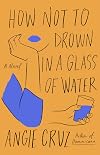
Cara Romero is in her mid-fifties and expected to work the rest of her life in the factory that made “little lamps.” But the Great Recession closed the factory and now she is struggling to find work. Cara tells her life story in a series of sessions with a job counselor.
What an interesting way to tell this story! The reader comes to know Cara through her
monologues, interspersed with copies of job notices, psychological and interest assessments, and forms she has show more completed.
Here is a woman who has always worked, and whom life has not treated kindly. She has been married to a violent man, has struggled to provide for her child, and was abused by her own mother. Yet she has continued to move forward with perseverance. She has shown kindness, even generosity, to her “found family” in her apartment complex. And yet, she has also managed to turn her only child out, though she desperately wants to reconcile.
There are times when I wanted to laugh at her antics and her odd logic. Yet, I could not help but empathize with her and her situation. And though I often winced at some of her actions, I was cheering her on throughout. I’ve known women like Cara. Women who have been knocked down but who get up and try again. Women who make the best with the cards life has dealt them. Women who express their gratitude, friendship and love through the foods they cook for others. How can I help but love such a woman.
Several of my book club buddies listened to the audio version and they raved about it. I read it in the text version but am considering getting the audio to experience “Cara’s voice.” show less
Cara Romero is in her mid-fifties and expected to work the rest of her life in the factory that made “little lamps.” But the Great Recession closed the factory and now she is struggling to find work. Cara tells her life story in a series of sessions with a job counselor.
What an interesting way to tell this story! The reader comes to know Cara through her
monologues, interspersed with copies of job notices, psychological and interest assessments, and forms she has show more completed.
Here is a woman who has always worked, and whom life has not treated kindly. She has been married to a violent man, has struggled to provide for her child, and was abused by her own mother. Yet she has continued to move forward with perseverance. She has shown kindness, even generosity, to her “found family” in her apartment complex. And yet, she has also managed to turn her only child out, though she desperately wants to reconcile.
There are times when I wanted to laugh at her antics and her odd logic. Yet, I could not help but empathize with her and her situation. And though I often winced at some of her actions, I was cheering her on throughout. I’ve known women like Cara. Women who have been knocked down but who get up and try again. Women who make the best with the cards life has dealt them. Women who express their gratitude, friendship and love through the foods they cook for others. How can I help but love such a woman.
Several of my book club buddies listened to the audio version and they raved about it. I read it in the text version but am considering getting the audio to experience “Cara’s voice.” show less

This strong debut novel is set in the Dominican Washington Heights neighborhood of NYC. Two widowed sisters, each of whom is emotionally bound to a niece, also care for their mother, father, and brother. When Olivia takes to her bed in a semi-conscious state, her daughter Soledad returns to her apartment from the East Village, where she has attended art school, works in a fancy gallery, and has basically been ignoring her family. Flaca, daughter of Gorda, is fourteen and in love with an show more older musician in the building, who is in love with Soledad. The story is told in the voices of the two cousins, with Olivia's thoughts flitting through. As the family's back history of abuse, poverty, abandonment, and murder is filled in, Olivia's apartment fills with nude male haunting spirits who had been her customers during a brief period of prostitution back in the DR. The magical realism is very effective in drawing the poisons in the family to the surface, and a return trip back to their homeland completes the family journey. Beautiful, heartfelt, dramatic writing make this a most memorable novel.
Quote: "A sadness stirs in me, thinking about Gorda and my mother, myself and Flaca, the distance between us. How we're like static between radio stations and my hand slips on the tuner trying to find clarity on either side." show less
Quote: "A sadness stirs in me, thinking about Gorda and my mother, myself and Flaca, the distance between us. How we're like static between radio stations and my hand slips on the tuner trying to find clarity on either side." show less
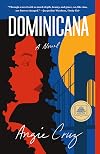
Ana is eleven years old when we meet her – the second oldest daughter in a large Dominican Republic family that includes cousins as well as siblings. She has come to the attention of Juan Ruiz – one of a clan of brothers who are essentially wheeler-dealers with big plans. There’s an undercurrent here that Juan is more interested in the beachfront property Ana’s family claims, but he also sees her develop into a nubile teen on his frequent visits from New York.
Bowing to pressure from show more her family, Ana eventually agrees to marry Juan, to go with him to New York, and once established there, to help the rest of her family emigrate.
That’s the set-up for the bulk of the novel, as 15-year-old Ana rapidly becomes disillusioned with marriage, pines away in an essentially empty apartment as her husband goes about his business (which includes selling stolen goods, waiting tables at a hotel, promoting various deals, and carrying on an affair with a married woman). Her efforts to adjust, to improve herself by learning English and getting a basic education, to squirrel away a few dollars at a time out of Juan’s view, propel her into multiple situations that test her resilience and resourcefulness. Things take a turn when Juan leaves his pregnant bride to go back to the Dominica Republic to nail down the land transfer. But he is caught in a war zone when the U.S. occupies the island to intervene in a civil war. Meantime, Ana is placed under the protection of Juan’s youngest brother, and the undeniable attraction between the two young people creates complications.
There’s a lot going on here, most of it seen through Ana’s eyes, with short excursions into Juan’s POV. In some ways, she’s incredibly resourceful; in others she handles herself the way most 15-year-olds would. She longs for her family, for the familiar foods and social events of her home, tries to prepare for the coming baby, and copes with Juan’s rages and frustrations, which he frequently takes out on her with his fists. And underneath it all is her own grown sexual awareness, which finds its inevitable outlet with the only man to whom she is physically close.
Ana is an easy character to identify with – basically good, hard-working, and utterly in over her head in New York. Many of the challenges she faces are exacerbated by her own awareness that she’s in the country with falsified papers and could face deportation if she interfaces with any official agencies. This fear keeps her from utilizing the social safety nets that might make her plight easier to bear.
Juan, while less likeable, is also a man of his time and upbringing. He has certain expectations of his wife’s place, and reacts to any conflict with her in the same way he saw other men react within their own families. He’s utterly sincere about succeeding in business, but the deck is pretty well stacked against him. He knows this, and so has no compunctions about bending the rules to even up the odds.
The novel is set in the mid-sixties and utilizes then-current events well as a backdrop to the characters’ actions and impressions of their newly-adopted country. show less
Bowing to pressure from show more her family, Ana eventually agrees to marry Juan, to go with him to New York, and once established there, to help the rest of her family emigrate.
That’s the set-up for the bulk of the novel, as 15-year-old Ana rapidly becomes disillusioned with marriage, pines away in an essentially empty apartment as her husband goes about his business (which includes selling stolen goods, waiting tables at a hotel, promoting various deals, and carrying on an affair with a married woman). Her efforts to adjust, to improve herself by learning English and getting a basic education, to squirrel away a few dollars at a time out of Juan’s view, propel her into multiple situations that test her resilience and resourcefulness. Things take a turn when Juan leaves his pregnant bride to go back to the Dominica Republic to nail down the land transfer. But he is caught in a war zone when the U.S. occupies the island to intervene in a civil war. Meantime, Ana is placed under the protection of Juan’s youngest brother, and the undeniable attraction between the two young people creates complications.
There’s a lot going on here, most of it seen through Ana’s eyes, with short excursions into Juan’s POV. In some ways, she’s incredibly resourceful; in others she handles herself the way most 15-year-olds would. She longs for her family, for the familiar foods and social events of her home, tries to prepare for the coming baby, and copes with Juan’s rages and frustrations, which he frequently takes out on her with his fists. And underneath it all is her own grown sexual awareness, which finds its inevitable outlet with the only man to whom she is physically close.
Ana is an easy character to identify with – basically good, hard-working, and utterly in over her head in New York. Many of the challenges she faces are exacerbated by her own awareness that she’s in the country with falsified papers and could face deportation if she interfaces with any official agencies. This fear keeps her from utilizing the social safety nets that might make her plight easier to bear.
Juan, while less likeable, is also a man of his time and upbringing. He has certain expectations of his wife’s place, and reacts to any conflict with her in the same way he saw other men react within their own families. He’s utterly sincere about succeeding in business, but the deck is pretty well stacked against him. He knows this, and so has no compunctions about bending the rules to even up the odds.
The novel is set in the mid-sixties and utilizes then-current events well as a backdrop to the characters’ actions and impressions of their newly-adopted country. show less

Shortlisted for the Women's Prize for Fiction 2020
3.5
In Dominicana, Angie Cruz pays homage to the first generation of Dominican women who immigrated to New York City after Trujillo's assassination in the 1960s. Ana Cancion, the green-eyed beauty of a rural family, is her mother's hope for obtaining papers for a better life for the family in New York. So she convinces her 15-year-old daughter to marry 32-year-old Juan Ruiz, who works in New York and hopes to build a restaurant and apartments show more in Santo Domingo.
Juan is an overprotective and controlling husband. He attempts to instill fear in Anna, fear of her surroundings so she won't leave their apartment in Washington Heights, and a fear of disobeying him. Juan is at times physically and verbally abusive, especially when drunk. The book chronicles Anna's daily life, her limited contact with Juan's friends and business associates, her growing sense of isolation and sorrow.
Anna becomes pregnant, and when Juan must return to the Dominican Republic to attend to business there, he leaves her under the protection of his younger brother, Ceasar. The latter encourages her to leave the apartment and explore her new environment. She starts taking English classes at the local church and, with Cesar's help, begins cooking and selling Dominican dishes food to local factory workers. She begins to enjoy life.
While Juan has the necessary connections and funds to obtain papers for her extended family, she dreads his return. Although she wants to help her family, she does not wish to remain in an abusive marriage. Her resilience and attempts to resolve this dilemma become the focus of the remainder of the book.
Dominicana is well-written and heartfelt. I listened to the audio, and the lively reading and the insertion music add to the ambiance! show less
3.5
In Dominicana, Angie Cruz pays homage to the first generation of Dominican women who immigrated to New York City after Trujillo's assassination in the 1960s. Ana Cancion, the green-eyed beauty of a rural family, is her mother's hope for obtaining papers for a better life for the family in New York. So she convinces her 15-year-old daughter to marry 32-year-old Juan Ruiz, who works in New York and hopes to build a restaurant and apartments show more in Santo Domingo.
Juan is an overprotective and controlling husband. He attempts to instill fear in Anna, fear of her surroundings so she won't leave their apartment in Washington Heights, and a fear of disobeying him. Juan is at times physically and verbally abusive, especially when drunk. The book chronicles Anna's daily life, her limited contact with Juan's friends and business associates, her growing sense of isolation and sorrow.
Anna becomes pregnant, and when Juan must return to the Dominican Republic to attend to business there, he leaves her under the protection of his younger brother, Ceasar. The latter encourages her to leave the apartment and explore her new environment. She starts taking English classes at the local church and, with Cesar's help, begins cooking and selling Dominican dishes food to local factory workers. She begins to enjoy life.
While Juan has the necessary connections and funds to obtain papers for her extended family, she dreads his return. Although she wants to help her family, she does not wish to remain in an abusive marriage. Her resilience and attempts to resolve this dilemma become the focus of the remainder of the book.
Dominicana is well-written and heartfelt. I listened to the audio, and the lively reading and the insertion music add to the ambiance! show less
Lists
Awards


You May Also Like


Associated Authors
Statistics
- Works
- 7
- Also by
- 5
- Members
- 1,560
- Popularity
- #16,523
- Rating
- 3.9
- Reviews
- 71
- ISBNs
- 50
- Languages
- 3