
Jason Holt (2)
Author of The Daily Show and Philosophy: Moments of Zen in the Art of Fake News
For other authors named Jason Holt, see the disambiguation page.
About the Author
Jason Holt is Associate Professor at Acadia University, where he teaches courses in philosophy and communication for the School of Kinesiology. His research focuses on aesthetics and philosophy of mind as well as popular culture and philosophy. His books include Blindsight and the Nature of show more Consciousness, which was shortlisted for the 2005 CPA book prize, various edited volumes, and literary books, most recently a book of poetry, Inversed. show less
Works by Jason Holt
The Ultimate Daily Show and Philosophy: More Moments of Zen, More Indecision Theory (2013) 15 copies, 1 review
Associated Works
The Matrix and Philosophy: Welcome to the Desert of the Real (2002) — Contributor — 898 copies, 7 reviews
Tagged
Common Knowledge
- Gender
- male
- Education
- Acadia University (BA, Philosophy)
Dalhousie University (MA, Philosophy)
University of Western Ontario (PhD, Philosophy) - Occupations
- poet
professor - Organizations
- Acadia University
- Short biography
- [from Goodreads website]
Jason Holt is a Canadian poet who lives in Nova Scotia and teaches at Acadia University. He received his Ph.D. in philosophy from Western University in 1998. His book The Nature of Consciousness was shortlisted for the 2005 CPA Book Prize. His interests include the history, poetry, and the philosophy of Sport—a topic he teaches at Acadia in the Kinesiology department. - Places of residence
- Wolfville, Nova Scotia, Canada
- Associated Place (for map)
- Nova Scotia, Canada
Members
Reviews
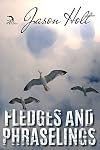
Any poetry collection that questions the very act of expression, poetic or otherwise, as seriously as it questions the self behind that act, as well as the ultimate significance of either, could amount to dreary reading indeed, as twentieth century readers and writers discovered too late. The result for modernist poetry, and to some extent for poetry in general in the twentieth century, was that the former group simply abandoned the latter, and, outside the academy, poetry lost its show more audience.
In "Fledges and Phraselings," though, Jason Holt has shown that this does not have to be the inevitable outcome of raising the questions and making the observations he takes such delight in exploring. There is much Puckish fun in Holt’s engagement with language and form, and in the discoveries he makes about their relationship to each other, to meaning, and to the existential aperҫus that plague modern life.
Frost asserted that poetry effects “a momentary stay against confusion.” In his mind this outcome was connected to poetry’s formal integrity. Holt’s stays are momentary enough, sometimes only four lines in length, but they are not so much “against” as “in spite of” – or even comfortably “amidst” – the “confusion” from which Holt declines to flinch. While there is self-referentiality in these poems, the writer-persona’s ego is hardly the issue. Instead, his imagination is engaged, along with his sense of linguistic play.
In each of these poems, craft and expression become one and the same, and the very act of crafting a poem stands in unity with both its object and its occasion. While these poems are spare, one cannot miss what might be called, as per Renaissance values, their “wit.” Just as Renaissance poets had fun playing with the hyperbolic tropes of late medieval love poetry, Holt engages happily in the deconstruction and reconstruction of the syntax and locutions of contemporary discourse, which, having become, more or less, modalities of professional ennui, could really use a playful slap or two upside the head.
And while Holt’s deconstructions are memorable, his reconstructions are qualified, transient – mists, really, before the dispersive infinite regress of self-consciousness. They are, in a sense, more precious thereby. And more honest: part of what we experience in a mist is the fact that a burning away, and soon, is of its essence
Holt’s poems invent their rules as they go, so they aren’t easy poems per se. But neither are they inaccessible, despite their insouciance vis-à-vis contemporary expectations. To the extent that they exist, contemporary literary values, mediated primarily by journalists and agit prop impressarios, prioritize straightforward narratives with familiar locutions and syntax. Although Holt’s poems are almost without exception occasioned, they are hardly narrative pieces. And his spritely philosophical instincts lead him to put just about everything up for grabs, not just meaning, but idiomatic expression, syntax, and, especially, punctuation, which, although often implied, is never deployed.
Sentences extend associatively, often without clear predications, and syntactic connections multiply without always clarifying, although, in the best poems here (there are too many of them to list), multiplication does, in fact, constitute a kind of simplification. Words and clichés re-contextualize with protean fluidity, and mundane language is re-ordered and re-vitalized. Throughout, though, there is a plainspoken tone that is now haiku-ish, now cummings-esque.
Except for several startlingly brilliant sonnets, the structures of all these poems are strophic, and in almost all cases, necessarily so. One wonders whether Holt wasn’t at least tempted to differentiate the sections of a few of these poems into stanzas. Their reiterative rhetoric would support stanzas, and the breaks might even expedite the development of meaning. However, as the poet himself directly indicates in “The Singlestanzaed Poem,” the strophic approach is a major donnée in this sequence, and it’s not at all difficult to accept his commitment.
To me, good poetry is poetry that is fresh each time one reads it, yielding new pleasures and unforeseen perceptions. I can say without reservation that, having read "Fledges and Phraselings" several times, I fully anticipate my next encounter with its jests and gestures. show less
In "Fledges and Phraselings," though, Jason Holt has shown that this does not have to be the inevitable outcome of raising the questions and making the observations he takes such delight in exploring. There is much Puckish fun in Holt’s engagement with language and form, and in the discoveries he makes about their relationship to each other, to meaning, and to the existential aperҫus that plague modern life.
Frost asserted that poetry effects “a momentary stay against confusion.” In his mind this outcome was connected to poetry’s formal integrity. Holt’s stays are momentary enough, sometimes only four lines in length, but they are not so much “against” as “in spite of” – or even comfortably “amidst” – the “confusion” from which Holt declines to flinch. While there is self-referentiality in these poems, the writer-persona’s ego is hardly the issue. Instead, his imagination is engaged, along with his sense of linguistic play.
In each of these poems, craft and expression become one and the same, and the very act of crafting a poem stands in unity with both its object and its occasion. While these poems are spare, one cannot miss what might be called, as per Renaissance values, their “wit.” Just as Renaissance poets had fun playing with the hyperbolic tropes of late medieval love poetry, Holt engages happily in the deconstruction and reconstruction of the syntax and locutions of contemporary discourse, which, having become, more or less, modalities of professional ennui, could really use a playful slap or two upside the head.
And while Holt’s deconstructions are memorable, his reconstructions are qualified, transient – mists, really, before the dispersive infinite regress of self-consciousness. They are, in a sense, more precious thereby. And more honest: part of what we experience in a mist is the fact that a burning away, and soon, is of its essence
Holt’s poems invent their rules as they go, so they aren’t easy poems per se. But neither are they inaccessible, despite their insouciance vis-à-vis contemporary expectations. To the extent that they exist, contemporary literary values, mediated primarily by journalists and agit prop impressarios, prioritize straightforward narratives with familiar locutions and syntax. Although Holt’s poems are almost without exception occasioned, they are hardly narrative pieces. And his spritely philosophical instincts lead him to put just about everything up for grabs, not just meaning, but idiomatic expression, syntax, and, especially, punctuation, which, although often implied, is never deployed.
Sentences extend associatively, often without clear predications, and syntactic connections multiply without always clarifying, although, in the best poems here (there are too many of them to list), multiplication does, in fact, constitute a kind of simplification. Words and clichés re-contextualize with protean fluidity, and mundane language is re-ordered and re-vitalized. Throughout, though, there is a plainspoken tone that is now haiku-ish, now cummings-esque.
Except for several startlingly brilliant sonnets, the structures of all these poems are strophic, and in almost all cases, necessarily so. One wonders whether Holt wasn’t at least tempted to differentiate the sections of a few of these poems into stanzas. Their reiterative rhetoric would support stanzas, and the breaks might even expedite the development of meaning. However, as the poet himself directly indicates in “The Singlestanzaed Poem,” the strophic approach is a major donnée in this sequence, and it’s not at all difficult to accept his commitment.
To me, good poetry is poetry that is fresh each time one reads it, yielding new pleasures and unforeseen perceptions. I can say without reservation that, having read "Fledges and Phraselings" several times, I fully anticipate my next encounter with its jests and gestures. show less
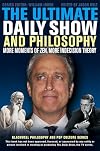
This collection of essays by philosophers on The Daily Show and, to a slightly lesser extent, The Colbert Report is actually a revised, extended, and updated edition of a volume originally published in 2006, hence the rather grandiose title.
The essays mostly fit into a few particular categories. Some talk about The Daily Show's place within and commentary on the news media of today's entertainment-oriented era, and about Jon Stewart as a sort of journalistic watchdog. Some compare Stewart's show more approach to that of specific philosophers, or situate the show within a long history of political satire. Some examine issues that the show is fond of talking about, although, for some reason, most of these seem to involve religion, including creationism, the "War on Christmas," and the tendency of political candidates in the US to claim that God wants them to win. There are a few on other random topics, too, however, including a discussion of neologisms (that is, newly coined words) and a look at some ideas about what irony is and whether Colbert qualifies as an ironist.
The style of the essays varies, with some having a more academic feel, while others attempt to take on some of the humorous tone of the The Daily Show itself. They're all quite readable, though, clearly written by fans of the show, and generally at least moderately interesting. (The one befuddling exception is Kimberly Blessing and Joseph Marren's "On Bullshit: Political Spin and the PR-ization of Media," which, weirdly seems to just keep repeating the same point over and over again in different words for fifteen pages.)
I don't, however, feel like I've gained any stunning new insights into the show, or its subject matter. I think most of the pieces here are making points that seem fairly obvious to me, or that have already been made in the show itself. There's also, especially in the first couple of sections, an unfortunate tendency for a lot of the essays to cover some of the same ground, and many of them use the exact same quotes and examples from the show. (I mean, I fully understand why everybody wants to talk about Stewart's Crossfire appearance, but reading the same quotes from it in essay after essay does get a bit old.)
On balance, I'd say it's worth a look for philosophically-inclined Daily Show fans, especially ones who, like me, are desperately missing both Stewart and Colbert and might appreciate a thoughtful look back. Just don't necessarily expect the book to open up lots of exciting new perspectives on it all. show less
The essays mostly fit into a few particular categories. Some talk about The Daily Show's place within and commentary on the news media of today's entertainment-oriented era, and about Jon Stewart as a sort of journalistic watchdog. Some compare Stewart's show more approach to that of specific philosophers, or situate the show within a long history of political satire. Some examine issues that the show is fond of talking about, although, for some reason, most of these seem to involve religion, including creationism, the "War on Christmas," and the tendency of political candidates in the US to claim that God wants them to win. There are a few on other random topics, too, however, including a discussion of neologisms (that is, newly coined words) and a look at some ideas about what irony is and whether Colbert qualifies as an ironist.
The style of the essays varies, with some having a more academic feel, while others attempt to take on some of the humorous tone of the The Daily Show itself. They're all quite readable, though, clearly written by fans of the show, and generally at least moderately interesting. (The one befuddling exception is Kimberly Blessing and Joseph Marren's "On Bullshit: Political Spin and the PR-ization of Media," which, weirdly seems to just keep repeating the same point over and over again in different words for fifteen pages.)
I don't, however, feel like I've gained any stunning new insights into the show, or its subject matter. I think most of the pieces here are making points that seem fairly obvious to me, or that have already been made in the show itself. There's also, especially in the first couple of sections, an unfortunate tendency for a lot of the essays to cover some of the same ground, and many of them use the exact same quotes and examples from the show. (I mean, I fully understand why everybody wants to talk about Stewart's Crossfire appearance, but reading the same quotes from it in essay after essay does get a bit old.)
On balance, I'd say it's worth a look for philosophically-inclined Daily Show fans, especially ones who, like me, are desperately missing both Stewart and Colbert and might appreciate a thoughtful look back. Just don't necessarily expect the book to open up lots of exciting new perspectives on it all. show less
Interesting. I am not well-educated in poetry, so when I read it, I depend entirely on personal response (feeling, seeing clearly), not technical knowledge or comparison with other poets. Holt's poems are obscure, lack titles and punctuation, and feature too many made-up words that are often more irritating than evocative, but some of them work for me. Here's the start of one I re-read several times with great interest:
listen pig
and write the words I whisper thee
I am your best muse
formed show more by all you imagine
and mastering it
as the whip for your continuance
your struggle at the slipperied rest
of gainful sloth employment... show less
listen pig
and write the words I whisper thee
I am your best muse
formed show more by all you imagine
and mastering it
as the whip for your continuance
your struggle at the slipperied rest
of gainful sloth employment... show less
 This review was written for LibraryThing Early Reviewers.
See full review: https://irenaioannou.com/?page_id=92
Experimental poetry with absence of titles—though the poet smartly addresses this peculiarity of his in page 119—punctuation and capitalization makes the navigation rather tenuous, but the playfulness in the syntax and the linguistic awareness compensates the reader.
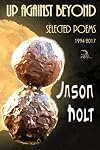
His poems about writing are interesting, and so is his evolution into shorter forms. I recommend the anthology for thoughtful reading. The title of the anthology came from show more the poem:
the only place to go
is up against beyond
what other challenge worthy
what other meaning
less than war
more than game
between covers of book or bed show less
Experimental poetry with absence of titles—though the poet smartly addresses this peculiarity of his in page 119—punctuation and capitalization makes the navigation rather tenuous, but the playfulness in the syntax and the linguistic awareness compensates the reader.
His poems about writing are interesting, and so is his evolution into shorter forms. I recommend the anthology for thoughtful reading. The title of the anthology came from show more the poem:
the only place to go
is up against beyond
what other challenge worthy
what other meaning
less than war
more than game
between covers of book or bed show less
This review was written for LibraryThing Early Reviewers.You May Also Like


Associated Authors
Statistics
- Works
- 11
- Also by
- 2
- Members
- 202
- Popularity
- #109,081
- Rating
- 3.5
- Reviews
- 11
- ISBNs
- 26

