
About the Author
Among his many contributions to philosophy, both academic and popular, Robert Arp is author of Scenario Visualization: An Evolutionary Account of Creative Problem Solving (2008); co-author of Critical Thinking: An Introduction to Reasoning Well (2011) and What's Good on TV? Teaching Ethics through show more Television (2011); and editor of 1001 Ideas that Changed the Way We Think (2013) and Psych and Philosophy: Some Dark Juju-Magumbo (2013). show less
Image credit: Battlestar Wiki
Works by Robert Arp
Batman and Philosophy: The Dark Knight of the Soul (The Blackwell Philosophy and Pop Culture Series) (2008) — Editor — 470 copies, 9 reviews
South Park and Philosophy: You Know, I Learned Something Today (The Blackwell Philosophy & Pop Culture Series) (2006) 140 copies, 4 reviews
Scenario Visualization: An Evolutionary Account of Creative Problem Solving (Bradford Books) (2008) 20 copies, 1 review
Associated Works
Alice in Wonderland and Philosophy: Curiouser and Curiouser (2010) — Contributor — 250 copies, 19 reviews
Watchmen and Philosophy: A Rorschach Test (The Blackwell Philosophy and Pop Culture Series) (2009) — Contributor — 249 copies, 2 reviews
Tagged
Common Knowledge
- Gender
- male
Members
Reviews
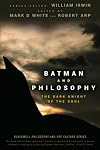
My curiosity has been easily piqued by books in this vein...that is, popular culture and philosophy examinations. I'm interested in them because the characters and worlds of the books that we read, and programs and films that we watch, provide so much insight into the philosophical and theological through-lines of our generation and culture. Batman has long been one of my favorite superheroes, because his existence on the edge between hero and antihero...the way in which he embraces the show more darkness in order to attempt to use it for good...is simultaneously disturbing and enthralling.
I anticipated Batman and Philosophy to be an interesting and fun read, but didn't think that it would be quite as thought-provoking as it turned out to be. I'll say up front that, if you've done any serious study of philosophy or theology, then you will likely, as I did, anticipate a more academic tone in the writing, but remember that this is geared to a more general audience. I think that's a good thing, because it doesn't become bogged down in the trappings of academic writing, but I don't think that it will feel shallow to any reader. The writing styles, as with any collected volume, vary greatly, and are disappointing at times. While some of the contributors don't shy away from the more formal tone of their discipline, others make attempts at interjecting humor that left me scratching my head more than laughing.
That said, there are extremely well-crafted analyses of the Dark Knight and his world lying behind that forced humor, and I found myself in deep thought more often than not as I worked my way through these pages. In fact, I'll admit that, in all of the thought and exploration and appreciation that I have given the character of Batman through the years, some of the deeper questions raised by the writers of these chapters had never occurred to me. Moreover, once they're presented for your consideration, you're left with that wonderful feeling of having so much more left to think about on the topic.
My favorite chapter was "Alfred, the Dark Knight of Faith: Batman and Kierkegaard", in which Alfred appears as the true hero through the lens of Kierkegaard's Fear and Trembling (I've always had an existentialist tendency, I'll confess). I also found the chapter, "Could Batman Have Been the Joker?" and it's exploration of modal logic and possible worlds in relation to the genre of comic book literature at large to be absolutely fascinating. There are thought-provoking discussions of identity, as well...one of the central tenants of many superhero characters. And, of course, the discussion of whether or not Batman is better than Superman...well, that's just fun.
Some chapters dwelt a bit too heavily in a humanist philosophy for my taste, and others left obvious holes in their arguments (debating whether or not Batman was ethically justified in permitting Robin to accompany him ducks the fact that Robin is a moral free agent).
What I found particularly engaging about this collection is that the authors are well-read in the literature. Not only do they display their expertise in their discipline, but each chapter is well-noted with specific Batman story-arcs, including examples and dialogue, to provide cases to which to apply their analyses. In many instances, I found myself digging back through my bookshelves to re-read these stories (and, in one case, purchased a graphic novel that had been glaringly absent from my shelf).
Batman and Philosophy is a surprisingly deep and provocative exploration of the Dark Night Detective and his world, as well as his place in the larger DC Universe and comic book history and thought in general. The book is a light read at under 250 pages, accessible while not boring, and I found myself engaged with each chapter. If you're a Batman fan, and especially if you enjoy philosophical discourse at all, I would recommend you treat yourself to this collection. show less
I anticipated Batman and Philosophy to be an interesting and fun read, but didn't think that it would be quite as thought-provoking as it turned out to be. I'll say up front that, if you've done any serious study of philosophy or theology, then you will likely, as I did, anticipate a more academic tone in the writing, but remember that this is geared to a more general audience. I think that's a good thing, because it doesn't become bogged down in the trappings of academic writing, but I don't think that it will feel shallow to any reader. The writing styles, as with any collected volume, vary greatly, and are disappointing at times. While some of the contributors don't shy away from the more formal tone of their discipline, others make attempts at interjecting humor that left me scratching my head more than laughing.
That said, there are extremely well-crafted analyses of the Dark Knight and his world lying behind that forced humor, and I found myself in deep thought more often than not as I worked my way through these pages. In fact, I'll admit that, in all of the thought and exploration and appreciation that I have given the character of Batman through the years, some of the deeper questions raised by the writers of these chapters had never occurred to me. Moreover, once they're presented for your consideration, you're left with that wonderful feeling of having so much more left to think about on the topic.
My favorite chapter was "Alfred, the Dark Knight of Faith: Batman and Kierkegaard", in which Alfred appears as the true hero through the lens of Kierkegaard's Fear and Trembling (I've always had an existentialist tendency, I'll confess). I also found the chapter, "Could Batman Have Been the Joker?" and it's exploration of modal logic and possible worlds in relation to the genre of comic book literature at large to be absolutely fascinating. There are thought-provoking discussions of identity, as well...one of the central tenants of many superhero characters. And, of course, the discussion of whether or not Batman is better than Superman...well, that's just fun.
Some chapters dwelt a bit too heavily in a humanist philosophy for my taste, and others left obvious holes in their arguments (debating whether or not Batman was ethically justified in permitting Robin to accompany him ducks the fact that Robin is a moral free agent).
What I found particularly engaging about this collection is that the authors are well-read in the literature. Not only do they display their expertise in their discipline, but each chapter is well-noted with specific Batman story-arcs, including examples and dialogue, to provide cases to which to apply their analyses. In many instances, I found myself digging back through my bookshelves to re-read these stories (and, in one case, purchased a graphic novel that had been glaringly absent from my shelf).
Batman and Philosophy is a surprisingly deep and provocative exploration of the Dark Night Detective and his world, as well as his place in the larger DC Universe and comic book history and thought in general. The book is a light read at under 250 pages, accessible while not boring, and I found myself engaged with each chapter. If you're a Batman fan, and especially if you enjoy philosophical discourse at all, I would recommend you treat yourself to this collection. show less
Breaking Bad and Philosophy: Badder Living through Chemistry (Popular Culture and Philosophy) by David R. Koepsell
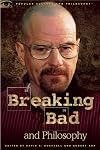
I read these "...and philosophy" books not as literary criticism/philosophy but as geek essays geeking about the thing they geek over. The quality of the essays are vary wildly (as you would expect), but there are some surprisingly bad clunkers in there. Also, this was published before the series had aired its final season, so it's almost like reading essays about a book that ignore the last five chapters, or talking about a movie you hadn't seen the last 30 minutes of.
1. Walt's Rap Sheet: show more decent. How much blame, legally and ethically, does Walt have on the deaths he caused? This essay had a clear question, and it provides clear answers. Whether you agree or not... I give it a B.
2. Heisenberg's Uncertain Confession: terrible. Talks about souls (being part of the chemical composition of the body?), St. Augustine, Werner Heisenberg, strict materialism, redemption... and I think there might have been an interesting idea in there somewhere drawing all these things together, but it needed an editor or a friend or something -anything!- to bash it into shape. A big large hammer, maybe. Uh.. and despite my utter lack of physics knowledge I don't think Heisenberg's Uncertainty Principle works the way he's trying to make it work. Like, trying to work it to prove human free will and the existence of the soul. Yeah... F for fail.
3. Was Skylar's Intervention Ethical: Ha, talk about a clear question. Unfortunately, a clear answer was less apparent. I liked the humor, but the essay rambled and lost focus constantly. I got the impression that the writer didn't really expect or care that this would be publicly published. One part of the essay was titled "Coercion Due To Chickenshit" to give you an example of the informality, which could work if done well. But this was like a first draft. Poor. C-
4. Finding Happiness in a Black Hat: meh. Writer took on the unenviable task of making existentialism an ethical (as in strongly moral) philosophy. Doesn't seem like it should be that hard (it's philosophy! they're all kinda ethics...) until you try to work out how, logically, a person shouldn't act like a evil shit when living "authentically" (haha scare quotes). I'm not saying it's impossible, but unselfishness is not exactly existentialism's strong suit. And dude... are you sure you wanna use Walter White as an example of how existentialism works as ethical code? Uh... I mean, okay you haven't seen the 5th season but Walter White aka Heisenberg as a arguably goodish individual kinda died at the end of the 3rd. Maybe it works to prove how you can still totally admire Walter White as a badass even when he is acting like an evil shit? I would like the essay more if it actually had the balls to say that. oh and the most important thing. this is what gets me the most in this essay... it ignores Breaking Bad events that are inconvenient to its ideas. Like the last section which lists off ways that Walter White accepts responsibility for his actions and conveniently forgetsabout the freakin' plane crash and all those lies he tells Jesse (about Jane and Lily of the Valley) . Quote: "Walt also accepts consequences for each decision and action he makes as Heisenberg" Haha, like whatevs. D for intellectual dishonesty.
5. Hurtling Towards Death: OMG a decent essay! Unfortunately, it focuses on Heidegger and damn me if there's a philosopher who resonates with me less. I swear, if I come across another essay in this book that theorizes on authenticity, I am gonna have to write an imaginary Dear John letter to the author stating, "It's not you, it's me" and move the fuck on. B
6. Macbeth on Ice: Shakespeare nerd talking about Macbeth and Breaking Bad. Interesting. A-
7. Walter White's Will to Power: Blah blah blah Nietzsche blah blah. I can't even remember this one, really. B
8. Better Than Human: Eh... at least when that Shakespeare nerd was talking about Macbeth I could follow along. When this writer talks about Mad Men I just get confused. Maybe it'll be interesting to a Mad Men fan? Also more Nietzsche blah blah blah. Damn existentialism why are like all the essays in this book about existentialism C
9. The Riddle of Godfather Gus: Most of this essay was just, like, summaries of what happened in the episodes. Useless. D
10. If Walt's Breaking Bad, Maybe We Are Too: I find myself naturally drawn toward this "consequentialist" way of thinking, so I enjoyed reading about it a bit which I have never done before. But because of my... familiarity? I didn't get any new earth shattering revelations. B
11. I Appreciate the Strategy: OMG I am existentially fatigued. I blew my wad complaining about it in that first essay that dealt with it and now I can't bother. C because I no longer care
12. What's So Bad About Meth?: Haha, oh philosophy. With a title like that, you might expect... I don't know... facts on meth use. But that sorta stuff is way to specific for these big thinkers. Drugs are illegal. so drugs are bad. Mmmmmkay? C
13. It's Arbitrary?: A bit better than the previous one in trying to prove the evilness of drug use, but bible quotes? Not really my bag. Also, trying to convince me that "drugs cloud your mind therefore bad" while basically giving a free pass to alcohol is really stupid. I mean, are you trying to prove or disprove the arbitrariness of "this drug okay, that drug bad" or not? C
14. Does Cooking Make Walt a Bad Guy? OMG this is really decent. Actually written like the author knows something about drug use and doesn't lose focus on reality. So grateful I give it an A.
15. Been through the Desert on a Horse with No Name: I guess it's alright if you are a Lacan fan. I am not. It reads like a college essay. Like, "Use your favorite TV show to demonstrate your understanding of Lacan" instead of... something interesting. C
16, 17, 18, 19. These were decent but I have stopped really caring anymore. ahahhaha. show less
1. Walt's Rap Sheet: show more decent. How much blame, legally and ethically, does Walt have on the deaths he caused? This essay had a clear question, and it provides clear answers. Whether you agree or not... I give it a B.
2. Heisenberg's Uncertain Confession: terrible. Talks about souls (being part of the chemical composition of the body?), St. Augustine, Werner Heisenberg, strict materialism, redemption... and I think there might have been an interesting idea in there somewhere drawing all these things together, but it needed an editor or a friend or something -anything!- to bash it into shape. A big large hammer, maybe. Uh.. and despite my utter lack of physics knowledge I don't think Heisenberg's Uncertainty Principle works the way he's trying to make it work. Like, trying to work it to prove human free will and the existence of the soul. Yeah... F for fail.
3. Was Skylar's Intervention Ethical: Ha, talk about a clear question. Unfortunately, a clear answer was less apparent. I liked the humor, but the essay rambled and lost focus constantly. I got the impression that the writer didn't really expect or care that this would be publicly published. One part of the essay was titled "Coercion Due To Chickenshit" to give you an example of the informality, which could work if done well. But this was like a first draft. Poor. C-
4. Finding Happiness in a Black Hat: meh. Writer took on the unenviable task of making existentialism an ethical (as in strongly moral) philosophy. Doesn't seem like it should be that hard (it's philosophy! they're all kinda ethics...) until you try to work out how, logically, a person shouldn't act like a evil shit when living "authentically" (haha scare quotes). I'm not saying it's impossible, but unselfishness is not exactly existentialism's strong suit. And dude... are you sure you wanna use Walter White as an example of how existentialism works as ethical code? Uh... I mean, okay you haven't seen the 5th season but Walter White aka Heisenberg as a arguably goodish individual kinda died at the end of the 3rd. Maybe it works to prove how you can still totally admire Walter White as a badass even when he is acting like an evil shit? I would like the essay more if it actually had the balls to say that. oh and the most important thing. this is what gets me the most in this essay... it ignores Breaking Bad events that are inconvenient to its ideas. Like the last section which lists off ways that Walter White accepts responsibility for his actions and conveniently forgets
5. Hurtling Towards Death: OMG a decent essay! Unfortunately, it focuses on Heidegger and damn me if there's a philosopher who resonates with me less. I swear, if I come across another essay in this book that theorizes on authenticity, I am gonna have to write an imaginary Dear John letter to the author stating, "It's not you, it's me" and move the fuck on. B
6. Macbeth on Ice: Shakespeare nerd talking about Macbeth and Breaking Bad. Interesting. A-
7. Walter White's Will to Power: Blah blah blah Nietzsche blah blah. I can't even remember this one, really. B
8. Better Than Human: Eh... at least when that Shakespeare nerd was talking about Macbeth I could follow along. When this writer talks about Mad Men I just get confused. Maybe it'll be interesting to a Mad Men fan? Also more Nietzsche blah blah blah. Damn existentialism why are like all the essays in this book about existentialism C
9. The Riddle of Godfather Gus: Most of this essay was just, like, summaries of what happened in the episodes. Useless. D
10. If Walt's Breaking Bad, Maybe We Are Too: I find myself naturally drawn toward this "consequentialist" way of thinking, so I enjoyed reading about it a bit which I have never done before. But because of my... familiarity? I didn't get any new earth shattering revelations. B
11. I Appreciate the Strategy: OMG I am existentially fatigued. I blew my wad complaining about it in that first essay that dealt with it and now I can't bother. C because I no longer care
12. What's So Bad About Meth?: Haha, oh philosophy. With a title like that, you might expect... I don't know... facts on meth use. But that sorta stuff is way to specific for these big thinkers. Drugs are illegal. so drugs are bad. Mmmmmkay? C
13. It's Arbitrary?: A bit better than the previous one in trying to prove the evilness of drug use, but bible quotes? Not really my bag. Also, trying to convince me that "drugs cloud your mind therefore bad" while basically giving a free pass to alcohol is really stupid. I mean, are you trying to prove or disprove the arbitrariness of "this drug okay, that drug bad" or not? C
14. Does Cooking Make Walt a Bad Guy? OMG this is really decent. Actually written like the author knows something about drug use and doesn't lose focus on reality. So grateful I give it an A.
15. Been through the Desert on a Horse with No Name: I guess it's alright if you are a Lacan fan. I am not. It reads like a college essay. Like, "Use your favorite TV show to demonstrate your understanding of Lacan" instead of... something interesting. C
16, 17, 18, 19. These were decent but I have stopped really caring anymore. ahahhaha. show less
**This book was reviewed for the San Francisco Book Review**
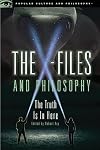
Aah, but this show, one of the first big serial paranormal dramas, shaped a large chunk of my teenage years. I've always loved the unknown, the unexplained, the unusual. There’s a great deal of philosophy embedded in the X-Files, to be sure. The X-Files and Philosophy digs down to expose this philosophy, leaving plenty of food for thought for the novice, and the devout X-philes alike.
There are ten different sections, each centring show more around broad topics such as science vs the fringe, conspiracy theories, elusive truth, ethical conundrums, and the nature of belief, among others.
Many of these topics have always fascinated me, especially the fluid nature of 'truth’, versus the rigidity of belief, despite the fact that there is no such thing as a true belief. Beliefs are subjective, shaped by our perceptions, yet once set, they can be difficult to shift, even when confronted with contradictory truth.
Some of my favorites essays include:
Mulder’s Metaphysics- takes a look at various perceptions of metaphysics, placing value on a pluralistic view that can encompass the material world, and the immaterial. (For the record, I share Mulder’s ontological pluralism view)
Five Ways of Being a Monster- not all monsters are cryptids or creatures of the night. Plenty of human monsters walk among us today. Some are skillfully hidden, while others easily give themselves away. The other four categories of monster are mutants, cryptids, unknown species, and supernatural beasties. (I love the fact this philosopher used the word 'cray-cray’)
I Want to Believe….and That's the Problem- looks at the nature of belief, and how we arrive at our beliefs. Mulder is a xenophiliac, and will jump to the more extreme conclusions first. Scully is the cautious believer. She seeks mundane explanations first, but is willing to shift beliefs with sufficient evidence.
I could go on. There are many great essays here!
📚📚📚📚📚 Highly recommended for any interested in philosophy, and especially those who love X-Files and want to believe the truth is out there. show less
Aah, but this show, one of the first big serial paranormal dramas, shaped a large chunk of my teenage years. I've always loved the unknown, the unexplained, the unusual. There’s a great deal of philosophy embedded in the X-Files, to be sure. The X-Files and Philosophy digs down to expose this philosophy, leaving plenty of food for thought for the novice, and the devout X-philes alike.
There are ten different sections, each centring show more around broad topics such as science vs the fringe, conspiracy theories, elusive truth, ethical conundrums, and the nature of belief, among others.
Many of these topics have always fascinated me, especially the fluid nature of 'truth’, versus the rigidity of belief, despite the fact that there is no such thing as a true belief. Beliefs are subjective, shaped by our perceptions, yet once set, they can be difficult to shift, even when confronted with contradictory truth.
Some of my favorites essays include:
Mulder’s Metaphysics- takes a look at various perceptions of metaphysics, placing value on a pluralistic view that can encompass the material world, and the immaterial. (For the record, I share Mulder’s ontological pluralism view)
Five Ways of Being a Monster- not all monsters are cryptids or creatures of the night. Plenty of human monsters walk among us today. Some are skillfully hidden, while others easily give themselves away. The other four categories of monster are mutants, cryptids, unknown species, and supernatural beasties. (I love the fact this philosopher used the word 'cray-cray’)
I Want to Believe….and That's the Problem- looks at the nature of belief, and how we arrive at our beliefs. Mulder is a xenophiliac, and will jump to the more extreme conclusions first. Scully is the cautious believer. She seeks mundane explanations first, but is willing to shift beliefs with sufficient evidence.
I could go on. There are many great essays here!
📚📚📚📚📚 Highly recommended for any interested in philosophy, and especially those who love X-Files and want to believe the truth is out there. show less
Batman and Philosophy: The Dark Knight of the Soul (The Blackwell Philosophy and Pop Culture Series) by Mark D. White
Excellent overview & there are some brilliant essays in this, making this surprisingly accessible at times. There are some duff efforts and there are some mediocre efforts but these are few & far between. Any Batman fan would get something out of this, and anyone with an interest in philosophy (Western or eastern) will also find parts of this rewarding. Serious but worth the effort
You May Also Like


Associated Authors
Statistics
- Works
- 29
- Also by
- 4
- Members
- 1,282
- Popularity
- #20,005
- Rating
- 3.5
- Reviews
- 20
- ISBNs
- 105
- Languages
- 6