

Jack Challoner
Author of Hurricane & Tornado (Eyewitness Books)
About the Author
Series
Works by Jack Challoner
Genius Inventions: The Stories Behind History's Greatest Technological Breakthroughs (2019) 12 copies
Little Book of Elements: A Pocket Guide to the Periodic Table (The Little Book of...) (2020) 9 copies
Inteligencia artificial: guía para principiantes: robótica y cerebros construidos por el hombre 4 copies
Desirable Future?: Consumer Electronics in Tomorrow's World (Science Museum TechKnow) (2008) 3 copies
Science Museum: The Souvenir Book 2 copies
Les roches et les minéraux 2 copies
Cum functioneaza totul 1 copy
Wetenschappen 1 copy
Física 1 copy
Tagged
Common Knowledge
- Gender
- male
- Education
- Imperial College London (Physics)
- Occupations
- consultant (science editor)
editor (science)
writer
author - Nationality
- UK
- Places of residence
- Bristol, Gloucestershire, England, UK
- Associated Place (for map)
- England, UK
Members
Reviews
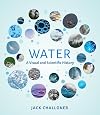
Water by Jack Challoner is a beautiful and very informative book that can serve as a general reference for a general readership or, I think, as an interesting text for either teaching at home or piquing your child's interest in science.
The science is not at an advanced level and will be readily accessible to most readers. That said, this goes deeper than just a surface level overview. Combined with the beautiful illustrations that makes this an excellent addition to a home library.
While show more there is no bibliography as such (at least in my review copy) the notes are largely bibliographic in nature and can serve as guides for further reading. The book discusses water from the Big Bang (okay, some time after the Big Bang) and traces it through history, it touches on the history of science as well as human thought in general, the scientific method, the biology of life, and so many other areas including earth science. It is this broad presentation that I think would make this an excellent book to use with your children to teach them, whether homeschooling or simply helping to generate an appreciation for science and how it touches so much (as in all) of our lives.
I'm not reviewing the program I used to read this book, I'm reviewing the book, so I won't whine about things that have nothing whatsoever to do with the quality of the book. I'll let others do that, I'll stay on topic (except for this little whine of my own about such people).
Reviewed from a copy made available by the publisher via NetGalley. show less
The science is not at an advanced level and will be readily accessible to most readers. That said, this goes deeper than just a surface level overview. Combined with the beautiful illustrations that makes this an excellent addition to a home library.
While show more there is no bibliography as such (at least in my review copy) the notes are largely bibliographic in nature and can serve as guides for further reading. The book discusses water from the Big Bang (okay, some time after the Big Bang) and traces it through history, it touches on the history of science as well as human thought in general, the scientific method, the biology of life, and so many other areas including earth science. It is this broad presentation that I think would make this an excellent book to use with your children to teach them, whether homeschooling or simply helping to generate an appreciation for science and how it touches so much (as in all) of our lives.
I'm not reviewing the program I used to read this book, I'm reviewing the book, so I won't whine about things that have nothing whatsoever to do with the quality of the book. I'll let others do that, I'll stay on topic (except for this little whine of my own about such people).
Reviewed from a copy made available by the publisher via NetGalley. show less
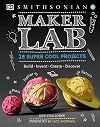
Great collection of fun projects, most of them quick, perfect for older children and teens.
The book has great photos (it IS a DK book after all) and easy to follow step by step instructions on how to make sugar crystal lollipops, bath fizzies, water filters, baloon powered toy cars, invisible ink, and even a baked Alaska dessert!
Bonus points awarded for
- clearly illustration ingredient sections
- accurate completion time estimations
- level of difficulty meter
- alerts for potentially tricky show more or dangerous procedures that require adult assistance
I have singled out the sugar crystal lollipops and bath fizzies to try at home. If all turns out well, the next step is to try them with our children's book group.
Very colorful and exciting, well worth a read for anyone interested in fun group projects that highlight science without overwhelming. show less
The book has great photos (it IS a DK book after all) and easy to follow step by step instructions on how to make sugar crystal lollipops, bath fizzies, water filters, baloon powered toy cars, invisible ink, and even a baked Alaska dessert!
Bonus points awarded for
- clearly illustration ingredient sections
- accurate completion time estimations
- level of difficulty meter
- alerts for potentially tricky show more or dangerous procedures that require adult assistance
I have singled out the sugar crystal lollipops and bath fizzies to try at home. If all turns out well, the next step is to try them with our children's book group.
Very colorful and exciting, well worth a read for anyone interested in fun group projects that highlight science without overwhelming. show less
I think if you wanted one book full of science experiments/kids maker projects for classroom, club, or home, this would probably be the one to pick! It covers a lot of science projects that are in older kids activity compendiums, but with better illustrations and instructions. Upper elementary schoolers may need help with following the instructions, but tweens should be able to do it well. Only a few involve heat. Kitchen experiments include: sticky slime, invisible ink, baked Alaska, show more Monster marshmallows, sugar crystal lollipops, and the ever-popular lemon battery. Building ones include a DNA model, paper planes, a cardboard tube-and-cup phone speaker, rubber band planets, balloon rocket car, kaleidoscope, popsicle stick bridge, dancing paper snake, and breathing machine (lung model in a bottle). Water experiments include a classic density tower, a waterwheel, the soap-powered boat, a multi-layer dirty-water filter (not, of course, suitable for drinking water!), growing a epsom salt stalactite, bath fizzes with cream of tartar and baking soda, colored-ice balls frozen in balloons. Outdoor experiments include a bottle terrarium (this one I have a concern about because it doesn't give guidance about what kind of plant to use), cast-plaster impression "fossils" from shells, a fava bean plant that grows through levels in a shoe box, sun prints (made with commercial cyanotype paper), the paper-mache erupting vinegar and baking soda volcano, and a wind catcher made with paper cups and skewers. Short "how it works" sidebar for each project. show less

What a great treatment of this subject! This is excellent in the same way that the old Time-Life history sets were. The material is presented in an easily logical pattern, with lots of interesting facts, photos, and enough tease material to encourage a reader to read further. I've never seen the periodic table presented so simply and clearly to the general public before. Kudos!
Lists
Awards


You May Also Like


Associated Authors
Statistics
- Works
- 99
- Members
- 3,476
- Popularity
- #7,321
- Rating
- 3.9
- Reviews
- 21
- ISBNs
- 319
- Languages
- 17
