
Theodore W. Gray
Author of The Elements: A Visual Exploration of Every Known Atom in the Universe
About the Author
Image credit: From Theodore Gray Wikipedia article. Photographer: Kathryn Cramer.
Series
Works by Theodore W. Gray
The Elements: A Visual Exploration of Every Known Atom in the Universe (2009) 2,907 copies, 21 reviews
Reactions: An Illustrated Exploration of Elements, Molecules, and Change in the Universe (2017) 404 copies, 6 reviews
Theo Gray's Mad Science: Experiments You Can Do at Home - But Probably Shouldn't (2009) 282 copies, 4 reviews
Theodore Gray's Completely Mad Science: Experiments You Can Do at Home but Probably Shouldn't: The Complete and Updated Edition (2016) 53 copies, 3 reviews
The Kid's Book of the Elements: An Awesome Introduction to Every Known Atom in the Universe (2020) 49 copies, 1 review
Exploring Mathematics With Mathematica: Dialogs Concerning Computers and Mathematics (1991) 23 copies, 1 review
The Photographic Engagement Calendar of The Elements: A Visual Exploration of Every Known Atom in the Universe 2012 (2011) 2 copies
The Elements 2013 Calendar: A Visual Exploration of Every Known Atom in the Universe (2012) 2 copies
My Element 1 copy
ABC Elements 1 copy
Associated Works
Tagged
Common Knowledge
- Canonical name
- Gray, Theodore W.
- Birthdate
- 1964-11-18
- Gender
- male
- Education
- University of Illinois, Urbana-Champaign (BS, Chemistry)
- Organizations
- Wolfram Research
- Nationality
- USA
- Birthplace
- Urbana, Illinois, USA
- Associated Place (for map)
- Illinois, USA
Members
Discussions
Chemistry coffee table book in Name that Book (July 2010)
Reviews
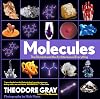
This beautiful book that is both a gorgeous “coffee table book” and an engrossing and informative guide to many known molecules is a follow-up book or perhaps companion compendium to the author’s previous book, The Elements: A Visual Exploration of Every Known Atom in the Universe. The author explains in the introduction that while the periodic table is complete, “there is no catalog of all the molecules in the universe, and there can’t be. There may be only six different chess show more pieces, but it’s out of the question to list all the ways of arranging them on the chess board.” Thus he chose to write about the molecules that interest him the most, and that “illustrate the deeper connections and broader concepts that unify them all.”
Gray begins with an introduction about the electrostatic force that holds compounds together in a single atom as well as in compounds and molecules. He reviews the architecture of atoms which is key to how they can combine. Then he goes into specifics.
Chapter 2 is a riff on alchemical names, and an explanation for many of named categories, like salts, acids, alcohols, aldehydes, ketones, etc. Chapter 3 explains the distinction between organic and inorganic compounds, or as he calls it, “Dead or Alive.” Chapter 4 uses the relationship between oil and water to discuss bonds between atoms and what that means for molecules. In particular he focuses on “the magic of soap” and tells readers how soap works. Chapter 5 tackles the difference between compounds that are “mineral” and those that are “vegetable” - oil and wax are the main topics of this chapter. Chapter 6 moves onto rock and ore. Chapter 7 is for rope and fiber - what they are made of and how they work, including a section on animal-made fibers. The most widely used animal fibers, he avers, come from “soft and warm animals such as sheep and fluffy birds.” What are they made of and why are they warm? In Chapter 8, the author writes about “Pain and Pleasure” and the molecular make-up of what compounds that cause pain in the body and compounds that relieves it. Chapter 9, “Sweet and Double Sweet” relates to sugars and sugar substitutes. (Stevia packets, you might be interested to know, are 96 percent glucose sugar, with only 4 percent made up of stevia extract.). In Chapter 10, Gray expands on the distinctions between natural and artificial compounds. Chapter 11 deals with scent, or “molecules as messengers.” Chapter 12 explores the colors of molecules and how they come to be. The 13th chapter is called “I Hate That Molecule.” Here the author writes about compounds that have been caught up in politics, such as those comprising vaccines. He addresses the controversy about vaccines containing thimerosal, for example, and notes: “The number of children who developed autism as a result of being given vaccines containing thimerosal is [easy] to determine: it is known to be exactly zero.” He also deals with compounds containing lead, affecting the ozone layer, contributing to global warming, and causing disease - he calls asbestos “The Most Horrible Very Bad Inorganic Compound Ever.” Finally, Chapter 14 deals with the molecules that “run the machinery of life” DNA and RNA.
All of these facts, fun as they are, are secondary to the visual aspects of the book, in which amazing large color photos (by both Theodore Gray and Nick Mann) of both the molecules and products derived from them make up the bulk of the presentations.
Evaluation: If you ever thought chemistry was “boring,” you are in for a surprise and an intellectual and visual treat. This book is outstanding, and will stimulate your desire to know more about molecules, and how people figured out how to use them. show less
Gray begins with an introduction about the electrostatic force that holds compounds together in a single atom as well as in compounds and molecules. He reviews the architecture of atoms which is key to how they can combine. Then he goes into specifics.
Chapter 2 is a riff on alchemical names, and an explanation for many of named categories, like salts, acids, alcohols, aldehydes, ketones, etc. Chapter 3 explains the distinction between organic and inorganic compounds, or as he calls it, “Dead or Alive.” Chapter 4 uses the relationship between oil and water to discuss bonds between atoms and what that means for molecules. In particular he focuses on “the magic of soap” and tells readers how soap works. Chapter 5 tackles the difference between compounds that are “mineral” and those that are “vegetable” - oil and wax are the main topics of this chapter. Chapter 6 moves onto rock and ore. Chapter 7 is for rope and fiber - what they are made of and how they work, including a section on animal-made fibers. The most widely used animal fibers, he avers, come from “soft and warm animals such as sheep and fluffy birds.” What are they made of and why are they warm? In Chapter 8, the author writes about “Pain and Pleasure” and the molecular make-up of what compounds that cause pain in the body and compounds that relieves it. Chapter 9, “Sweet and Double Sweet” relates to sugars and sugar substitutes. (Stevia packets, you might be interested to know, are 96 percent glucose sugar, with only 4 percent made up of stevia extract.). In Chapter 10, Gray expands on the distinctions between natural and artificial compounds. Chapter 11 deals with scent, or “molecules as messengers.” Chapter 12 explores the colors of molecules and how they come to be. The 13th chapter is called “I Hate That Molecule.” Here the author writes about compounds that have been caught up in politics, such as those comprising vaccines. He addresses the controversy about vaccines containing thimerosal, for example, and notes: “The number of children who developed autism as a result of being given vaccines containing thimerosal is [easy] to determine: it is known to be exactly zero.” He also deals with compounds containing lead, affecting the ozone layer, contributing to global warming, and causing disease - he calls asbestos “The Most Horrible Very Bad Inorganic Compound Ever.” Finally, Chapter 14 deals with the molecules that “run the machinery of life” DNA and RNA.
All of these facts, fun as they are, are secondary to the visual aspects of the book, in which amazing large color photos (by both Theodore Gray and Nick Mann) of both the molecules and products derived from them make up the bulk of the presentations.
Evaluation: If you ever thought chemistry was “boring,” you are in for a surprise and an intellectual and visual treat. This book is outstanding, and will stimulate your desire to know more about molecules, and how people figured out how to use them. show less
This is a follow-up of sorts to Theodore Gray's earlier book, The Elements: A Visual Exploration of Every Known Atom in the Universe. Unlike that one, this volume cannot possibly be comprehensive because while there are a limited number of elements in the periodic table, the ways in which those elements can combine into molecules is practically infinite. So Gray instead takes us through a sampling of interesting and important molecules, loosely organized by what they're used for by human show more beings.
If you've read The Elements -- and you should! -- this one has a very similar sensibility, with lots and lots of photos of substances the author has painstakingly collected and managed to make visually interesting, despite the tendency of most pure substances to actually just look like boring white powders. There's a nice little basic chemistry lesson at the beginning and all kinds of wonderfully fascinating information to be found throughout the entire book, as Gray tells us, for instance, why teflon is so slippery, how soap works, why oil and water don't mix, and what's in artificial sweeteners, along with tons of other, sometimes much weirder and more obscure things. He does this with a lot of genial humor; in places this book is genuinely laugh-out-loud funny. But he also takes a wonderfully hard-headed and clear-eyed look at things like what the difference is between "natural" and "artificial" substances is (answer: very little), at chemicals that get an undeserved bad rap, and at ones that genuinely are bad news.
It's all extremely interesting and delightfully fun, as weird as that might seem for a book about chemistry, even for a science-minded reader like me. More than that, though, I think it really has shifted my perspective on the world around me. It's one thing to be aware, hypothetically, somewhere in the back of your mind, that everything in the world is made of molecules and almost everything that happens in it comes down to the action of these small, varied entities fitting together and breaking apart, but it's a different experience entirely to find yourself stopping to think about what that really means, and to marvel at the ways in which we human beings have found to shape these tiny interactions to do some very big things. And all the more so when you contemplate just how simple so many of these ultra-important molecules are, and how much small differences between them -- even ones so small it can be hard to notice them on a diagram -- matter in our lives.
In other words, this is pretty, it's entertaining, it's educational, and it's actually kind of mind-blowing. A very, very cool book! show less
If you've read The Elements -- and you should! -- this one has a very similar sensibility, with lots and lots of photos of substances the author has painstakingly collected and managed to make visually interesting, despite the tendency of most pure substances to actually just look like boring white powders. There's a nice little basic chemistry lesson at the beginning and all kinds of wonderfully fascinating information to be found throughout the entire book, as Gray tells us, for instance, why teflon is so slippery, how soap works, why oil and water don't mix, and what's in artificial sweeteners, along with tons of other, sometimes much weirder and more obscure things. He does this with a lot of genial humor; in places this book is genuinely laugh-out-loud funny. But he also takes a wonderfully hard-headed and clear-eyed look at things like what the difference is between "natural" and "artificial" substances is (answer: very little), at chemicals that get an undeserved bad rap, and at ones that genuinely are bad news.
It's all extremely interesting and delightfully fun, as weird as that might seem for a book about chemistry, even for a science-minded reader like me. More than that, though, I think it really has shifted my perspective on the world around me. It's one thing to be aware, hypothetically, somewhere in the back of your mind, that everything in the world is made of molecules and almost everything that happens in it comes down to the action of these small, varied entities fitting together and breaking apart, but it's a different experience entirely to find yourself stopping to think about what that really means, and to marvel at the ways in which we human beings have found to shape these tiny interactions to do some very big things. And all the more so when you contemplate just how simple so many of these ultra-important molecules are, and how much small differences between them -- even ones so small it can be hard to notice them on a diagram -- matter in our lives.
In other words, this is pretty, it's entertaining, it's educational, and it's actually kind of mind-blowing. A very, very cool book! show less

What a joy to read! The elements is truly “a visual exploration of every known element in the universe.” Author Theodore Gray (also a co-founder of Wolfram Research and its Mathematica), in a quirky and lively manner, discusses all the elements of the periodic table from #1 hydrogen to #118 ununoctium. (In my college days, lawrencium was the last element discovered. We’ve come a long way.) Stories range from the radioactive Eagle Scout to gray tin to vanadium tools. And the FBI’s show more confiscation of an element in the collection.
Gray and Nick Mann provided the photographs accompanying each element from Gray’s extensive element collection. Each element is pictured in pure form and items using the element are also pictured, from coins, jewelry and lead crystal to red fiestaware (containing uranium), light bulbs, common medicines like pepto-bismal and much more. Against a black background, the photos and layout were stunning. The paper was heavy coated paper which meant a book of considerable weight. Truly a coffee table book!
Gray also includes an explanation of the periodic table, orbitals with filling orders and other chemical properties than a non-chemist might want to skip. There is also a very short bibliography for further reading. If you want more information, Gray has a website with lots more photos and facts for students, teachers and professionals.
There was not a conventional periodic table as I remember it in the book, making it difficult for me to visualize where the element fit. It would have helped to have one in addition to the stylized table used throughout. I was also taken aback by his comment that when “oxygen combines with hydrogen and carbon, the result can be anything from water to …” Really! The comments about incandescent bulbs were also starting to wear thin after the 5th or 6th time. And the author is decidedly opinionated about other things so be prepared. However this in no way detracted from the book.
For someone who needs a more scholarly approach, there are many books on chemical elements and the periodic table. But for a light-hearted look at basic chemistry, this book is superb. show less
Gray and Nick Mann provided the photographs accompanying each element from Gray’s extensive element collection. Each element is pictured in pure form and items using the element are also pictured, from coins, jewelry and lead crystal to red fiestaware (containing uranium), light bulbs, common medicines like pepto-bismal and much more. Against a black background, the photos and layout were stunning. The paper was heavy coated paper which meant a book of considerable weight. Truly a coffee table book!
Gray also includes an explanation of the periodic table, orbitals with filling orders and other chemical properties than a non-chemist might want to skip. There is also a very short bibliography for further reading. If you want more information, Gray has a website with lots more photos and facts for students, teachers and professionals.
There was not a conventional periodic table as I remember it in the book, making it difficult for me to visualize where the element fit. It would have helped to have one in addition to the stylized table used throughout. I was also taken aback by his comment that when “oxygen combines with hydrogen and carbon, the result can be anything from water to …” Really! The comments about incandescent bulbs were also starting to wear thin after the 5th or 6th time. And the author is decidedly opinionated about other things so be prepared. However this in no way detracted from the book.
For someone who needs a more scholarly approach, there are many books on chemical elements and the periodic table. But for a light-hearted look at basic chemistry, this book is superb. show less
Reactions: An Illustrated Exploration of Elements, Molecules, and Change in the Universe by Theodore W. Gray
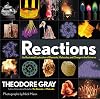
This is the final book in Theodore Gray's wonderful non-fiction trilogy about the chemistry of everything around us. The Elements introduced the basic building blocks of that chemistry, Molecules showed the ways in which those building blocks could combine to create an unimaginably vast array of substances, and Reactions looks at some of the ways in which those substances interact with each other to make things happen. We find out here why some materials burn more easily than others, why show more dropping a bottle of nitroglycerine can ruin your whole day, how it's possible to tell by analyzing your breath whether your body is currently burning sugar or fat, why watching grass grow or paint dry should be far less boring than you think, and a great deal more.
As with the previous books, this is a beautifully well-designed volume full of eye-catching photographs. It's also deeply fascinating. I'm extremely impressed with Gray's ability to explain things very clearly and interestingly, in such a way that not only do you understand the science better, but you also find yourself with a new and exciting perspective on the whole world around you. He also writes with a fun, engaging, often very humorous voice.
I definitely recommend all three books, even (or perhaps especially) for those who took high school chemistry and thought it was boring. show less
As with the previous books, this is a beautifully well-designed volume full of eye-catching photographs. It's also deeply fascinating. I'm extremely impressed with Gray's ability to explain things very clearly and interestingly, in such a way that not only do you understand the science better, but you also find yourself with a new and exciting perspective on the whole world around you. He also writes with a fun, engaging, often very humorous voice.
I definitely recommend all three books, even (or perhaps especially) for those who took high school chemistry and thought it was boring. show less
Lists
Awards


You May Also Like


Associated Authors
Statistics
- Works
- 36
- Also by
- 2
- Members
- 5,178
- Popularity
- #4,802
- Rating
- 4.4
- Reviews
- 53
- ISBNs
- 99
- Languages
- 15
- Favorited
- 3