
John Emsley
Author of Nature's Building Blocks: An A-Z Guide to the Elements
About the Author
John Emsley is Science Writer in Residence at the University of Cambridge. Author of the highly popular "Molecule of the Month" column for The Independent and of the book Molecules in an Exhibit, he has received both a Glaxo Award for science writing and the Chemical Industries Association's show more President's Award for science communication. He lives in London show less
Image credit: Photo by John Holman
Works by John Emsley
Molecules at an Exhibition: Portraits of Intriguing Materials in Everyday Life (1998) 226 copies, 1 review
Vanity, Vitality, and Virility: The Science behind the Products You Love to Buy (2004) 67 copies, 2 reviews
The Consumer's Good Chemical Guide: A Jargon-free Guide to the Chemicals of Everyday Life (1994) 65 copies
Was It Something You Ate?: Food Intolerance: What Causes It and How to Avoid It (1999) 16 copies, 1 review
Better Looking, Better Living, Better Loving: How Chemistry can Help You Achieve Life's Goals (2007) 13 copies
The global warming debate : the report of the European Science and Environment Forum (1996) 5 copies
Associated Works
The Guardian science course : Part VI : Building blocks — Contributor — 1 copy
Tagged
Common Knowledge
- Birthdate
- 1938
- Gender
- male
- Occupations
- science writer
- Organizations
- University of Cambridge (King's College)
- Awards and honors
- Rhône-Poulenc prize (1995)
GDCh Literaturpreis (2003) - Nationality
- UK
- Places of residence
- London, England, UK
- Associated Place (for map)
- England, UK
Members
Reviews
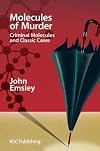
I am chemist by trade and when I saw this book pop up on Amazon Vine I thought I would get it and give it a read. It is a fascinating book. Anyone interested in chemistry, forensics, or even poisons would find this book fascinating; you don't need a technical background.
This book covers 5 poisons found in nature and 5 man-made poisons. Each chapter is very nicely structured and goes through how the poison was discovered, how the poison affects the human body, what remedies there are, and show more then goes through a case study where the poison was used to murder someone. In some chapters there are sections that give statistics on the number of poisonings with a given poison and how many of these are accidental.
The only parts that might require some technical knowledge are the chemical descriptions of the poisons and how the poison reacts with the enzymes (or whatever) in the human body. Even these parts of the book are presented in such a fashion that someone without a depth of technical knowledge gets a lot out of them.
The book is very well-written. I was worried this would be more of a dry technical read but it wasn't. I was sucked in right from the beginning and had trouble putting the book down. I really, really enjoyed it.
This is not something you would want to use as a handbook for poisoning because for the majority of cases the poisons go wrong and/or the poisoners get caught. My husband did want to know exactly why I need to read a book about poisons. I told him it was in self-defense :-)
Overall a great book. I will definitely keep an eye out for more books from this author. A colleague of mine actually heard John Emsley do a talk on forensic chemistry at an American Chemical Society meeting; supposedly he is also a great speaker. show less
This book covers 5 poisons found in nature and 5 man-made poisons. Each chapter is very nicely structured and goes through how the poison was discovered, how the poison affects the human body, what remedies there are, and show more then goes through a case study where the poison was used to murder someone. In some chapters there are sections that give statistics on the number of poisonings with a given poison and how many of these are accidental.
The only parts that might require some technical knowledge are the chemical descriptions of the poisons and how the poison reacts with the enzymes (or whatever) in the human body. Even these parts of the book are presented in such a fashion that someone without a depth of technical knowledge gets a lot out of them.
The book is very well-written. I was worried this would be more of a dry technical read but it wasn't. I was sucked in right from the beginning and had trouble putting the book down. I really, really enjoyed it.
This is not something you would want to use as a handbook for poisoning because for the majority of cases the poisons go wrong and/or the poisoners get caught. My husband did want to know exactly why I need to read a book about poisons. I told him it was in self-defense :-)
Overall a great book. I will definitely keep an eye out for more books from this author. A colleague of mine actually heard John Emsley do a talk on forensic chemistry at an American Chemical Society meeting; supposedly he is also a great speaker. show less
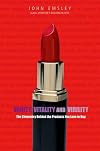
John Emsley's Vanity, Vitality, and Virility is a crash course in consumer and medical chemistry. He examines many spheres of everyday life -- including makeup, drugs, plastics, and food -- to get a deep look at the chemistry at work. At some points, yes, I did start to glaze over when each chemical was listed and each of their interactions with the human body was laid out, but overall, with multiple re-readings, I might start to retain a lot of the chemistry here. I learned at lot more show more about chlorinates than I expected, to name one. Emsley does well to go through the actual history of the science conducted to delineate the good, bad, and ugly about corporate chemistry. Very refreshingly, he ends with a plea to young scientists to come and help in the field, and that can't be bad at all. show less
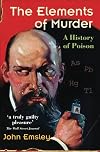
A very interesting book from start to finish, including the lovely cover work, which so convinced my Mother that she thought I'd torn her book.
A very thorough explanation is given of the uses of these poisonous elements, why they're poisonous, what damage they do and what remedies can be used against them. In the section on each poison there is also at least one discription of a case where it has been used to poison people, the process that the murderer went through and how they were show more caught.
I also really like the chemical glossary at the end.
The weakest part of the book, oddly enough, was the first chapter on mercury but it gets better after this, particularly the sections on arsenic and stibium.
Very good and solid book. show less
A very thorough explanation is given of the uses of these poisonous elements, why they're poisonous, what damage they do and what remedies can be used against them. In the section on each poison there is also at least one discription of a case where it has been used to poison people, the process that the murderer went through and how they were show more caught.
I also really like the chemical glossary at the end.
The weakest part of the book, oddly enough, was the first chapter on mercury but it gets better after this, particularly the sections on arsenic and stibium.
Very good and solid book. show less

This booklet was written to accompany the Channel Four TV series 'The Elements'. Since 1991, when this booklet was writen, a further nine elements have been found; so, it is not totally up to date; but not 'out of date' as the short history and general descriptions are correct for those that are listed. What makes this booklet valuable I think is the inclusion of specially commissioned poems by poet Roger McGough for the elements: carbon, gold, iron, mercury, Nitrogen, Oxygen, Sulphur and show more Meitnerium (then only known as element 109). The blend of stuffy science and whimsical poetry make this something unique and potentially place it in the hands of people who would not otherwise glance twice at the periodic table. Beautiful. show less
Lists
Awards


You May Also Like


Associated Authors
Statistics
- Works
- 25
- Also by
- 1
- Members
- 1,695
- Popularity
- #15,146
- Rating
- 3.8
- Reviews
- 25
- ISBNs
- 93
- Languages
- 9
- Favorited
- 2