
Marta Orriols
Author of Aprendre a parlar amb les plantes
About the Author
Image credit: Orriols in 2019
Works by Marta Orriols
Tagged
Common Knowledge
- Legal name
- Orriols Balaguer, Marta
- Birthdate
- 1975
- Gender
- female
- Nationality
- Spain
- Birthplace
- Sabadell, Spain
- Map Location
- Spain
Members
Reviews
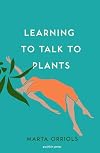
“You said that talking to plants was a private, transformative act, an act of faith for those who don’t believe in miracles. I get up, take a breath, and add to my list: Learn to talk to plants.”
In need of a book for the Books In Translation Reading Challenge, Learning to Talk to Plants caught my attention in the Edelweiss catalogue. This debut won Spanish author Marta Orriols the Omnium Cultural Prize for the best Catalan novel in 2018, and has been skilfully translated into English show more by Mara Fay Letham.
Learning to Talk To Plants is a raw and moving story of love, loss and grief. Just hours after her partner of more than a decade informs Paula he is leaving her for another woman, Mauro is killed in an accident. Paula is devastated by his death but her mourning is complicated by her feelings of anger, hurt, and betrayal.
“Everyone assumed, during those weeks following the accident, that my stunned gaze, neglected appearance and lowered blinds were due to my sadness over losing the person who’d been my partner for so many years; no one realized that, clinging to the pain of his death, there was another grief, slippery but slow, like a slug able to cover everything— including the other pain—with its viscous trail that gradually saturated everything, ugly, so ugly that all I knew how to do was hide it, I was dying too with the shock of this new shame, even more shocking than the death itself.”
Orriols’ eloquent prose immerses the reader in her character’s intimate thoughts, moving between her struggle in the present and memories of her past. As a neonatologist who lost her mother at a young age, Paula is familiar with the fragility of life, but this loss is more complicated. Though grief unfolds in a predictable manner, from denial through to acceptance, Paula’s experience of it is so intensely personal. I found her situation intriguing, and had great empathy for her. I was particularly impressed by Orriols’ authentic and nuanced portrayal of Paula’s volatile emotions.
“My pain is mine and the only possible unit for measuring or calibrating it is the intimacy of everything that comprised the how. How I loved him, how he loved me. How we were, uniquely, no longer us and, therefore, how I could uniquely grieve him.”
The writing is eloquent, I highlighted at least a dozen sentences or paragraphs that struck me as particularly meaningful or profound. The momentum is steady, but not slow, moving the story forward over the course of about six months.
I may have selected Learning To Talk to Plants to ‘tick a box’, but I was rewarded with a tender, evocative and insightful novel that I would recommend. show less
In need of a book for the Books In Translation Reading Challenge, Learning to Talk to Plants caught my attention in the Edelweiss catalogue. This debut won Spanish author Marta Orriols the Omnium Cultural Prize for the best Catalan novel in 2018, and has been skilfully translated into English show more by Mara Fay Letham.
Learning to Talk To Plants is a raw and moving story of love, loss and grief. Just hours after her partner of more than a decade informs Paula he is leaving her for another woman, Mauro is killed in an accident. Paula is devastated by his death but her mourning is complicated by her feelings of anger, hurt, and betrayal.
“Everyone assumed, during those weeks following the accident, that my stunned gaze, neglected appearance and lowered blinds were due to my sadness over losing the person who’d been my partner for so many years; no one realized that, clinging to the pain of his death, there was another grief, slippery but slow, like a slug able to cover everything— including the other pain—with its viscous trail that gradually saturated everything, ugly, so ugly that all I knew how to do was hide it, I was dying too with the shock of this new shame, even more shocking than the death itself.”
Orriols’ eloquent prose immerses the reader in her character’s intimate thoughts, moving between her struggle in the present and memories of her past. As a neonatologist who lost her mother at a young age, Paula is familiar with the fragility of life, but this loss is more complicated. Though grief unfolds in a predictable manner, from denial through to acceptance, Paula’s experience of it is so intensely personal. I found her situation intriguing, and had great empathy for her. I was particularly impressed by Orriols’ authentic and nuanced portrayal of Paula’s volatile emotions.
“My pain is mine and the only possible unit for measuring or calibrating it is the intimacy of everything that comprised the how. How I loved him, how he loved me. How we were, uniquely, no longer us and, therefore, how I could uniquely grieve him.”
The writing is eloquent, I highlighted at least a dozen sentences or paragraphs that struck me as particularly meaningful or profound. The momentum is steady, but not slow, moving the story forward over the course of about six months.
I may have selected Learning To Talk to Plants to ‘tick a box’, but I was rewarded with a tender, evocative and insightful novel that I would recommend. show less
Isso é o que chamo de livro que exala maturidade. Apesar de ser o primeiro livro de narrativa extensa que a autora lançou, Orriols tem um domínio muito maduro da narrativa, assim como seus personagens tem uma consciência da própria maturidade de forma sensível e indelével. O livro é sobre todo tipo de luto que atravessamos na vida, seja a morte de pessoas próximas, seja o fim de um relacionamento, nossa protagonista também tem um tipo de luto a mais com o qual a maioria das pessoas show more não precisa lidar: o luto da perda de pacientes, um outro tipo de sentimento de perda que soa ainda mais desamparado porque permeado pela culpa.
Um belo livro. E o aprender a falar com plantas é um ato bem mais sutil do que poderíamos imaginar. show less
Um belo livro. E o aprender a falar com plantas é um ato bem mais sutil do que poderíamos imaginar. show less
I thought the premise of this book was interesting - a couple breaks and then almost immediately one of them dies in an accident. The girlfriend is left in emotional limbo. She's not really a widow since they weren't married. And her boyfriend cheated on her and dumped her hours before his death - which almost no one knows.
I waited and waited and waited for this book to stop being boring. It never did. Alsolots of dead plants, very little talking to plants. Just disappointment all around.
I waited and waited and waited for this book to stop being boring. It never did. Also
Què passa en una relació amorosa, estable però encara relativament jove, quan un dels dos pren una decisió unilateral que afecta directament el futur de la parella? Quan la Marta li comunica al Dani que no vol ser mare, sobre entre els dos una esquerda que els portarà a orbitar per uns llimbs plens de dubtes i indecisions que els impulsaran a repensar-se com a individus i com a parella. Aquesta novel·la és una invitació a nedar pel mar de contradiccions en què es converteix la show more possibilitat de ser pares. Una anàlisi íntima al voltant de la voluntat, linstint, la llibertat i les estructures socials. Marta Orriols ens ofereix una història propera i plena darestes sensibles on torna a desplegar la seva habilitat narrativa per descriure les emocions i pulsions més íntimes. show less
Nov 23, 2020Catalan
Awards

You May Also Like


Associated Authors
Statistics
- Works
- 5
- Members
- 241
- Popularity
- #94,247
- Rating
- 3.5
- Reviews
- 10
- ISBNs
- 31
- Languages
- 9