

Mark Brandi
Author of Wimmera
About the Author
Mark Brandi is an Australian author, originally from Marche. He was raised in Italy. He has a degree in criminal justice and has worked as a policy advisor and project officer in the Department of Justice. He then decided to become a writer. His work has appeared in The Guardian, The Age, and the show more Big Issue. It can also be heard on Radio National. His first novel, Wimmera, won the 2016 UK Crime Writers' Association Debut Daggar and the 2018 Indie Book Award for Debut Fiction. (Bowker Author Biography) show less
Works by Mark Brandi
Tagged
Common Knowledge
Members
Reviews
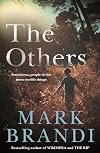
The Others is a haunting coming-of-age novel from Australian author Mark Brandi.
On his eleventh birthday Jacob’s father gifts him a diary, encouraging his son to write about their life on an isolated farm in rural Tasmania. The boy writes of the sheep they tend, the goats they hunt and eat, the drought that destroys their crops, the foxes that lurk in the hills. Of his dead mother, whom he misses but can’t remember, of the whites of his father’s eyes, of the questions he has about show more ‘the town’, the plague, and the Others.
Jacob’s voice is captivating, Brandi pitches it perfectly to project the curiosity and innocence of a young boy whose understanding and experience of the world is limited to what his father tells him, supplemented by a dictionary, an incomplete encyclopaedia, and a faded Women’s Weekly magazine.
Jacob is reluctant to ask his father too many questions, wary of his father’s temper or alternatively afraid that the ‘soft eyes’ will return, which means his dad may not talk or move for days. There are subtle clues for the reader that what Jacob’s father tells him about life outside the farm may not be true, small details that the boy doesn’t recognise as incongruous. Tension builds as Jacob’s curiosity grows, and he secretively begins defying his father’s edict to remain within the confines of the farm. Brandi conjures dread and anxiety as a confrontation, either between Jacob and his father or Jacob and the ‘others’, seems inevitable.
The writing is spare, yet evocative, I was clearly able to visualise the farm and it’s immediate surrounds. Some of the graphic scenes in the novel have more impact because the description is so stark. Unexpectedly, the story is also enhanced by small sketches, drawn by Jacob in his diary.
Powerful and unsettling, The Others is a gripping novel with an ending that left my heart pounding. show less
On his eleventh birthday Jacob’s father gifts him a diary, encouraging his son to write about their life on an isolated farm in rural Tasmania. The boy writes of the sheep they tend, the goats they hunt and eat, the drought that destroys their crops, the foxes that lurk in the hills. Of his dead mother, whom he misses but can’t remember, of the whites of his father’s eyes, of the questions he has about show more ‘the town’, the plague, and the Others.
Jacob’s voice is captivating, Brandi pitches it perfectly to project the curiosity and innocence of a young boy whose understanding and experience of the world is limited to what his father tells him, supplemented by a dictionary, an incomplete encyclopaedia, and a faded Women’s Weekly magazine.
Jacob is reluctant to ask his father too many questions, wary of his father’s temper or alternatively afraid that the ‘soft eyes’ will return, which means his dad may not talk or move for days. There are subtle clues for the reader that what Jacob’s father tells him about life outside the farm may not be true, small details that the boy doesn’t recognise as incongruous. Tension builds as Jacob’s curiosity grows, and he secretively begins defying his father’s edict to remain within the confines of the farm. Brandi conjures dread and anxiety as a confrontation, either between Jacob and his father or Jacob and the ‘others’, seems inevitable.
The writing is spare, yet evocative, I was clearly able to visualise the farm and it’s immediate surrounds. Some of the graphic scenes in the novel have more impact because the description is so stark. Unexpectedly, the story is also enhanced by small sketches, drawn by Jacob in his diary.
Powerful and unsettling, The Others is a gripping novel with an ending that left my heart pounding. show less
Eden by Mark Brandi
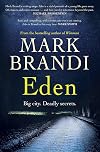
Though it can be read as a stand alone, Eden is also a powerful sequel of sorts to Mark Brandi’s award winning novel Wimmera, the story of two young boys and a shocking crime.
After serving a nine year sentence having been convicted of accessory to murder, Tom is released into the city of Melbourne. He has a tentative plan but it’s quickly scuppered when his meagre prison earnings are stolen and his ex-girlfriend, Lucy, discourages his request to visit. With no where else to go and show more determined to stay out of trouble, Tom seeks temporary refuge in the city cemetery. When he’s woken by the head groundskeeper and his dog Lina, Tom is prepared to move on but Cyril unexpectedly offers him a job.
In exchange for some cash and a cot in the on-site maintenance shed, Tom learns to dig graves and pull weeds. Cyril is generous, even if his offsider Seamus is taciturn, and with his confidence in the possibility of new start restored, Tom is ready to believe change is possible. But all too quickly his dreams start to turn to ash when he realises the cemetery is not the idyll Cyril suggests.
Eden is only a short novel but it still packs a punch. Brandi’s prose is tight yet evocative and effortlessly establishes atmosphere. There’s a thrum of tension from the opening page that the author slowly layers with anxiety and menace.
Tom is a well-realised character, somewhat ingenuous perhaps given his age and past, but his desire for redemption feels genuine. Cyril is colourful, but with an edge of darkness he can’t quite hide, while the handful of other supporting characters play their part in adding richness to the story.
A riveting, gritty thriller, Eden cements my opinion of Mark Brandi as a compelling Australian author. show less
After serving a nine year sentence having been convicted of accessory to murder, Tom is released into the city of Melbourne. He has a tentative plan but it’s quickly scuppered when his meagre prison earnings are stolen and his ex-girlfriend, Lucy, discourages his request to visit. With no where else to go and show more determined to stay out of trouble, Tom seeks temporary refuge in the city cemetery. When he’s woken by the head groundskeeper and his dog Lina, Tom is prepared to move on but Cyril unexpectedly offers him a job.
In exchange for some cash and a cot in the on-site maintenance shed, Tom learns to dig graves and pull weeds. Cyril is generous, even if his offsider Seamus is taciturn, and with his confidence in the possibility of new start restored, Tom is ready to believe change is possible. But all too quickly his dreams start to turn to ash when he realises the cemetery is not the idyll Cyril suggests.
Eden is only a short novel but it still packs a punch. Brandi’s prose is tight yet evocative and effortlessly establishes atmosphere. There’s a thrum of tension from the opening page that the author slowly layers with anxiety and menace.
Tom is a well-realised character, somewhat ingenuous perhaps given his age and past, but his desire for redemption feels genuine. Cyril is colourful, but with an edge of darkness he can’t quite hide, while the handful of other supporting characters play their part in adding richness to the story.
A riveting, gritty thriller, Eden cements my opinion of Mark Brandi as a compelling Australian author. show less

Told in three parts WIMMERA focuses on two people. In the first part we meet Ben and Fab; best friends in their final year of primary school. In their small rural town they are left to their own devices for great swathes of time. Not due to bad parenting but because that’s the way the world was then. The boys watch TV, play backyard cricket, go yabbying and camping. They can talk endlessly of mindless things such as the intricate rules for their favourite activities but they actively avoid show more discussing the big, scary stuff. Like why Ben’s 14-year old neighbour hung herself on the family clothesline or the fact that Fab’s father beats him regularly. No one, not even the adults, talks about those things. Towards the end of this part of the book readers know that something has gone awry for one of the boys but we have to speculate about the details. In the book’s second and third acts we find out a little more as the boys’ history is investigated, but even by the end of the novel there’s still a lot we don’t know.
It doesn’t feel quite right to say I loved WIMMERA given it is so sad and full of melancholy. But what other word is there?
I loved that it depicts an Australia I instantly recognised. Although it is set in rural Victoria I think WIMMERA owes more to its core events taking place in the late 1980’s than to its geography. Things – often awful or frightening things – that are known but not spoken of are at the heart of this story and that kind of secret keeping is – or was – not reserved for country towns. The inner-city street I grew up on was equally good at hiding things. That said, the book’s physical setting is utterly authentic too.
I loved that the book’s central characters are neither heroic nor extremely flawed. They’re ‘normal’, for want of a better word. They do good things and not-so-good things and fumble their way through life, like most of us. Maybe other readers look for inspiration from fictional characters but I like it best when people in fiction are as clueless and awkward as I usually am.
I loved that the book left so much unsaid. At 262 pages WIMMERA is one of the shortest modern novels I’ve read. And though it clearly annoys some readers I found the lack of detail very fitting. This is, after all, big scary stuff. Not the kind of thing people talk about. It feels very realistic to me that people like Ben and Fab – growing up when and where they did – would never tell all. Probably couldn’t tell all even if they had the desire to.
Like its geographic namesake WIMMERA is quite beautifully sparse and reveals its secrets unwillingly. Surely only the hardest of hearts could fail to be moved by Ben and Fab’s story even though they struggle so hard to share it. Or perhaps because they struggle so hard to share it. Highly recommended. show less
It doesn’t feel quite right to say I loved WIMMERA given it is so sad and full of melancholy. But what other word is there?
I loved that it depicts an Australia I instantly recognised. Although it is set in rural Victoria I think WIMMERA owes more to its core events taking place in the late 1980’s than to its geography. Things – often awful or frightening things – that are known but not spoken of are at the heart of this story and that kind of secret keeping is – or was – not reserved for country towns. The inner-city street I grew up on was equally good at hiding things. That said, the book’s physical setting is utterly authentic too.
I loved that the book’s central characters are neither heroic nor extremely flawed. They’re ‘normal’, for want of a better word. They do good things and not-so-good things and fumble their way through life, like most of us. Maybe other readers look for inspiration from fictional characters but I like it best when people in fiction are as clueless and awkward as I usually am.
I loved that the book left so much unsaid. At 262 pages WIMMERA is one of the shortest modern novels I’ve read. And though it clearly annoys some readers I found the lack of detail very fitting. This is, after all, big scary stuff. Not the kind of thing people talk about. It feels very realistic to me that people like Ben and Fab – growing up when and where they did – would never tell all. Probably couldn’t tell all even if they had the desire to.
Like its geographic namesake WIMMERA is quite beautifully sparse and reveals its secrets unwillingly. Surely only the hardest of hearts could fail to be moved by Ben and Fab’s story even though they struggle so hard to share it. Or perhaps because they struggle so hard to share it. Highly recommended. show less
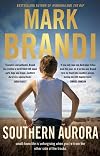
There's never anything overt or preachy in the work that Brandi produces. They are all, universally, entertaining novels with characters that appeal, and connections for readers to make. But they are doing that with great fearlessness - he isn't afraid to assault the reader with emotion and reaction. He always makes you think though, always makes you consider the story behind the facades that we see every day, and all too often, choose to ignore.
show more target="_top">https://www.austcrimefiction.org/review/southern-aurora-mark-brandi show less
show more target="_top">https://www.austcrimefiction.org/review/southern-aurora-mark-brandi show less
Awards


You May Also Like


Statistics
- Works
- 7
- Members
- 243
- Popularity
- #93,556
- Rating
- 3.7
- Reviews
- 13
- ISBNs
- 40