
Judith Hermann
Author of Summerhouse, Later: Stories
About the Author
Image credit: Credit: Ordu Oğuz, 2007, Berlin, Germany
Works by Judith Hermann
Associated Works
Tagged
Common Knowledge
- Canonical name
- Hermann, Judith
- Birthdate
- 1970-05-15
- Gender
- female
- Occupations
- Schriftstellerin
- Awards and honors
- Wilhelm-Raabe-Preis (2023)
Bremer Literaturpreis (2022)
Erich-Fried-Preis (2014) - Nationality
- Germany
- Birthplace
- Berlin, Germany
- Places of residence
- Berlin, Deutschland
- Map Location
- Germany
Members
Reviews
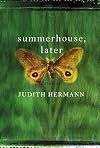
Judith Hermann’s debut volume of short fiction—deftly translated from the German original by Margot Bettauer Dembo—paints a fascinating if sometimes perplexing portrait of a youthful generation, rootless inhabitants of a society that dangles possibilities but doesn’t give its citizens a solid foundation on which to build a life, or any reason to aspire for success or significance. Many of Hermann’s characters behave in what seems a deliberately purposeless fashion, distracting show more themselves from a pervasive lack of meaning by drifting through a series of empty activities and entertainments. They live for the moment, with little regard for what the future might hold. In the volume’s opening tale, “The Red Coral Bracelet,” the young female narrator recalls her great-grandmother’s marriage to a man who manufactures furnaces. He takes his young wife to Russia, where the need is great, and there, the narrator’s great-grandfather is compelled to abandon his wife because of the huge demand for his product. He travels all over the country, for years at a time, and while he’s away she takes a series of lovers, all of whom shower her with gifts, one of which is the red coral bracelet. Years later, the narrator is wearing her great-grandmother’s bracelet in her therapist’s office when the string breaks and the beads scatter all over the floor, freeing her from the shackles of a troubling personal history. In “Hurricane (Something Farewell),” Nora and Christine are visiting a friend who lives on a tropical island. Without any goals and untethered by emotional connections, they spend their time drinking, getting high, and engaging in meaningless dalliances. News comes that a hurricane is approaching, but there is little sense of urgency. In the end, Christine goes home to resume her life, and Nora stays behind. And in “Sonja,” an artist finds himself inexplicably haunted by an enigmatic young woman he meets on a train. The young woman, Sonja, has an odd appearance—“her face was as unusual and as old-fashioned as one of those Madonna paintings from the fifteenth century”—and lives in an apartment by herself with no visible means of support. The attraction is not sexual, but in her presence his inhibitions melt away and he talks about himself and his life in more detail than with anyone else, including his girlfriend Verena. In the end the lines of communication break down and Sonja vanishes from his life, without reason or explanation, leaving behind no traces of her existence. Hermann’s collection presents a succession of lives in stasis, people whose objectives are half-formed, whose motivations are obscure and unarticulated. One could complain that Hermann’s characters lack depth, that their struggles are empty. This may be true, but the book remains captivating nonetheless because of the atmospheric details that she drops into her expressive prose, and the level of invention that drives the action. Her plots are mostly hazy and dreamlike; they evade description and resist quick summary. Not for all tastes, but in these fictions, Judith Hermann provides a glimpse into a shadowy and slightly off-kilter version of reality that is memorable and poignant. show less
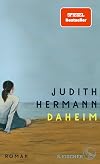
Takže na začátek poznámka k překladu: "Krabi" jsou pravděpodobně krevety (Krabben). Taky už jsem se jednou spletl.
Ale dál k věci, Judith Hermann ukazuje, že umí. Celé je to poetické, voní to solí, kejdou a pivem, šuká se jen decentně, a příběh plyne pomalu jako letní dny u Nordsee. Přeci jen, kdo by se nechtěl někdy odstěhovat na nejnudnější místo světa, v noci poslouchat bučení krav a hučení větru, koupat se ve studeném moři a přemýšlet o (ne)smyslu show more života. A o tom přesně Daheim je. show less
Ale dál k věci, Judith Hermann ukazuje, že umí. Celé je to poetické, voní to solí, kejdou a pivem, šuká se jen decentně, a příběh plyne pomalu jako letní dny u Nordsee. Přeci jen, kdo by se nechtěl někdy odstěhovat na nejnudnější místo světa, v noci poslouchat bučení krav a hučení větru, koupat se ve studeném moři a přemýšlet o (ne)smyslu show more života. A o tom přesně Daheim je. show less
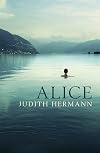
When my friend gave me this book she told me, “It’s SOOO German”, meaning that the five men/chapters are all connected to the heroine through death. German Intellectuals (= ‘Dieter’ types) have a reputation (among Americans) for dwelling on death. In all fairness to the author, I found the book to be a celebration of life as contrasted by death.
Each chapter gives a strong sense of place and mood: Berlin on a hot summer day, Berlin on a rainy summer day, an Italian Alpine village on show more a sunny day, etc. The heroine stays in a strong Zen-like zone of the present, a result of which, you don’t get a lot of back story on how some of the characters relate to her life history. There is an assumption that these connections have already been made long in the past, so as a reader, you are left to ‘connect the dots’. Also, the author tends to indulge in a lot of lists of stuff. I realize that these lists build up the sense of atmosphere and reality of the scene she is describing, but I sometimes got impatient and groaned, “another list”. One has to be somewhat patient with this book, it is a lot like reading poetry.
My only gripe with the book is that there are no quotation marks when people are talking. I found this very irritating, probably because I like grammar too much and I tend to get confused by lack of punctuation, for example: He said that she said. Again, it is a bit like reading poetry, I found myself having to slow down and decipher sentences. I read the English language translation (by Margot Bettauer Dembo), so I’m not sure if these lack of quotation marks was just for this edition or if this is in the German version also. Maybe it is the hot new thing in the literary world, no quotations. It is probably some sort of revolt against those people who make the ‘bunny ears’ quotes with their fingers while talking. show less
Each chapter gives a strong sense of place and mood: Berlin on a hot summer day, Berlin on a rainy summer day, an Italian Alpine village on show more a sunny day, etc. The heroine stays in a strong Zen-like zone of the present, a result of which, you don’t get a lot of back story on how some of the characters relate to her life history. There is an assumption that these connections have already been made long in the past, so as a reader, you are left to ‘connect the dots’. Also, the author tends to indulge in a lot of lists of stuff. I realize that these lists build up the sense of atmosphere and reality of the scene she is describing, but I sometimes got impatient and groaned, “another list”. One has to be somewhat patient with this book, it is a lot like reading poetry.
My only gripe with the book is that there are no quotation marks when people are talking. I found this very irritating, probably because I like grammar too much and I tend to get confused by lack of punctuation, for example: He said that she said. Again, it is a bit like reading poetry, I found myself having to slow down and decipher sentences. I read the English language translation (by Margot Bettauer Dembo), so I’m not sure if these lack of quotation marks was just for this edition or if this is in the German version also. Maybe it is the hot new thing in the literary world, no quotations. It is probably some sort of revolt against those people who make the ‘bunny ears’ quotes with their fingers while talking. show less
Poetický vesmír Judith Hermann. Děj v náznacích, v popisech počasí, zvuků a vůní okolo Alice. Žádná struktura, mikropříběhy bez začátku a konce. Něco tam je, ale zároveň něco chybí.
Kdyby to nebylo o smrti, tak se asi nudím.
Kdyby to nebylo o smrti, tak se asi nudím.
Lists
Awards


You May Also Like


Associated Authors
Statistics
- Works
- 14
- Also by
- 3
- Members
- 1,100
- Popularity
- #23,361
- Rating
- 3.6
- Reviews
- 35
- ISBNs
- 116
- Languages
- 12
- Favorited
- 4