
Eva Menasse
Author of Vienna
About the Author
Image credit: Eva Menasse, Leipzig Bookfair 2013 By Lesekreis - Own work, CC0, https://commons.wikimedia.org/w/index.php?curid=25193905
Series
Works by Eva Menasse
2005 1 copy
Tilgivelige dødssynder 1 copy
Dyr for viderekomne 1 copy
Associated Works
Kingdom of Olives and Ash: Writers Confront the Occupation (2017) — Contributor — 167 copies, 5 reviews
Donauwalzer am Irawadi: Exil in England, Kampf in Burma, Rückkehr nach Wien (2011) — Foreword — 3 copies
Tagged
Common Knowledge
- Canonical name
- Menasse, Eva
- Legal name
- Menasse, Eva
- Birthdate
- 1970-05-11
- Gender
- female
- Occupations
- journalist
novelist - Organizations
- Akademie der Künste Berlin
- Awards and honors
- Jakob-Wassermann-Literaturpreis (2023)
Mainzer Stadtschreiber (2019)
Ludwig-Börne-Preis (2019)
Stipendiatin der Villa Massimo in Rom (2015)
Jonathan Swift – Internationaler Literaturpreis für Satire und Humor (2015)
Heinrich-Böll-Preis (2013) (show all 7)
Gerty-Spies-Literaturpreis (2013) - Relationships
- Menasse, Robert (half-brother)
Kumpfmüller, Michael (husband) - Short biography
- Eva Menasse, geboren 1970 in Wien, begann als Journalistin bei 'Profil' in Wien. Sie wurde Redakteurin der 'Frankfurter Allgemeinen Zeitung', begleitete den Prozeß um den Holocaust-Leugner David Irving in London und arbeitete nach einem Aufenthalt in Prag als Kultur-Korrespondentin in Wien. Sie lebt seit 2003 in Berlin. Vienna ist ihre erste literarische Veröffentlichung und wurde von der Kritik und Lesern begeistert aufgenommen.
- Nationality
- Austria
- Birthplace
- Vienna, Austria
- Places of residence
- Berlin, Germany
- Map Location
- Austria
Members
Reviews

Dunkelblum is a (fictitious) small Austrian town close to the Hungarian border in the province of Burgenland. As in many other parts of Europe, bad things happened here around the end of World War II, and the local people who were involved one way or the other have kept very quiet about them. But now it’s 1989, and there aren’t that many people left who even know where the bodies are buried (assuming that there were bodies to be buried…). A team of students has arrived in Dunkelblum to show more rehabilitate the long-abandoned and overgrown Jewish cemetery, a local farmer looking for an underground watercourse has stumbled on human remains in a field, and it looks as though all kinds of nastiness is about to be exposed. Meanwhile, on the other side of the border, East German refugees are starting to arrive in their Trabi’s, hoping that the Hungarians will let them out.
On one level this novel, written thirty years later, seems to be a book about how 1989 turned out not to be the “end of history” year when Europe shook off the legacies of World War II — the opening of borders failed to act as a magical cure to inequalities between east and west, our new political optimism and European identity failed to put an end to the petty self-interest of racism and nationalist bigotry. But it’s also more generally a novel about small communities and how they keep secrets. Everyone in Dunkelblum is keeping secrets from their neighbours, their parents, their children, and (most of all) from outsiders. Ironically, we, as strangers and readers of the novel, are the only people who get an inkling of the truth. The characters themselves, being too closely involved, repeatedly make false connections or fail to see the obvious. And it isn’t always completely clear that knowing the truth would help anyone (even assuming that there is one clear truth in all that mess…).
Menasse’s narrative style is clever — she builds a kind of recursive picture of the community, constantly shifting the point of view from her central characters to minor characters who don’t initially appear to have anything much to do with the story, but actually turn out to be central to one part of it. This works well to give us the illusion of a complete picture of a community that in real life would contain several hundred people. By the end of the book we feel that we know Dunkelblum — and of course we do, because despite its provincial Austrianness, it’s exactly like any small community anywhere. show less
On one level this novel, written thirty years later, seems to be a book about how 1989 turned out not to be the “end of history” year when Europe shook off the legacies of World War II — the opening of borders failed to act as a magical cure to inequalities between east and west, our new political optimism and European identity failed to put an end to the petty self-interest of racism and nationalist bigotry. But it’s also more generally a novel about small communities and how they keep secrets. Everyone in Dunkelblum is keeping secrets from their neighbours, their parents, their children, and (most of all) from outsiders. Ironically, we, as strangers and readers of the novel, are the only people who get an inkling of the truth. The characters themselves, being too closely involved, repeatedly make false connections or fail to see the obvious. And it isn’t always completely clear that knowing the truth would help anyone (even assuming that there is one clear truth in all that mess…).
Menasse’s narrative style is clever — she builds a kind of recursive picture of the community, constantly shifting the point of view from her central characters to minor characters who don’t initially appear to have anything much to do with the story, but actually turn out to be central to one part of it. This works well to give us the illusion of a complete picture of a community that in real life would contain several hundred people. By the end of the book we feel that we know Dunkelblum — and of course we do, because despite its provincial Austrianness, it’s exactly like any small community anywhere. show less
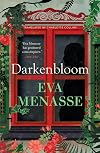
From the first paragraph, Eva Menasse presents a foreboding picture of a tangled, overgrown garden, hiding corruption and secrets, with shadows peering out of darkened windows. She describes it with wry irony and sharp wit. It’s an excellent introduction to her dark and tangled story.
The storyline jumps from place to place and from time to time, with multiple layers and multiple points of view. In spite of the helpful table of characters, a reader has to pay attention to keep track of how show more the characters fit into each others’ lives, although that gradually becomes clear as the novel progresses.
It tells the story of the town and many of its residents. A town on the periphery of the second world war and on the border with Hungary (which Darkenbloomers choose to call “Over There”), it’s become a backwater village from which young people leave and return only for family obligations. Some residents want modern economic development like centralized water works, but they are held back by those fearing what it might dig up. A winemaker moves forward with crafted quality wines, while his parents cling to their old customers who have ordered the same wine for decades because it is cheap. Characteristically, the acting mayor seeks guidance from his mentor who is lying comatose in a hospital in Vienna.
In many ways, the novel reminded me of Middlemarch, where George Eliot uses the residents of a small town to represent a changing wider world, both describing the action and commenting on it with a clever wit. But where Eliot comments on the scene with warmth, Menasse uses a dark tone to describe a far nastier scene. She visits many of the households in the town and notes the silences and deceptions that have deformed the relationships between people and within families. They all have secret resentments and histories that go back to childhood, or to past generations. To them, the danger is the contemporary characters who threaten to break through the façade that covers up the stories people don’t want to know. When a body is found in a field, the sense among the locals that “you don’t want to get involved in anything, not after all we’ve lived through, on the border.” Being on the border, keeping outsiders away and protecting themselves from danger, is at centre of their psyche.
The townspeople don’t know the whole truth (they don’t want to) and describe the unpleasant stories from the past as “rumour.” But the travel agent (naturally, the one who crosses borders) who is putting together a town history, finds the stories don’t line up. People leave out details that might put them in the wrong place, and say it wasn’t as bad as the rumours claim. The bad things were the fault of a few Nazi thugs – who sanitized their history and ran the town with the support of the Russian army after it overran their feeble defenses. When one former Nazi leader candidly describes his story, the locals say that you can’t take the old guy seriously. Some surviving victims of the violence don’t want to live with the pain that the past brings up.
The story takes some curious turns and ends on a lighter tone, when the old Nazi youth welcome refugees from Eastern Europe, perhaps as a joke against the modern state. When more of the story comes out, it feels like a weight has been removed, But the novel ends on an ambiguous note – an old farmer enters a church expecting quiet meditation, but little devilish voices around the Messiah chirp away saying this is not the end of the story.
This was a totally engrossing story, leaving me trying to understand the various characters and their perspectives on the town and its history. It examines a dark, painful history, but Menasse’s sharp commentary keeps it from feeling heavy, and the imperfect attempts of several characters to find the truth allow some light to break through. Menasse seems to be calling on Austria to stop hiding from its history and face up the need to repair the damage it has inflicted on contemporary society. Although drawn in a particular place, this lesson applies to many countries, including here in Canada with our colonialist past. show less
The storyline jumps from place to place and from time to time, with multiple layers and multiple points of view. In spite of the helpful table of characters, a reader has to pay attention to keep track of how show more the characters fit into each others’ lives, although that gradually becomes clear as the novel progresses.
It tells the story of the town and many of its residents. A town on the periphery of the second world war and on the border with Hungary (which Darkenbloomers choose to call “Over There”), it’s become a backwater village from which young people leave and return only for family obligations. Some residents want modern economic development like centralized water works, but they are held back by those fearing what it might dig up. A winemaker moves forward with crafted quality wines, while his parents cling to their old customers who have ordered the same wine for decades because it is cheap. Characteristically, the acting mayor seeks guidance from his mentor who is lying comatose in a hospital in Vienna.
In many ways, the novel reminded me of Middlemarch, where George Eliot uses the residents of a small town to represent a changing wider world, both describing the action and commenting on it with a clever wit. But where Eliot comments on the scene with warmth, Menasse uses a dark tone to describe a far nastier scene. She visits many of the households in the town and notes the silences and deceptions that have deformed the relationships between people and within families. They all have secret resentments and histories that go back to childhood, or to past generations. To them, the danger is the contemporary characters who threaten to break through the façade that covers up the stories people don’t want to know. When a body is found in a field, the sense among the locals that “you don’t want to get involved in anything, not after all we’ve lived through, on the border.” Being on the border, keeping outsiders away and protecting themselves from danger, is at centre of their psyche.
The townspeople don’t know the whole truth (they don’t want to) and describe the unpleasant stories from the past as “rumour.” But the travel agent (naturally, the one who crosses borders) who is putting together a town history, finds the stories don’t line up. People leave out details that might put them in the wrong place, and say it wasn’t as bad as the rumours claim. The bad things were the fault of a few Nazi thugs – who sanitized their history and ran the town with the support of the Russian army after it overran their feeble defenses. When one former Nazi leader candidly describes his story, the locals say that you can’t take the old guy seriously. Some surviving victims of the violence don’t want to live with the pain that the past brings up.
The story takes some curious turns and ends on a lighter tone, when the old Nazi youth welcome refugees from Eastern Europe, perhaps as a joke against the modern state. When more of the story comes out, it feels like a weight has been removed, But the novel ends on an ambiguous note – an old farmer enters a church expecting quiet meditation, but little devilish voices around the Messiah chirp away saying this is not the end of the story.
This was a totally engrossing story, leaving me trying to understand the various characters and their perspectives on the town and its history. It examines a dark, painful history, but Menasse’s sharp commentary keeps it from feeling heavy, and the imperfect attempts of several characters to find the truth allow some light to break through. Menasse seems to be calling on Austria to stop hiding from its history and face up the need to repair the damage it has inflicted on contemporary society. Although drawn in a particular place, this lesson applies to many countries, including here in Canada with our colonialist past. show less
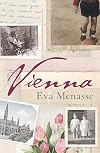
I liked Menasse’s Darkenbloom earlier this year, but I was less taken by this novel. The characters in Vienna seemed less vivid, less dramatic and they don’t come together to form a compelling story.
My sense at first was that the story wasn’t coming together because there were too many characters and no clear focus. But Darkenbloom also dealt with a wide variety of characters – a whole village rather than a family – meandered through their stories and ended in an inconclusive show more note. However, Darkenbloom had an underlying mystery, and the stories all bring some light to the mystery. It also had a sardonic tone from the narrator which added another layer of interest to the novel.
Vienna, in my reading, has none of these. The characters are mostly dull, they exist in a static society, and the narrator has a flatter tone. The characters make up a complex family dynamic, but there’s nothing especially interesting in the staid middle-class family.
Objectively, some of the characters should be more interesting. Father’s curious trading business, Uncle Ferdinand’s criminal enterprises, Aunt Gustl’s eccentricities could be elements in a colourful family epic. The way the Jewish side of the family survived the Nazi regime by using its ambiguous German relations is an intriguing line, although an undeveloped one. Their later lives in a marginal country on the edge of the Soviet sphere has an interest, but not much of a story. The family tells its stories from the past, but they are tired anecdotes and even the family finds their retelling a bore.
When Father returns to England where he spent the war, he seems to want to connect to his memories, but at the same time treats them as practically insignificant. And when the narrator’s brother causes a sensation by exposing the Nazi past of a national football star, the family – and the country – react by questioning the value of the story. Some members of the family question whether their Jewish past is even relevant in modern Austria.
Is this the point of Menasse’s novel? She seems to be saying that families have plenty of stories that they tell and argue about because they define the family members’ roles to each other and to the broader society, but the stories are a bit boring to outsiders. The narrator tries to bring the family together over its shared histories, but the final family meeting breaks into a fight as different factions within the family identify with different religious and national identities, stories, legends, what-ifs, with no solution, no way out. In the end, the narrator says, everyone talks with circumspection to avoid upsetting anyone else, and the younger generation finds it all irrelevant. This is probably the way with most families, especially large families with diverse branches.
And perhaps this is a metaphor for Austria, a small not-very-important country that has been part of some key histories, with branches and ties into other countries. But to avoid upsetting its more powerful neighbours, it deliberately downplays both its left- and right-wing political factions, its religious and cultural divisions, and strives to present a bland picture of itself.
This may all be an insightful presentation of a contemporary Austrian identity, but I don’t find that it makes a compelling story. show less
My sense at first was that the story wasn’t coming together because there were too many characters and no clear focus. But Darkenbloom also dealt with a wide variety of characters – a whole village rather than a family – meandered through their stories and ended in an inconclusive show more note. However, Darkenbloom had an underlying mystery, and the stories all bring some light to the mystery. It also had a sardonic tone from the narrator which added another layer of interest to the novel.
Vienna, in my reading, has none of these. The characters are mostly dull, they exist in a static society, and the narrator has a flatter tone. The characters make up a complex family dynamic, but there’s nothing especially interesting in the staid middle-class family.
Objectively, some of the characters should be more interesting. Father’s curious trading business, Uncle Ferdinand’s criminal enterprises, Aunt Gustl’s eccentricities could be elements in a colourful family epic. The way the Jewish side of the family survived the Nazi regime by using its ambiguous German relations is an intriguing line, although an undeveloped one. Their later lives in a marginal country on the edge of the Soviet sphere has an interest, but not much of a story. The family tells its stories from the past, but they are tired anecdotes and even the family finds their retelling a bore.
When Father returns to England where he spent the war, he seems to want to connect to his memories, but at the same time treats them as practically insignificant. And when the narrator’s brother causes a sensation by exposing the Nazi past of a national football star, the family – and the country – react by questioning the value of the story. Some members of the family question whether their Jewish past is even relevant in modern Austria.
Is this the point of Menasse’s novel? She seems to be saying that families have plenty of stories that they tell and argue about because they define the family members’ roles to each other and to the broader society, but the stories are a bit boring to outsiders. The narrator tries to bring the family together over its shared histories, but the final family meeting breaks into a fight as different factions within the family identify with different religious and national identities, stories, legends, what-ifs, with no solution, no way out. In the end, the narrator says, everyone talks with circumspection to avoid upsetting anyone else, and the younger generation finds it all irrelevant. This is probably the way with most families, especially large families with diverse branches.
And perhaps this is a metaphor for Austria, a small not-very-important country that has been part of some key histories, with branches and ties into other countries. But to avoid upsetting its more powerful neighbours, it deliberately downplays both its left- and right-wing political factions, its religious and cultural divisions, and strives to present a bland picture of itself.
This may all be an insightful presentation of a contemporary Austrian identity, but I don’t find that it makes a compelling story. show less
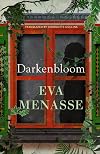
Eva Menasse is an award winning author, born in Austria but resident in Berlin for twenty years. Amongst the accolades, her novel Vienna translated by the late Anthea Bell, was shortlisted for the (now defunct) 2007 Independent Foreign Fiction Prize in the UK. Charlotte Collins, (who has also translated Robert Seethaler's compelling novellas and Nino Haratischvili's chunksters) has done a superb job of bringing this novel to English readers and I won't be surprised if it is nominated for the show more International Booker...
Set in 1989 when the Soviet bloc was collapsing, Darkenbloom is a long, complex and discursive novel which gradually reveals the WW2 secrets of an Austrian town on the border with Hungary.
Not everyone will like the way the book is constructed, but I thought it was brilliant because it mirrors real life when people are confronted by change which they can no longer avoid. The narrator has a wry, ironic and discursive style, always teasing with hints that there is more to know but it's being withheld for the time being. There are multiple characters, and sometimes they are referred to by their first names or nicknames, and at other times by their surnames or their relationships or occupations. There is a list of characters at the front of the book but it was no good to me because I was so absorbed in the story that I forgot that it was there.
Details accumulate and the pieces gradually fit together, but the reader has to be alert, has to remember, and has to recognise dissembling and lies. Just the same as if we were there ourselves, trying to make sense of things that happened a long time ago and our sources of information are people who are lying, muddled, or just as confused as we are. The novel demonstrates with awful clarity just how hard it is to piece together the truth when it's been hidden for so long for reasons of guilt, malice, trauma, regret, shame or a desire to 'move on' because the harm can't be undone. This is relevant to all of us because there are few countries around the world that don't have some kind of uncomfortable past that some people want to dig up, and others who would rather let sleeping dogs lie.
Now all this sounds very sobering, and at times it is, but there are also priceless moments of humour like this one. The inhabitants of Darkenbloom are meeting in the Hotel Tüffer, a pub formerly owned by Jewish people who were ejected from it, to the benefit of the barmaid Resi Reschen who has 'owned' it ever since. They are there to discuss the contentious water plan which has caused alarm in some places because (though nobody says so out loud) the works might dig up the long-hidden site of the massacre of the Jews.
To read the rest of my review please visit https://anzlitlovers.com/2025/02/21/darkenbloom-2021-english-2024-by-eva-menasse... show less
Set in 1989 when the Soviet bloc was collapsing, Darkenbloom is a long, complex and discursive novel which gradually reveals the WW2 secrets of an Austrian town on the border with Hungary.
Not everyone will like the way the book is constructed, but I thought it was brilliant because it mirrors real life when people are confronted by change which they can no longer avoid. The narrator has a wry, ironic and discursive style, always teasing with hints that there is more to know but it's being withheld for the time being. There are multiple characters, and sometimes they are referred to by their first names or nicknames, and at other times by their surnames or their relationships or occupations. There is a list of characters at the front of the book but it was no good to me because I was so absorbed in the story that I forgot that it was there.
Details accumulate and the pieces gradually fit together, but the reader has to be alert, has to remember, and has to recognise dissembling and lies. Just the same as if we were there ourselves, trying to make sense of things that happened a long time ago and our sources of information are people who are lying, muddled, or just as confused as we are. The novel demonstrates with awful clarity just how hard it is to piece together the truth when it's been hidden for so long for reasons of guilt, malice, trauma, regret, shame or a desire to 'move on' because the harm can't be undone. This is relevant to all of us because there are few countries around the world that don't have some kind of uncomfortable past that some people want to dig up, and others who would rather let sleeping dogs lie.
Now all this sounds very sobering, and at times it is, but there are also priceless moments of humour like this one. The inhabitants of Darkenbloom are meeting in the Hotel Tüffer, a pub formerly owned by Jewish people who were ejected from it, to the benefit of the barmaid Resi Reschen who has 'owned' it ever since. They are there to discuss the contentious water plan which has caused alarm in some places because (though nobody says so out loud) the works might dig up the long-hidden site of the massacre of the Jews.
Last of all, the mayor's secretary, Frau Balaskó, teetered across the square from the town hall. A short, spherical person, she floated in on the highest of heels, an astonishing display of almost artistic balance. She felt that these shoes were a requirement of her position, but at the end of the working day she took them off as soon as she got to the car park and swapped them for the slippers she kept under the passenger seat. Today, though, she was here in her official capacity, and so was balanced on her thin, perilous needles. Keeping her gaze firmly fixed in front of her and an eye out for potential obstacles, she squeezed through to a free chair, and only when she was happily seated and the blood had begun to teach her squashed toes again did she look up. (p.331)
To read the rest of my review please visit https://anzlitlovers.com/2025/02/21/darkenbloom-2021-english-2024-by-eva-menasse... show less
Lists
Awards


You May Also Like


Associated Authors
Statistics
- Works
- 21
- Also by
- 4
- Members
- 584
- Popularity
- #42,937
- Rating
- 3.7
- Reviews
- 20
- ISBNs
- 65
- Languages
- 8
- Favorited
- 2

