
William Bryant Logan
Author of Oak: The Frame of Civilization
About the Author
William Bryant Logan is a practicing arborist and the author of three acclaimed books on nature, Dirt: The Ecstatic Skin of the Earth, Oak: The Frame of Civilization, and Air: The Restless Shaper of the World. He is on the faculty of the New York Botanical Garden and lives in Brooklyn, New York.
Disambiguation Notice:
This is a different author from the poet William Logan (no middle name).
Image credit: Photo courtesy Dirt: the Movie
Works by William Bryant Logan
Tagged
Common Knowledge
Members
Reviews
http://nwhyte.livejournal.com/2485017.html
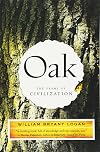
Logan tries to show that the oak tree is Awfully Important to Western Civilisation, and indeed makes a reasonable case for the place of oak in various foundational texts and physical structures of our society. In particular, I liked the points made about the nutritional value of acorn flour (though it's odd that it isn't used more) and the oak structure of Westminster Hall and of early modern sailing ships. There were some odd slips (Burley for show more Burghley, Wainright for Wainwright) and the naval warfare theme got more than a little sidetracked when it came to the nineteenth century. It's a reasonable effort, though reflecting rather than communicating the author's obsession with the subject.
Of course, he completely omits those civilisations and culture for whom oak was not an option. I'm a little troubled by the nativist resonances of his equating Europe and the Middle East with pre-Columbian North and Central America, and the fact that this particular focus erases Africa and other places where oak doesn't grow.
I would also have liked to know more about how oak fitted in with other types of wood in the ancient world. It's interesting that Ötzi the iceman carried many different types of wood crafted into tools - none of them oak, as far as I can tell from a quick scan of the websites. Logan's focus on oak, important as it was and is, rather obscures the rest of the forest. show less
Logan tries to show that the oak tree is Awfully Important to Western Civilisation, and indeed makes a reasonable case for the place of oak in various foundational texts and physical structures of our society. In particular, I liked the points made about the nutritional value of acorn flour (though it's odd that it isn't used more) and the oak structure of Westminster Hall and of early modern sailing ships. There were some odd slips (Burley for show more Burghley, Wainright for Wainwright) and the naval warfare theme got more than a little sidetracked when it came to the nineteenth century. It's a reasonable effort, though reflecting rather than communicating the author's obsession with the subject.
Of course, he completely omits those civilisations and culture for whom oak was not an option. I'm a little troubled by the nativist resonances of his equating Europe and the Middle East with pre-Columbian North and Central America, and the fact that this particular focus erases Africa and other places where oak doesn't grow.
I would also have liked to know more about how oak fitted in with other types of wood in the ancient world. It's interesting that Ötzi the iceman carried many different types of wood crafted into tools - none of them oak, as far as I can tell from a quick scan of the websites. Logan's focus on oak, important as it was and is, rather obscures the rest of the forest. show less
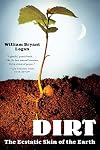
This outstanding collection of essays by William Bryan Logan brings everything beneath our feet up into our consciousness as a lens on life and the cycles of nature. The writing is smooth and enjoyable. Where there is heavy science, it is situated in a meaningful point. You will think differently about soil, what it tells us about our past, and what it suggests about our future.
Solid science conveyed in enthusiastic, sometimes rapturous prose. There is so much going on in this book: botany, arboriculture, politics, philosophy, history, economics. And yet Logan effortlessly moves from one to another. Highly recommended.
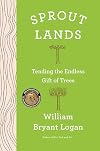
The author writes beautiful prose - descriptive and elegant. There are many references to religion and I assume his love, respect, and wonder for trees is almost a religion for him. The concept for the book is important in these times where the environment is in such peril. His tone is quite optimistic. The book ranges all over the world featuring settings both historical and present For a nature "lover" - a naturalist - a very amateur scientist, I recommend the book.
Lists
Awards


You May Also Like


Statistics
- Works
- 11
- Members
- 1,162
- Popularity
- #22,116
- Rating
- 3.8
- Reviews
- 19
- ISBNs
- 38
- Languages
- 2