
Mark Siegel (2)
Author of Reconciliation: Islam, Democracy, and the West
For other authors named Mark Siegel, see the disambiguation page.
Works by Mark Siegel
Tagged
Common Knowledge
There is no Common Knowledge data for this author yet. You can help.
Members
Reviews

Benazir Bhuto, was a powerful force for democracy and politics in Pakistan and having been its Prime Minster, wrote Reconciliation: Islam, Democacy, and the West in 2007 just before her assassination. In her trying to seek our support and to persuade us with this ambitious program she displays a broad vision knowing the messy practicalities and hard realities before her. This reminds one of former President Jimmy Carters' Palestine Peace Not Apartheid published in 2006. Both Carter and Bhuto show more as practicing politicians are offering ways out of historically horrendous, trying and seemingly intractable situations and both were denied implementation. Still, we are much better off for these two to have lived among us and to be confronted by them.
Quotes: (pages 79-80) “Islam was sent as a message of liberation. The challenge for modern-day Muslims is to rescue this message from the fanatics, the bigots, and the forces of dictatorship. It is to give Muslims back the freedom God ordained for mankind to live in peace, in justice, in equality, in a system that is answerable to the people on this earth accepting that it is God who will judge us on the Day of Judgment.”
(pages 151-152) “Actions have consequences, and the actions that the West have taken over the last century to discourage the development of democratic institutions in the Muslim world are clearly related to the cynicism of Muslims as to the true motives of the West and the charge of hipocracy leveled against the West that is prevalent in the Islamic world today.
How would the world be different if Britain and the United States had not destabilized the democratically elected government of Mosadegh in Iran in 1953?”
(page 261) “A strong argument can be made that the future of the twenty-first century will be shaped by the peaceful growth of democracy and moderation around the world, but most especially in Islamic nations, countering the thesis presented in “The Cash of Civilizations?” Specifically describing Islamic states is fundamental to the course I have committed myself to and the course my nation in the months and years ahead. Democracies do not go to war with democracies. Democracies do not become state sponsors of terrorism. I find no evidence to the contrary.”
(page 312) “American public diplomacy failed to adjust to the new communications age, where people are bombarded by information twenty-four hours a day., seven days a week, on multiple, overlapping mechanisms: public television, private television, cable television, print, radio, and the Internet. In other words, information can not be controlled to preach a single political ideology. The United States and the West have been out-performed and out-innovated by extremists preaching hatred and violence,” show less
Quotes: (pages 79-80) “Islam was sent as a message of liberation. The challenge for modern-day Muslims is to rescue this message from the fanatics, the bigots, and the forces of dictatorship. It is to give Muslims back the freedom God ordained for mankind to live in peace, in justice, in equality, in a system that is answerable to the people on this earth accepting that it is God who will judge us on the Day of Judgment.”
(pages 151-152) “Actions have consequences, and the actions that the West have taken over the last century to discourage the development of democratic institutions in the Muslim world are clearly related to the cynicism of Muslims as to the true motives of the West and the charge of hipocracy leveled against the West that is prevalent in the Islamic world today.
How would the world be different if Britain and the United States had not destabilized the democratically elected government of Mosadegh in Iran in 1953?”
(page 261) “A strong argument can be made that the future of the twenty-first century will be shaped by the peaceful growth of democracy and moderation around the world, but most especially in Islamic nations, countering the thesis presented in “The Cash of Civilizations?” Specifically describing Islamic states is fundamental to the course I have committed myself to and the course my nation in the months and years ahead. Democracies do not go to war with democracies. Democracies do not become state sponsors of terrorism. I find no evidence to the contrary.”
(page 312) “American public diplomacy failed to adjust to the new communications age, where people are bombarded by information twenty-four hours a day., seven days a week, on multiple, overlapping mechanisms: public television, private television, cable television, print, radio, and the Internet. In other words, information can not be controlled to preach a single political ideology. The United States and the West have been out-performed and out-innovated by extremists preaching hatred and violence,” show less
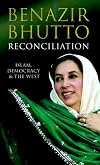
This book is something of a slow burner: after fifty pages I almost gave up, after a hundred, I was gripped. I am not a diplomat, or of any other profession giving me an insight into the Middle East, but this book oozes common sense.
Benazir Bhutto pulls no punches, she lays blame on the West, particularly the UK and America but, she also berates the countries of the region. This would have been a worthwhile read, in its self, but Bhutto offers practical ways forward that should be taken by show more both sides and, it is hard to see that, were even a small part of her suggested schemes implemented, that relations between the west and the Middle East would not improve immeasurably.
The desperately depressing thing about this book is that I was able to buy it for £1 from Pound Stretchers! A work, such as this, ought to be read by every citizen of the world! We need more understanding, the desire to work together to improve life for all God's children, however they pray to him. show less
Benazir Bhutto pulls no punches, she lays blame on the West, particularly the UK and America but, she also berates the countries of the region. This would have been a worthwhile read, in its self, but Bhutto offers practical ways forward that should be taken by show more both sides and, it is hard to see that, were even a small part of her suggested schemes implemented, that relations between the west and the Middle East would not improve immeasurably.
The desperately depressing thing about this book is that I was able to buy it for £1 from Pound Stretchers! A work, such as this, ought to be read by every citizen of the world! We need more understanding, the desire to work together to improve life for all God's children, however they pray to him. show less
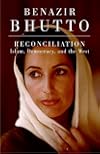
In the end, this is kind of a two star book that gets an extra star because it contains a first hand account of the some of Pakistan's struggles with democracy.
In this book Bhutto -- who was assassinated not long after she returned to Pakistan and shortly after the book was completed -- tries to do many things. She gives an Quranic exegesis of why Islam and democracy are compatible despite the claims of extremists, she shares a personal account of her role in Pakistan's struggle for show more democracy, she gives a history of Pakistan, she takes us on a whirlwind tour of democracy in Muslim nations, and she presents her case for taking a stance for reconciliation between Western and Muslim nations and rejecting the Clash of Civilizations view of the relationship between Islam and the West.
Bhutto's exegesis is fairly successful in so far as it is sufficient to show that the Quran, like the Bible, can be interpreted in many ways. She did not convince me that the Quran was being misused to to justify violence anymore than I am convinced by progressive Christians that the Bible can't be used to justify any number of horrible things. However, she did convince me that it could also be used to justify a worldview that supported equality, democracy, and modernization. (When you don't believe these books come from a divine source, you don't get so caught up on their plurality of perspective.)
The other part of the book that is successful is where she is presenting her role in Pakistan's history as a memoir. Her account of the first attempt on her life the night of her final return to Pakistan was particularly compelling. When she switches to broader themes, it's clear that she is presenting a biased case -- not an unfairly biased case, but biased in the way that politicians always emphasize the themes that align with their goals.
Overall, I'm glad I read this, because I did learn a lot. But sadly -- and likely because of time and political pressure -- this book did not have the opportunity to grow into what it was attempting to be. show less
In this book Bhutto -- who was assassinated not long after she returned to Pakistan and shortly after the book was completed -- tries to do many things. She gives an Quranic exegesis of why Islam and democracy are compatible despite the claims of extremists, she shares a personal account of her role in Pakistan's struggle for show more democracy, she gives a history of Pakistan, she takes us on a whirlwind tour of democracy in Muslim nations, and she presents her case for taking a stance for reconciliation between Western and Muslim nations and rejecting the Clash of Civilizations view of the relationship between Islam and the West.
Bhutto's exegesis is fairly successful in so far as it is sufficient to show that the Quran, like the Bible, can be interpreted in many ways. She did not convince me that the Quran was being misused to to justify violence anymore than I am convinced by progressive Christians that the Bible can't be used to justify any number of horrible things. However, she did convince me that it could also be used to justify a worldview that supported equality, democracy, and modernization. (When you don't believe these books come from a divine source, you don't get so caught up on their plurality of perspective.)
The other part of the book that is successful is where she is presenting her role in Pakistan's history as a memoir. Her account of the first attempt on her life the night of her final return to Pakistan was particularly compelling. When she switches to broader themes, it's clear that she is presenting a biased case -- not an unfairly biased case, but biased in the way that politicians always emphasize the themes that align with their goals.
Overall, I'm glad I read this, because I did learn a lot. But sadly -- and likely because of time and political pressure -- this book did not have the opportunity to grow into what it was attempting to be. show less
Written shortly before her assassination, former Pakistani Prime Minister Benazir Bhutto’s Reconciliation details the current struggles between Islam and the West and gives her plan for promoting democracy in Islamic nations and fostering goodwill between the two cultures.
The book breaks down into five easily digestible sections. First, Bhutto uses Quranic scripture and the teachings of moderate Muslims to prove that, contrary to popular belief, the religion of Islam is not inherently show more undemocratic. She effectively argues that equality is a fundamental aspect of mainstream Islam and, only when it is taken out of context, can Islam be used as a tool of oppression. Second, she traces the development of democracy in Islamic countries throughout the world. While she (unfairly I believe) places a lot of fault on the United States, Britain, and other former empire seekers, Bhutto’s main argument is that the primary barrier to democratic development in Muslim nations is the lack of a history of democracy. Those countries where democracy flourished at the beginning of the century were most likely to continue those democratic institutions. The nations where equality and self-government were squelched have had the most trouble transitioning to a free and democratic society.
Following a lengthy and tangential history of Pakistan, Bhutto concludes by taking on the “clash of civilizations” theory. She contends that the coming battle will not be between Islam and the West, but among Muslim states, with “the forces of moderation and modernity and the competing forces of extremism and fanaticism.” In order for the forces of moderation to win this battle, however, they need support from the West. Gender equality must be created and a functioning civil society (specifically educational and non-governmental organizations) is absolutely crucial to the creation and extension of a democratic Muslim world.
Bhutto’s ideas are solid. I think she goes a bit far in blaming the western world for the current state of affairs in the Muslim world but, overall, I would recommend this book to anyone hoping to understand the current state of democracy in Islamic nations and to understand the steps that will be necessary in order to create stable democratic governments. show less
The book breaks down into five easily digestible sections. First, Bhutto uses Quranic scripture and the teachings of moderate Muslims to prove that, contrary to popular belief, the religion of Islam is not inherently show more undemocratic. She effectively argues that equality is a fundamental aspect of mainstream Islam and, only when it is taken out of context, can Islam be used as a tool of oppression. Second, she traces the development of democracy in Islamic countries throughout the world. While she (unfairly I believe) places a lot of fault on the United States, Britain, and other former empire seekers, Bhutto’s main argument is that the primary barrier to democratic development in Muslim nations is the lack of a history of democracy. Those countries where democracy flourished at the beginning of the century were most likely to continue those democratic institutions. The nations where equality and self-government were squelched have had the most trouble transitioning to a free and democratic society.
Following a lengthy and tangential history of Pakistan, Bhutto concludes by taking on the “clash of civilizations” theory. She contends that the coming battle will not be between Islam and the West, but among Muslim states, with “the forces of moderation and modernity and the competing forces of extremism and fanaticism.” In order for the forces of moderation to win this battle, however, they need support from the West. Gender equality must be created and a functioning civil society (specifically educational and non-governmental organizations) is absolutely crucial to the creation and extension of a democratic Muslim world.
Bhutto’s ideas are solid. I think she goes a bit far in blaming the western world for the current state of affairs in the Muslim world but, overall, I would recommend this book to anyone hoping to understand the current state of democracy in Islamic nations and to understand the steps that will be necessary in order to create stable democratic governments. show less
Lists
Awards

Statistics
- Works
- 1
- Members
- 474
- Popularity
- #52,000
- Rating
- 3.9
- Reviews
- 12
- ISBNs
- 91
- Languages
- 9