
Nicholas Rescher (1928–2024)
Author of G. W. Leibniz's Monadology : An Edition for Students
About the Author
Born in Germany, Nicholas Rescher moved to the United States with his parents in 1939 and became a naturalized American citizen in 1944. He attended Queens College in New York City and he received his Ph.D. from Princeton University in 1951. Rescher served in the U.S. Marine Corps from 1952 to 1954 show more and was employed by the Rand Corporation from 1954 to 1956. He resumed his academic career in 1957 and in 1961 joined the faculty of the University of Pittsburgh, where he is now Research Professor of Philosophy. He played a major role in propelling Pittsburgh into the very top rank among graduate schools in philosophy in the United States. Rescher is the most prolific living American philosophical author, as the list of his books in print reveals. He is also the founding editor of three major philosophical journals: American Philosophical Quarterly, History of Philosophy Quarterly, and Public Affairs Quarterly. Approaching philosophy with a solid background in mathematics and science, he has also specialized in the history of philosophy, with a doctoral dissertation and early articles on Leibniz and, later, with pioneering scholarship on medieval Arabic logic. Rescher's experiences led him to seek practical applications for his philosophical expertise, and he ventured beyond academic philosophy to draw upon empirical research as well as logical method to produce significant works in social thought. He has also sought to formulate a coherent philosophical system in the great tradition. His thinking has moved in the direction of philosophical idealism as he increasingly emphasized the role of mind in constituting its objects. (Bowker Author Biography) show less
Series
Works by Nicholas Rescher
The Limits Of Science (The Pittsburgh-Konstanz Series in the Philosophy and History of Science) (1984) 29 copies, 1 review
Distributive justice; a constructive critique of the utilitarian theory of distribution (1966) 25 copies, 1 review
Kant and the Reach of Reason: Studies in Kant's Theory of Rational Systematization (1999) 21 copies, 1 review
A System of Pragmatic Idealism, Volume 1: Human Knowledge in Idealistic Perspective (1992) 17 copies, 1 review
Unselfishness: The Role of the Vicarious Affects in Moral Philosophy and Social Theory (1975) 17 copies
Scientific progress : a philosophical essay on the economics of research in natural science (1977) 14 copies
Peirce's Philosophy of Science: Critical Studies in His Theory of Induction & Scientific Method (1978) 14 copies
Essays in Honor of Carl G. Hempel: A Tribute on the Occasion of his Sixty-Fifth Birthday (Synthese Library Book 24) (1969) 12 copies
The Strife of Systems: An Essay on the Grounds and Implications of Philosophical Diversity (1985) 11 copies
Cognitive systematization: A systems-theoretic approach to a coherentist theory of knowledge (1979) 8 copies
Scientific explanation and understanding : essays on reasoning and rationality in science (1983) 7 copies
Human Interests: Reflections on Philosophical Anthropology (Stanford Series in Philosophy) (1990) 7 copies
Philosophical Standardism: An Empiricist Approach to Philosophical Methodology (Philosophy) (1994) 6 copies, 1 review
Pragmatism in Philosophical Inquiry: Theoretical Considerations and Case Studies (SpringerBriefs in Philosophy) (2016) 6 copies
A theory of possibility: A constructivistic and conceptualistic account of possible individuals and possible worlds (1975) 5 copies
The Primacy of Practice: Essays Towards a Pragmatically Kantian Theory of Empirical Knowledge (1973) 5 copies
Espionage, statecraft, and the theory of reporting : a philosophical essay on intelligence management (2017) 4 copies
The Logic of Decision and Action 4 copies
Philosophical Clarifications Studies Illustrating the Methodology of Philosophical Elucidation (2019) 4 copies
The logic of inconsistency : a study in non-standard possible-world semantics and ontology (1979) 4 copies
Cosmos and Logos: Studies in Greek Philosophy (Topics in Ancient Philosophy / Themen der antiken Philosophie, 1) (2005) 3 copies
Plausible Reasoning: An Introduction to the Theory and Practice of Plausibilistic Inference (1976) 3 copies
Luck Theory: A Philosophical Introduction to the Mathematics of Luck (Logic, Argumentation & Reasoning Book 20) (2022) 2 copies
Leibniz and cryptography : an account on the occasion of the initial exhibition of the reconstruction of Leibniz's cipher machine (2012) 2 copies
Freedom in the World: 1998-1999: The Annual Survey of Political Rights and Civil Liberties (1999) 1 copy
Scientific Realism: A Critical Reappraisal (The Western Ontario Series in Philosophy of Science) (1987) 1 copy
Studies in moral philosophy 1 copy
Associated Works
Philosophers Who Believe: The Spiritual Journeys of 11 Leading Thinkers (1993) — Contributor — 274 copies
The Sheed and Ward Anthology of Catholic Philosophy (A Sheed & Ward Classic) (2005) — Contributor — 34 copies
The Critical Approach to Science and Philosophy : In Honor of Karl R. Popper (1964) — Contributor — 19 copies
Tagged
Common Knowledge
- Birthdate
- 1928-07-15
- Date of death
- 2024-01-05
- Gender
- male
- Occupations
- professor (philosophy)
- Organizations
- University of Pittsburgh
- Awards and honors
- President, American Philosophical Association Eastern Division (1989-1990)
- Nationality
- USA (naturalized)
- Birthplace
- Hagen, Westphalia, Prussia, Germany
- Place of death
- Pittsburgh, Pennsylvania, USA
- Associated Place (for map)
- USA
Members
Reviews
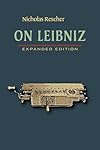
This collection of articles explores the life of Leibniz as well as his contributions as philosopher and mathematician while struggling as a frustrated courtier. We learn that the logician that invented calculus independently, setting himself at the same level of Newton, gazed onto the rich land of cryptanalysis. There he was excited by the possibilities but unmoved to develop a cryptologic theory. In a way of life I find similar to that revealed in the autobiography of Jean-Jacques show more Rousseau, much of Leibniz’s energy was absorbed in seeking royal patronage. Frustrations with an unmovable imperial bureaucracy caused the self-important Leibniz to react petulantly. Despite such failings, Leibniz also stands on a level with Spinoza and Kant by contributing an organized system as important as theirs to the development of Western philosophy. Rescher’s pieces here explore the development and structure of this system, unique in its mathematical underpinnings.
[See my full review at MAA Reviews] show less
[See my full review at MAA Reviews] show less

Not quite as interesting as the first volume in this series and it's a bit hard to see where the idealism lies. Nevertheless this book summaries Rescher's moral philosophy well and his argument against cultural relativism in values was very good.
The Limits Of Science (The Pittsburgh-Konstanz Series in the Philosophy and History of Science) by Nicholas Rescher

Some excellent arguments here against those who dismiss science and those who glorify it. Lays out a sensible middle path which considers science valid within a limited domain. In Rescher's typical style the arguments are lucid and very informative. Highly recommended especially to scientists.
I've enjoyed other books by Rescher, but I thought this one was a bit off the mark. By restricting his study of ignorance to things which can not be known at all he ends up with too many philosophical platitudes, silly questions without any interesting real-world consequences. In general I was disappointed by his failure to make connections between ignorance and knowledge. On several occasions he also repeats almost word-by-word an argument which he just presented 10 pages ago, which show more indicates that this book was written in haste. show less
You May Also Like


Associated Authors
Statistics
- Works
- 197
- Also by
- 4
- Members
- 1,408
- Popularity
- #18,248
- Rating
- 3.5
- Reviews
- 17
- ISBNs
- 515
- Languages
- 9