
Dag Solstad (1941–2025)
Author of Shyness and Dignity
About the Author
Image credit: Photo: Bjarne Thune
Series
Works by Dag Solstad
Gymnaslærer Pedersens beretning om den store politiske vekkelsen som har hjemsøkt vårt land (1982) 121 copies, 1 review
Bjørn Hansen–Trilogien (Ellevte roman, bok atten; 17. roman; Tredje, og siste, roman om Bjørn Hansen) (2024) 5 copies
Kamerat Stalin, eller Familien Nordby : et skuespill om en norsk kommunistfamilie i åra 1945-56 (1975) 3 copies
Endelig! Lykken og mitt forsøk, i 2022, på å utholde smerten ved tidens herjinger : roman (2025) 3 copies
Lise Ögretmeni Pedersen'in Ülkemize Musallat Olan Büyük Siyasi Uyanisa Dair Anlatisi (2020) 2 copies
DROJË DHE DINJITET 1 copy
Spiraler ; Svingstol 1 copy
Aib Dan Martabat 1 copy
Om Brand av Henrik Ibsen 1 copy
Georg: Sit du godt? 1 copy
Associated Works
Tagged
Common Knowledge
- Birthdate
- 1941-07-16
- Date of death
- 2025-03-14
- Gender
- male
- Occupations
- novelist
playwright
short story writer - Awards and honors
- Aschehoug Prize (2004)
Brage Prize (Honorary Award ∙ 1998)
Gyldendal Prize (1996)
Dobloug Prize (1996)
Nordic Council's Literature Prize (1989) - Nationality
- Norway
- Birthplace
- Sandefjord, Norway
- Places of residence
- Sandefjord, Norway (birth)
Berlin, Germany
Oslo, Norway - Associated Place (for map)
- Norway
Members
Reviews
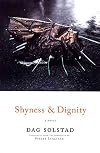
Elias Rukla has taught Norwegian literature to bored secondary school students for more than 25 years. One day while teaching Ibsen's The Wild Duck (which he recognizes his students are 'not in a position to understand...To maintain anything else would be an insult to the old master....'), he experiences an epiphany. Later that day he breaks down into a public fit of rage, and realizes that his life has been irrevocably changed.
Elias Rukla spends the rest of the day wandering the city and show more reviewing his life in an attempt to understand how he has come to feel so alone and detached. In a moment of humor, he imagines, 'turning up for an audition to be selected as a fictional character and being scrutinized by the novelists of the 1920s. He could see how they declined with thanks, one after another, he saw Marcel Proust barely raise an eyelid before casting a brief, meaningful, ironic glance at his colleagues....Only Thomas Mann would take the poor candidate aspiring to be a fictional character seriously. He would have looked at Elias Rukla and asked if he could, in a few words, say why he was of the opinion that precisely his fate was suitable as fictional material, either in the capacity of a central character or a minor figure, for, after all, if one has the ambition to be a central character, one must have a clear understanding that one can also be suitable as a minor character---that is a condition that must be agreed to before any author will take the slightest interest in ones fate, he thought, Thomas Mann would have said to him. And after Elias Rukal had given an account of his life...Thomas Mann would give him a reserved but friendly look and say, Well I can't promise you anything as there is no way I can fit you and your life into my present plans, as far as I can see...but there will be other times after this, and then we can possibly come back to the matter....(This) should be sufficient to keep you from being discouraged and make you continue your life as before, even if you should not be granted the privilege of entering one of my novels, as a character.'
Elias is an iconic 20th century character--an alienated, isolated soul, 'a socially aware individual who no longer has anything to say,' and who doesn't know what to do next.
Highly recommended if you are in the mood for this sort of angst. show less
Elias Rukla spends the rest of the day wandering the city and show more reviewing his life in an attempt to understand how he has come to feel so alone and detached. In a moment of humor, he imagines, 'turning up for an audition to be selected as a fictional character and being scrutinized by the novelists of the 1920s. He could see how they declined with thanks, one after another, he saw Marcel Proust barely raise an eyelid before casting a brief, meaningful, ironic glance at his colleagues....Only Thomas Mann would take the poor candidate aspiring to be a fictional character seriously. He would have looked at Elias Rukla and asked if he could, in a few words, say why he was of the opinion that precisely his fate was suitable as fictional material, either in the capacity of a central character or a minor figure, for, after all, if one has the ambition to be a central character, one must have a clear understanding that one can also be suitable as a minor character---that is a condition that must be agreed to before any author will take the slightest interest in ones fate, he thought, Thomas Mann would have said to him. And after Elias Rukal had given an account of his life...Thomas Mann would give him a reserved but friendly look and say, Well I can't promise you anything as there is no way I can fit you and your life into my present plans, as far as I can see...but there will be other times after this, and then we can possibly come back to the matter....(This) should be sufficient to keep you from being discouraged and make you continue your life as before, even if you should not be granted the privilege of entering one of my novels, as a character.'
Elias is an iconic 20th century character--an alienated, isolated soul, 'a socially aware individual who no longer has anything to say,' and who doesn't know what to do next.
Highly recommended if you are in the mood for this sort of angst. show less

Elképzelek egy húszéves érettségi találkozót, ahol az egykori diákok nosztalgiázásba merülnek.
- Gizi nénire emlékeztek? Fú, mekkora forma volt!
- Ja. És Szűcs tanár úr megvan? Azta, milyen meggybora volt neki, még mindig feljön tőle a savam!
- Igen, igen. És Rukla tanár úr?
- ...?
- Tudjátok, aki irodalmat tanított.
- Nem földrajzot?
- Nem, irodalmat.
- Persze, rémlik. De nem jut eszembe róla semmi.
- Igazából nekem se.
Rukla tanár úr statiszta mások életében. Ha show more eszébe is jut egykori diákjainak, csak homályos pacaként materializálódik, akihez nem is tudnak arcot rendelni. Ő a mellékszereplő, aki rendre kimarad a nagyjelenetekből, a forgatókönyv-írók pedig a gyengébb mondatokat adják neki. A háttérben kolbászol, a cselekmény akkor zajlik, ha ő nincs ott. Revelációi senkit sem érdekelnek, a légüres térbe potyognak és visszhang nélkül halnak el. Amikor pedig mégis fel tudja hívni magára a kozmikus rendező figyelmét, amikor egy pillanatra saját történetének főszereplőjeként tud megjelenni, ennek az ára alkalmasint az, hogy egy tragédia súlyát vonja magára.
Megj.: Nehéz elvonatkoztatni a magyar címtől, ami - azt gondolom - jobb, mint az eredeti. (Ami kb.: "Szégyenlősség és méltóság".) Ami érdekes kérdést vet fel: találhat ki jobbat a fordító, mint az eredeti? Azt gondolom, nem. Egyszerűen nem erre szerződött. Kertész Judit címmagyarítása ugyanis olyan erővel hívott elő egy olvasatot, hogy attól nem is tudtam függetleníteni magam. show less
- Gizi nénire emlékeztek? Fú, mekkora forma volt!
- Ja. És Szűcs tanár úr megvan? Azta, milyen meggybora volt neki, még mindig feljön tőle a savam!
- Igen, igen. És Rukla tanár úr?
- ...?
- Tudjátok, aki irodalmat tanított.
- Nem földrajzot?
- Nem, irodalmat.
- Persze, rémlik. De nem jut eszembe róla semmi.
- Igazából nekem se.
Rukla tanár úr statiszta mások életében. Ha show more eszébe is jut egykori diákjainak, csak homályos pacaként materializálódik, akihez nem is tudnak arcot rendelni. Ő a mellékszereplő, aki rendre kimarad a nagyjelenetekből, a forgatókönyv-írók pedig a gyengébb mondatokat adják neki. A háttérben kolbászol, a cselekmény akkor zajlik, ha ő nincs ott. Revelációi senkit sem érdekelnek, a légüres térbe potyognak és visszhang nélkül halnak el. Amikor pedig mégis fel tudja hívni magára a kozmikus rendező figyelmét, amikor egy pillanatra saját történetének főszereplőjeként tud megjelenni, ennek az ára alkalmasint az, hogy egy tragédia súlyát vonja magára.
Megj.: Nehéz elvonatkoztatni a magyar címtől, ami - azt gondolom - jobb, mint az eredeti. (Ami kb.: "Szégyenlősség és méltóság".) Ami érdekes kérdést vet fel: találhat ki jobbat a fordító, mint az eredeti? Azt gondolom, nem. Egyszerűen nem erre szerződött. Kertész Judit címmagyarítása ugyanis olyan erővel hívott elő egy olvasatot, hogy attól nem is tudtam függetleníteni magam. show less

Solstad offers us the portrait of a man having a very very bad no good day. Elias is a man who values his dignity as a good schoolteacher, a reliable caring husband, stepfather and citizen. He sees himself as a 'good', conscientious, thoughtful person but he crosses a behavioural boundary he can't step back from given his personality and upbringing: passive shy, self-conscious, overly thoughtful to the point of being/appearing self-absorbed.
After finishing a lecture on The Wild Duck for show more bored uninterested senior high school students, he steps over that behavioral line, very publicly shaming himself in front of students and teachers. To most of us, his display of imperfection would not be so ruinous -- the point is, for him, it is catastrophic. Solstad alternates giving us Elias' past history along with the present and as I learned his story and character I was simultaneously sympathetic and also thinking, 'Jeez, dude, get over yourself and live.' Solstad is giving us a person crushed by character, circumstance, choices, unable to overcome and move on. Nothing feel good. I think it is a genuine attempt to explain why some people break, seemingly over nothing much.
I was least drawn in by the portrait of Eva, the abandoned wife of his former best friend who becomes Elias' wife. She is (over and over again) described as an indescribable beauty which just made me want to vomit. Also kick both of them hard. To him, (as she was to husband #1) she is not a person but an object to admire although now and then Elias makes a half-hearted attempt to view her a real person, he can't. In part because of her covetousness for nice things. Which brings us to the underlying critique of capitalist society and blablabla - but I don't buy that Eva is shallow and Elias is doomed because of it. He is who he is. She is a person who can't be judged as she gave up having a rich internal life for two men and her child when she was too young to know any better, although she has, in her forties begun to assert herself (which proves my point).
The ending is apparently open-ended, but to me it is implicit that Elias will act, definitively.
Karl Ove Knausgaard admires Solstad and he is one of the few contemporary Norwegian novelists in translation. And I have barely even mentioned the exegesis of The Wild Duck, the play Elias is teaching that fatal day! Might the best thing in what really is a superb but somehow very maddening novel. **** show less
After finishing a lecture on The Wild Duck for show more bored uninterested senior high school students, he steps over that behavioral line, very publicly shaming himself in front of students and teachers. To most of us, his display of imperfection would not be so ruinous -- the point is, for him, it is catastrophic. Solstad alternates giving us Elias' past history along with the present and as I learned his story and character I was simultaneously sympathetic and also thinking, 'Jeez, dude, get over yourself and live.' Solstad is giving us a person crushed by character, circumstance, choices, unable to overcome and move on. Nothing feel good. I think it is a genuine attempt to explain why some people break, seemingly over nothing much.
I was least drawn in by the portrait of Eva, the abandoned wife of his former best friend who becomes Elias' wife. She is (over and over again) described as an indescribable beauty which just made me want to vomit. Also kick both of them hard. To him, (as she was to husband #1) she is not a person but an object to admire although now and then Elias makes a half-hearted attempt to view her a real person, he can't. In part because of her covetousness for nice things. Which brings us to the underlying critique of capitalist society and blablabla - but I don't buy that Eva is shallow and Elias is doomed because of it. He is who he is. She is a person who can't be judged as she gave up having a rich internal life for two men and her child when she was too young to know any better, although she has, in her forties begun to assert herself (which proves my point).
The ending is apparently open-ended, but to me it is implicit that Elias will act, definitively.
Karl Ove Knausgaard admires Solstad and he is one of the few contemporary Norwegian novelists in translation. And I have barely even mentioned the exegesis of The Wild Duck, the play Elias is teaching that fatal day! Might the best thing in what really is a superb but somehow very maddening novel. **** show less
This is a mostly gloomy, occasionally hilarious take on modern middle-class life. Middle-aged highschool teacher Elias Rukla stops at a roundabout and starts reminiscing about his entire adulthood, slowly finding out that he's become only a supporting character in his own life, and perhaps has been for a long time. A more conventional novel would follow that insight with a sequence of actions Elias would take to fix that situation, but Solstad is not interested in that, keeping the focus on show more the past instead. When I finished this book, I thought it was missing a "real" ending, but now I realize that it doesn't need one: Elias has been living a lie and something has to change, even if we don't get to find out exactly what. show less
Lists
Books I Loved (1)
Awards


You May Also Like


Associated Authors
Statistics
- Works
- 61
- Also by
- 2
- Members
- 2,063
- Popularity
- #12,459
- Rating
- 3.9
- Reviews
- 48
- ISBNs
- 255
- Languages
- 20
- Favorited
- 11