

Jens Bjørneboe (1920–1976)
Author of Moment of Freedom: The Heiligenberg Manuscript
About the Author
Image credit: dagbladet.no
Series
Works by Jens Bjørneboe
The Moment Of Freedom Trilogy: Moment Of Freedom / Powderhouse / The Silence (1982) 89 copies, 2 reviews
Οι καρχαρίες 1 copy
Mooramees : [romaan] 1 copy
Norsk formelsamling 1 copy
Frihedens j̜eblik 1 copy
Utan en trd̄ 1 copy
Saken om "Uten en Tråd" 1 copy
Chwila wolności 1 copy
Samlede essays; Kultur 2 1 copy
Samlede essays, politikk 1 copy
PAHA PAIMEN 1 copy
Tagged
Common Knowledge
- Canonical name
- Bjørneboe, Jens
- Legal name
- Bjørneboe, Jens Ingvald
- Other names
- Bjorneboe, Jens
- Birthdate
- 1920-10-09
- Date of death
- 1976-05-09
- Gender
- male
- Occupations
- painter
teacher
novelist
dramatist
essayist
poet - Awards and honors
- Doblougprisen (1974)
- Relationships
- Bjerke, André (cousin)
- Nationality
- Norway
- Birthplace
- Kristiansand, Norway
- Place of death
- Veierland, Nøtterøy, Norway
- Associated Place (for map)
- Norway
Members
Reviews
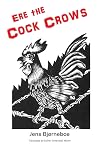
Overall, has the foundations of compelling, powerful, and impactful story-telling. This edition is hampered by some (what I will assume are) translation errors into English, but that does not distract from the narrative as much as the translators interjections. An excellent work in any form and quite pleased this made it into English for others to experience (it was my first time reading). Worth reading and time well spent. Frustrating, yet potent.
 This review was written for LibraryThing Early Reviewers.
Jens Bjorneboe was outspoken and anarchic. He clashed with most social institutions in his determination to challenge repression, censorship and authoritarianism. This is a thrilling tale of mutiny and shipwreck which bears comparison with Melville's Moby Dick. It is also the story of mankind's voyage into the 20th century.
Jens Bjørneboe is not a name I was familiar with before reading this, though, according to Wikipedia, he is "widely considered to be one of Norway's most important post-war authors". Bjørneboe is a fascinating character; based on the editorial content and annotations here, he seems also to have a coterie of devoted admirers. It is difficult to imagine, in these times, that such an author might be considered important in an English-speaking context.
Bjørneboe was a novelist, dramatist, show more composer, Waldorf school teacher with mystical inclinations, a writer for children, a political thinker, and a self-described "anarcho-nihilist". He struggled for years with what in those days were called manic-depressive tendencies, which would today be labeled bipolar, and alcoholism. He started drinking at age 12, the story goes, starting with his father's after-shave. The depression eventually was a contributing factor in his suicide at the young age of 56, in 1976. Bjørneboe was by nature a rebel, rebelling against orthodoxies, narrow-mindedness, and predigested thinking, and deeply upset by the inhumanity of the human species.
It was only on consulting Wikipedia that I realized that Bjørneboe was also, anomalously, the author of Without a Stitch, a work of jolly and unrestrained eroticism which led to an obscenity conviction, and also appeared in a somewhat notorious film adaptation back in the 60s. It is the kind of work that in today's repressive terms appears dated and reprehensible, while in terms of market appeal it would be both superfluous and unimaginable. Nevertheless, the income from it seems to have provided him with what little financial independence he had. His other works, more notable critically and still largely untranslated, including a three-volume History of Bestiality, remain largely unknown in the English-speaking world.
By the second page of Ere the Cock Crows, the narrator is brutally clubbing to death a mutilated and paralyzed rate. By the next page, the rat is being torn to shreds and devoured with equal brutality and bloodiness by a second rat. This is untrammeled violence, the violence of humanity and of life itself, both human and animal, and the implication of confronting us with this at the outset seems to be that unless one does look at this clearly, right from the start, there will be no understanding or progress. But there is no lesson drawn from this, no attempt to make sense of it.
On the next page, in the company of the still-nameless narrator, we are traversing a ruined, bombed, destroyed city, a place where countless rats like those we have just encountered lurk. The message: is follow and learn, if you will, but you will need a strong stomach for this. But if you are not squeamish about looking violence and brutality full in the face, read on: "The remains of the bombed city are our wasteland... They are my wasteland." (p. 5)
We are in Germany: "we are on the way to Max... Max was an SS man, a ruin of a human being, worse than any of the ruins we had to clamber through to get to him....Max is paralyzed in both legs from being shot in the back". But "his head and arms are living enough". Very much akin to the trapped, dying rat we have already met.
Ere the Cock Crows is an early work which bears every appearance of being unfinished. The nameless narrator of the opening chapter disappears without explanation. We learn early on that the focus of the narrative will be on Nazi medical experimentation and the character of those involved in the implementation of this program, what it was that allowed them to become so foully distorted, and whether there might have remained, at bottom, some possibility of transformation, even redemption, for individuals so deeply immersed in unspeakable crimes.
And yet, the harrowing aspect of the initial pages is not sustained, and the bulk of the narrative is conveyed in the form of a family drawing-room moralistic drama, as one might have found in Ibsen. In the end, the narrative remains less than satisfying, and the working out of the plot, such as it is, is fragmented and less then convincing. The emotional impetus behind the work is unquestionable -- indeed, it seems that an adolescent encounter with a book describing Nazi brutalities was a transformative experience for the young Bjørneboe
Nevertheless, to me at least, the dialogue does feel dated, the painfully elaborated personal tics of the characters and the recurrent echoes they experience of their past friendships appear labored and stilted. Of this segment of the drama, the critic Steinar Løding says, "I read [it]... without meeting the executioner in myself." (p. 253).
The imagery is often similarly strained, as for example a recurrent black-and-red motif drawn as a contrast to the black of the SS uniforms and clearly a reference to the anarchist flag: "He raised his head abruptly and looked at her. The strong, emaciated face turned black and red." (p. 122). Anarchism itself is, if I am not mistaken, nowhere referenced other than through this code.
Nevertheless, the moral and ethical questions here are of undoubted, and timeless, urgency. As the depraved and brutal Dr Reynhardt puts it at one point, in an effort to justify himself to his wife, "Who can be human at all today without feeling like an accessory ?" Indeed.
The editor and translator, Esther Greenleaf Mürer, has been at great pains to "reconstruct" a version of the lost original theatrical version of the work, which preceded the novelistic version. The play is presented here as an appendix. She also provides interesting insights into the significance of the title with respect to the three denials made by the corrupt Reynhardt at various points in the discussion-laden plot, and how these relate to the denial of Christ. Indeed, the names themselves are undeniably made to carry some symbolic weight as well (the irony of Reynhardt being at once hard of heart and "pure" of heart, for example).
Bjørneboe was also, for at least part of his life, under the influence of Anthroposophy, the school of Christian and Theosophical-tinged mysticism founded by Rudolf Steiner, and also associated with biodynamic agriculture and the Waldorf School movement. To what degree, I am not familiar enough with Bjørneboe to be able to say. The images of the main character's redemption and resurrection, as interpreted through the prism of Anthroposophy, are of interest, though they do appear a bit labored as well, and one could easily draw out the strains of the conflicts in the book -- intellectualism and dogmatic idealism as opposed to insight and human compassion -- without reference to Steiner.
One of the Wikipedia notes seem to imply that Bjørneboe was in some sense close to being a Nazi apologist, or at least an apologist for some others in the intellectual community, e. g. Knut Hamsun, who might have been seen as working too closely with the Nazis. I see nothing of that in the text; Bjørneboe does clearly have an insight into the complexity of real-world decision-making and the impossibility of reducing narratives to black and white, even where those kinds of verdicts seem on the face of it to be painfully obvious.
Republishing and translating Bjørneboe's works would seem to be a worthy if likely thankless effort. The world, and intellectual life and thought, will always be in need of rebels, contrarians and rule-breakers, especially insofar as they focus on the truly deep and apparently insoluble questions, without being distracted by narrow aestheticism and literary pretensions. show less
Bjørneboe was a novelist, dramatist, show more composer, Waldorf school teacher with mystical inclinations, a writer for children, a political thinker, and a self-described "anarcho-nihilist". He struggled for years with what in those days were called manic-depressive tendencies, which would today be labeled bipolar, and alcoholism. He started drinking at age 12, the story goes, starting with his father's after-shave. The depression eventually was a contributing factor in his suicide at the young age of 56, in 1976. Bjørneboe was by nature a rebel, rebelling against orthodoxies, narrow-mindedness, and predigested thinking, and deeply upset by the inhumanity of the human species.
It was only on consulting Wikipedia that I realized that Bjørneboe was also, anomalously, the author of Without a Stitch, a work of jolly and unrestrained eroticism which led to an obscenity conviction, and also appeared in a somewhat notorious film adaptation back in the 60s. It is the kind of work that in today's repressive terms appears dated and reprehensible, while in terms of market appeal it would be both superfluous and unimaginable. Nevertheless, the income from it seems to have provided him with what little financial independence he had. His other works, more notable critically and still largely untranslated, including a three-volume History of Bestiality, remain largely unknown in the English-speaking world.
By the second page of Ere the Cock Crows, the narrator is brutally clubbing to death a mutilated and paralyzed rate. By the next page, the rat is being torn to shreds and devoured with equal brutality and bloodiness by a second rat. This is untrammeled violence, the violence of humanity and of life itself, both human and animal, and the implication of confronting us with this at the outset seems to be that unless one does look at this clearly, right from the start, there will be no understanding or progress. But there is no lesson drawn from this, no attempt to make sense of it.
On the next page, in the company of the still-nameless narrator, we are traversing a ruined, bombed, destroyed city, a place where countless rats like those we have just encountered lurk. The message: is follow and learn, if you will, but you will need a strong stomach for this. But if you are not squeamish about looking violence and brutality full in the face, read on: "The remains of the bombed city are our wasteland... They are my wasteland." (p. 5)
We are in Germany: "we are on the way to Max... Max was an SS man, a ruin of a human being, worse than any of the ruins we had to clamber through to get to him....Max is paralyzed in both legs from being shot in the back". But "his head and arms are living enough". Very much akin to the trapped, dying rat we have already met.
Ere the Cock Crows is an early work which bears every appearance of being unfinished. The nameless narrator of the opening chapter disappears without explanation. We learn early on that the focus of the narrative will be on Nazi medical experimentation and the character of those involved in the implementation of this program, what it was that allowed them to become so foully distorted, and whether there might have remained, at bottom, some possibility of transformation, even redemption, for individuals so deeply immersed in unspeakable crimes.
And yet, the harrowing aspect of the initial pages is not sustained, and the bulk of the narrative is conveyed in the form of a family drawing-room moralistic drama, as one might have found in Ibsen. In the end, the narrative remains less than satisfying, and the working out of the plot, such as it is, is fragmented and less then convincing. The emotional impetus behind the work is unquestionable -- indeed, it seems that an adolescent encounter with a book describing Nazi brutalities was a transformative experience for the young Bjørneboe
Nevertheless, to me at least, the dialogue does feel dated, the painfully elaborated personal tics of the characters and the recurrent echoes they experience of their past friendships appear labored and stilted. Of this segment of the drama, the critic Steinar Løding says, "I read [it]... without meeting the executioner in myself." (p. 253).
The imagery is often similarly strained, as for example a recurrent black-and-red motif drawn as a contrast to the black of the SS uniforms and clearly a reference to the anarchist flag: "He raised his head abruptly and looked at her. The strong, emaciated face turned black and red." (p. 122). Anarchism itself is, if I am not mistaken, nowhere referenced other than through this code.
Nevertheless, the moral and ethical questions here are of undoubted, and timeless, urgency. As the depraved and brutal Dr Reynhardt puts it at one point, in an effort to justify himself to his wife, "Who can be human at all today without feeling like an accessory ?" Indeed.
The editor and translator, Esther Greenleaf Mürer, has been at great pains to "reconstruct" a version of the lost original theatrical version of the work, which preceded the novelistic version. The play is presented here as an appendix. She also provides interesting insights into the significance of the title with respect to the three denials made by the corrupt Reynhardt at various points in the discussion-laden plot, and how these relate to the denial of Christ. Indeed, the names themselves are undeniably made to carry some symbolic weight as well (the irony of Reynhardt being at once hard of heart and "pure" of heart, for example).
Bjørneboe was also, for at least part of his life, under the influence of Anthroposophy, the school of Christian and Theosophical-tinged mysticism founded by Rudolf Steiner, and also associated with biodynamic agriculture and the Waldorf School movement. To what degree, I am not familiar enough with Bjørneboe to be able to say. The images of the main character's redemption and resurrection, as interpreted through the prism of Anthroposophy, are of interest, though they do appear a bit labored as well, and one could easily draw out the strains of the conflicts in the book -- intellectualism and dogmatic idealism as opposed to insight and human compassion -- without reference to Steiner.
One of the Wikipedia notes seem to imply that Bjørneboe was in some sense close to being a Nazi apologist, or at least an apologist for some others in the intellectual community, e. g. Knut Hamsun, who might have been seen as working too closely with the Nazis. I see nothing of that in the text; Bjørneboe does clearly have an insight into the complexity of real-world decision-making and the impossibility of reducing narratives to black and white, even where those kinds of verdicts seem on the face of it to be painfully obvious.
Republishing and translating Bjørneboe's works would seem to be a worthy if likely thankless effort. The world, and intellectual life and thought, will always be in need of rebels, contrarians and rule-breakers, especially insofar as they focus on the truly deep and apparently insoluble questions, without being distracted by narrow aestheticism and literary pretensions. show less
This review was written for LibraryThing Early Reviewers.Three childhood friends. One is a doctor performing “medical” experiments in a Nazi prison camp, the second is the commandant of the camp and the third is a Jewish prisoner in the camp. The prisoner has been fattened up, literally, and the time to begin “medical” experiments on him has arrived. What will the men do? “Ere the cock crows.” (Reference: Jesus says to Paul, “Before the cock crows you will deny me three times.”) A shocking and melancholy narrative unravels as we show more meet those involved directly and indirectly. Bjørnbee focuses on the issue of morality, how each character handles his conscience, or lack thereof, during this very complex and abhorrent time in history. A powerful novel by a talented author.
A side note regarding this publication. This book needs a good edit. There are numerous misspelled words and words that are missing or do not belong whatsoever. It is truly distracting and unfortunate. show less
A side note regarding this publication. This book needs a good edit. There are numerous misspelled words and words that are missing or do not belong whatsoever. It is truly distracting and unfortunate. show less
This review was written for LibraryThing Early Reviewers.Awards


You May Also Like


Associated Authors
Statistics
- Works
- 76
- Members
- 1,682
- Popularity
- #15,283
- Rating
- 4.1
- Reviews
- 52
- ISBNs
- 224
- Languages
- 13
- Favorited
- 8

