
Bob Hall (1)
Author of Squadron Supreme
For other authors named Bob Hall, see the disambiguation page.
About the Author
Image credit: http://www.comicvine.com/bob-hall/26-2889/
Series
Works by Bob Hall
Associated Works
The Valiant Era Collection (Reprinting Six Of The Most Sought After Valiant Comics) — Contributor — 4 copies
Tagged
Common Knowledge
There is no Common Knowledge data for this author yet. You can help.
Members
Reviews
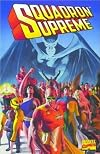
This book is so underrated. It truly does take a look at what a world with superhumans might actually be like, if editorial edicts didn't force that a status quo be maintained. There are other series that do this as well, but few as well, and this was one of the first. Furthermore, many of those series are mature audience series, while this comic explores these realities in a way that is all ages and can be enjoyed by anyone. It's also tempting, in stories like this, to kill characters show more without reason, just because you can. The consequences of the actions in these issues always seem organic and never exploitative. One of my favorite Marvel comics. show less
Mark Gruenwald takes classic superhero archetypes, characters that will definitely seem familiar no matter which of the main two companies you grew up reading, and looks at them in a very realistically-minded way. Consider, if you were one of the most powerful beings on Earth, and the world was in chaos, wouldn't you at least consider the possibility of using your powers to enforce some form of order? That is exactly what the Squadron Supreme do in this series, and the moral implications show more strike such a chord.
The team at first seems to be a simple Justice League rip-off, but Mark's storytelling makes them so much more. Again, he is playing with archetypes. We could find a collection of characters that pre-dates the DC super team that match perfectly with each of the Squadron members. That's what makes this collection of characters so special, and why you keep seeing them in some form or another through the years.
Gruenwald takes a very serious look at the actions of heroes and the moral implications behind them. Something that may seem genuinely noble may have some fatal flaw that isn't revealed until things turn bleak. Like Watchmen and Kingdom Come later on (although, with only a year between Watchmen and Squadron Supreme, it is obvious Gruenwald wasn't the only one to have the idea, especially when Moore had his in the works for a very long time), we get to see a much grittier realism in comics than was really accepted at the time. These characters were not protected by some editor who was thinking of a future, because they may not have one. Death is real in the world of the Squadron Supreme. show less
The team at first seems to be a simple Justice League rip-off, but Mark's storytelling makes them so much more. Again, he is playing with archetypes. We could find a collection of characters that pre-dates the DC super team that match perfectly with each of the Squadron members. That's what makes this collection of characters so special, and why you keep seeing them in some form or another through the years.
Gruenwald takes a very serious look at the actions of heroes and the moral implications behind them. Something that may seem genuinely noble may have some fatal flaw that isn't revealed until things turn bleak. Like Watchmen and Kingdom Come later on (although, with only a year between Watchmen and Squadron Supreme, it is obvious Gruenwald wasn't the only one to have the idea, especially when Moore had his in the works for a very long time), we get to see a much grittier realism in comics than was really accepted at the time. These characters were not protected by some editor who was thinking of a future, because they may not have one. Death is real in the world of the Squadron Supreme. show less
Mark Gruenwald seems like he was a pretty lovely guy. Certainly by all accounts he was greatly liked, and his enthusiasm for the life he led and the greater stories he was involved in spinning comes through in every page. And so when you hear that he wanted his ashes mixed with Squadron Supreme, specifically, it disposes you well toward it.
But it's good on its own merits. JLA pastiche--in a much more direct way then I realized reading these as a kid--and predating Watchmen or Kingdom Come, show more it's the earliest book I know looking at what would happen if the superheroes decided to return and run shit, rule the world.
Being the first, and coming in that pre-Watchmen, pre-Dark Night Returns, whatever else, era, Squadron wears its innocence a little. These are Silver Age heroes trying to run a black-and-white world with no shades of grey, not the highly sophisticated Bendis Daredevils and Norman Osborn-in-Dark Reigns of today. They're a bunch of mid-20th century upper-middle-class American professionals, decent and naive, and yeah they're superheroes but you know the plastic's still on the couch at home. Whizzer is even a mailman. And the kind of equal-opportunity engineering-based way they solve their problems, and the non-partisan, "get with the team, chum!" way they bust opposition, is just to be expected. And Gruenwald could have done something with this, but he doesn't really--barely hints at how all fascism is brightly coloured and "chum"-based in ways. The end comes not because twelve superheroes could never keep the whole thing down forever, but because Kyle Richmond, a dopey second-rate Batman, kills a bunch of Squadroners with climactic fisticuffs (after getting beaten down by Captain America in a pointless worldhopping guest shot, just so we can see that he's second rate). That's what makes the impression. The deaths of friends. And then rather than try to salvage something (public health insurance?) from the debacle, they dismantle it all so humanity can find its own way, somehow oblivious that that's just as much meddling. But they have a Main Street, my superhero friends are the milkman and Bill from the branch office and we play poker conception of the world, so it makes sense really. In real life tyrants cause chaos by nature.
So it's not real life, but it's good social-engineering-Utopia allegory and superhero soap opera. Even if ultimately what you're left with is that this could not succeed, but that the Squadron were not enough to do it. They're not smart, dude. they're manipulating each other with the most bald-faced pretexts, they're refusing to take even the simplest of consultative or precautionary measures personally or politically, which when you've set yourself up as oligarchy is just criminally irresponsible. and even just in regular life--oh man, you should see Tom Thumb with his many PhD's invade the future empire with just one reformed criminal and a stun gun and try to find the cure for cancer. He knows nothing about the language, the people, the security setup--he just bumbles in and does it, showing that they are as incompetent 4000 years forward. You should see how he behaves with his life on the line. They're all like enormous children with zero capacity for forethouhgt or planning. I'm with Iron Man: register 'em. I guess that's why the superhero registration act stuck around. Anyway, this is kind of like a double pastiche, then, because if it were described to you it could sound completely credible, but when you see the things they say and do, you get that they're behaving within limits set by the soon-to-be-exploded superhero conventions of the day, i.e., like they're slightly retarded. But that's no different from a lot of great stories, and Gruenwald was first to put these incredibly productive issues into the air. show less
But it's good on its own merits. JLA pastiche--in a much more direct way then I realized reading these as a kid--and predating Watchmen or Kingdom Come, show more it's the earliest book I know looking at what would happen if the superheroes decided to return and run shit, rule the world.
Being the first, and coming in that pre-Watchmen, pre-Dark Night Returns, whatever else, era, Squadron wears its innocence a little. These are Silver Age heroes trying to run a black-and-white world with no shades of grey, not the highly sophisticated Bendis Daredevils and Norman Osborn-in-Dark Reigns of today. They're a bunch of mid-20th century upper-middle-class American professionals, decent and naive, and yeah they're superheroes but you know the plastic's still on the couch at home. Whizzer is even a mailman. And the kind of equal-opportunity engineering-based way they solve their problems, and the non-partisan, "get with the team, chum!" way they bust opposition, is just to be expected. And Gruenwald could have done something with this, but he doesn't really--barely hints at how all fascism is brightly coloured and "chum"-based in ways. The end comes not because twelve superheroes could never keep the whole thing down forever, but because Kyle Richmond, a dopey second-rate Batman, kills a bunch of Squadroners with climactic fisticuffs (after getting beaten down by Captain America in a pointless worldhopping guest shot, just so we can see that he's second rate). That's what makes the impression. The deaths of friends. And then rather than try to salvage something (public health insurance?) from the debacle, they dismantle it all so humanity can find its own way, somehow oblivious that that's just as much meddling. But they have a Main Street, my superhero friends are the milkman and Bill from the branch office and we play poker conception of the world, so it makes sense really. In real life tyrants cause chaos by nature.
So it's not real life, but it's good social-engineering-Utopia allegory and superhero soap opera. Even if ultimately what you're left with is that this could not succeed, but that the Squadron were not enough to do it. They're not smart, dude. they're manipulating each other with the most bald-faced pretexts, they're refusing to take even the simplest of consultative or precautionary measures personally or politically, which when you've set yourself up as oligarchy is just criminally irresponsible. and even just in regular life--oh man, you should see Tom Thumb with his many PhD's invade the future empire with just one reformed criminal and a stun gun and try to find the cure for cancer. He knows nothing about the language, the people, the security setup--he just bumbles in and does it, showing that they are as incompetent 4000 years forward. You should see how he behaves with his life on the line. They're all like enormous children with zero capacity for forethouhgt or planning. I'm with Iron Man: register 'em. I guess that's why the superhero registration act stuck around. Anyway, this is kind of like a double pastiche, then, because if it were described to you it could sound completely credible, but when you see the things they say and do, you get that they're behaving within limits set by the soon-to-be-exploded superhero conventions of the day, i.e., like they're slightly retarded. But that's no different from a lot of great stories, and Gruenwald was first to put these incredibly productive issues into the air. show less

This graphic novel seems inspired by the old idiom about dogs who chase cars and what would they do once they caught them. In it, Doctor Doom uses the powers of an unwilling Purple Man to achieve his long-sought goal of conquering the world. Yet with the world literally bowing before him, Doom soon finds that conquering the world is a lot more stimulating than running it. And when a group of Avengers challenge his dominance, Doom finds himself facing a most unusual dilemma . . .
One of the show more limitations of most comic book plots is that the bad guy usually has to lose -- and the more audacious the goal, the more likely it is that the bad guy will fail. For this reason David Micheline's graphic novel stands out for its relatively novel exploration of what it would be like if a world-conquering super-villain actually conquered the world. Perhaps because of this it's a little more fun than might be expected, with a few "kid in the candy store" moments that no world conquest story should be without. I'm less a fan of Bob Hall's art, but it's a matter of taste; more disappointing is the absence, in person or even by way of explanation, of Reed Richards, which is disappointing but perhaps understandable given that it's ultimately an Avengers story and not a FF one. Still, it's an entertaining story, one that stands as one of the more interesting one-shots Marvel has done over the years. show less
One of the show more limitations of most comic book plots is that the bad guy usually has to lose -- and the more audacious the goal, the more likely it is that the bad guy will fail. For this reason David Micheline's graphic novel stands out for its relatively novel exploration of what it would be like if a world-conquering super-villain actually conquered the world. Perhaps because of this it's a little more fun than might be expected, with a few "kid in the candy store" moments that no world conquest story should be without. I'm less a fan of Bob Hall's art, but it's a matter of taste; more disappointing is the absence, in person or even by way of explanation, of Reed Richards, which is disappointing but perhaps understandable given that it's ultimately an Avengers story and not a FF one. Still, it's an entertaining story, one that stands as one of the more interesting one-shots Marvel has done over the years. show less
Lists
Awards

You May Also Like


Associated Authors
Statistics
- Works
- 37
- Also by
- 9
- Members
- 443
- Popularity
- #55,290
- Rating
- 3.7
- Reviews
- 16
- ISBNs
- 19