
Sean Adams (4)
Author of The Heap: A Novel
For other authors named Sean Adams, see the disambiguation page.
About the Author
Image credit: photo by Juliana Sabo
Works by Sean Adams
Associated Works
Tagged
Common Knowledge
- Birthdate
- c. 1970s-1980s
- Gender
- male
- Education
- Bennington College
Iowa Writers' Workshop - Agent
- Neon Literary
- Places of residence
- Des Moines, Iowa, USA
- Associated Place (for map)
- Iowa, USA
Members
Reviews
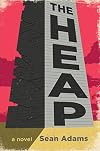
The story is set in the ruins of Los Verticales, an experimental tower city somewhere in the high desert which collapsed. Now the rubble is picked over by diggers, scavenging valuable items from the rubble. Somewhere inside the wreckage is radio DJ Bernard, miraculously alive and giving focus to the digging effort, especially his brother Orville, who is nominally the main character.
The best bits of the story are the
These are not gems, they barely rise to broken glass, but they're at least shiny. The mass of the story is an undifferentiated 'dumb conspiracy'. When Orville refuses to include commercial endorsements in his daily calls with Bernard, he is replaced by a vocal impersonator. It turns out that there is a whole covert guild of vocal impersonators willing to murder to maintain power, and managerially ambitious digger Lydia helps Orville free himself from the grips of the conspiracy, where they find out that Bernard is also a vocal impersonator, and the real brother is long dead. But the Heap and the Dig provides some focus in a world.
I care deeply about J.G. Ballard. He even has an adjective, Ballardian, defined as resembling or suggestive of the conditions described in Ballard's novels and stories, esp dystopian modernity, bleak man-made landscapes, and the psychological effects of technological, social or environmental developments. Thinking about it, the thing about true Ballardian scifi is its absolute sincerity and commitment. The characters are clearly obsessive madmen, driven to the point of destruction, but their obsessions are treated as irresistible urges linked to eternal universal truths, the escaping of thanatic and erotic energy in a post-industrial post-modern space-age atomic complex. Ballard's subject is alienation, and his alienation is richly textured.
By comparison, Adams is nothing but sidelong winks at absurdity. Look at how stupid American managerialism is. Look at the pointlessness of office life, of the tiny rituals we call community, at the cleverness of the decently distanced allusions to 9/11 and Ground Zero. Aren't I clever as an author? And with all these cleverness, he cores out the strength of the Ballardian project.
I understood entirely when I got to the end and saw in the author's biography that he attended the Iowa Writer's Workshop, which I can only conclude is an entire dojo of authors trained how to write a story wrong on purpose, likely as part of some all encompassing Author's Conspiracy.
At least the book is short.

In the wake of the collapse of a huge condominium in the desert, a massive dig operation is begun to remove the debris, to salvage what can be recovered, and just possibly to find a survivor buried deep in the wreckage, beaming out a live radio program to the world.
This is the basic setup for Adams' novel, and the reader may be forgiven a certain sense of cynicism on approaching it. Consider it a parable, then. Or an extended metaphor for the manipulated, shaky, manufactured structure that show more is our world, if you wish.
Adams creates a wide cast of characters here, not all of whom are what they seem, but all of whom are recognizable in one way or another as hustlers, sycophants, romantics, goldbricks, political wannabes, and fugitives in one way or another from lives as crushed and warped as the debris they dig through every day.
Perceptive readers will see the holes in the story long before the characters do, but will hang on for the ride as these diggers ... ah, forgive me; I can't resist ... get to the bottom of it all. show less
This is the basic setup for Adams' novel, and the reader may be forgiven a certain sense of cynicism on approaching it. Consider it a parable, then. Or an extended metaphor for the manipulated, shaky, manufactured structure that show more is our world, if you wish.
Adams creates a wide cast of characters here, not all of whom are what they seem, but all of whom are recognizable in one way or another as hustlers, sycophants, romantics, goldbricks, political wannabes, and fugitives in one way or another from lives as crushed and warped as the debris they dig through every day.
Perceptive readers will see the holes in the story long before the characters do, but will hang on for the ride as these diggers ... ah, forgive me; I can't resist ... get to the bottom of it all. show less
Orville is working as a volunteer digging in the rubble of a collapsed apartment building that once housed as many people as a decent-sized city. He's looking for his brother, Bernard, who, improbably, appears to have survived and to be broadcasting from a radio station somewhere deep in the ruins. And then Orville turns down an offer for a side job and finds himself falling afoul of... a secret society of murderous voice actors?
It's a strange, somewhat surreal story, but an enjoyable one. show more Also a humorous one, although not so much laugh-out-loud funny as entertainingly absurd, in a constant, low-key sort of way. And, interestingly enough, the little glimpses into what life was like in the city-sized apartment building were actually pretty clever and intriguing. show less
It's a strange, somewhat surreal story, but an enjoyable one. show more Also a humorous one, although not so much laugh-out-loud funny as entertainingly absurd, in a constant, low-key sort of way. And, interestingly enough, the little glimpses into what life was like in the city-sized apartment building were actually pretty clever and intriguing. show less
 This review was written for LibraryThing Early Reviewers.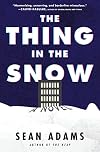
This is a weird little novel. Three workers at the Northern Institute, a fictional research institution set in a snowbound, cold region, carry out a series of apparently endless, monotonous maintenance tasks. Hart, the seniormost, agonizes about his lack of management skills, taking refuge in a series of corporate superhero novels, in which the hero solves dramatic conflicts through personnel management techniques. Cline, a significantly more competent worker, is tormented by a mysterious show more object that appears in the snow outside, one day, and tries unsuccessfully to get everyone else to care about it, even while Hart feels threatened by her competence. Gibbs does as he's told. Every week, their boss, Kay, sends a series of tasks - open and close all the doors to check them, place golf balls on tables to make sure they are flat, and so on. As the thing in the snow slowly consumes their attention, they fall behind on their tasks.
The book is clearly intended to be a satire of the workplace, with Beckettian undertones (as Beckett said in Waiting for Godot, "Nothing happens. Nobody comes, nobody goes. It's awful."). As satires go, it's heavy-handed and unsubtle. The author could have chosen to make the point, instead of dropping it on the reader's head like an anvil, but we increasingly live in the sort of world where the obvious is valorised, and the complex regarded as necessarily elitist. And so here we are. show less
The book is clearly intended to be a satire of the workplace, with Beckettian undertones (as Beckett said in Waiting for Godot, "Nothing happens. Nobody comes, nobody goes. It's awful."). As satires go, it's heavy-handed and unsubtle. The author could have chosen to make the point, instead of dropping it on the reader's head like an anvil, but we increasingly live in the sort of world where the obvious is valorised, and the complex regarded as necessarily elitist. And so here we are. show less
Awards


You May Also Like


Associated Authors
Statistics
- Works
- 2
- Also by
- 1
- Members
- 296
- Popularity
- #79,167
- Rating
- 3.4
- Reviews
- 29
- ISBNs
- 54
- Languages
- 2
- Favorited
- 1
