
Dan van der Vat (1939–2019)
Author of Pacific Campaign: The U.S.-Japanese Naval War 1941-1945
About the Author
Works by Dan van der Vat
The Titanic Conspiracy: Cover-Ups and Mysteries of the World's Most Famous Sea Disaster (1996) — Author — 117 copies, 3 reviews
The Ship That Changed the World: The Escape of the Goeben to the Dardanelles in 1914 (1986) 70 copies, 1 review
Gentlemen of War: The Amazing Story of Commander Karl Von Muller and the S M S Emden (1984) 47 copies
Tagged
Common Knowledge
- Canonical name
- Vat, Dan van der
- Legal name
- Vat, Daniel Francis Jeroen van der
- Birthdate
- 1939-10-28
- Date of death
- 2019-05-09
- Gender
- male
- Relationships
- Vat, Daan van der (father)
- Nationality
- Netherlands
- Birthplace
- Alkmaar, Holland
- Associated Place (for map)
- Alkmaar, Holland
Members
Reviews

On June 21, 1919, more marine tonnage sank than any day in history before or since.
Van der Vat looks at the history of the German High Seas Fleet from a notion in the head of Captain Alfred von Tirpitz to outer space.
Some parts of that story are relatively well known.
While Van der Vat places perhaps too much emphasis on the Anglo-German naval arms race as a cause of World War. Germany lost that arms race by late 1912, and both sides knew it. But he does show it was a definite cause in the show more souring German-British relations before the war.
Certainly, German naval actions in skirmishes in the North Sea and, of course, the Battle of Jutland have gotten wide coverage.
The actual scuttling of the fleet on the summer solstice has certainly been covered elsewhere. The nine German sailors who died that day – shot in lifeboats as they left their sinking ships – are the symbolic last German casualties of the war.
Where the book shines is in the coverage of the fleet between the Nov. 11, 1918 Armistice and the scuttling and the fate of the fleet after the scuttling.
Van der Vat looks at he political conflicts around the German High Seas Fleet after the Armistice. Who would get those ships? Would Germany be allowed to keep them? Would nations like France get them? How were they to be divided up by the victors. Did Britain really want other countries boosting their navies?
The German Navy was mutinous at the end of the war. Admiral Reuter, at the fleet’s bases in Wihelmshaven and Kiel, found Soviet Councils. They assumed the ability to be consulted in command decisions and approve officers.
So, Reuter found many of the approximately 20,000 men crewing the ships into internment an unruly bunch. But he had a deadline to meet. The fleet was to present itself for internment by November 21, 1918 or hostilities would resume.
So, on that date, 74 German ships, flying no ensigns and their guns disabled, assembled in Scotland’s Firth of Forth under the guns of more than 250 Allied ships. For some British officers and sailors, it was something of a bitter day. They had hoped to sink the German fleet in combat.
In Scapa Flow, it was to be a long eight months for the Germans.
The German High Fleet was not designed to operate far from its home bases. The living conditions on ships were not good. The superior German armor on them also made the spaces more cramped than on British vessels.
Their British minders had considered the possibility of a scuttling and took appropriate steps. Crews were not to travel between ships or fraternize with members of the British Navy. There would be no radios on board. Their mail would be censored. Germany had to pay for the coal to keep steam up – a condition of their internment, and food was shipped from Germany.
The dreary winter took its toll on mind and spirit. By the time the fleet sunk, there were only about 1,700 in the harbor, a skeleton crew. Many had left when the ships reached Scapa Flow. The rest between then and June 17, 1919. Some asked for leave to return home often to simply desert the navy in the chaos of post-Armistice Germany. Others were shipped off for sickness, particularly dental problems.
Reuter was happy to reduce his numbers because of discipline problems, particularly on the large battleships. Only on the small torpedo boats had discipline and morale been maintained.
Reuter himself returned briefly to Germany in December 1918.
As van der Vat points out, it is very unlikely he did not discuss scuttling the fleet with government and military officials. But, in his memoirs and official inquiries, he always maintained it was his sole decision. That was done, very likely, to avoid implicating the German government in breaking the Armistice.
Out of contact with their government, their news censored, the Germans had no idea what was going on with peace negotiations in Paris. However, an enterprising sailor had built a homemade radio and picked up news that the Armstice was set to expire on June 23, 1919.
Around 10 AM on June 21st, Reuter, in his dress uniform, sent the signal for scuttling to the cadre of officers and sailors in on the plot: “Paragraph Eleven. Confirm.”.
Under the eyes of a group of Stromness schoolchildren touring around the interned fleet and an angry British Navy, the scuttling begin. It was over by 5 PM.
Not all the ships were scuttled – German ships were not designed to be easily scuttled. Some were only beached. Some were saved by British sailors. The book’s appendix, besides providing a map of Scapa Flow with the ships, lists all the technical specifications and fate of each ship. Reuter’s order for scuttling is also provided in full.
The French were furious. So were the British – publicly, but Prime Minister David Lloyd George was secretly pleased that the Germans had solved a military and political problem for them. No other nation’s navy would get those ships.
The story didn’t end there. Starting in 1922 with local salvage efforts by Orcadians and through about 1981 salvage efforts continued. Some ships were raised and towed as far as the Firth of Forth over 275 miles away.
But there are still some German ships at the bottom of Scapa Flow and a popular attraction for divers all over the world.
So, what about outer space?
Well, there is a rumor that metal off some of the German ships was used by American spacecraft to house sensitive radiation detectors. Steel smelted after 1945 has trace amounts of radioactivity in it. It’s introduced into its smelting since the atmosphere has radioactive particles in it since the days of nuclear weapons being detonated in the atmosphere.
Van der Vat tried to confirm this rumor with NASA, but they could neither confirm or deny it after a search in their records.
I did a far from exhaustive search on the Web of a Million Lies and didn’t find anything more conclusive. “Low background steel” is, in fact, a desirable material for some scientific applications though its use may be coming to an end. And metal from warships has been used for such purposes including American warships sunk in 1945. But there’s no direct evidence the fruits of von Tirpitz’s brain made it into space.
Either way van der Vat’s book still stands as the classic work on the singular event of the Grand Scuttle. show less
Van der Vat looks at the history of the German High Seas Fleet from a notion in the head of Captain Alfred von Tirpitz to outer space.
Some parts of that story are relatively well known.
While Van der Vat places perhaps too much emphasis on the Anglo-German naval arms race as a cause of World War. Germany lost that arms race by late 1912, and both sides knew it. But he does show it was a definite cause in the show more souring German-British relations before the war.
Certainly, German naval actions in skirmishes in the North Sea and, of course, the Battle of Jutland have gotten wide coverage.
The actual scuttling of the fleet on the summer solstice has certainly been covered elsewhere. The nine German sailors who died that day – shot in lifeboats as they left their sinking ships – are the symbolic last German casualties of the war.
Where the book shines is in the coverage of the fleet between the Nov. 11, 1918 Armistice and the scuttling and the fate of the fleet after the scuttling.
Van der Vat looks at he political conflicts around the German High Seas Fleet after the Armistice. Who would get those ships? Would Germany be allowed to keep them? Would nations like France get them? How were they to be divided up by the victors. Did Britain really want other countries boosting their navies?
The German Navy was mutinous at the end of the war. Admiral Reuter, at the fleet’s bases in Wihelmshaven and Kiel, found Soviet Councils. They assumed the ability to be consulted in command decisions and approve officers.
So, Reuter found many of the approximately 20,000 men crewing the ships into internment an unruly bunch. But he had a deadline to meet. The fleet was to present itself for internment by November 21, 1918 or hostilities would resume.
So, on that date, 74 German ships, flying no ensigns and their guns disabled, assembled in Scotland’s Firth of Forth under the guns of more than 250 Allied ships. For some British officers and sailors, it was something of a bitter day. They had hoped to sink the German fleet in combat.
In Scapa Flow, it was to be a long eight months for the Germans.
The German High Fleet was not designed to operate far from its home bases. The living conditions on ships were not good. The superior German armor on them also made the spaces more cramped than on British vessels.
Their British minders had considered the possibility of a scuttling and took appropriate steps. Crews were not to travel between ships or fraternize with members of the British Navy. There would be no radios on board. Their mail would be censored. Germany had to pay for the coal to keep steam up – a condition of their internment, and food was shipped from Germany.
The dreary winter took its toll on mind and spirit. By the time the fleet sunk, there were only about 1,700 in the harbor, a skeleton crew. Many had left when the ships reached Scapa Flow. The rest between then and June 17, 1919. Some asked for leave to return home often to simply desert the navy in the chaos of post-Armistice Germany. Others were shipped off for sickness, particularly dental problems.
Reuter was happy to reduce his numbers because of discipline problems, particularly on the large battleships. Only on the small torpedo boats had discipline and morale been maintained.
Reuter himself returned briefly to Germany in December 1918.
As van der Vat points out, it is very unlikely he did not discuss scuttling the fleet with government and military officials. But, in his memoirs and official inquiries, he always maintained it was his sole decision. That was done, very likely, to avoid implicating the German government in breaking the Armistice.
Out of contact with their government, their news censored, the Germans had no idea what was going on with peace negotiations in Paris. However, an enterprising sailor had built a homemade radio and picked up news that the Armstice was set to expire on June 23, 1919.
Around 10 AM on June 21st, Reuter, in his dress uniform, sent the signal for scuttling to the cadre of officers and sailors in on the plot: “Paragraph Eleven. Confirm.”.
Under the eyes of a group of Stromness schoolchildren touring around the interned fleet and an angry British Navy, the scuttling begin. It was over by 5 PM.
Not all the ships were scuttled – German ships were not designed to be easily scuttled. Some were only beached. Some were saved by British sailors. The book’s appendix, besides providing a map of Scapa Flow with the ships, lists all the technical specifications and fate of each ship. Reuter’s order for scuttling is also provided in full.
The French were furious. So were the British – publicly, but Prime Minister David Lloyd George was secretly pleased that the Germans had solved a military and political problem for them. No other nation’s navy would get those ships.
The story didn’t end there. Starting in 1922 with local salvage efforts by Orcadians and through about 1981 salvage efforts continued. Some ships were raised and towed as far as the Firth of Forth over 275 miles away.
But there are still some German ships at the bottom of Scapa Flow and a popular attraction for divers all over the world.
So, what about outer space?
Well, there is a rumor that metal off some of the German ships was used by American spacecraft to house sensitive radiation detectors. Steel smelted after 1945 has trace amounts of radioactivity in it. It’s introduced into its smelting since the atmosphere has radioactive particles in it since the days of nuclear weapons being detonated in the atmosphere.
Van der Vat tried to confirm this rumor with NASA, but they could neither confirm or deny it after a search in their records.
I did a far from exhaustive search on the Web of a Million Lies and didn’t find anything more conclusive. “Low background steel” is, in fact, a desirable material for some scientific applications though its use may be coming to an end. And metal from warships has been used for such purposes including American warships sunk in 1945. But there’s no direct evidence the fruits of von Tirpitz’s brain made it into space.
Either way van der Vat’s book still stands as the classic work on the singular event of the Grand Scuttle. show less

I have read a few books on the surprise attack by the Japanese Imperial Forces in 1941, and this book would be the best I have read – an illustrated version of the classic war pic “Tora! Tora! Tora!” of the 70s. It does away with a lot of the pre and post-war history that, while it has relevance, it is not what a lot of readers want, or need to know about.
There are two reasons that this book is such a good read – to those who are well aware of the attack, and especially for those show more whose knowledge is just being able to name the battle in pub quizzes – it is in its illustrations and its ‘non-biased’ approach to getting the story across.
The plethora of photos (some I have never seen before) maps, and the brilliant paintings are a credit to this book, capturing the shock, scale, and awesomeness of the event. Some are those taken by Japanese pilots who took part in the attack and seem almost surreal or shots from a movie such is their impact.
Brilliant photo showing near miss on Battleship row
The writing is to the point and not full of jargon, giving the most ardent land-lubber and civilian the ability to keep pace. And with eye-witness accounts from all sides (American, Japanese, and civilian) these add different perspectives to the ensuing battle. In fact I would go so far as to say that you cannot help but show some respect for the antagonists for their own bravery, skill, and patriotism.
In closing I will no doubt upset some; it is with the immortal words from President Roosevelt; “…a date which will live in infamy, the United States of America was suddenly and deliberately attacked…” – I have an issue with the use ‘suddenly’ – in reading any book on this subject it is clear to even the most layman of people who this term is hardly justified – the fact that the attack happened with such ferocity and impact was partly in due to the Japanese planning and execution (which in fact did not go entirely to plan, otherwise it could have been so much worse), but the inept ability and arrogance of the American forces who had enough pieces of the puzzle to know what was happening, where, and when. It was inevitable, they just failed in their task, yet another case of ‘how the hell did the Allies win the war?’ Not so much their winning, more the Axis losing in my mind…there will be debate whether America in fact bought it upon themselves (as has been repeated in many more instances since WWII) as their interjection into Manchuria was the catalyst. But that’s another story for another time.
RIP to all who fell not just at Pearl Harbour, but WWII itself. show less
There are two reasons that this book is such a good read – to those who are well aware of the attack, and especially for those show more whose knowledge is just being able to name the battle in pub quizzes – it is in its illustrations and its ‘non-biased’ approach to getting the story across.
The plethora of photos (some I have never seen before) maps, and the brilliant paintings are a credit to this book, capturing the shock, scale, and awesomeness of the event. Some are those taken by Japanese pilots who took part in the attack and seem almost surreal or shots from a movie such is their impact.
Brilliant photo showing near miss on Battleship row
The writing is to the point and not full of jargon, giving the most ardent land-lubber and civilian the ability to keep pace. And with eye-witness accounts from all sides (American, Japanese, and civilian) these add different perspectives to the ensuing battle. In fact I would go so far as to say that you cannot help but show some respect for the antagonists for their own bravery, skill, and patriotism.
In closing I will no doubt upset some; it is with the immortal words from President Roosevelt; “…a date which will live in infamy, the United States of America was suddenly and deliberately attacked…” – I have an issue with the use ‘suddenly’ – in reading any book on this subject it is clear to even the most layman of people who this term is hardly justified – the fact that the attack happened with such ferocity and impact was partly in due to the Japanese planning and execution (which in fact did not go entirely to plan, otherwise it could have been so much worse), but the inept ability and arrogance of the American forces who had enough pieces of the puzzle to know what was happening, where, and when. It was inevitable, they just failed in their task, yet another case of ‘how the hell did the Allies win the war?’ Not so much their winning, more the Axis losing in my mind…there will be debate whether America in fact bought it upon themselves (as has been repeated in many more instances since WWII) as their interjection into Manchuria was the catalyst. But that’s another story for another time.
RIP to all who fell not just at Pearl Harbour, but WWII itself. show less
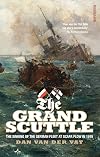
As you might expect from the title, this book explains the circumstances surrounding the scuttling of the German fleet in Scapa Flow, Orkney, after the First World War. It draws upon archive materials, eyewitness accounts, and survivors’ stories told to the author many years later. The idea of the book is an interesting one, but I found the writing style a bit old-fashioned—the author is prone to referring to ships as “she” and to “Man’s” achievements, which provokes show more eye-rolling on my part. It is a book of many details, which interested readers will enjoy but which for this reader were overwhelming. I would say this is a book better read when you have the attention span to read carefully. For me, in the middle of present global circumstances, this is not the right book for the times. show less

Another description of the Anglo-Turkish mixup resulting in the Ottomans allying with the Central Powers. It is a reliable account, with a good survey of the Ottoman German arrangements. For the Goeben's escape he mentions the errors of the French Navy, and, of course the vagueness of the orders under which the Royal Navy's forces were operating. Yes, he favours the school that believes the four RN Armoured Cruisers under Adm. Troubridge should hav tried harder to engage the fleeing show more Kreigsmarine ships.There are a small number of errors, and while describing the heroic efforts required to keep a coal-fired, reciprocating engined ship like the Goeben at protracted high speed, he never mentions the fact that all the pursuing RN Battlecruisers were oil-fired Turbined powered ships who may well have driven the German ship into complete collapse merely by keeping the Goeben at near top speed for a longer period. Pity. show less
Lists
Awards


You May Also Like


Associated Authors
Statistics
- Works
- 16
- Members
- 1,437
- Popularity
- #17,899
- Rating
- 3.4
- Reviews
- 18
- ISBNs
- 83
- Languages
- 6
- Favorited
- 1