
E. H. Shepard (1879–1976)
Author of Winnie-The-Pooh's ABC
About the Author
Series
Works by E. H. Shepard
Pooh and Piglet Go Hunting Slide-and-Peek: Slide and Peek Book (A Slide and Peek Book) (1999) 9 copies
Pooh and Piglet Find a Heffalump (Pooh Graduated Chunkies) (2001) — Illustrator — 7 copies, 1 review
Pooh Goes Visiting 1 copy
Winne the Pooh's Calendar Book. 1975. Inspired by A.A.Milne. 1974. Spiral bound paper. (1974) 1 copy
The Christopher Robin 1 copy
My Very First Encyclopedia 1 copy
Pooh project book 1 copy
Winnie the pooh 1 copy
Associated Works
Winnie-the-Pooh • The House at Pooh Corner (1958) — Illustrator, some editions — 7,017 copies, 50 reviews
Winnie-the-Pooh: The Classic Collection (1926) — Illustrator, some editions — 4,230 copies, 24 reviews
When We Were Very Young • Now We Are Six (1932) — Illustrator, some editions — 1,794 copies, 12 reviews
Winnie Ille Pu (1958) — Illustrator, some editions; Cover artist, some editions — 1,499 copies, 7 reviews
Tao of Pooh and Te of Piglet Boxed Set (1992) — Illustrator, some editions — 1,391 copies, 16 reviews
Pooh and the Philosophers : In Which It Is Shown That All of Western Philosophy Is Merely a Preamble to Winnie-The-Pooh (1995) — Illustrator — 920 copies, 5 reviews
Winnie-the-Pooh's Giant Lift-the-Flap Book (1997) — Illustrator, some editions — 315 copies, 4 reviews
Three Cheers for Pooh: A Celebration of the Best Bear in All the World (2001) — Illustrator — 112 copies, 1 review
Pooh & Friends (Disney Home Pooh Collection) Leisure Arts #3262 (2001) — Original characters — 80 copies, 1 review
Tales from Winnie-the-Pooh/ Humphrey's Tiny Tales: My Treasure Hunt Trouble (2011) — Illustrator — 32 copies
The Return of the Hero (Wind in the Willows Storybook) (1987) — Illustrator, some editions — 19 copies
The River Bank and the Open Road (Wind in the Willows Storybook) (1991) — Illustrator, some editions — 16 copies
The Wind in the Willows: The Wild Wood (pop-up book ∙ Treasury Collection) (1990) — Illustrator — 15 copies
The Holly Tree and Other Christmas Stories — Illustrator — 5 copies
More "Very Young Songs": From "When We Were Very Young" and "Now We Are Six" — Illustrator — 3 copies
Winnie-the-Pooh's Calendar Book 1972 — Illustrator — 1 copy
The seventh daughter — Illustrator — 1 copy
Tagged
Common Knowledge
- Canonical name
- Shepard, E. H.
- Legal name
- Shepard, Ernest Howard
- Other names
- Shepard, E. H.
- Birthdate
- 1879-12-10
- Date of death
- 1976-03-24
- Gender
- male
- Education
- St Paul's School, London, England, UK
Heatherley's School of Fine Art
Royal Academy Schools - Occupations
- illustrator
artist - Organizations
- Punch magazine
British Army (WWI) - Awards and honors
- Military Cross (1917)
Order of the British Empire (Officer, 1972) - Relationships
- Shepard, Mary (daughter)
Knox, E. V. (son-in-law) - Nationality
- UK
- Birthplace
- St John's Wood, London, England, UK
- Places of residence
- St John's Wood, London, England, UK
Lodsworth, West Sussex, England, UK - Place of death
- London, England, UK
- Burial location
- Lodsworth Church cemetery, Chichester, West Sussex, UK
- Associated Place (for map)
- England, UK
Members
Reviews
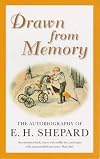
This utterly delightful memoir would probably have remained forever unknown to me had it not been for a lovely review of it by The Captive Reader. I quite literally went in search of it right away although not a big reader of non-fiction I do really like these kinds of childhood memoirs. I am so very glad I found a copy, this book is very much a keeper, and one I know I shall return to. E.H Shepard is remembered and loved by many for his wonderful drawings which illustrated classic works of show more children’s literature, particularly Winnie the Pooh and The Wind in the Willows. Here he has illustrated his memoir of childhood with drawings very reminiscent of the works for which he is best known. Included are also drawings he made when only seven years old, and long before he had any real ambitions to make his living from his art.
“I was born in St. John’s Wood, at No. 55 Springfield Road, and I can remember the nursery there and the garden at the back. Each morning my father would come in and dance me round before he went to business. I can also remember the cotton frocks that I wore with plaid bows on my shoulders and a plaid sash round my middle; under these I wore little drawers, rather tight and scratchy for small legs. Getting ready for a party, Mother would frizz my hair with a curling iron.”
Ernest Shepard was born in to an upper middle class family in 1879 living with his family in St. Johns Wood in London at a time during the later years of Queen Victoria’s reign. Ernest’s father was an architect; his family moved in fairly artistic circles themselves, and certainly encouraged the early artistic talent that Ernest showed. His was a landscape of streets crammed with horse-drawn hansom cabs and buses, a known and recognisable policeman to be found on the corner of his street. It is to this world that E.H Shepard returns us with affection and nostalgia in this wonderfully warm and engaging memoir. Drawn from Memory recounts the very earliest years of Ernest’s Victorian childhood, a truly happy idyll in which he lived in the years before his mother’s death. Ernest was the youngest of three children, his older brother Cyril and sister Ethel feature alongside his lovingly drawn parents, who so obviously provided a deeply loving environment for their children to grow up in. The Shepard’s naturally enough for a family of their type, had servants too, and they are remembered here too, Ellen, Martha and Lizzie women who fed and cared for Ernest, and who appear here as an extension of his family.
“On the whole it was nice to be back home again. Martha, all smiles, opened the front door. The Fire was burning in the dining room, and Lizzie prepared a very particular tea with crumpets. Sambo joined us. Purring and fussing round us all. Father and Mother had a lot of letters to read, and we children sat back feeling very comfortable and content. The trees outside were beginning to turn, and the old messenger man was sweeping up the leaves. Presently the lamplighter, with his staff, came along the Terrace, and one by one the lamps were lit. It really was rather nice to be home once more.”
Children were not so very different then as they are today; Ernest recalls his and his brother’s irritation at having birthdays close to Christmas, and people who would make one present do for both occasions, how unfair that is for children unlucky enough to be born in December. Particularly memorable is Ernest’s wonderfully happy portrayal of summer weeks spent on a farm as the hops are harvested, it must surely have been one of his fondest of his childhood memories. When Queen Victoria celebrates her golden jubilee – the streets of London are thronged with people celebrating and watching the parade. The three Shepard children are each allowed to go and buy themselves a flag for the occasion, but Ernest having seen so much red, white and blue, wants his flag to be different –and so proudly purchases the Belgian flag. Seaside holidays, stays with his maiden aunts, illness and kindergarten games are all recalled with love and humour by a man who so obviously benefitted from an idyllic childhood – although this time was destined to be so short.
In the preface E H Shepard warns that his memoir depicts the last truly happy year of his childhood – before his adored mother was taken from them so tragically early. This knowledge is felt by the reader throughout this delightfully happy book, and certainly lends it an undercurrent of poignancy. So when Ernest makes almost casual reference to coming across his beloved brother’s grave in 1916, I felt it like an almost physical shock. Having suffered these two tragic losses – it is no wonder that his memoir of this one supremely happy time is so deeply felt. show less
“I was born in St. John’s Wood, at No. 55 Springfield Road, and I can remember the nursery there and the garden at the back. Each morning my father would come in and dance me round before he went to business. I can also remember the cotton frocks that I wore with plaid bows on my shoulders and a plaid sash round my middle; under these I wore little drawers, rather tight and scratchy for small legs. Getting ready for a party, Mother would frizz my hair with a curling iron.”
Ernest Shepard was born in to an upper middle class family in 1879 living with his family in St. Johns Wood in London at a time during the later years of Queen Victoria’s reign. Ernest’s father was an architect; his family moved in fairly artistic circles themselves, and certainly encouraged the early artistic talent that Ernest showed. His was a landscape of streets crammed with horse-drawn hansom cabs and buses, a known and recognisable policeman to be found on the corner of his street. It is to this world that E.H Shepard returns us with affection and nostalgia in this wonderfully warm and engaging memoir. Drawn from Memory recounts the very earliest years of Ernest’s Victorian childhood, a truly happy idyll in which he lived in the years before his mother’s death. Ernest was the youngest of three children, his older brother Cyril and sister Ethel feature alongside his lovingly drawn parents, who so obviously provided a deeply loving environment for their children to grow up in. The Shepard’s naturally enough for a family of their type, had servants too, and they are remembered here too, Ellen, Martha and Lizzie women who fed and cared for Ernest, and who appear here as an extension of his family.
“On the whole it was nice to be back home again. Martha, all smiles, opened the front door. The Fire was burning in the dining room, and Lizzie prepared a very particular tea with crumpets. Sambo joined us. Purring and fussing round us all. Father and Mother had a lot of letters to read, and we children sat back feeling very comfortable and content. The trees outside were beginning to turn, and the old messenger man was sweeping up the leaves. Presently the lamplighter, with his staff, came along the Terrace, and one by one the lamps were lit. It really was rather nice to be home once more.”
Children were not so very different then as they are today; Ernest recalls his and his brother’s irritation at having birthdays close to Christmas, and people who would make one present do for both occasions, how unfair that is for children unlucky enough to be born in December. Particularly memorable is Ernest’s wonderfully happy portrayal of summer weeks spent on a farm as the hops are harvested, it must surely have been one of his fondest of his childhood memories. When Queen Victoria celebrates her golden jubilee – the streets of London are thronged with people celebrating and watching the parade. The three Shepard children are each allowed to go and buy themselves a flag for the occasion, but Ernest having seen so much red, white and blue, wants his flag to be different –and so proudly purchases the Belgian flag. Seaside holidays, stays with his maiden aunts, illness and kindergarten games are all recalled with love and humour by a man who so obviously benefitted from an idyllic childhood – although this time was destined to be so short.
In the preface E H Shepard warns that his memoir depicts the last truly happy year of his childhood – before his adored mother was taken from them so tragically early. This knowledge is felt by the reader throughout this delightfully happy book, and certainly lends it an undercurrent of poignancy. So when Ernest makes almost casual reference to coming across his beloved brother’s grave in 1916, I felt it like an almost physical shock. Having suffered these two tragic losses – it is no wonder that his memoir of this one supremely happy time is so deeply felt. show less
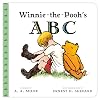
I like the idea of somebody having to comb through Ernest H. Shepard's illustrations from the four books he did with A. A. Milne and finding the 26 images that would work for an alphabet book. The dragon is a bit jarring, the island seems like more of a rock, yellow daffodil is just plain weak, and expedition is an outright cheat, but, hey, if that's what you have to work with, you make it work.
(My Pooh Project: I love Winnie the Pooh, and so does my wife. Having a daughter gave us a chance show more to indoctrinate her into the cult by buying and reading her every Pooh book we came across. How many is that? I’m going to count them this year by reading and reviewing one every day and seeing which month I finally run out. Track my progress here:
https://www.goodreads.com/review/list/23954351-rod-brown?ref=nav_mybooks&she... ) show less
(My Pooh Project: I love Winnie the Pooh, and so does my wife. Having a daughter gave us a chance show more to indoctrinate her into the cult by buying and reading her every Pooh book we came across. How many is that? I’m going to count them this year by reading and reviewing one every day and seeing which month I finally run out. Track my progress here:
https://www.goodreads.com/review/list/23954351-rod-brown?ref=nav_mybooks&she... ) show less

This board book is an adaptation of A. A. Milne's The House at Pooh Corner, Chapter Two: In Which Tigger Comes to the Forest and Has Breakfast. Eleanor Kwei has adapted Ernest H. Shepard's original illustrations to fit a highly condensed storyline.
The gimmick of this particular board book is that it is layered by die-cuts to show all the featured characters when the book is closed. As you read the story, each page turn reveals what the character is doing on their particular page.
Even at a show more fraction of the words, the essence of Milne's story shines through as Tigger tries a variety of foods -- "Tiggers don't like honey" -- in search of the perfect breakfast.
(My Pooh Project: I love Winnie the Pooh, and so does my wife. Having a daughter gave us a chance to indoctrinate her into the cult by buying and reading her every Pooh book we came across. How many is that? I’m going to count them this year by reading and reviewing one every day and seeing which month I finally run out. Track my progress here:
https://www.goodreads.com/review/list/23954351-rod-brown?ref=nav_mybooks&she... ) show less
The gimmick of this particular board book is that it is layered by die-cuts to show all the featured characters when the book is closed. As you read the story, each page turn reveals what the character is doing on their particular page.
Even at a show more fraction of the words, the essence of Milne's story shines through as Tigger tries a variety of foods -- "Tiggers don't like honey" -- in search of the perfect breakfast.
(My Pooh Project: I love Winnie the Pooh, and so does my wife. Having a daughter gave us a chance to indoctrinate her into the cult by buying and reading her every Pooh book we came across. How many is that? I’m going to count them this year by reading and reviewing one every day and seeing which month I finally run out. Track my progress here:
https://www.goodreads.com/review/list/23954351-rod-brown?ref=nav_mybooks&she... ) show less
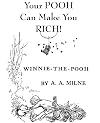
In six short paragraphs stretched out over four small pages, author Michael T. Prescott informs readers that the first Winnie-the-Pooh book is in public domain and anyone can make money off it as long as they follow two simple rules: don't use Disney's character models, and don't use Tigger.
For example, one might write up four pages of text informing readers that the first Winnie-the-Pooh book is in public domain and anyone can make money off it, and then fill out the remaining 36 pages of show more the body of the book with Ernest H. Shepard's illustrations from Winnie-the-Pooh, "so you can understand what you have to work with . . . "
I admire the audacity of this project and had a good laugh at the sweaty pitchman tone. I hope with my 99 cent Kindle purchase, Prescott's Pooh will indeed make him rich.
(My Pooh Project: I love Winnie the Pooh, and so does my wife. Having a daughter gave us a chance to indoctrinate her into the cult by buying and reading her every Pooh book we came across. How many is that? I’m going to count them this year by reading and reviewing one every day and seeing which month I finally run out. Track my progress here:
https://www.goodreads.com/review/list/23954351-rod-brown?ref=nav_mybooks&she... ) show less
For example, one might write up four pages of text informing readers that the first Winnie-the-Pooh book is in public domain and anyone can make money off it, and then fill out the remaining 36 pages of show more the body of the book with Ernest H. Shepard's illustrations from Winnie-the-Pooh, "so you can understand what you have to work with . . . "
I admire the audacity of this project and had a good laugh at the sweaty pitchman tone. I hope with my 99 cent Kindle purchase, Prescott's Pooh will indeed make him rich.
(My Pooh Project: I love Winnie the Pooh, and so does my wife. Having a daughter gave us a chance to indoctrinate her into the cult by buying and reading her every Pooh book we came across. How many is that? I’m going to count them this year by reading and reviewing one every day and seeing which month I finally run out. Track my progress here:
https://www.goodreads.com/review/list/23954351-rod-brown?ref=nav_mybooks&she... ) show less
You May Also Like


Associated Authors
Statistics
- Works
- 47
- Also by
- 100
- Members
- 998
- Popularity
- #25,828
- Rating
- 4.2
- Reviews
- 28
- ISBNs
- 51
- Languages
- 7
- Favorited
- 1