
Bernd Perplies
Author of Prometheus: Fire with Fire
About the Author
Series
Works by Bernd Perplies
Der Weltenfinder - Die zweite Reise ins Wolkenmeer: Roman (Die Reise ins Wolkenmeer, Band 2) (2018) 3 copies
Čas zkázy (Věk magie, #2) 1 copy
Bájná pečeť (Věk magie, #1) 1 copy
Do propasti (Věk magie, #3) 1 copy
Strážci Aquaterry 1 copy
Perry Rhodan NEO MP3 Doppel-CD Folgen 15 16: Schritt in die Zukunft; Finale für Ferrol (2012) 1 copy
Associated Works
Tagged
Common Knowledge
- Birthdate
- 1977-02-28
- Gender
- male
- Agent
- Thomas Schlück GmbH
- Nationality
- Deutschland
Members
Reviews

Okay, so here we have another Prometheus novel that felt like it could have been a third of a novel. Let's tackle this one a bit differently. I want to move through it in order, not quite chapter-by-chapter, but significant chapter by significant chapter.
Continuity Notes:
- Chapter 2: A recap of where we're at so far, which is mostly characters talking about how they haven't actually learned anything yet.
- Chapter 4: A chapter set on the Klingon ship. On the one hand, these kind of feel like distractions; on
- the other hand, they almost read like they're by a different writer(s) to the rest of the book, because these characters actually have personalities and are trying to do things that bring them into conflict with one another.
- Chapter 5: For some reason, Lwaxana Troi is in this book.
- Chapter 6: The Klingon High Council meets to complain about how little is happening in this book.
- Chapter 7: One of the trilogy's ongoing subplots is about how women shouldn't be just having casual but enthusiastic sex all the time.
-
Chapter 12: One of the very annoying things in the first book were a large number of chapters where boring people did boring things and then at the end they all blew up. Here's another one, alas, but thankfully it's the only one in this book.
- Chapter 13: The Klingon High Council meets to have the same conversation over again as in chapter 6. I don't think you need either of these two chapters, but you certainly didn't need both of them.
- Chapter 14: Over 150 pages into the second book in this trilogy, Captain Adams finally makes an interesting decision. The Klingon captain, Kromm, decides he is going to bombard innocent civilians in order to get some answers. Adams places Prometheus between the Bortas and the planet to stop him. How is Adams going to deescalate this situation and save the innocent civilians?
- Chapter 15: Don't worry, Captain Adams is in no danger of joining the pantheon of clever Star Trek captains. The showdown fizzles out when Lwaxana on Earth calls in a favor from Picard who calls in a favor from Worf who calls in a favor from Martok who orders Kromm to stand down. And that's it.
- Chapter 18: Another meeting where people complain about how little has happened, but in this case it's the Federation Council. So many interminable meeting scenes in these books.
-
Chapter 19: Finally the characters figure out something that's been obvious the entire book, which is that some kind of external influence is making everyone more aggressive and xenophobic.
-
Chapter 22: Lwaxana figures out that what's happening now is linked to the disappearance of the Valiant a century ago. I am not sure why she is making every significant plot breakthrough and not our supposed main characters.
- Chapters 24-5: The main characters do a lot of technobabble to figure out where the crashed Valiant is. It's a very undramatic way to climax your novel.
- Chapter 27: Spock is the one who makes a key breakthrough in the subplot on the Klingon ship.
- Chapter 30: Spock figures out that the cause of everything here is the entity from "Day of the Dove." This is doubly frustrating: one, the attentive reader could have figured this out six hundred pages ago from the prologue to the first book, and two, it's yet another breakthrough by literally anyone other than the crew of the Prometheus.
Continuity Notes:
- Not as reference-heavy as the first book, but the book does recap what we learned about the "Day of the Dove" entity from The Q Continuum, even carrying over the name that book gave it, (*).
- Not sure what I think of a book whose moral is clearly "don't be a xenophobe" also having one of its few significant breakthroughs coming from gratuitous torture.
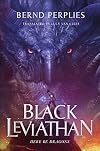
Black Leviathan by Bernd Perplies is a thrilling fantasy adventure that reimagines the classic Moby-Dick story—only this time, it’s not a white whale that stalks the skies, but a monstrous, winged dragon. Originally written in German and now available in English, this novel offers a fresh, high-stakes take on obsession, vengeance, and survival, all set in a richly imagined world where airships hunt dragons for valuable resources.
The story draws clear inspiration from Moby-Dick, show more particularly in the character of Captain Adaron, whose descent into madness and need for revenge against the legendary black dragon echoes Captain Ahab’s classic arc. That said, Black Leviathan doesn’t feel like a strict retelling. Instead, it stands on its own, using its predecessor more as a thematic touchstone than a blueprint. The dragon-laden skies and steampunk-style world add a creative and cinematic flair that separates this book from traditional sea-faring tales.
One of the standout strengths of the novel is its immersive world-building. The concept of airships, sky-hunting, and dragon biology is both inventive and intriguing. The pacing of the plot keeps the story moving, and the action sequences—especially the dragon hunts—are intense and engaging.
However, where the book falters a bit is in character development. While the story pulls you in, the characters themselves often lack the emotional depth or background necessary to make their personal arcs resonate fully. Some of the major character deaths, for example, don’t land with the emotional weight they could have—largely because readers aren’t given enough time or insight to form deeper connections with them.
The ending also feels a little rushed, wrapping up major events without offering the space needed to fully explore their consequences or give the characters—and readers—a satisfying emotional payoff.
Still, Black Leviathan is an exciting and inventive read that will appeal to fans of fantasy, dragon lore, and adventure stories. While it may not fully realize the emotional depth it hints at, it’s a worthwhile journey with a compelling premise and a world that begs for further exploration. show less
The story draws clear inspiration from Moby-Dick, show more particularly in the character of Captain Adaron, whose descent into madness and need for revenge against the legendary black dragon echoes Captain Ahab’s classic arc. That said, Black Leviathan doesn’t feel like a strict retelling. Instead, it stands on its own, using its predecessor more as a thematic touchstone than a blueprint. The dragon-laden skies and steampunk-style world add a creative and cinematic flair that separates this book from traditional sea-faring tales.
One of the standout strengths of the novel is its immersive world-building. The concept of airships, sky-hunting, and dragon biology is both inventive and intriguing. The pacing of the plot keeps the story moving, and the action sequences—especially the dragon hunts—are intense and engaging.
However, where the book falters a bit is in character development. While the story pulls you in, the characters themselves often lack the emotional depth or background necessary to make their personal arcs resonate fully. Some of the major character deaths, for example, don’t land with the emotional weight they could have—largely because readers aren’t given enough time or insight to form deeper connections with them.
The ending also feels a little rushed, wrapping up major events without offering the space needed to fully explore their consequences or give the characters—and readers—a satisfying emotional payoff.
Still, Black Leviathan is an exciting and inventive read that will appeal to fans of fantasy, dragon lore, and adventure stories. While it may not fully realize the emotional depth it hints at, it’s a worthwhile journey with a compelling premise and a world that begs for further exploration. show less
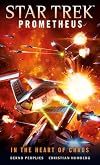
This book was one of the ones I picked up at a library book sale. I've not read any other Star Trek Prometheus titles and was concerned I would be lost or that I wouldn't care about these ST characters. I was surprised to find quite a few references to ST characters I did know--Ambassador Spock plays a key role as does Alexander Rozshenko, Kosinski and Wesley Crusher have minor but important roles, Picard is mentioned.
The book plays off of an Original Series episode where an entity creates show more hatred and encourages the humans and Klingons to fight each other. As best I can tell this is a different entity but has similar traits. The book mentions that Picard faced a similar entity, but I haven't been able to identify if that was from a Next Generation episode or in a book or just written into this storyline as a way to discuss a known character from the ST universe.
The plot is a bit plodding at times as they (Federation and Klingons) try to unravel the mystery. I wish Raspin had been put into the escape pod too. I was glad the vessel of the white guardian survived--though I suspected he would before it was revealed.
All-in-all, I was pleasantly surprised. show less
The book plays off of an Original Series episode where an entity creates show more hatred and encourages the humans and Klingons to fight each other. As best I can tell this is a different entity but has similar traits. The book mentions that Picard faced a similar entity, but I haven't been able to identify if that was from a Next Generation episode or in a book or just written into this storyline as a way to discuss a known character from the ST universe.
The plot is a bit plodding at times as they (Federation and Klingons) try to unravel the mystery. I wish Raspin had been put into the escape pod too. I was glad the vessel of the white guardian survived--though I suspected he would before it was revealed.
All-in-all, I was pleasantly surprised. show less

Back in 2018, Big Finish Productions released an audiobook of this novel read by Alec Newman, which I reviewed for Unreality SF. I did not like it very much, either the novel qua novel or as an audiobook. But I wanted to actually read the book in its chronological context, so here I am giving it a second go.
It is a bit odd reading it here; it picks up right from The Fall: Peaceable Kingdoms. That novel ended on 27 October with zh'Tarash being elected president of the Federation; this opens show more on 29 October with her inaugural speech. But that book also ended as a sort of send-off to the political thriller aspects of Star Trek novels and continuous galactic crises... and this book plunges us straight into another political thriller and galactic crisis. Alien terrorists are suicide bombing Federation (and, later, Klingon) facilities in what surely must be an even less subtle 9/11 allegory than Enterprise's Xindi arc.
So if you have space politics fatigue when it comes to Star Trek novels, this is not the one for you... On top of that, the space politics are not very interesting. There are occasional chapters devoted to what the Klingon High Council or Federation Council is deliberating; this is pretty much never interesting, as characters we don't care about have conversations about things we already know. The scenes seem primarily used to make it clear that the authors did indeed read Articles of the Federation, but serve no real purpose in the actual story.
That is a criticism you could aim, in fact, at a significant portion of this book. The authors love to write chapters about irrelevant characters learning or doing things (e.g., a retired Romulan spy, a sneaky Ferengi, Martok, twice Miradorn mercenaries, a Federation communications office on a starbase); these characters are pretty much never interesting. Meanwhile, the actual main characters don't seem to do very much at all. Captain Adams of the Prometheus talks to Ro on DS9 about the inauguration... but why? A group of Prometheus characters watch Quark dither with a broken viewscreen... but why? I think you could lop the first seventy-seven pages off this book and begin with the current chapter seven, and no one would have even noticed. Even after that point, it drags. Basically one thing of importance happens in this book: the Prometheus does some investigating, and some members of its crew are captured, and they get away and learn one interesting thing in the process. That's a few chapters, not an almost 400-page novel.
Part of the issue seems to be that the writers of the book aren't quite sure what it wants to be. Is the Prometheus trilogy a single story about a galactic crisis? Or the pilot for an ongoing set of adventures about the USS Prometheus? (Similar to how the first four New Frontier novels worked.) If it's the former, the scenes of characters around the galaxy kind of make sense... but the scenes of the Prometheus crew do not, as they don't really add anything to the story. We learn about the tactical officer's love life, and the engineer's heritage, and how one guy really likes juice, and so on. But if this is meant to set up the cast of the Prometheus as a ship, it fails there because these people are utterly uninteresting as characters, and because nothing they do really seems to matter.
I was vaguely hopeful that divorced from Alec Newman's plodding, mispronunciation-filled reading I might like this more... but to be honest, I didn't think I would, and I didn't. The main benefit of reading it myself is that it didn't take me eleven hours to get through it.
Continuity Notes:
It is a bit odd reading it here; it picks up right from The Fall: Peaceable Kingdoms. That novel ended on 27 October with zh'Tarash being elected president of the Federation; this opens show more on 29 October with her inaugural speech. But that book also ended as a sort of send-off to the political thriller aspects of Star Trek novels and continuous galactic crises... and this book plunges us straight into another political thriller and galactic crisis. Alien terrorists are suicide bombing Federation (and, later, Klingon) facilities in what surely must be an even less subtle 9/11 allegory than Enterprise's Xindi arc.
So if you have space politics fatigue when it comes to Star Trek novels, this is not the one for you... On top of that, the space politics are not very interesting. There are occasional chapters devoted to what the Klingon High Council or Federation Council is deliberating; this is pretty much never interesting, as characters we don't care about have conversations about things we already know. The scenes seem primarily used to make it clear that the authors did indeed read Articles of the Federation, but serve no real purpose in the actual story.
That is a criticism you could aim, in fact, at a significant portion of this book. The authors love to write chapters about irrelevant characters learning or doing things (e.g., a retired Romulan spy, a sneaky Ferengi, Martok, twice Miradorn mercenaries, a Federation communications office on a starbase); these characters are pretty much never interesting. Meanwhile, the actual main characters don't seem to do very much at all. Captain Adams of the Prometheus talks to Ro on DS9 about the inauguration... but why? A group of Prometheus characters watch Quark dither with a broken viewscreen... but why? I think you could lop the first seventy-seven pages off this book and begin with the current chapter seven, and no one would have even noticed. Even after that point, it drags. Basically one thing of importance happens in this book: the Prometheus does some investigating, and some members of its crew are captured, and they get away and learn one interesting thing in the process. That's a few chapters, not an almost 400-page novel.
Part of the issue seems to be that the writers of the book aren't quite sure what it wants to be. Is the Prometheus trilogy a single story about a galactic crisis? Or the pilot for an ongoing set of adventures about the USS Prometheus? (Similar to how the first four New Frontier novels worked.) If it's the former, the scenes of characters around the galaxy kind of make sense... but the scenes of the Prometheus crew do not, as they don't really add anything to the story. We learn about the tactical officer's love life, and the engineer's heritage, and how one guy really likes juice, and so on. But if this is meant to set up the cast of the Prometheus as a ship, it fails there because these people are utterly uninteresting as characters, and because nothing they do really seems to matter.
I was vaguely hopeful that divorced from Alec Newman's plodding, mispronunciation-filled reading I might like this more... but to be honest, I didn't think I would, and I didn't. The main benefit of reading it myself is that it didn't take me eleven hours to get through it.
Continuity Notes:
- The book often reads like it was written by Roy Thomas, with the characters taking pains to think about or mention totally irrelevant continuity points, like the Ferengi on Alpha Eridani II who has to think about the fact that before the planet became a Romulan subject world, it was an Earth colony terrorized by the Redjac entity because that was mentioned in "Wolf in the Fold."
- There are a lot of deep cuts here. When O'Brien meets the Prometheus's Kirk-descended chief engineer, he mentions that another Kirk descendant once served on DS9, referring to a one-off Malibu comic from twenty years prior.
- Titan changed the cover from its original German publication, replacing the image of the Prometheus with a less dynamic one, but thankfully getting rid the original's silly flaming logo. (Though the new logo is a very boring one.) Weirdly, the Big Finish audiobook reverts to the German cover and logo.
- Alexander Rozkenko is in this book. I couldn't tell you why; he doesn't do anything. Also the authors seem to think that the Federation ambassador to the Klingons is someone who works for the Klingons.
- On top of that, Spock is here too. But, again, who knows why.
Lists
Awards

You May Also Like


Associated Authors
Statistics
- Works
- 54
- Also by
- 7
- Members
- 586
- Popularity
- #42,791
- Rating
- 3.7
- Reviews
- 14
- ISBNs
- 83
- Languages
- 2